❓ What did it mean to be young in Africa in 2006, and how different is that reality today?
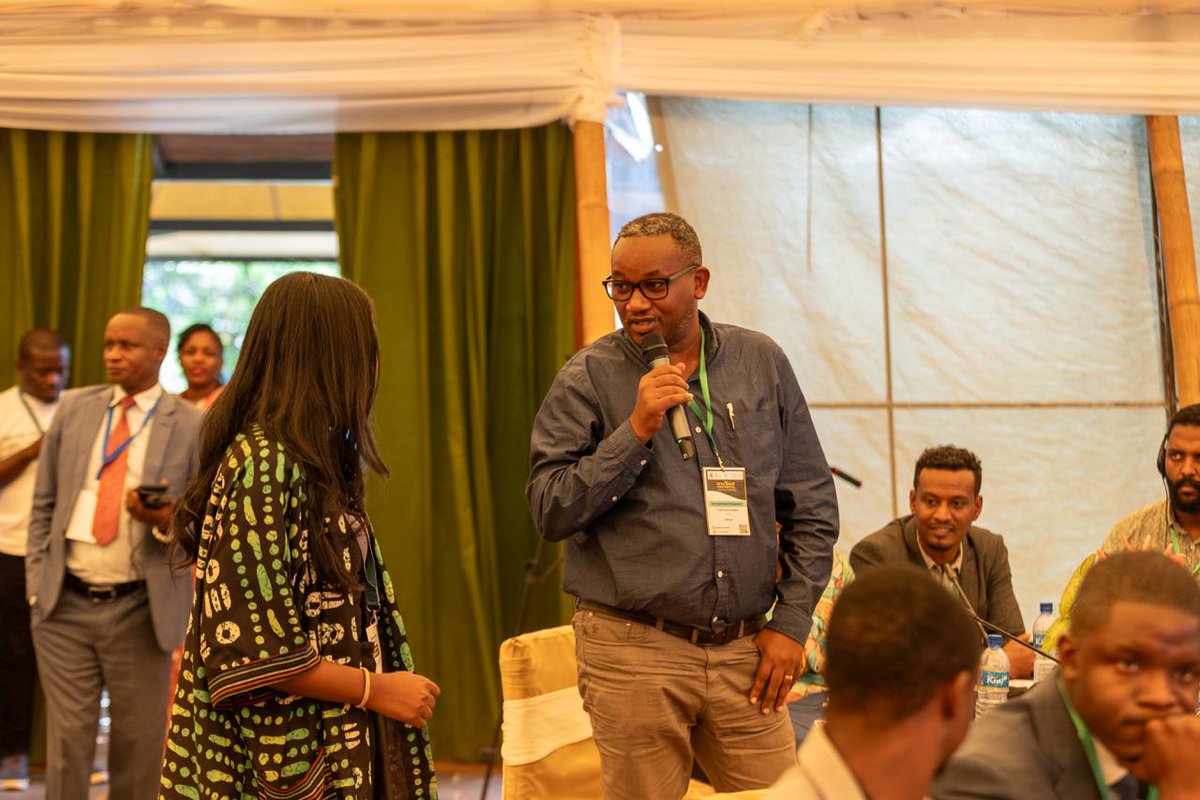
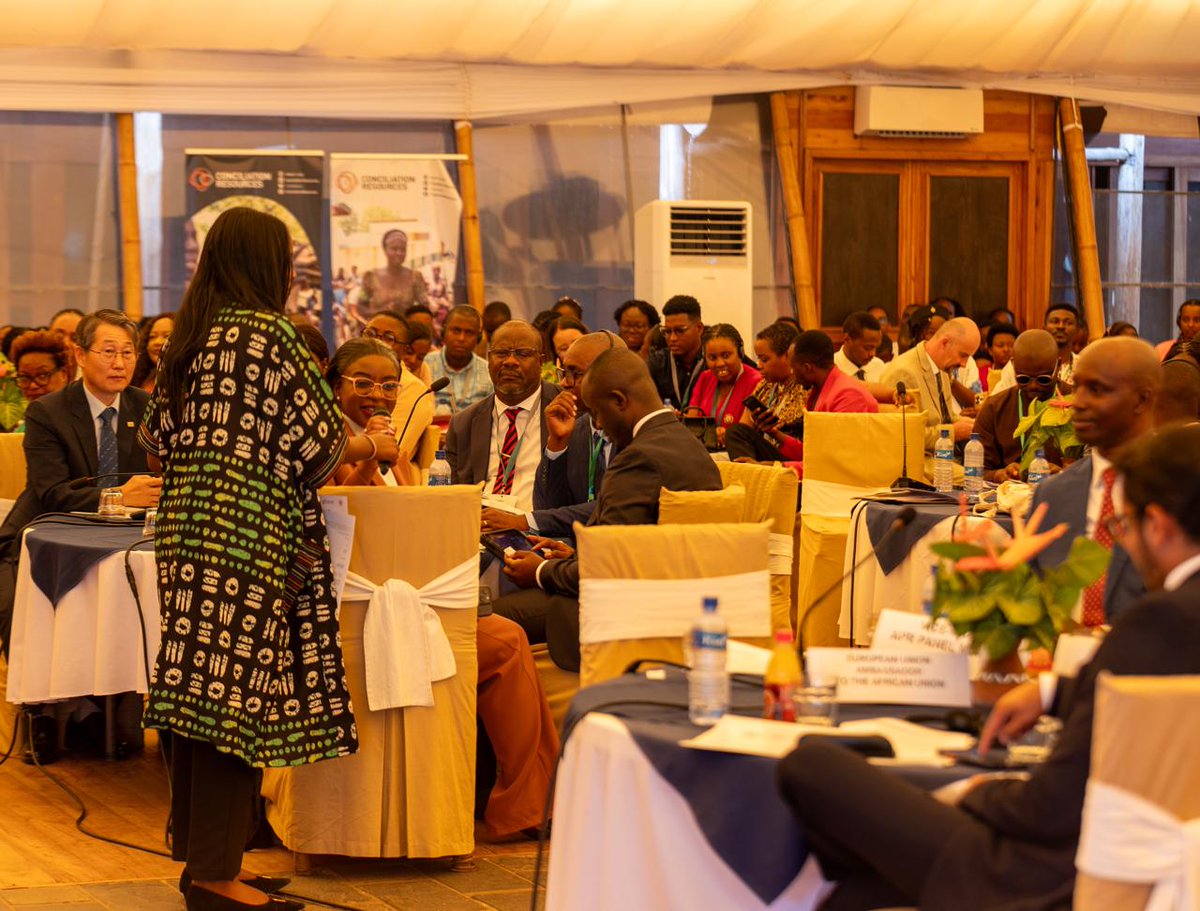
💭 During the presentation of the African Youth Charter @ 20 Appraisal Overview, Ms. Alice Kampengele @ThenamesKabu, from @RestlessDev, took the room back 20 years to reflect on the context in which the Charter was created and how young people’s realities have evolved since then — from the digital revolution to new and growing challenges such as climate change.
🎯 The reflection was also forward-looking: just as the Charter was designed with future generations in mind, today’s appraisal must consider the young people who will inherit its next chapter.
💬 “One of the main reasons we are in this room discussing this is because, in 2006, people believed that young people mattered then and would continue to matter tomorrow. We owe it to them to keep pushing this forward.”
💪 She also recognized the work of the African Union Youth Division @AUYouthProgram in making the Charter and its content more accessible and relevant to young people today.
@aueuyouthlab
#AUEUYouthLab #AUEUYouthVoicesLab #PoweroftheCollective #AUEU #EngageEmpowerConnect #EuropeAid #Bujumbura2026 #YPS #WPS #TheCharterWeWant #AYCat20
You haven’t even mentioned their abysmal handling of the Kafue River disaster. I hope they have plans to open a state of the art cancer diseases hospital cause we’re going to need it.
When your leaders came into power they:
1. Removed subsidies on fuel making the cost of doing business more and in the process killed small businesses.
2. They modified the pay structure for government securities, the same securities they themselves invested in, enjoyed returns and used to send their kids to good schools
3. A family of 5 in Zambia now needs K12,000/month to afford basics
4. A whole institution paid $80m to China “by mistake” and they didn’t owe you a reason or an apology
I can go on….
Then here you are giving them a high five for shrinking your opportunities. You’re special.
Also school feeding programs still exist in wealthy countries because some of you with all your money still can’t be trusted to feed your kids nutritious meals. You even think it’s a badge of honor to boast that your kids mostly eat fast food for school lunch.
Does the Free Movement of People mean free trains and buses? 🤔
Beyond crossing borders, it speaks to the Africa envisioned in AU’s Agenda 2063; an integrated continent where young people can learn, work, trade and contribute to peace without conflict, insecurity and unnecessary barriers standing in their way.
This and more will be at the centre of the conversations in Bujumbura, as @_AfricanUnion and the Government of Burundi convene the 5th Continental Dialogue on YPS and WPS in Africa.
On the sidelines, @APRMorg, together with @OneYoungAfrica and @RestlessDev, will convene the Africa Youth Charter @20: From Promise to Prosperity Side Event to assess two decades of the Charter’s implementation.
10-12 August, 2026 | Bujumbura, Burundi.
🎥 @nyaika256
Zambia 🇿🇲 votes on August 13 in a closely fought election. Key voter concerns are the cost of living and unemployment. President Hichilema tells the BBC why he is seeking a second term in an election that was once widely expected to be straightforward for the incumbent.
Moving on from taste maybe they can serve it better sure but when everyone got their food it was really nice to see all the kids just around the field laughing and sharing a meal together. Everyone seemed happy, safe and most importantly well fed. Anyway this was early 2021.
Looking at those cups it seems that they’re being given porridge. Guys, I’ve eaten this porridge before and it slaps. At least the one in Eastern province does, I still think about it to this day. That porridge? It had a message & it was calling to all of us.
Mundubile’s BBC Interview: what worked and what failed
Sampa Kabwela
For decades, I have worked with top leaders preparing them for high-stakes media interviews. Its what I get paid for. I have just watched Mundubile's interview clip. If I were leading his communications, this is what I would have done.
Appearance
Appearance is communication. He needs a custom-made, well-fitting suit. Its not optional. The jacket he wore was oversized, and the gray did not flatter him on camera. The choice of tie was even worse. He looked even older and charmless.
His posture needed improvement. He should have sat upright, with a slight forward lean while speaking to project confidence and engagement. Instead, he appeared slouched, stiff, and uncomfortable.
Content
The communications team should have anticipated the obvious questions. By now, they should know the most frequently asked questions and the recurring criticisms and how to answer by heart.
The interviewer was clearly trying to tie him to the Lungu presidency and its failures (not its successes). It was an obvious line of questioning, yet he failed to handle it effectively. He missed an opportunity to put that association to rest once and for all.
He could have --
Corrected the record: He should have clarified that he was an inconsequential provincial minister, was not a member of Cabinet, and was not among the country’s principal decision-makers. He could even have illustrated the point by asking the interviewer whether every decision made at the BBC is his responsibility simply because he works there.
Shared lessons learned: He could have acknowledged that while he was not President Lungu, he observed both the successes and the failures of that administration. As someone aspiring to lead Zambia, he is uniquely positioned to understand what worked, what failed, and how he would do differently. He could have drawn the same comparison with the current administration.
Pivoted to his manifesto: That was the moment to introduce his vision and policy agenda. Talking about his love for Zambia should have been the underlying theme, not the primary response to a question about his association with the previous administration.
Where he did well
He attempted to lead the conversation by steering it toward the issues he wanted to discuss rather than allowing the interviewer to dictate the entire agenda. That is an important media skill.
His articulation, voice, and cadence are his strength. He has a commanding, interview-friendly voice and communicates with clarity and authority.
Where he was clumsy
His biggest weakness was ignoring questions that required direct answers. While redirecting an interview is a legitimate technique, the audience must still feel that the original question has been addressed before you pivot to your key messages. He did not achieve that balance and he came out as unprepared, disoriented and clumsy. Perhaps this was his first interview with a major international broadcaster in his 55 years.
Lessons for the future
-- Invest in a wardrobe that works on camera.
-- Conduct camera tests to determine which colours, fabrics, and fits project confidence and authority. Appearance is communication.
-- Rehearse extensively. Every major interview should be preceded by multiple mock interview sessions.
-- Understand the audience, the platform, and the interviewer’s objectives before stepping into the studio.
--Recognize that media performance improves with experience. The more interviews you do, the more natural the process becomes.
Lastly, prepare thoroughly and, where appropriate, ask the broadcaster for the likely line of questioning. In my experience, there are very few leaders I would put in front of a camera for a major interview without first understanding the likely areas of questioning.
Overall score: 6/10
This is not a rating of Mundubile’s viability as a political leader (that's upto the voters). It is an assessment of his interview management and media performance.
But he didn’t answer the question on why we should trust a man who served in a government that had both poor economic statistics and poor lived realities.
Mundubile’s BBC interview resonated with many Zambians because he spoke to the gap between economic statistics and lived reality. Inflation may be falling, the kwacha may be stronger and mining revenues may be rising, but many households still struggle with the cost of living.
His “second independence” message taps into a deeper frustration: Zambia is rich in resources, yet too many citizens remain poor and feel excluded from the benefits of that wealth.
That is why his message connects. He is asking a simple but powerful question: When will Zambia’s economic recovery actually be felt in the homes of ordinary Zambians?
What truly grinds my gears is that if this lot wins they’ll find the same system that enabled them the first time. An ACC that is the same, P.Secretaries who are basically party cadres. Even worse, they’ll have a roadmap on how to pass a shoddy constitutional amendment.
Not a CK fan, but his claim isn’t automatically wrong. It’s like saying “Zambians embraced solar thanks to govt policy,” when really it was 20-hour load shedding that caused it. A good outcome can have an ugly cause. Whether his claim holds I don’t know, but the logic is fair.
I will say it again. 'this man has no shame' 🤣🤣🤣
'Zambia's bumper harvest of maize is not a UPND achievement. It is a sign of poverty and unemployment,' - Chishimba Kambwili.
Or even just adjusting the tax brackets. A tax at 37% should exist, but for the super wealthy. It’s just insane to me that at 24 with only two years’ work experience, all the bank CEOs and I were in the same tax bracket, and it’s not because I was earning a ton of money.