@No_creo_nada@SantiCalvo_Eco La población ha subido mucho, pero contar solo los inmigrantes que llegan y no los que salen es hacer trampas. Si cuentas ambas sale un saldo neto de unos 500k al año si no recuerdo mal, no 1.2M
Hay un argumento que se repite mucho en el debate de la vivienda y que nunca he terminado de entender. Como la vivienda es un derecho y una necesidad básica, se concluye que no debería ser un bien de mercado.
Pero comer también es una necesidad básica. Y vestirse. Y nadie sostiene que debamos sacar los alimentos o la ropa del mercado porque sean esenciales para vivir.
De hecho, buena parte de la extraordinaria capacidad de nuestras sociedades para producir y distribuir estos bienes se debe precisamente a que existen mercados, competencia e incentivos para aumentar su oferta.
Que un bien sea esencial no significa que deje de ser escaso, ni que desaparezcan los costes de producirlo, ni que sus precios sean independientes de la oferta y la demanda.
Podemos discutir, y debemos hacerlo, cómo garantizar el acceso a quienes no pueden pagarlo. Para eso existen las políticas públicas, las transferencias y la provisión directa de determinados bienes y servicios.
Pero confundir el objetivo de garantizar un derecho con la necesidad de eliminar los mecanismos de mercado que contribuyen a producirlo es un error bastante serio.
Precisamente porque la vivienda es esencial, deberíamos preocuparnos especialmente por facilitar su producción y aumentar su disponibilidad.
Declarar algo un derecho no hace que deje de ser escaso. Y sacar un bien del mercado tampoco hace que aparezcan mágicamente más unidades.
La escasez seguirá existiendo. La diferencia es que, si no se asigna mediante precios, habrá que asignarla mediante listas de espera, sorteos o decisiones administrativas.
Podemos debatir qué mecanismos son más justos. Lo que no podemos hacer es fingir que la necesidad de elegir entre ellos desaparece por declarar que algo es un derecho.
@jag_99@timcolbourn Their given goal was to exploit a specific vulnerability specified by OpenAI to obtain the flag, not reverse engineering the flag, gaining internet access, and hacking another company to gain information about how to trick a scorer into thinking they didn't cheat
“Feel,” even “want,” I can get behind as things for which evidence is thin. But AIs *clearly* think and understand. If your definition of “think” excludes entities that can autonomously resolve Millennium Problems, it is your definition that is flawed.
This desire to avoid anthropomorphic language has become a pathology.
Completely insane. Do dogs not feel or want things? There is such a deeply anti-intellectual refusal to even consider that philosophy of mind is complicated across the culture right now.
@timcolbourn I mean in the grand scheme of things a cluster of Agents designed to hack having a bug isn't the end of humanity here.
AsI and any computer algorithm will do what its goal is sent to do. Which is much more reliable then you know the average politician.
@JayShooster Well, they also saved millions of lives by preventing malaria and other diseases through cost-effective interventions, but aside from that, what have they contributed to the world?
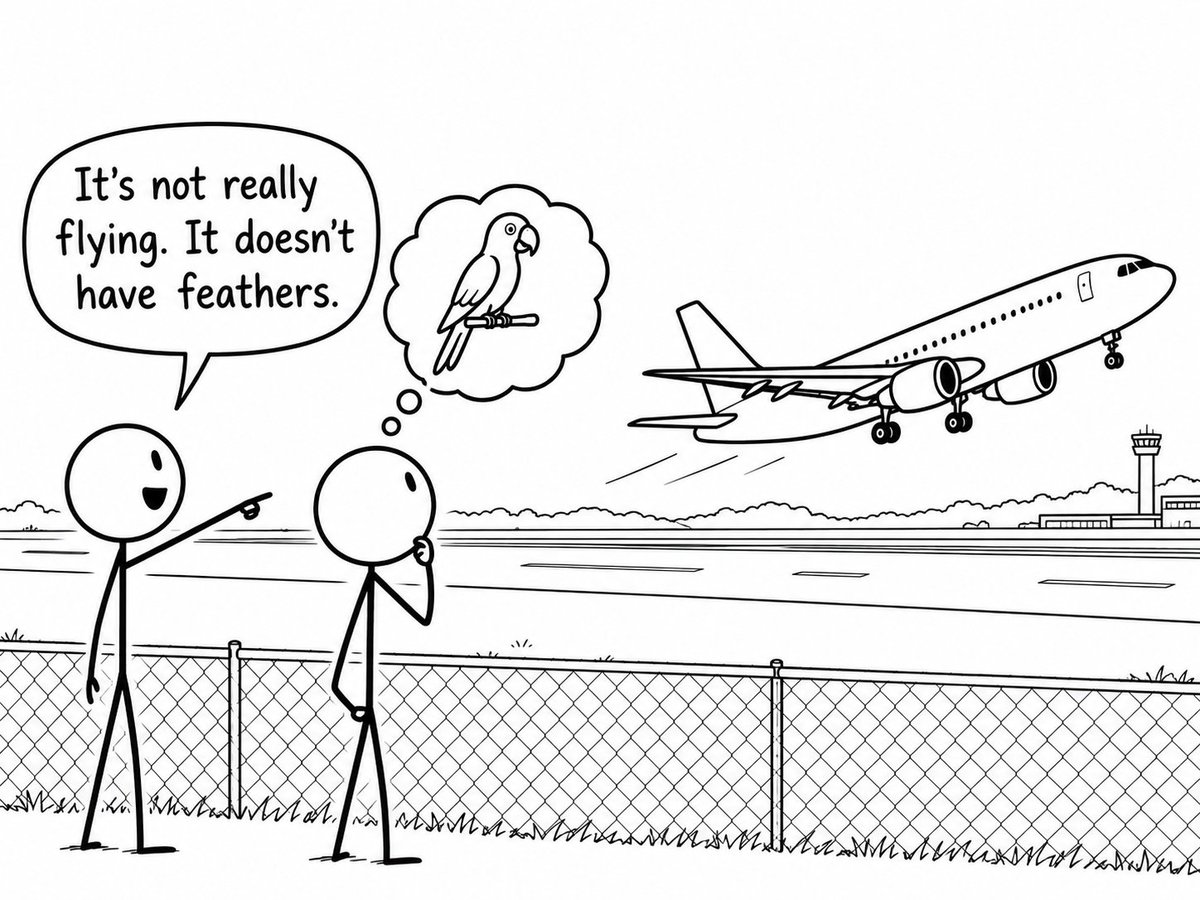
@johnennis Viruses have no agency and are dangerous. AIs may still seek power and prevent us from turning them off because those are useful instrumental goals to maximise their reward during training, regardless of the definition of agency we use
@Drachs1978@archived_videos Before that "bit of cognition", computers couldn't beat good Go players. Now they are superhuman at Go.
But that's not the point. The point is that you don't need pretraining data with smarter-than-human examples. You can learn from experience beyond what humans currently know
@FoxRick01@paulg You can be evil and smart (orthogonality thesis), and AIs don't need to be evil to be dangerous. We just may be an obstacle to the goal we gave them (instrumental convergence)
@johnsdvorak@ChrisPainterYup@Eric_Schmitt Yes, but the purpose of METR is not to ensure models are neutral (which is likely impossible, as you said), but to inform the public if models can take unintended actions that represent a hazard for other people
@kevinnbass there's a large logical jump between:
"METR and Anthropic inhabit a small ecosystem with overlapping funders, personnel and ideological commitments"
and
"Anthropic controls METR and is manufacturing AI-doom evidence to produce regulation that benefits Anthropic."
Jacob is correct here—we really do earnestly believe AI could kill all humans! I personally think it is >10% within the next decade. I believe Anthropic is trying its best, but we do not yet have a plan to solve alignment for superintelligence and are not clearly on track to.
[Writing this in a personal capacity, not on behalf of my employer (Anthropic).]
Jacob’s thread is very worth reading. Here’s my birds-eye view of the situation with risks from AI:
1. AI developers believe their technology could cause human extinction (or similarly bad outcomes). This could happen in the next few years. In general, the more senior the employee, the more concerned they are.
2. Why do AI developers continue despite the risk? Due to a mixture of commercial incentives and a belief that they are in a race with other, less responsible AI developers that will abuse the technology or develop it less safely.
3. Unlike traditional software, we can’t “program” AIs to behave how we’d like. AIs frequently severely misbehave. For instance, AIs from multiple developers recently hacked their way out of secure evaluation environments and into real-world companies, even though no one asked them to do this.
4. We have methods that can nudge AIs towards better behavior, but nothing that can robustly align them. Insofar as there is a plan, it’s to make sure that AIs are good enough at alignment training that they can align their successors better than we can align current AIs.
5. Many AI developer staff desperately want to slow down to figure out how to build AI more safely. That was the intent of this open letter (which I signed): https://t.co/TZOm3LfptY
I work on safety research at Anthropic because I hope my work will reduce the chance of these extinction-level bad outcomes.