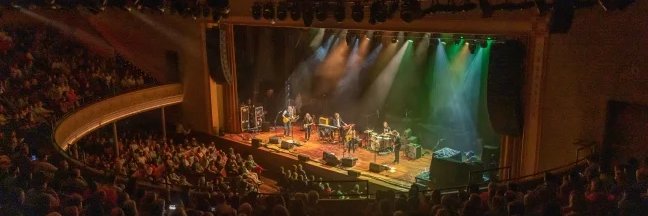
Dolly understood the power of nostalgia and myth-making. But we do well to remember that in some ways her emblematic early song was 1969's "In the Good Old Days (When Times Were Bad)" which is absolutely relentless about how awful it is to be poor.
Everyone should know what she did in response to a thousand homes being lost to wildfire in Gatlinburg, Tennessee. She did basic income before the hundreds of new pilot experiments, not because of the evidence, but I think because of her profound sense of empathy.
Article below:
A lot of people from Appalachia who experience class mobility feel some pressure to abandon where they're from and comport themselves to some standard of white coastal middle classness. I always loved that Dolly refused to stop being herself or abandon the place that raised her.
The science of practicing psychology is directive but the art of practicing psychology is holding back. The best advice and the smartest interpretations are tiny dents next to the impact of a client getting there on their own.
If you’re a physician sitting across from a patient and you hear this:
“My LLM suspects I have XYZ diagnosis based on these symptoms, labs, and so on…”
What is your reaction?
Insight is the first step toward healing, but desensitization through exposure is the most potent step. There is no triumph in merely making the map of your mind; you must explore and reclaim the territory, to succeed in changing.
If someone initiates an uncomfortable conversation instead of avoiding you, it’s often a sign of respect and investment in the relationship. Most people will prioritize their own comfort and avoid taking a positive risk rather than endure a little awkwardness to repair a rupture.
Producing food is expensive. Our economy is fake and distorted and we've come to expect valuable things to be cheap. Quality food isnt cheap. If it is, there is market distortion and dishonesty involved, or it is in fact not quality food. Quality costs money. The big development is now even slop is getting expensive.
I’m increasingly skeptical of this oft repeated trope that direct‑to‑patient care is “transactional.”
Today, my brilliant beautiful wife, an employed academic physician has 20+ patients scheduled in 15‑minute slots, 80+ inbox messages, endless insurance paperwork, and notes that must be written exactly to billing specifications to avoid denials. She’ll arrive at clinic at 7am, get home after 7pm, and continue working to finish the day.
Today, in my concierge clinic, I’ll see 8 new patients for 45–60 minutes each. Messages are answered in real time. There’s no insurance interference. My notes are written to take care of patients…not to satisfy a billing algorithm. I’ll leave home at 7:30am and be home by 6pm.
Insurance based medicine inserts a third party with ZERO fiduciary duty to the patient or the physician. Its primary obligation is financial. Patients pay premiums, deductibles, copays, and coinsurance, yet still face denials, delays, and opaque decision making that neither they nor their doctors control.
That is the most transactional model in healthcare.
In nearly every other profession, law, finance, architecture, consulting…you pay the expert directly for their time, judgment, and accountability. Only in medicine are clinicians expected to navigate a byzantine system that actively disincentivizes thoughtful care, continuity, and prevention.
Who are you the biggest dick to? Many people are hard on themselves but gentle with everyone else. Some are hard on everyone. Other people are easy on themselves but brutal to others. Or gentle with both. By the time you finished reading this, you probably saw yourself somewhere.
Pro tech or not, every society needs a contingent of cranky luddites who refuse to buy into the next new thing and to forget the old ways, code writers as much as subsistence farmers
Enough.
(Yes, we have a very active bubble here who will push back- go for it... But there are millions who are silent, reading this, and feel inadequate, who need to see this)
You walked this morning. Enough.
You didn’t hit ten thousand steps. You hit seven, and you took the stairs twice because the elevator felt too easy. Enough.
You lift twice a week. Not five times. Not with a coach filming your bar speed. Twice, with intent, and you add a little weight when the old weight stops being hard. Enough.
You don’t track your HRV. You notice when you’re flat, and you go easy that day. Enough.
You take vitamin D and creatine. The other eleven bottles stay on the influencer’s shelf, where the evidence left them. Enough.
You don’t own a cold plunge, a red-light panel, or a ring that scores your sleep. You go to bed at a reasonable hour in a cool, dark room, and most mornings you wake up feeling like yourself. Enough.
Most of your easy efforts are actually easy. Once in a while, you go hard enough that talking gets difficult. Enough.
You can carry the groceries up two flights and still finish the sentence you started. Enough.
There’s a second way to interpret this word, and it has nothing to do with measurement. It’s the one you say to the noise that is social media advice.
The post telling you you’re already behind. The protocol that replaced last month’s protocol. The man half your age is explaining what your hormones are doing. The feeling, manufactured and sold to you on purpose, that whatever you’re doing for your body, it isn’t sufficient and never will be.
ENOUGH.
You are allowed to do the few things that work, do them for decades, and stop apologizing for the things you skipped. The fundamentals are not a lesser version of health. They are healthy. Everything else is garnish.
Enough isn’t a white flag. It’s the line. Learn to say it both ways... "this is sufficient", and that’s quite enough now — and then… most of the anxiety this industry runs on has nowhere left to stand.