Google will now also have to allow publishers to opt-out of allowing their content to be used for the ‘fine-tuning’ of AI models. This provides publishers with confidence that they will have control over the full range of AI use-cases of their content. See https://t.co/6z1UGGOjKP
Doctolib jure que les informations médicales de ses millions d'utilisateurs sont à l’abri en Europe. Mais la plateforme française les transmet à Google, Microsoft et Anthropic, pour entraîner son propre modèle d'IA. La CNIL, elle, est aux abonnés absents.
https://t.co/vdgWz9ox5C
💥VOUS ÊTES IDENTIFIABLE PAR LE WIFI💥
(même si vous n'avez pas de smartphone sur vous)
Des chercheurs de l'Institut de technologie de Karlsruhe (KIT) ont mis au point un système capable d'identifier des personnes en utilisant uniquement les signaux sans fil émis par des routeurs Wi-Fi standard.
Leur méthode, baptisée #BFId (Beamforming Feedback Information / Informations de rétroaction de formation de faisceau) a atteint une précision de 99,5 % lors de tests menés sur 197 sujets, ce qui constitue le plus grand ensemble de données à ce jour dans le domaine des études d'identification par Wi-Fi.
Le système identifie les personnes sans matériel spécifique ni accès direct au réseau, même lorsqu'elles ne sont pas en possession d'un appareil.
https://t.co/PUG8B2O7q3
Cc @mmtchi 🌼
On parle cloud. On parle hyperscalers. On parle SecNumCloud. Et pendant ce temps, le code lui-même, matière première de notre souveraineté, se forge sur GitHub. Soit une plateforme détenue par Microsoft, de juridiction américaine, soumise au CLOUD Act et au FISA 702. Nos administrations, nos OIV, nos pépites y installent leurs dépôts, leurs pipelines CI/CD, leurs secrets de build. La chaîne de production logicielle nationale s'appuie sur une infrastructure étrangère, non pas pour héberger nos données, mais pour fabriquer notre logiciel. Le débat souverain se concentre sur le lieu où la donnée dort. L'angle mort, c'est le lieu où le logiciel naît. Tant que nous penserons la souveraineté en aval, nous la perdrons en amont.
La protection des données doit être érigée en droit fondamental autonome.
Dans un contexte de piratages massifs et de dérégulation, les données personnelles sont exposées à toutes les convoitises. Tribune avec William Bourdon ⬇️ https://t.co/Yh1iuHcEvw
Le clickbait de crasseux…
C’est AUTOMATIQUE.
Personne n’a rien décidé spécifiquement, c’est un mécanisme automatique. Ce que comprend finalement l’article après le titre et l’accroche. Pas glorieux.
https://t.co/MMpqciXhWv
‼️🚨 Malicious actors can now use your SSD's activity, just by getting you to open their website, to spy on which other sites you're browsing and which apps you're running.
The attack, called FROST, is accurate: 88.95% on identifying websites, 95.83% on identifying applications. It works on macOS and Linux, across browsers, and runs entirely in JavaScript.
The browser makers were told, and largely shrugged. Chromium says fingerprinting isn't a security bug. Apple called it out of scope. Mozilla acknowledged it and shipped nothing.
Researchers at Graz University of Technology developed the attack. It abuses the Origin Private File System, a browser feature that lets sites store files on your disk without asking. The attack creates one huge file, then constantly times how fast it can read from it. When you open another tab or launch an app, that activity competes for the same SSD, and the tiny changes in read speed leak what you're doing. A trained neural network turns those timing patterns into guesses about which site or app it is.
🚨 BREAKING: Spain’s anticorruption police has raided the headquarters of PM Pedro Sánchez’s Socialist Party in Madrid.
Read the full story: https://t.co/eUmUcQ7MVw
Pourquoi les offres d'emploi pour développeurs continuent-elles d'augmenter aux USA alors que l'IA automatise de plus en plus le développement logiciel ?
Probablement parce que le volume de code à produire augmente radicalement . La quantité de code produite et maintenue n'a jamais été aussi grande. Les dépôts de code sur les grandes plateformes collaboratives (gith-like) connaissent une croissance exponentielle.
En réduisant considérablement le coût de production du code, l'intelligence artificielle a rendu le développement logiciel accessible à un nombre bien plus grand d'entreprises, de secteurs et de projets. Des domaines qui n'envisageaient pas de créer leurs propres outils il y a encore quelques années s'y lancent aujourd'hui.
Paradoxalement, loin de faire disparaître les postes de développeurs, cette dynamique semble en créer davantage — ce qui devrait inciter à nuancer sérieusement le discours sur les destructions massives d'emplois annoncées par l'essor de l'IA, plus généralement.
OnlyFans is Hacked 🚨
Apparently OnlyFans has been hacked and they're selling the complete database of 340 million users
including data of content creators and consumers.
The leaked data includes
- Usernames and profile names
- Email addresses
- Phone numbers
- Account creation dates
- Follower/subscriber metrics
- Creator/fan rankings
- Linked social media profiles
- Partial payment card metadata (last 4 digits of the card)
The result of this is going to be a massive wave of extortion attempts against users
Arthur Mensch, 33 ans, emploie 800 collaborateurs et fait régulièrement la Une de la presse américaine, un prodige français des industries IA du futur.
N’importe qui aurait quitté la salle devant tant d’indifférence. Lui est resté, alertant poliment sur le retard français
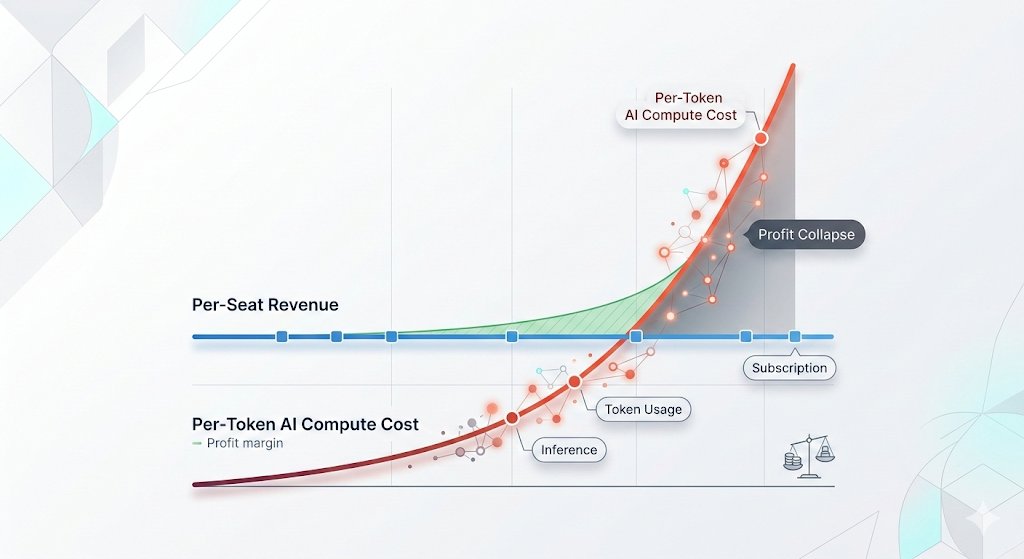
🦔Microsoft canceled its internal Claude Code licenses this week after token-based billing made the cost untenable, even for a company with effectively infinite cloud resources. Uber's CTO sent an internal memo warning the company burned through its entire 2026 AI budget in just four months. American AI software prices have jumped 20% to 37%, and GitHub (owned by Microsoft) is dropping flat-rate plans for usage-based billing across its products.
My Take
The AI subsidy era is ending in real time. The same company that put $13 billion into OpenAI and built the Azure infrastructure powering most of Anthropic's compute just looked at the bill from a competitor's coding tool and decided it was not worth paying. That is not a productivity failure on Anthropic's end. Token-based pricing is forcing every enterprise customer to confront the actual cost of running these models at scale, and the number turns out to be far higher than the flat-rate experiments suggested.
This ties directly to my Gemini Flash post yesterday. Anthropic, OpenAI, and Google all raised effective prices in the last six months. Enterprises that built workflows assuming AI costs would keep falling are now watching annual budgets evaporate in months. Two outcomes look likely from here. Either enterprises scale back AI usage to fit budgets, which slows the revenue ramp the labs need to justify their valuations ahead of IPOs, or the labs cut prices and absorb the losses, which makes the unit economics worse at exactly the wrong moment. Both paths land in the same place, the numbers stop working, and somebody has to take the writedown.
Hedgie🤗
Europe’s digital identity plans are moving from pilots to production.
Estonia has launched a €21.65M procurement to build and operate a compliant EU Digital Identity Wallet integrated with its national eID ecosystem.
#digitalwallets
https://t.co/jPV9vjqC7Q
Anthropic acaba de resolver el problema que frenaba a las empresas grandes con IA agéntica:
Antes: tu agente necesitaba acceso a tu MCP server → tenías que exponerlo a internet público → área legal decía no
Ahora: MCP tunnel crea un canal seguro vía tunnel .anthropic.com → el agente llega a tu servidor interno sin que salga nada a la red pública
Tu firewall, tus políticas, tu perimeter. El agente opera adentro.
Self-hosted sandboxes (beta pública) + MCP tunnels (research preview) = Claude Managed Agents corre en tu infraestructura
Cloudflare's security team spent the last few weeks testing Anthropic's Mythos against fifty of our own repositories. What we learned about offensive AI, why faster patching is the wrong reaction, and what the architecture around vulnerabilities has to look like next. https://t.co/RSrRtIhgaV