China’s intelligence operations are best understood not as the work of a few agencies, but as a party-led ecosystem woven into governance itself.
In a clear and timely piece for The Diplomat, Matt Brazil (Jamestown Foundation senior fellow and co-author of Chinese Communist Espionage: An Intelligence Primer) explains how the CCP has built an integrated “party-directed, whole-of-system” intelligence apparatus.
Key points from the article:
•Core institutions — Ministry of State Security (MSS), Ministry of Public Security (MPS), and PLA — operate alongside state-owned enterprises, private firms, universities, contractors, and United Front organizations. Leaks like iSOON illustrate how commercial actors support state missions.
•Intelligence serves regime security first, tightly integrated with influence operations, technology acquisition, and transnational repression (including the overseas “police stations” documented by Safeguard Defenders).
•Xi-era laws (National Intelligence Law, Counter-Espionage Law, Data Security Law, etc.) codify obligations across companies, institutions, and citizens, giving the system both legal reach and operational decentralization through technology and contractors.
•Brazil emphasizes this is not a “whole-of-society” effort in the way the phrase is often used. Most Chinese citizens avoid politics. Framing it that way risks alienating diaspora communities who are actually essential partners in resisting the CCP’s illicit activities.
•The system has deep roots in the CCP’s 1920s underground operations and has evolved under centralized political control with decentralized execution — a model that is resilient and difficult to disrupt through prosecutions alone.
For professionals assessing China-related risks — whether in credit, supply chains, technology, or policy — this framework moves the conversation beyond individual cases to the broader operating system.
Recommended read: Understanding China’s Party-State Intelligence System by Matt Brazil (The Diplomat, July 3, 2026)
https://t.co/NAPsUTrDjo
🚨 BREAKING: In a stunning blow to Democrats, 76% PERCENT of BLACK Americans want nationwide voter ID — in other words, the SAVE America Act
White voters: 85% want it
Latino voters: 82% want it
Another leftist narrative just got decimated.
Pass voter ID. GET THIS PASSED. 🇺🇸
So. Scotland Yard are apparently being forced to re-open 4000 plus rape gang cases going back to 2010 across London.
Does this mean that both Mark Rowley and Sadiq Khan who denied that there was a problem, will now resign and face investigation, and possibly prosecution for denial and cover up of the scandal?🤔
@emilieflink In early June 2026, the Bank of England issued warnings about AI deepfake videos falsely showing Nigel Farage in a physical fight with Governor Andrew Bailey, which Farage himself called out as bizarre fakes.
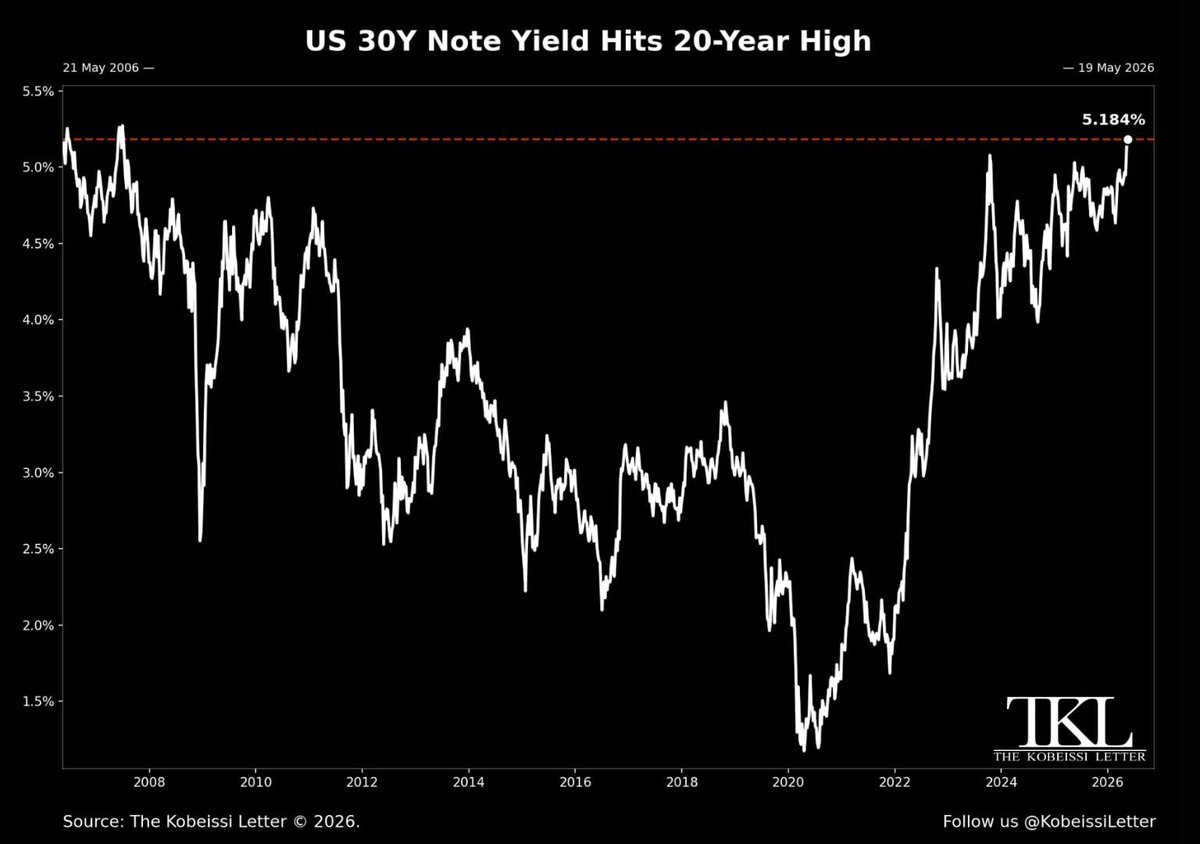
Bond markets are flashing red.
Today, the US 30Y Note Yield officially hit its highest level since July 2007, at 5.19%.
This will soon become Americans’ biggest problem, yet the vast majority do not even know it is happening.
What is happening? Let us explain.
(a thread)
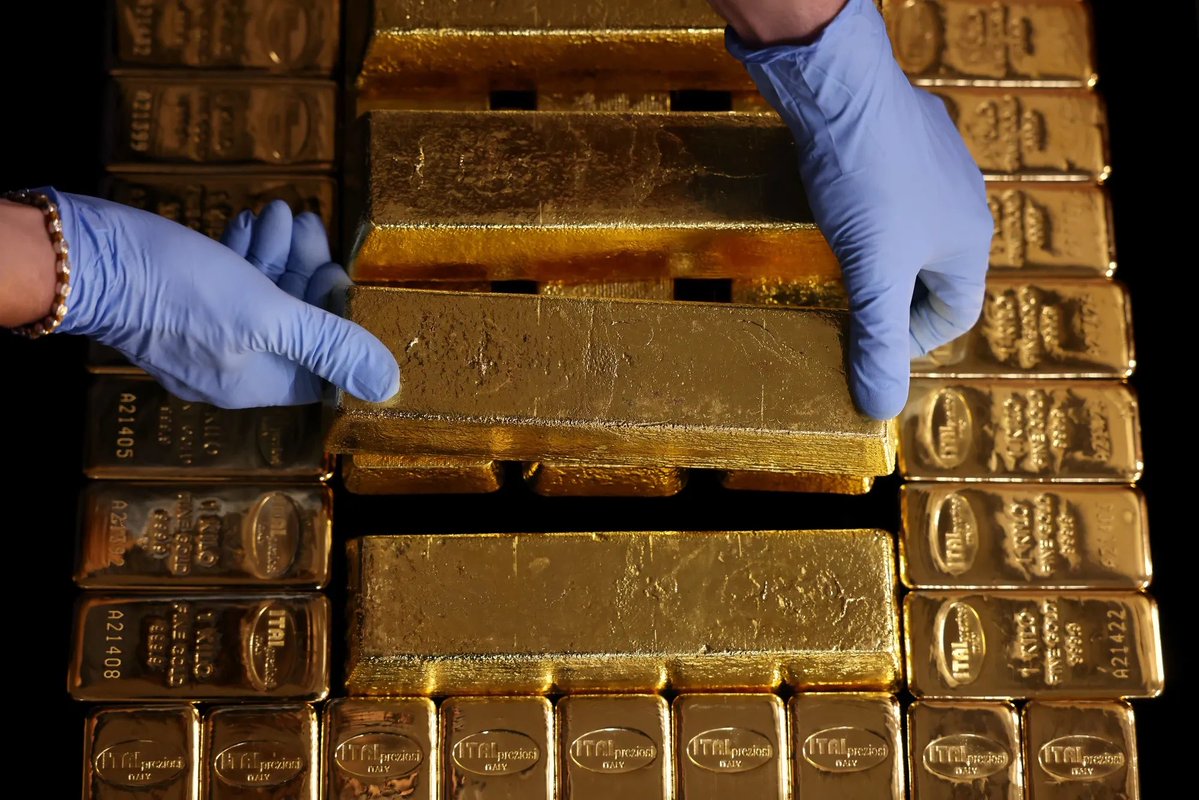
France moved 129 tonnes of gold from the Federal Reserve Bank of New York to Paris between July 2025 and January 2026. Every ounce of French sovereign gold is now stored on French soil. The Banque de France sold non-standard legacy bars held in New York at record prices and simultaneously purchased equivalent compliant bars in Europe, booking a capital gain of 12.8 billion euros without changing its total reserves of 2,437 tonnes by a single gram. The transaction was described as operational, not political. But the outcome is political regardless of the motive: a founding NATO ally has removed 100 percent of its gold from American custody.
Germany did this between 2013 and 2017. Now France. The pattern is consistent: Western central banks are bringing their gold home from New York, quietly, without fanfare, while publicly maintaining that the moves are routine. Nobody repatriates 129 tonnes of sovereign metal across an ocean because the storage fees were inconvenient. They do it because the world that made New York the safest vault on earth is the same world that froze $300 billion in Russian reserves in 2022, and every central bank on the planet watched.
China has purchased gold for 16 consecutive months. February 2026 was the latest: one tonne, modest, disciplined, bringing total reserves to 2,308 tonnes valued at $387.6 billion, approximately 10 percent of total foreign exchange reserves. China has simultaneously reduced its US Treasury holdings by $638 billion. The buying is not speculative. It is architectural. Every tonne purchased and every Treasury sold moves the centre of gravity of China’s reserve portfolio from an asset that can be frozen to an asset that cannot.
India repatriated 274 tonnes to domestic vaults, bringing 66 percent of its gold home. It reduced US Treasury holdings by 18 percent in 2025. Poland added 20 tonnes in February alone and is targeting 700 tonnes total. Uzbekistan added 8 tonnes. The structural bid from central banks that watched the 2022 freeze is running at 863 tonnes per year with no sign of slowing.
Then there are the sellers. Russia sold 6 tonnes in February and approximately 15 tonnes in the first two months of 2026, the largest drawdown since 2002. The country that triggered the global repatriation movement by getting its reserves frozen is now selling gold to fund the war deficit that the freeze was supposed to prevent. Turkey sold 8 tonnes in February and utilised approximately 50 tonnes in March for lira defence and liquidity operations. The irony is precise: the war that proves gold’s value as a sanctions-proof reserve is simultaneously forcing the countries most exposed to sanctions to liquidate their gold to survive the war’s economic consequences.
The net global position remains positive. Central banks added 19 tonnes in February despite Russia and Turkey selling. The buyers outweigh the sellers. But the composition tells the story. The buyers are countries building sovereignty: China, India, Poland, Uzbekistan. The sellers are countries defending survival: Russia funding a war, Turkey defending a currency. And the repatriators are countries hedging trust: France and Germany bringing metal home from the vault of the ally whose financial weapons they watched deployed in 2022.
Gold is at $4,676 tonight and down 8 percent from its January high. The correction is the trade. The repatriation is the structure. And the structure says that the world’s central banks, collectively, have decided that the safest place for sovereign gold is no longer New York. It is home.
Pakistani born, Brescia based Imam Ali Kashif went on Italian TV and defended Muslims right to marry 9 year old girls.
Italian PM Giorgia Meloni, the Iron Lady of Italy didn't come out to give a long talk, she simply gave orders to men on the ground.
Imam Kashif woke up this morning to find himself in Pakistan 🇵🇰
That's the way to do it 🇮🇹
Goldman Sachs on AI Agents stealing jobs from humans:
"Our analysis implies that AI substitution has reduced monthly payroll growth by roughly 25k and raised the unemployment rate by 0.16 percentage points over the past year, while augmentation has added about 9k to monthly payroll growth and lowered the unemployment rate by 0.06pp.[3] This implies a net drag of 16k per month on payroll growth and a 0.1pp boost to the unemployment rate. These negative effects fall largely on less experienced workers, widening the entry-level-to-experienced wage gap by 1.3% and the unemployment rate gap by 0.6pp from their pre-pandemic averages."
BREAKING: Fars News Agency reported explosions at the South Pars Petrochemical Complex in Asaluyeh within the hour. Israeli Defense Minister Katz claimed the strike immediately. “The IDF has just powerfully struck the largest petrochemical facility in Iran.” Combined with last week’s destruction of the Fajr 1 and Fajr 2 utility plants at Mahshahr, which shut more than 50 downstream facilities by cutting their electricity, water, and oxygen supply simultaneously, Katz declared 85 percent of Iran’s petrochemical production and exports now offline. He called it a “fatal blow to the IRGC’s financial artery” and cited $18 billion in petrochemical revenue to the Revolutionary Guard over the past two years. The number matters. But the chemistry matters more.
This is not an economic strike. It is a feedstock strike. The distinction is the insight nobody has stated clearly. A petrochemical plant produces methanol, ethylene, propylene, urea, and ammonia for export. It also produces the chemical intermediaries that become ammonium perchlorate, hydroxyl-terminated polybutadiene, and nitric acid, the components of solid rocket motor propellant. The same facility that earns $9 billion a year for the IRGC also synthesises the chemistry that fills the missiles the IRGC fires from granite tunnels 500 metres underground. When Israel destroys the plant, it does not merely reduce revenue. It severs the domestic chemical supply chain that connects a gas field to a warhead. The revenue and the reload are the same molecule at different stages of processing.
Iran’s underground missile cities hold an estimated 1,000 missiles. The launchers survive inside granite that no bunker-buster can reach. But a launcher without propellant is a metal tube. The missiles in those tunnels need fuel. The fuel needs precursors. The precursors came from the plants that are now on fire. China has shipped sodium perchlorate on four vessels from Gaolan to compensate. But four ships of imported precursor cannot replace the output of two industrial complexes that processed gas from the world’s largest natural gas field directly into the chemicals that powered Iran’s missile programme. The underground war depends on the above-ground chemistry. Israel just turned off the chemistry.
The strike on Asaluyeh targeted the Mobin and Damavand utility companies, which supplied electricity, water, and oxygen to the entire complex. Some Iranian reports claim the core Pars Petrochemical plant remains “intact and undamaged.” That may be true. It is also irrelevant. A petrochemical plant without electricity, water, and oxygen does not produce chemicals. It is a collection of pipes and vessels waiting for inputs that no longer arrive. The Israeli doctrine is not to flatten every building. It is to sever the utilities that make every building functional. One precision strike on a power substation shuts 50 plants. The efficiency is the point.
Mahshahr produced 72 million tonnes annually before the war. Iran’s total output reached 75.2 million tonnes in 2024. Polyethylene prices on the Dalian exchange are up 37 percent since February. Polypropylene up 38 percent. The Borouge facility in Abu Dhabi is offline from intercepted missile debris. Now Iran’s own petrochemical output, which fed Asian polymer markets through shadow fleet channels, has been destroyed by the country whose cities those same chemicals were being used to attack. The molecule that becomes plastic in Shanghai and propellant in the Zagros is the same molecule. It left the same gas field. It entered the same plant. And the plant is burning.
The granite remembers. The chemistry does not. When the feedstock stops, the missiles become furniture. And the revenue that bought the next war becomes a line item in a damage assessment that nobody in Tehran wants to publish.
https://t.co/dAOBBMsgDS
A job advertised by the DWP for a 'Shariah law administrator'.
I've formally questioned the DWP on what the hell they are playing at...
We live in Britain - we do NOT have, or want, Shariah law.
This is grim.














![BrianSozzi's tweet photo. Goldman Sachs on AI Agents stealing jobs from humans:
"Our analysis implies that AI substitution has reduced monthly payroll growth by roughly 25k and raised the unemployment rate by 0.16 percentage points over the past year, while augmentation has added about 9k to monthly payroll growth and lowered the unemployment rate by 0.06pp.[3] This implies a net drag of 16k per month on payroll growth and a 0.1pp boost to the unemployment rate. These negative effects fall largely on less experienced workers, widening the entry-level-to-experienced wage gap by 1.3% and the unemployment rate gap by 0.6pp from their pre-pandemic averages."](https://pbs.twimg.com/media/HFI4YsKXkAArKvl.jpg)