The feeling when you use your own package in a need!🤌
Introducing Chirag Auth Validator 🔐👀:
An npm package and GitHub repo for a effortless, plug-and-play authentication for your projects.
✅ Features:
- OTP Generation & Validation
- JWT Authentication
- Password Reset
- Token Revocation
- Active Token State Management
- Rate Limiting
- Prisma + Redis Integration
- Custom Controllers
- Works with both TypeScript and JavaScript! 🧵.
Today we announced the Claude-led discovery of a molecular machine that we suspect could represent a new gene editing mechanism. Its precise function, biotechnological utility (if any), or level of significance is not yet clear, but at minimum it is work I would have been proud to do as a PhD student. The work was done mostly, though not entirely, by Claude: our life sciences team suggested a broad area of research, Claude read through the literature and a bunch of genome data and discovered something interesting, then Claude proposed experiments to verify the discovery and our team carried them out.
It’s easy to dismiss this as a one-off or curiosity, but we’ve repeatedly seen a pattern where AI performance in new intellectual domains goes from weak to superhuman in a matter of a few years. In 2023 models struggled to do math at the level of an average high-school student. In 2024 they started to do well on math competitions for the best high-schoolers in the country, in 2025 they started to solve minor open problems, in early 2026 more significant open problems, and in late 2026 they are beginning to solve the top few open problems in all of mathematics. We believe AI for biology is on a similar exponential trend.
The main difference between biology and mathematics, of course, is that math can be done purely theoretically, while biology requires experimentation. Some have used this to draw the conclusion that AI’s utility in biology will be limited. We think this is wrong. As we’ve demonstrated today, humans can collaborate with AI to perform the experiments, validate key results in a few weeks and, if necessary, work with the AI to iterate on what they find. Eventually it may even be possible for Claude itself to safely perform the experiments by autonomously controlling lab equipment, with appropriate safeguards in place, but we aren’t doing that today (our lab is also a BSL1/BSL2 facility that doesn't handle materials dangerous to humans).
More broadly, biomedical advancement has many stages — from fundamental biology discoveries, to translational research, to drug discovery, clinical trials, and finally the actual delivery of medicines and health care to patients. We are also interested in these later stages, but even simply accelerating the first stage of fundamental biological discoveries has the potential to speed up and broaden the entire pipeline. Improving our understanding of biology and sharpening biologists’ tools can drive forward all of the later stages, for example by identifying new drug targets, finding new therapeutic modalities, allowing for more precise measurement, and speeding up the experimental loop which itself further accelerates our understanding of biology. This will not in itself speed up clinical trial times, but if it succeeds it could greatly increase the number of promising candidates that go into the pipeline — an increase in throughput even though latency remains.
In Machines of Loving Grace, I wrote about AI’s potential to “cure most diseases in 5-10 years” — a goal that sounds impossible, but one I believe is just barely possible if AI is applied to every stage of the pipeline. The first step is showing that AI can first help with, and then drive, biological discoveries.
Claude’s discovery is the latest in a line of related prior work that goes back decades, beginning with systems like CRISPR, and continuing with discoveries like the bridge recombinase and VIPR in the past few years. Recently, there has been heightened interest in systems based on reverse transcriptase (RT) enzymes, the enzyme underlying the system Claude identified. And most recently, a Stanford team working independently described a novel RT system with an associated non-coding array that is in some ways similar to the one Claude found, though they are distinct systems that evolved independently from each other. I believe that we’re at the very beginning of finding such systems and developing them into powerful tools for biotechnology.
I’m proud of the resources Anthropic has invested in accelerating the public benefits of AI through the life sciences, and we’re aiming both to grow our life sciences team and to work with other scientists to extend this approach to a broad range of problems. If you have a proposal for a research collaboration or are interested in joining our life sciences team, please reach out.
this is the guy who genuinely loves building and will fly across the country for even the smallest opportunity to do it.
congrats, mate! many more opportunities to build, learn, and win ahead of you. 💪🏻
ps: bc ready rahiyo time se chalna he.
Won the CIMET AI Hiring Hackathon in Jaipur 🏆
1200 registered. 100 invited on-site. Flew 1300 km to be there. 24 hours, solo.
Built an AI voice agent. Demoed it live on a real phone call. Won ₹1,00,000.
This didn't come easy. This year I lost at VibeCon by Emergent, Sarvam Build in Hours, and Bessemer Tech Catalyst. Took each loss as a lesson, watched the winners closely, and kept improving.
Just the start. Long way to go.
Thank you @CIMET and @HackCulture.
Working on something super exciting for an SF-based startup , a proactive AI-powered learning system that acts like a second brain for students.
Instead of static courses, it adapts daily around your weak spots, learning style, pace, and progress , creating a truly personalized learning journey.
Really excited to see how far this can go 🚀
Tired of opening 47 tabs just to apply for jobs?
Building RELAYY.
A curated job feed with 50K+ opportunities from companies like #OpenAI, #Anthropic, #Vercel, #MongoDB, #Figma, #GitLab and more.
It ranks roles against your actual profile, resume, and projects, curates only the strongest matches, and applies for you in one click.
No random listings.
No outdated jobs.
No LinkedIn doom scrolling.
Just jobs actually worth your shot. ✨
Would you use this?
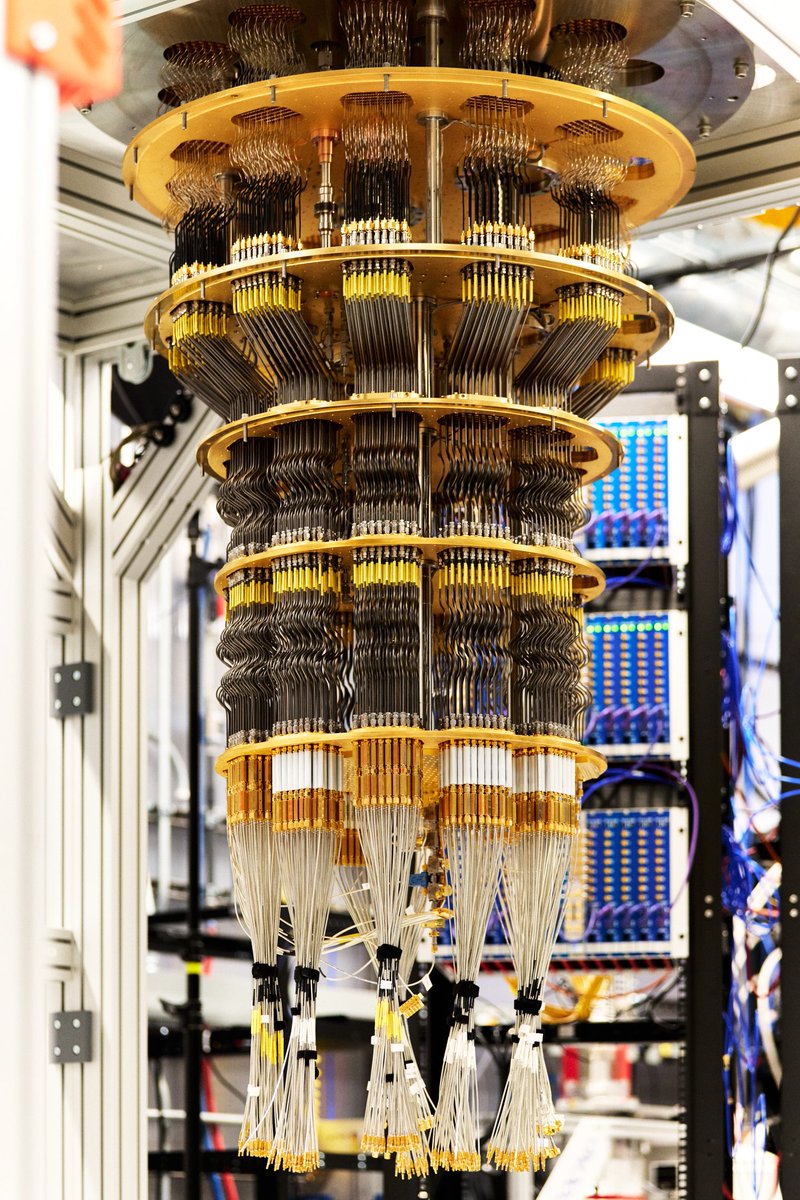
New breakthrough quantum algorithm published in @Nature today: Our Willow chip has achieved the first-ever verifiable quantum advantage.
Willow ran the algorithm - which we’ve named Quantum Echoes - 13,000x faster than the best classical algorithm on one of the world's fastest supercomputers. This new algorithm can explain interactions between atoms in a molecule using nuclear magnetic resonance, paving a path towards potential future uses in drug discovery and materials science.
And the result is verifiable, meaning its outcome can be repeated by other quantum computers or confirmed by experiments.
This breakthrough is a significant step toward the first real-world application of quantum computing, and we're excited to see where it leads.
@striver_79 How did being onsite (esp. at google) shape your career vs remote in your initial years or even now? What would you choose if you had to decide again?
this one Monkeytype setting unlocked 140 WPM for me. It's called 'read ahead easy'.
completely changed my rhythm by forcing me to type whole words in one go instead of letter-by-letter.
If you feel stuck, this is the setting to try.
I'm just grateful for the people around me, especially friends like @bhavya_garg1, @pradeep_dev07, and mentor @kirat_tw ...
the past 2-3 weeks were tough... seeing your loved ones in pain is never easy...things are finally improving but the support I received was truly incredible.
I'm here because of em and I believe the people around you play a major role in who you are today and will define who you become in the future.
It just took me back to my days at super30..how i landed there, taking money from @bhavya_garg1 ...for the people, the environment and the constant push to grow both personally and professionally... still remember waking up at 3am in winter, just because @pradeep_dev07 was there to knock on my door and the energy of rushing to superlabs in the dark, discussing classes and sessions... "aaj toh @arpit_bhayani ka session hai!"...and then start discussing bout the architecture..principles, always hit differently.
I learned so much from my friends, there...everyone was always talking about ideas, tech and of course, having fun... being a beginner the in-person experience helped me a lot.
And @kirat_tw himself, was and still is always there...even a week after I got placed, seeing me in a tough situation and without me saying a word, asked couple of times for my registered email and refunded the whole super30 fee... will never forget that.
A 100x better in person for sure...his support along with my friends, helped me grow so much faster.
And special thanks to the people I’ve worked with and shared the same energy..@iirfan , @dantioxidants .
The journey wouldn’t have been the same without em all..definitely, the people around you make a lot of difference.
Truly grateful to have such amazing people around me...
(@Alam_Creates always finds a way to capture the moment!)
@piyushsainii@bhavya_garg1 @pradeep_dev07 @kirat_tw You're not getting the point bro...out of literally four other people, you only noticed kirat. It's not only about him but all the people around me who helped me in my tough situation. Hope you also have some amazing people around you to support you.