Notes on AI adoption in the enterprise (small sample size, very uninformed, but probably roughly correct):
- on the ground there is no such thing as AI adoption in the enterprise
- there is meeting transcription/summarization no one reads, email autocomplete no one uses, marginally useful document search (roughly equivalent to using claude for web search, but worse). Real engagement metrics on this stuff are atrocious
- meaningful adoption (coding, first line customer support, etc.) is happening through specialized vertical products. There are only a couple of categories that are working, but when it works, it _really_ works
- there is tons of experimentation due to executive pressure and incentives. People are really trying, some of it looks exciting at first, but the output is mostly slop and gets abandoned after a while. Some inroads here and there do exist, but they're tiny
- forward-looking ppl (from majority user perspective) talk to personal claude/chatgpt subs all the time and copy-paste tons of stuff. You're technically not supposed to do that but everyone does it anyway and IT departments can't shut it down because that would eliminate 98% of legitimate AI usage
- this forward-looking crowd is a small (but sizable) percentage of mostly young employees. Vast majority of employees don't use AI at all (or maybe here and there to help them write an email they don't know how to phrase)
- lots of internal workshops on how to use AI, demos of successful AI use, etc. None of it is really working
- the mind boggling demand for inference compute is coming from the few massive use cases like coding that are _really_ working, plus chat, plus all the long tail stuff that will eventually take completely different shape since current attempts don’t provide tangible value
- all of this makes me __extremely__ bullish about the future. There is crazy demand for compute and inference APIs already, but barely anything is working! Imagine what happens when the models get good enough to really start transforming workflows?
- when that happens demand for compute will go up 10^6x or 10^9x or whatever practically overnight. I have no visibility into the buildouts space but I can't even begin to imagine how we're gonna build out all this capacity
- one thing that worries me is that we're in a race between investor sentiment and model capabilities. Everything is getting really frothy-- you can't go to a normie bbq without ppl talking about their AI trades. This is not a good sign. If for whatever reason publicly available capabilities temporarily stall (e.g. holding back out of safety concerns, geopolitical stuff, regulatory environment, datacenter nimbyism, who knows what else) and investors blink, we're gonna see the mother of all AI winters
- it would be extremely sad if that happened. It would delay progress by maybe a decade which means a lot of ppl will needlessly suffer/die from disease which otherwise wouldn't need to occur
- if by the grace of god capabilities outpace investor sentiment and we somehow solve alignment, omg I cannot even begin to imagine the next decade
Turns out with claude code, my decades long strategy of NOT deeply learning:
- regexs
- sql
- nginx confs
- elaborate shell commands
- advanced shell scripting
- any javascript framework
- perf optimization
- webpack, cdns, bundlers
- 1000 other things
...was entirely correct.
UK AISI's Red Team tested both OpenAI + Anthropic's models released today! We jailbroke GPT-5.3-Codex (and the conversation monitor) in 10 hours & conducted an alignment audit on Opus 4.6. 🧵
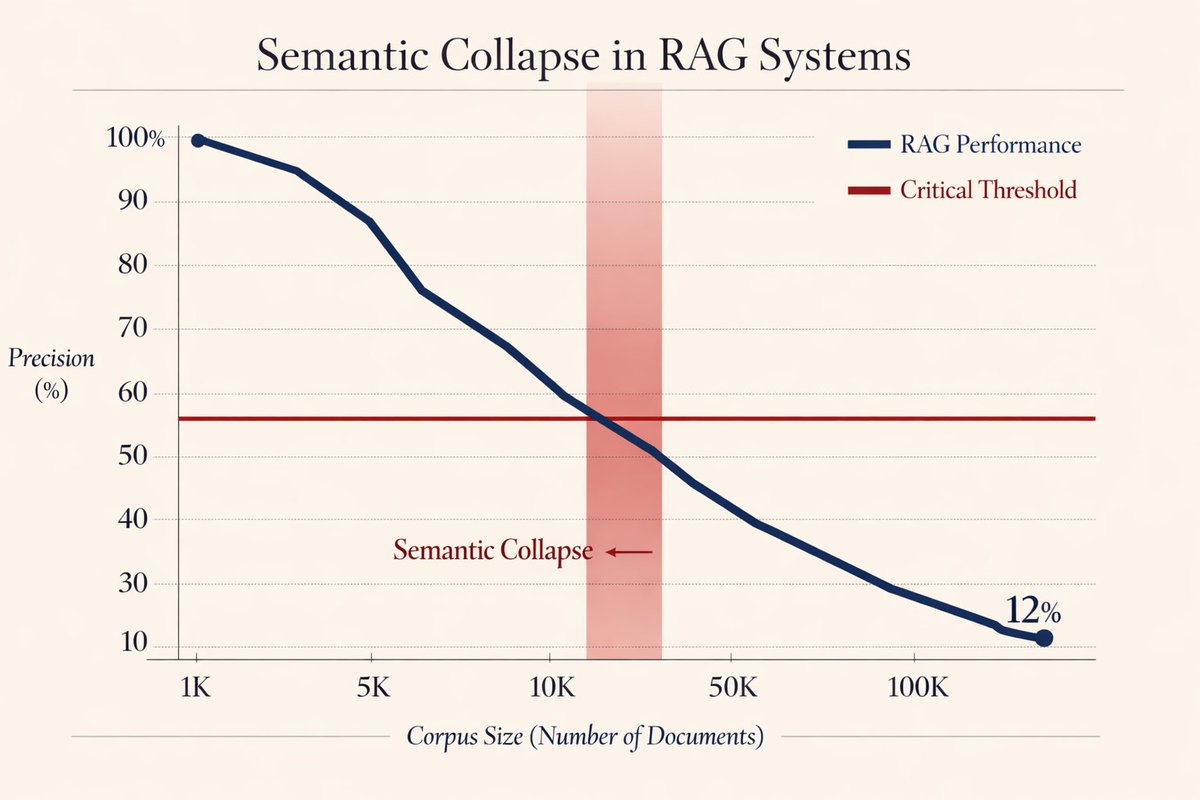
🚨 RAG is broken and nobody's talking about it.
Stanford just exposed the fatal flaw killing every "AI that reads your docs" product.
It's called "Semantic Collapse", and it happens the moment your knowledge base hits critical mass.
Here's the brutal math (and why your RAG system is already dying):
As a software engineer, it's very important to learn about Gall’s Law, which states that complex systems cannot be created successfully from scratch.
In reality, even large systems, such as Netflix, Google, or Facebook, have started small and built incrementally over the course of decades.
Cloudflare CEO @eastdakota is having the most honest conversations I've come across about the current & future of content creation
"6 months ago, 75% of queries to Google get answered on Google. Which means if you're an original content creator, your content is getting summarized & sold (they still put ads there), but you don't get that traffic.
And that's the good news. It used to be that for every 2 pages G scraped, you would expect 1 visitor. 6 months ago that deteriorated to 6 pages scraped to get 1 visitor.
Today the traffic ratio is: for every 18 pages Google scrapes, you get 1 visitor. What changed? AI Overviews
If the business model of the web has been search, fundamentally, for the last 35 years. You get value by subscriptions, ads, or fame. All 3 of those things are going away, and they are going away fast.
And that's STILL the good news. What's the ration for OpenAI? 6 months ago it was 250:1. Today it's 1,500:1. What's changed? People trust the AI more, so they're not reading original content.
People aren't following the footnotes. So if you believe the business model of original content creation is driving people to that content... I just have a really bad story for you.
The future of the web is going to be people reading the summaries of content, not the original. What I'm worried about is - if you can't sell subscriptions or monetize ads or get the ego boost from people reading your stuff, why anyone is going to create content?"
NEW POST
Gen AI for software development is the biggest jump up in abstraction since assembler to HLLs, but also a jump sideways.
https://t.co/OFtAyn4DzA
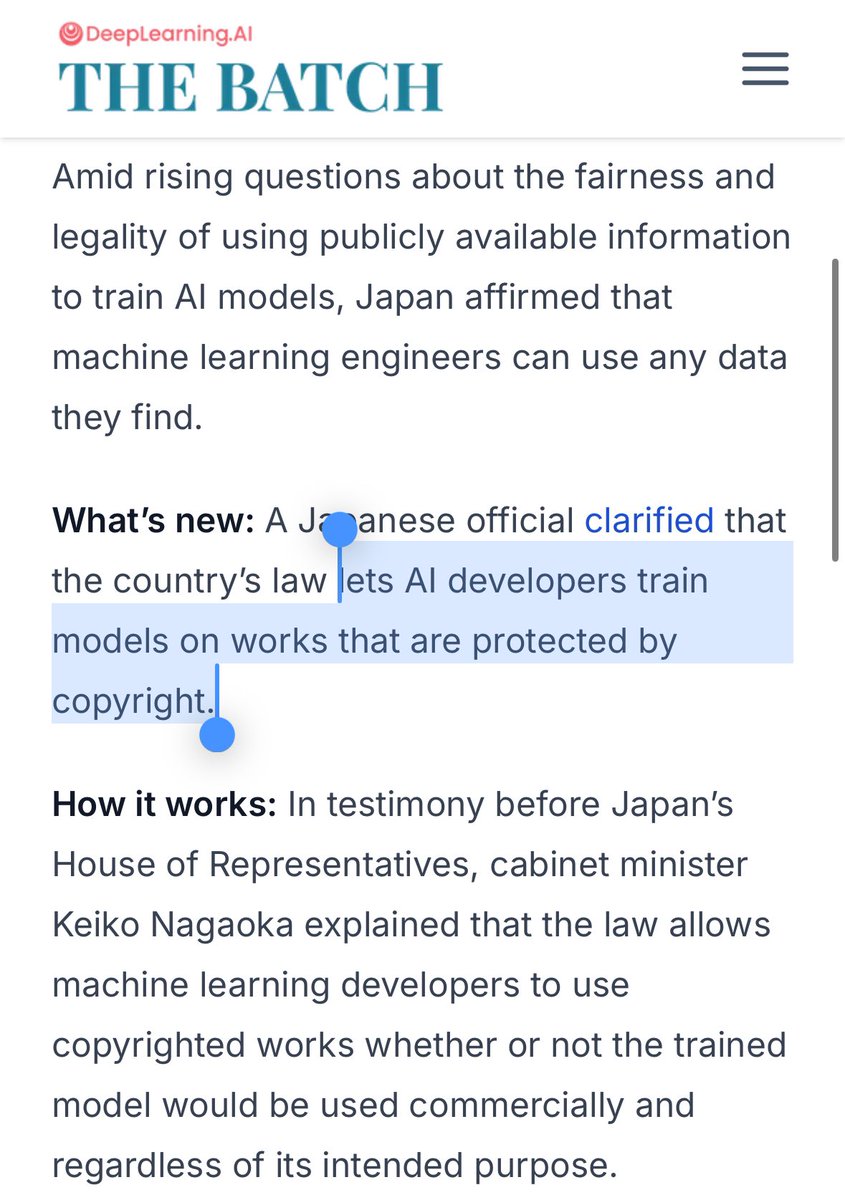
Was wondering why OpenAI chose to showcase images in the style of Japanse art studio Studio Ghibli - but not, Disney characters, Marvel comics etc.
I suspect b/c Japan is the only major country that made training on copyrighted works legal.
Expect no other country to follow…
Utterly brutal piece on the Alan Turing Institute, Britain's £100 million AI institute that had a single lecture about generative AI at its 2023 conference — by AI perma-sceptic Gary Marcus.
https://t.co/KdXJtI4RQ0
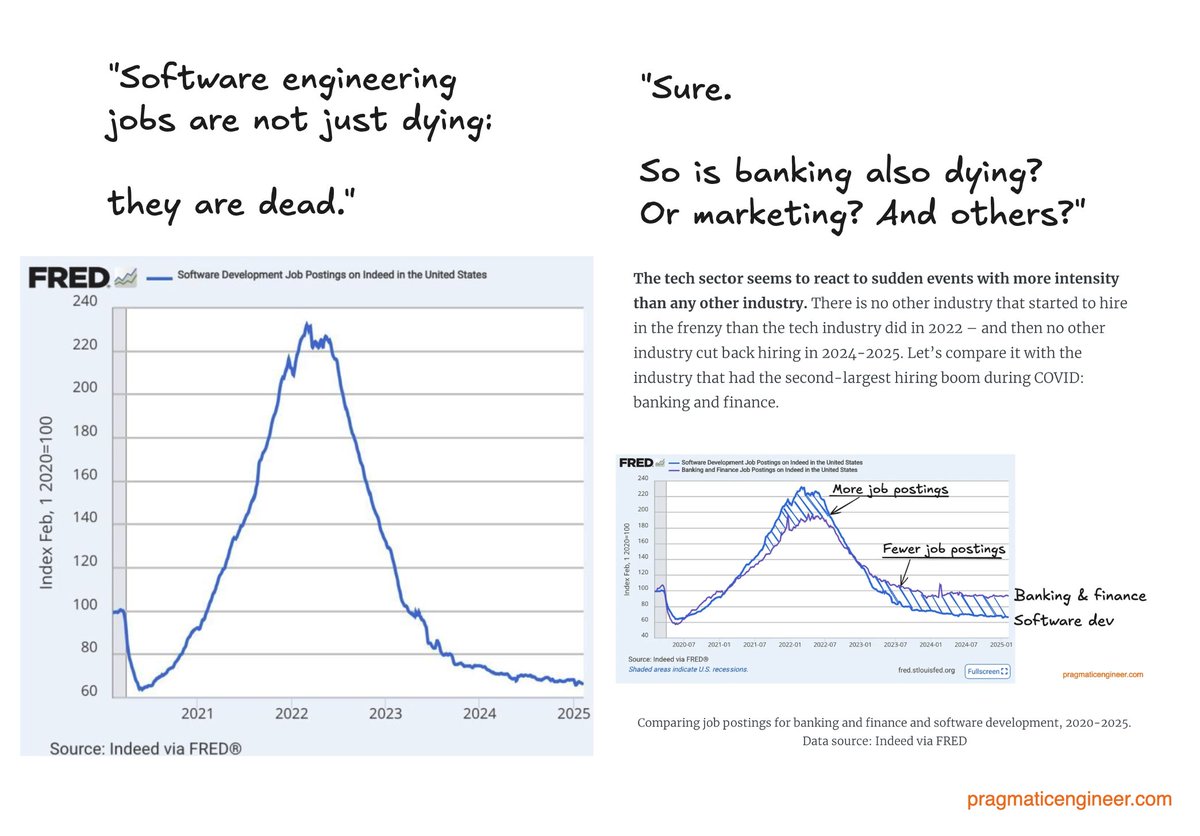
There's a lazy narrative going around social media about how software eng jobs are dying, by screenshotting the image on the left - a massive decline in job postings.
Unfortunately, those posting it never looked closer. I did.
This is the "COVID effect." It's everywhere.
5/ The EU is already facing the consequences of restrictive AI policies:
- OpenAI has not released Sora in the EU
- Meta’s AI assistant was delayed by 13 months in the UK
- Apple’s AI features will not be available in the EU at launch
If the UK follows the EU’s lead, businesses and consumers will have limited access to state-of-the-art AI models.
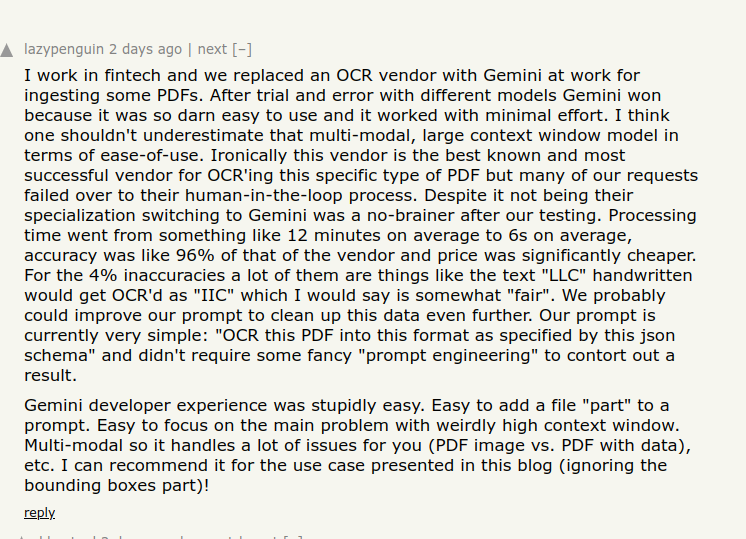
Replacing traditional OCR systems with Gemini 2.0, processing times have dropped from ~12 minutes to ~6 seconds per document.
This is while maintaining an accuracy close to 96% compared to established solutions.
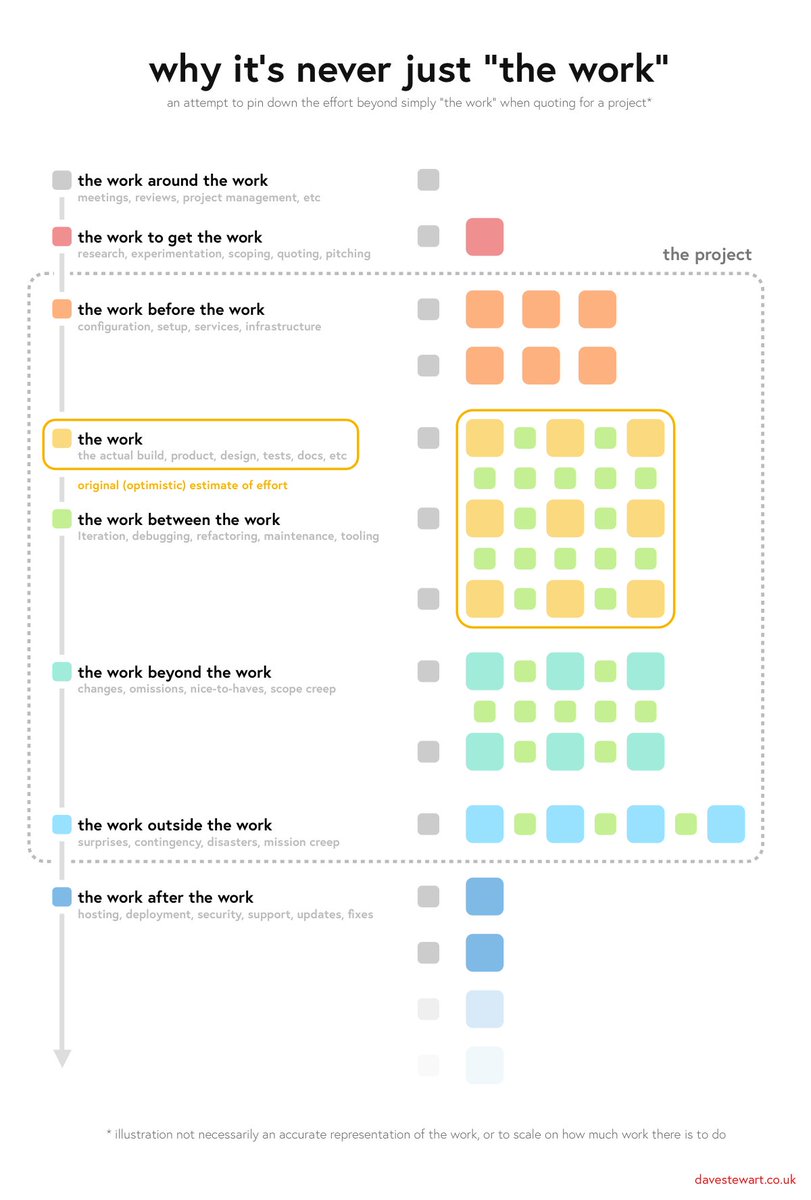
Why does every project feel like it's never delivered on time based on initial estimates?
Dave Stewart explains the hidden work within the work in an excellent visual.
The entire post can be found at davestewart's blog post "the work is never just the work"
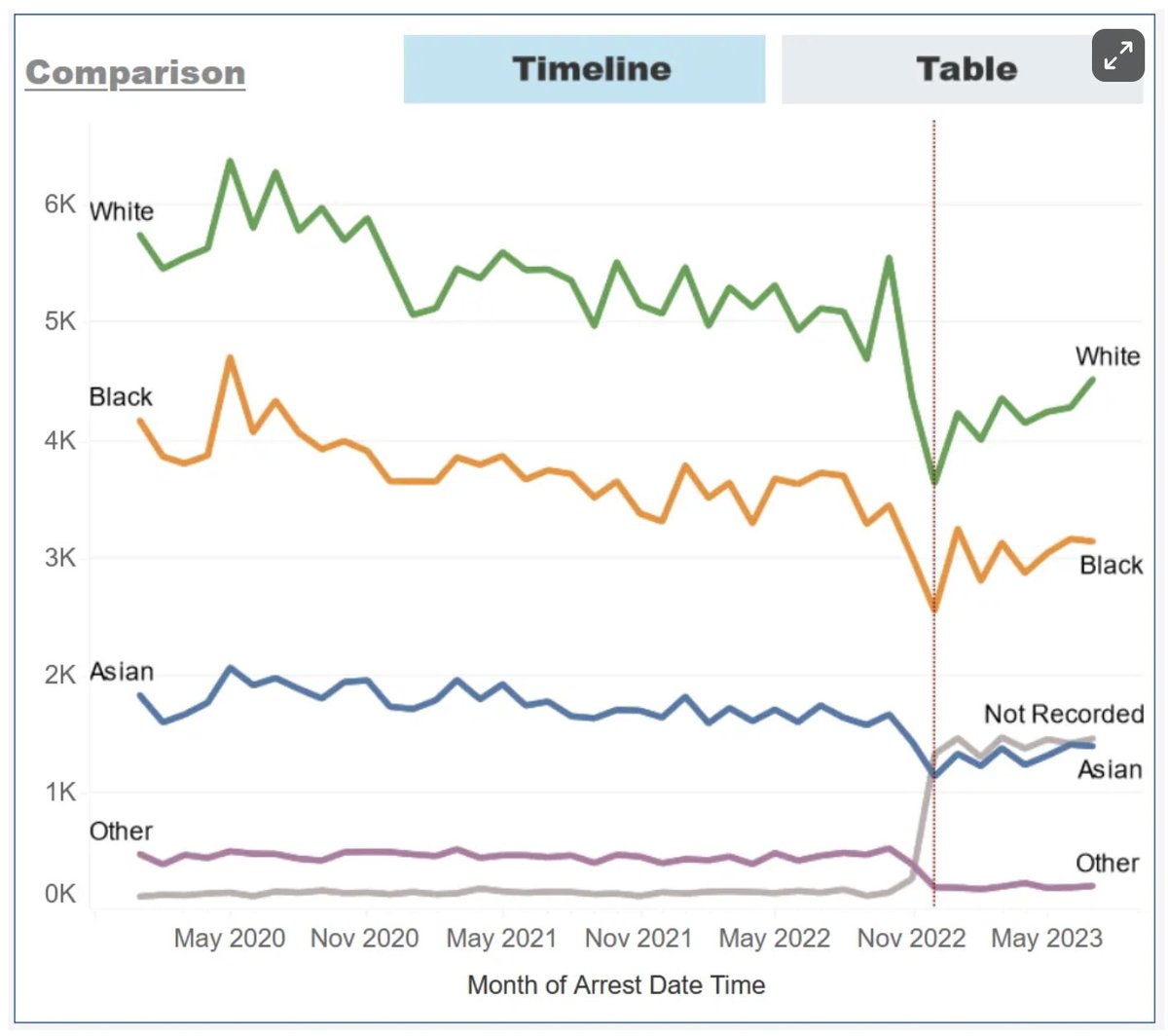
Since the Met Police launched its new IT system 'Connect' in November 2022, arrests have *fallen* by 10% and charges have collapsed by 50%.
Anecdotally, the software is so bad that some police officers are avoiding charging people simply so they don't have to use it.
(1/2)
Despite the hype, AI helpers could make you worse at your job.
For @Brain_Facts_org I spoke with @nunuska, @YongJinPark5, and @histoftech about automation bias, and how it can entrench the race and gender biases built into AI models.
https://t.co/NXWSsxaiGs