Omnia Agent is live on @ProductHunt today 🚀
Every day it reads your AI visibility data, picks the projects most likely to get your brand into AI answers, and starts working on them.
You just review and give the green light while petting your cat 🐈
https://t.co/HjmiIQUlev
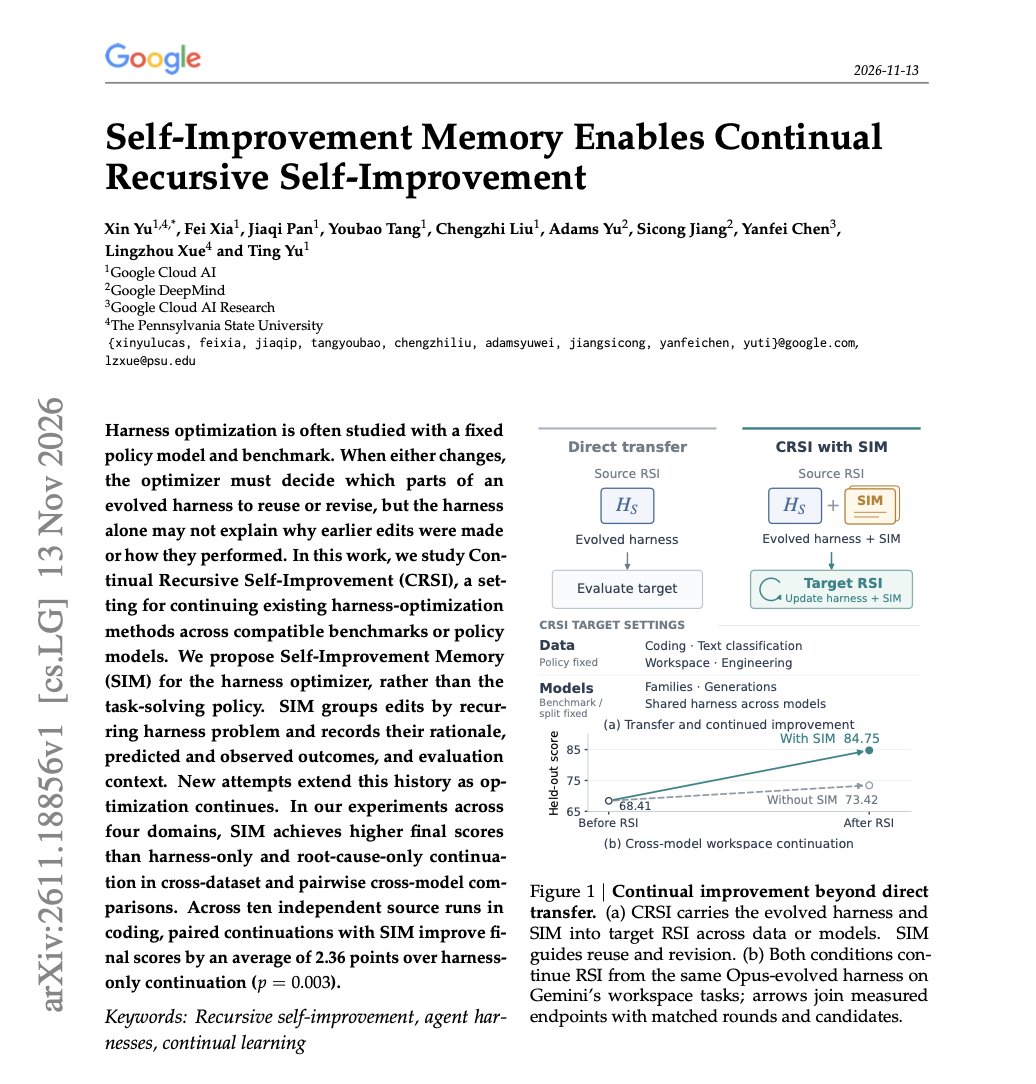
Brilliant paper from Google on RSI.
(bookmark it)
Recursive self-improvement (RSI) lets an optimizer agent improve an agent harness on its own. It reads failure traces, edits the prompts, tools and completion checks, and keeps whatever scores better on a benchmark.
This works until the model underneath changes. A harness evolved on Claude Opus, moved to Gemini, scored below Gemini's plain starting harness in every domain Google tested.
When the harness moves to a new model, the only thing carried over is the evolved harness code, meaning the prompts, checks and rules the optimizer added. The record of how each piece got there stays behind, including which failure it targeted and whether it fixed that failure when tested.
So the optimizer working on the new model inherits a set of changes with no reasons attached. It ends up retrying experiments that already failed, or removing fixes it doesn’t understand.
Google's fix is Self-Improvement Memory (SIM), a log kept for the optimizer itself. Each entry is a recurring problem, like an agent declaring a task done before its commands ran, and every fix attempted under it stores:
1. The edit and the reasoning behind it
2. The tasks it was predicted to fix, written down before testing
3. The tasks it actually fixed, failures included
4. The model and benchmark it was tested on
The whole log goes into the optimizer's prompt every round, and new attempts get appended as optimization continues.
The paper shows the difference on one inherited check that stops the agent from finishing early. With SIM, the optimizer read why the check existed and extended it.
Without SIM, it rewrote the same check four times, twice to fix deadlocks it had created itself.
On the Opus-to-Gemini workspace tasks, the run with SIM improved about 3x more from the same starting score. It also finished ahead in 9 of 10 independent coding runs.
The paper is at https://t.co/ZLdo7FK7qk
I also wrote an article on a related idea, covering how to make an agent harness diagnose its own failures.
It's built on @Cometml's Opik, which is 100% open source. It goes beyond reading trace logs to finding why a failure happened and stopping it from recurring.
That diagnosis step produces the kind of root causes SIM stores.
The article is quoted below.
An engineer on our team took a brand-new open-source product from 7.7% to 50.3% of AI answers in its niche. In 3 months.
#1, ahead of OctoPrint, Mainsail, Fluidd and Manyfold.
His part: 5 to 10 minutes a day approving. Omnia Agent did the rest.
5 lessons 🧵
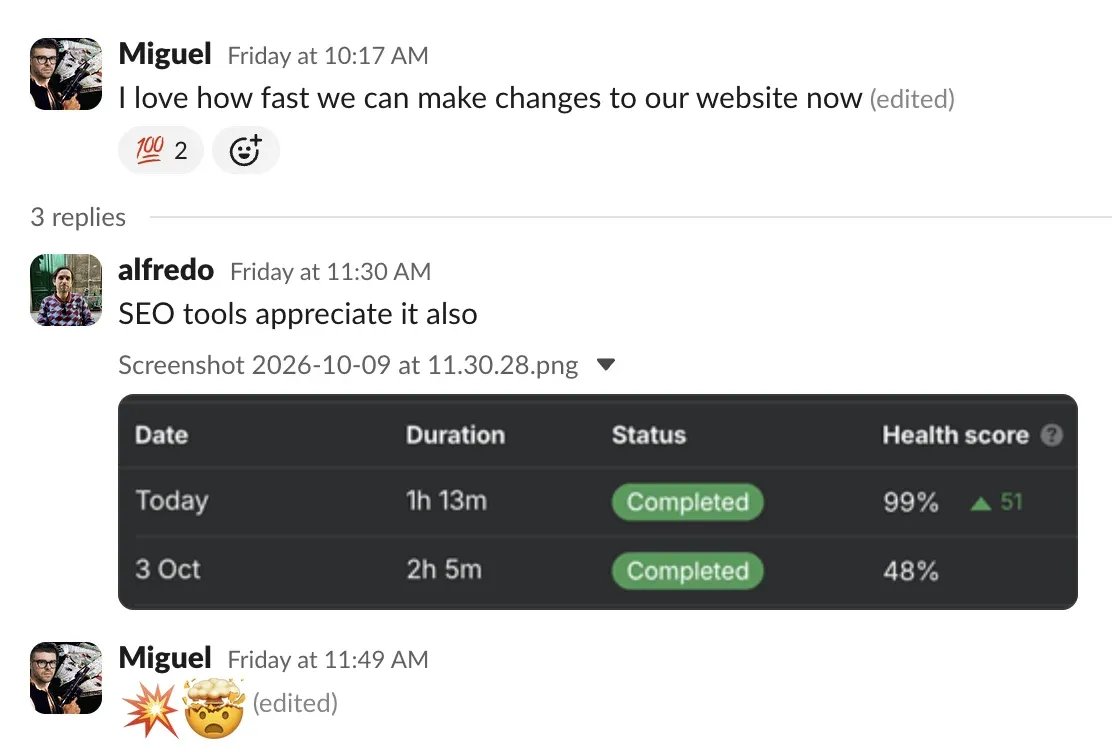
We migrated @useomnia ~800 page multi-language marketing website from @webflow to @astrodotbuild in a single day, improved our SEO/AEO dramatically and allowed for faster changes through agents. Here's the skill we used: https://t.co/XGBKxn5Wrh
@dotmapai@useomnia@webflow@astrodotbuild Both things, plus rendering speed, plus more lightweight images (not that this wouldn't be achievable with Webflow) but was trivially done by agents across the site on @astrodotbuild
@abdul_quadir_a@useomnia@webflow@astrodotbuild Both devs and marketing people, they are versed in the use of agents and it only took them a bit to get used to reading markdown, and use GitHub. Nevertheless, if need be, we could slap a visual editor on top, like @CloudCannon or @storyblok.
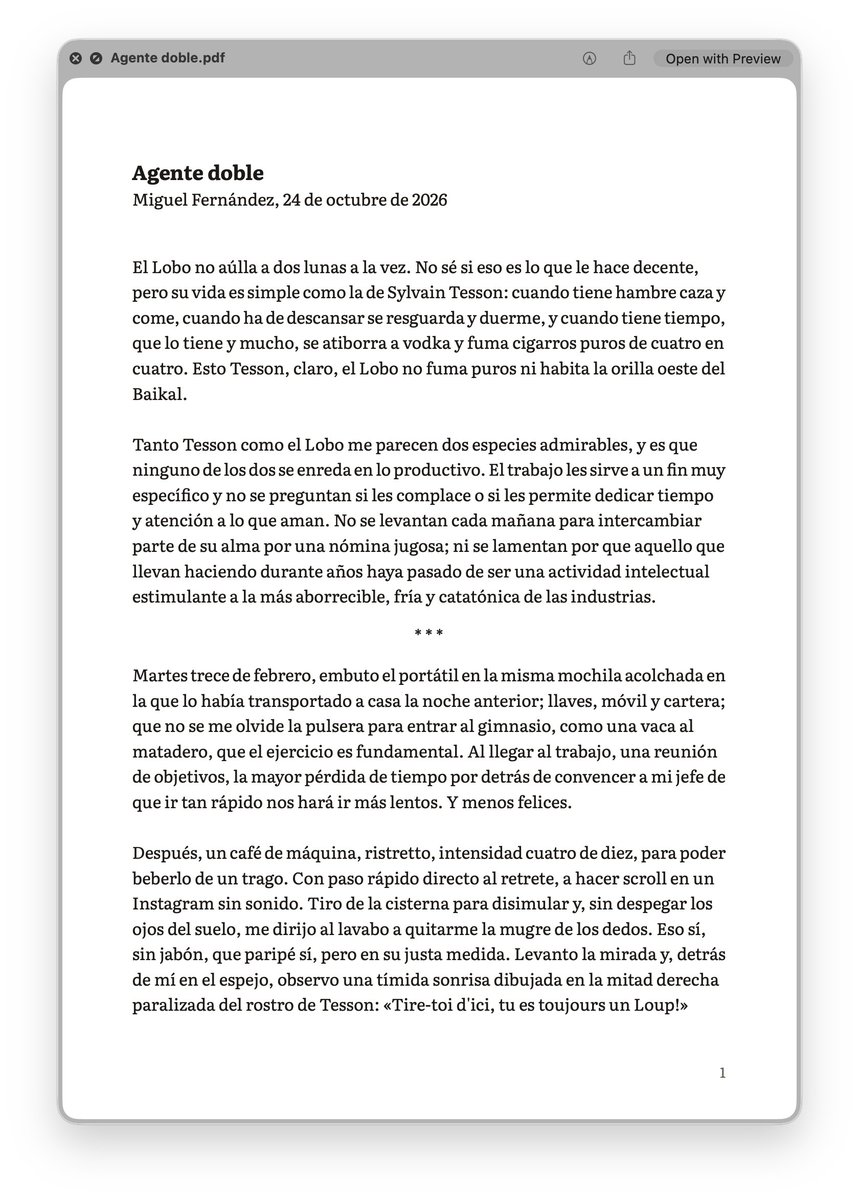
@esmaldan@elenayuscula@useomnia Publicaré un blogpost (y una sorpresa que no quiero desvelar) para poder hacer migraciones similares desde CMSs como Webflow a static site generators como Astro, o Hugo.
Stay tuned!
@esmaldan@elenayuscula de tal manera que estos se usen consistentemente. El resultado:
* Más rápido trabajar los contenidos con agentes como el Agente de @useomnia
* Más fácil de cambiar el diseño y la arquitectura de información del sitio
* Mejor SEO
* Mejor visibilidad en IA
@ThisIsFernandez@ProductHunt showing why a project was picked would make that approval more useful. then you can judge the link between a visibility gap and the work being proposed
Omnia Agent is live on @ProductHunt today 🚀
Every day it reads your AI visibility data, picks the projects most likely to get your brand into AI answers, and starts working on them.
You just review and give the green light while petting your cat 🐈
https://t.co/HjmiIQUlev
We dogfood at @useomnia. Mine is my wife's architecture studio.
3 days after shipping Project Suggestions, Omnio executed them:
→ fixed URLs, schema, structure
→ rewrote copy to match prompt semantics
→ new post where we were invisible
→ pitched a top-cited outlet