January 2, 1974
On the 15th anniversary of the Cuban Revolution, Fidel Castro paid tribute to his fallen comrade, Ernesto “Che” Guevara, declaring:
“Che, we dedicate to you this 15th anniversary of our Revolution.”
A powerful reminder of the bond between two revolutionaries and the enduring legacy of Che Guevara.
#copied
Heb weer een nieuwe af voor @MediaMondoNL. Dit keer een gesprek met Ana Wijnen, over #Bolivia waar zij vandaan komt en het verzet van het dappere #Boliviaanse volk, de historische achtergronden van de huidige onlusten en wat dit met ons te maken heeft:
https://t.co/8hk0MGUxbX
THE PEOPLE OF BOLIVIA ARE REVOLTING!
Want to know more about the background of the current uprising? Check out the new interview on our channel, a conversation with Ana Wijnen, a #Bolivian literary scholar who lives and works in the Netherlands:
https://t.co/voCkzWYQ3A
#bolivia
When Austria and Germany colluded to screw over Algeria. This match has everything! Racism, collusion, underdog victory!
#Fifaworldcup
The Worst World Cup Match in History https://t.co/rPR0wTieb9
After all the sacrifice, despite the genocide, ignoring the propaganda, the Palestinian Resistance keeps hunting child killing israeli terrorists in Gaza.
Bolivia's union confederation has forced the government to withdraw all privatization and anti-land reform laws, in exchange for ending the general strike. Agreement signed.
However (big however), most affiliated unions state that they want to maintain strike until govt resigns.
Capitalism Looted The World: Fidel Castro
Fidel Castro gives an interview to Epigmenio Ibarra of the Mexican television channel on July 20, 1991, after attending the First Ibero-American Summit in Guadalajara, Mexico.
In the one-hour interview, Castro, the Cuban revolutionary and nationalist leader of Cuba from 1959 to 2008, serving as prime minister from 1959 to 1976 and president from 1976 to 2008, argued that Western capitalism had looted the world. Unlike socialism, which he described as a system rooted in human prosperity, true freedom, and collective progress, Castro said capitalism had produced environmental destruction, mass inequality, unchecked consumerism, and an inability to solve humanity’s greatest crises, from poisoned oceans to the endless exploitation of resources.
Castro further insisted that socialism was not dying, but waiting to be reborn “like a phoenix from the ashes.” He believed humanity’s future depends on rational planning, education, healthcare, dignity, and sustainable living, rather than on endless consumption and corporate greed. “It is capitalism,” he argued, “that is in an irreversible crisis.”
Meanwhile, with the capitalist West, specifically the US, strangling Cuba with imperial-driven sanctions, Castro’s argument that capitalism is killing the world holds even after nine years of his death.
✍ Analysis - Iran-US war-ending MoU codifies Tehran's strategic leverage, cementing its status as regional superpower
By Press TV Strategic Analysis Desk
https://t.co/wCg8Z2Z8Um
The revolutionary momentum across the African continent continues to deepen as the Alliance of Sahel States (AES) advances bold programs centered on sovereignty, social welfare, regional integration, and economic independence. Far from collapsing under the pressure of sanctions, diplomatic isolation campaigns, media hostility, or violent terrorist attacks the AES Confederation and its allies continue to consolidate an alternative political vision rooted in dignity, self-determination, and Pan-African cooperation.
In Niger, the government has intensified its efforts to address housing inequality and improve living conditions for ordinary citizens through new rent control measures and ambitious public housing construction projects. Authorities recently reaffirmed their commitment to regulating abusive rent prices while accelerating the construction of the “Cité de la Refondation,” a major state-led housing initiative expected to deliver over 1,000 affordable housing units to Nigerien families. These policies reflect a growing political orientation within the AES: the state must actively intervene to protect citizens from speculative economic practices and guarantee access to basic social needs such as housing.
At the same time, Niger continues to strengthen its economic sovereignty through strategic control of its natural resources. In a major development, Niger secured a series of new oil agreements with China following almost a year of negotiations between the 2 nations. Foremost among these deals is the relaunch of 2 oil production projects backed by a $1 billion investment. This breakthrough is part of a broader AES push to reclaim national authority over extractive industries long dominated by foreign interests. Unlike the unequal arrangements historically imposed by Western corporations, the new orientation pursued by AES member states seeks to ensure that Africa’s immense natural wealth directly benefits African populations through industrial development, job creation and national revenue generation.
This broader strategic shift is also reflected in Mali’s recently unveiled “Vision Mali 2063” development strategy, a long-term national plan which openly embraces geopolitical realignment away from Western dependency. The document reportedly prioritizes sovereign development, regional integration, strategic autonomy, and strengthened South-South cooperation. Rather than conforming to neoliberal economic prescriptions imposed by international financial institutions, Mali’s leadership is articulating a model centered on national planning, state capacity, and African-controlled development trajectories.
The growing influence of the AES is now extending beyond the Sahel itself. In the Horn of Africa, Somalia has announced plans to adopt aspects of the “Burkinabè Model” as part of a national security restructuring effort. Burkina Faso’s recent security doctrine—which combines aggressive territorial defense, popular mobilization, and national sovereignty—has increasingly attracted attention from African states searching for alternatives to decades of failed externally managed security frameworks. The fact that Somalia is studying this model demonstrates the widening continental resonance of the Sahelian revolutionary experience.
Within Burkina Faso itself, the revolutionary government continues to emphasize social cohesion and national reconstruction. In Baporo, authorities launched a prisoner rehabilitation initiative rooted in restorative justice principles, presenting what officials described as a more “human face” to detention. The initiative reflects a broader effort to redefine governance not merely through coercive state power, but through social reintegration, collective responsibility, and national healing amid ongoing security challenges.
Meanwhile, regional alliances continue to evolve despite mounting pressure from ECOWAS and Western-aligned actors. The AES Confederation and Togo have significantly strengthened cooperation in the domains of trade, security, and diplomacy. This growing partnership highlights the increasing attraction of the AES project across West Africa, even among states that formally remain within ECOWAS structures. As economic corridors, security cooperation, and political coordination deepen between AES countries and neighboring states, the vision of a more sovereign and integrated West Africa continues to gain momentum.
Together, these developments reveal a broader continental transformation underway. From housing and infrastructure to security doctrine and geopolitical realignment, African states within and around the AES Confederation are increasingly asserting the principle that Africa’s future must be shaped by African priorities rather than external dictates.
In Defense of Communism: Russian Communist Workers Party - "Mertens vs Martens" (On the role of the Workers Party of Belgium- PTB) - https://t.co/XmhyCm7FOn
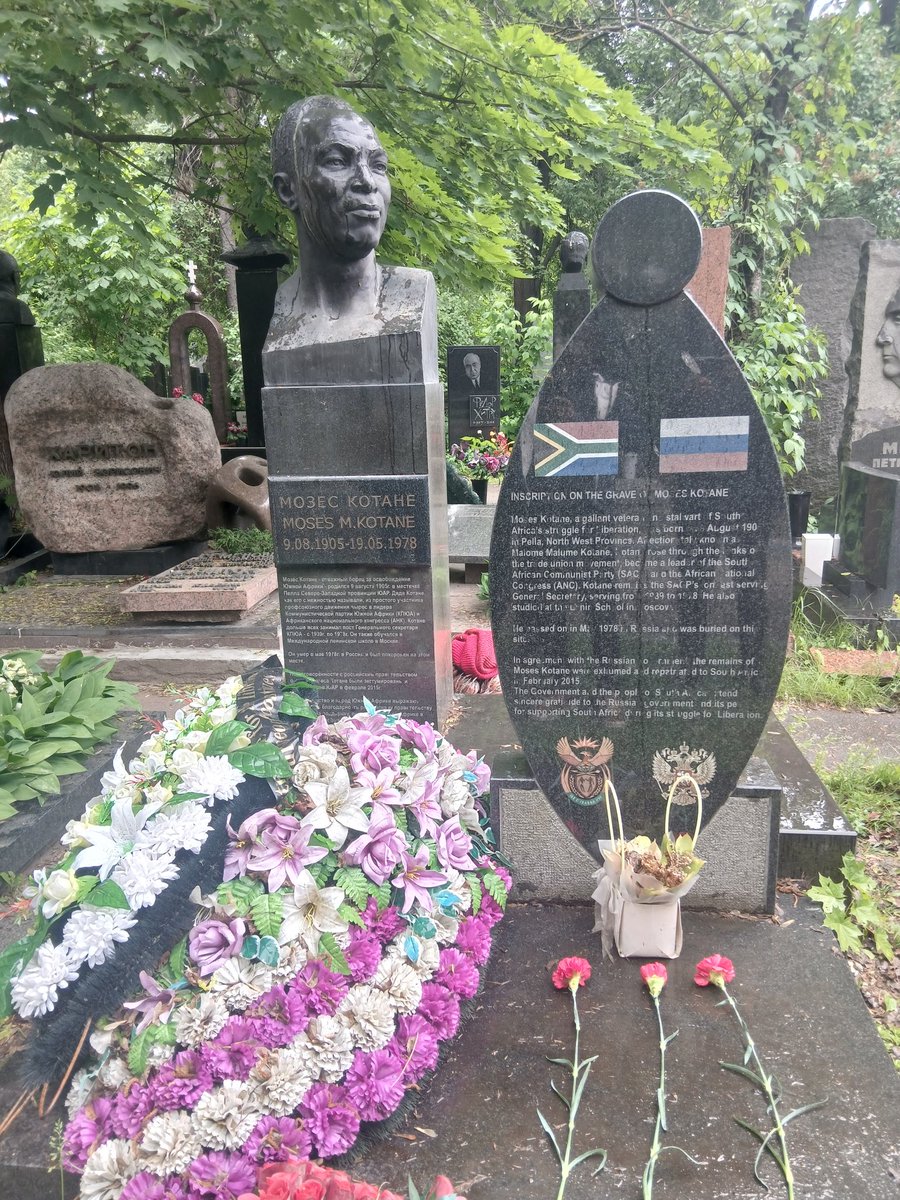
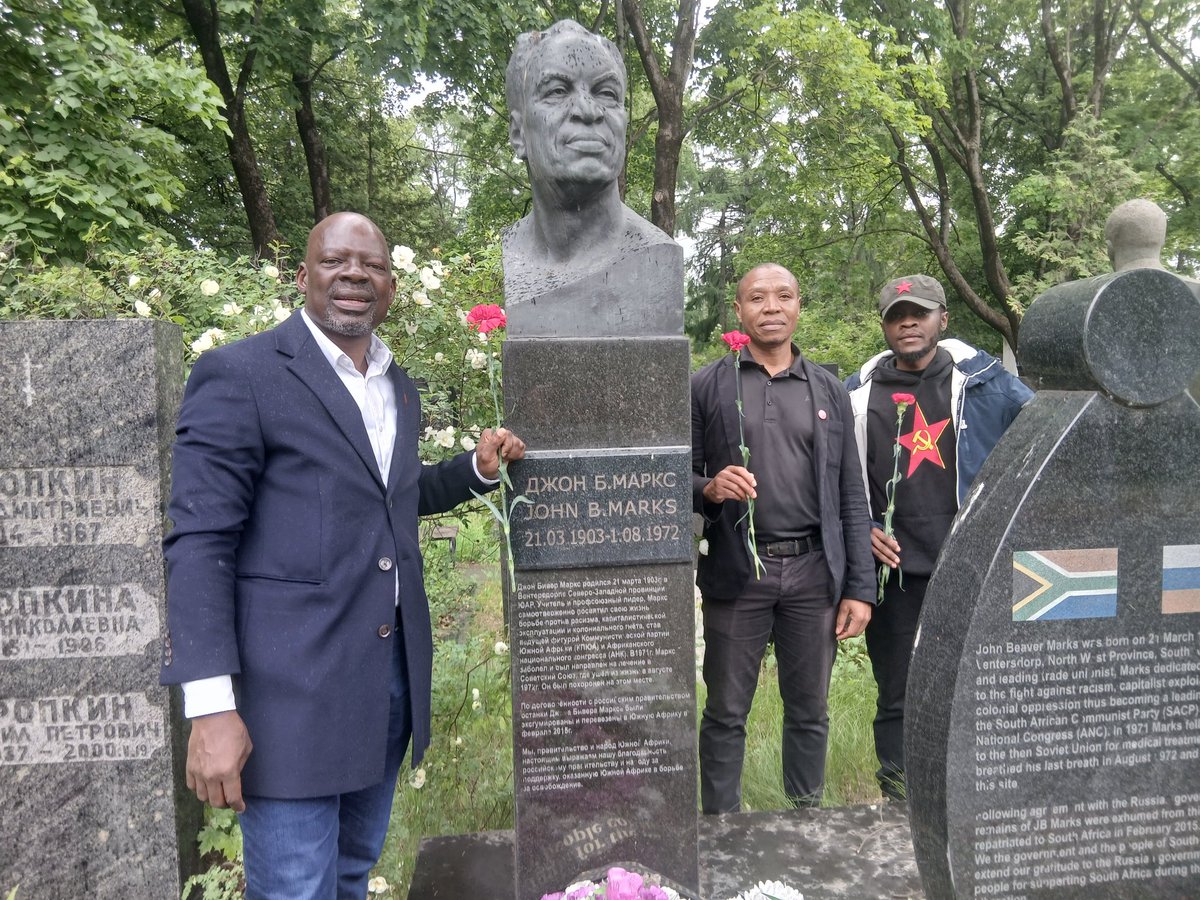
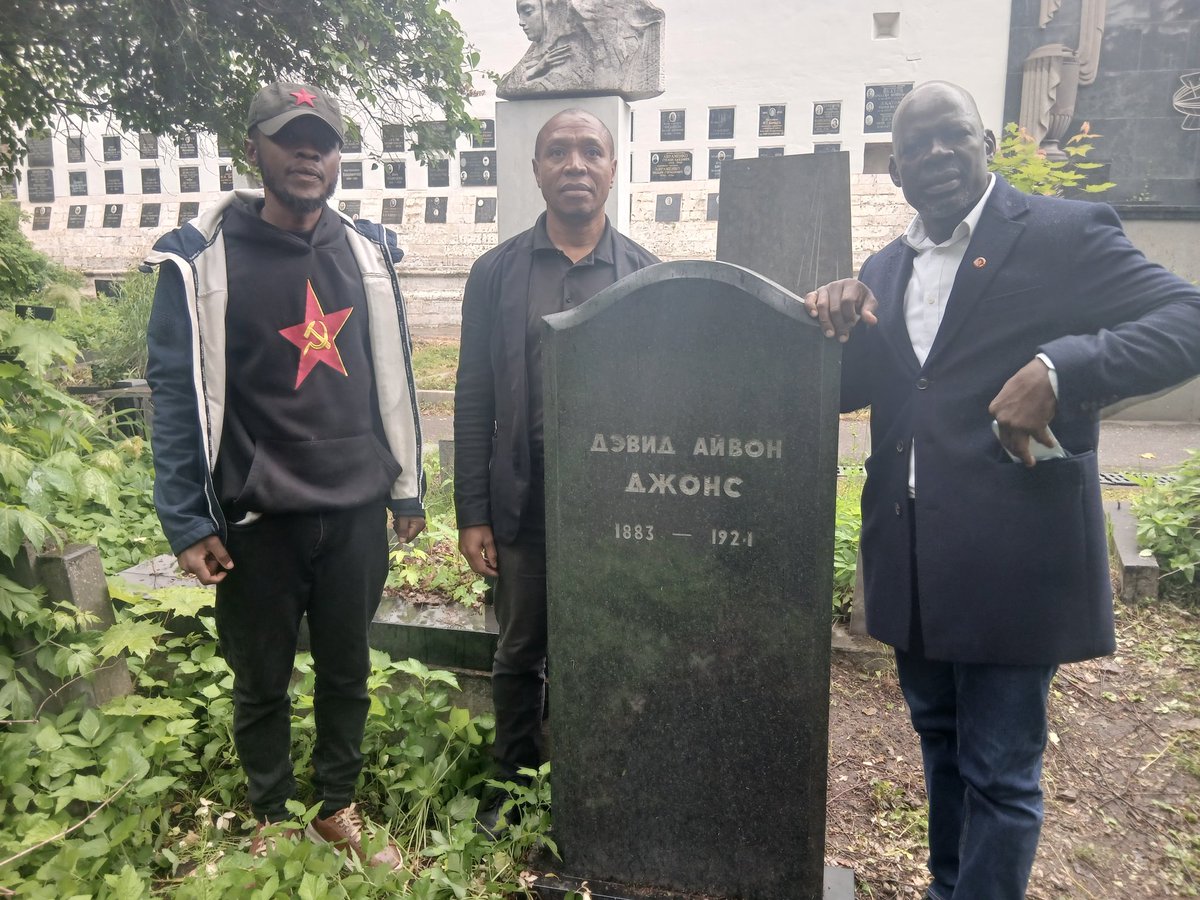
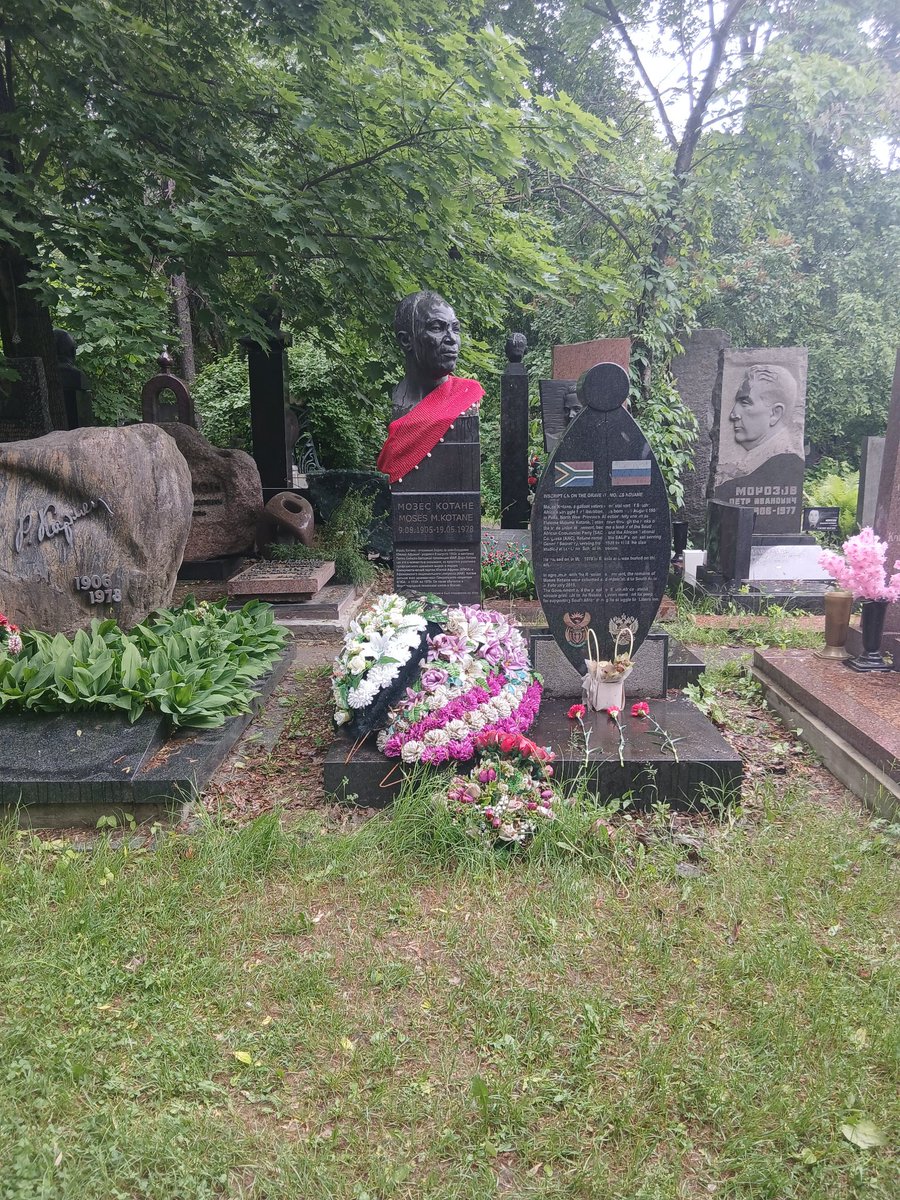
The National Chairperson cde @MwaivuKaluka together with the General Secretary of @SACP1921 cde Solly Mapaila and the General Secretary of the @CPSwaziland cde Keneth Kunene laid a wreath at the Grave of J.B Marks, M. Kotane and D. Jones former leaders of the @SACP1921 in Moscow.
«It is better to sacrifice everything, than to live in slavery!» –Ho Chi Minh
🚩🚩🚩
✴️ Another 'Lenin mine' under the foundation of the world colonial system
On February 3, 1930, the Communist Party of Vietnam (CPV) was founded. And here the Bolsheviks "planted a mine" under the foundation of the world colonial system.
The founder of the Vietnamese Communist Party, Ho Chi Minh, highly valued the role of Marxism-Leninism in the national liberation movement of the colonial countries.
In his article «Leninism and the Liberation of Oppressed Peoples» Ho Chi Minh wrote:
"Lenin was the first to decisively condemn all the prejudices against colonial peoples that had become ingrained in the blood and flesh of many European and American workers. Lenin's theses on the colonial question, approved by the Comintern, caused a whole revolution in all oppressed countries.
Lenin was the first to understand and emphasise the colossal importance of a correct resolution of the colonial question for the world revolution. At all congresses of the Comintern, the Profintern, and the Communist Youth International, the question of colonies was one of the first places.
Lenin was the first to understand and appreciate the enormous importance of involving colonial peoples in the revolutionary movement. Lenin was the first to understand that without their participation, social revolution was unthinkable.
Lenin, with his characteristic insight, understood that in order to work successfully in colonial countries it was necessary to make full use of the national liberation movement developing there, and that by supporting this movement the world proletariat was acquiring new powerful allies in its struggle for social revolution.
All representatives of the colonies who attended the Comintern congresses will never forget how much attention Lenin, the leader and comrade, paid to them, how he was able to delve into the most complex, purely local working conditions. Since then, each of us has had enough time to see dozens of times how right he was in his judgments and how valuable his instructions were.
Only thanks to Lenin's skillful approach to colonial issues was it possible to stir up the most backward masses of the peoples of the enslaved countries. Lenin's tactics in these issues, carried out by the communist parties of the whole world, have drawn and are drawing into the communist movement all that is best and most active in the colonies.
Lenin's solution to the most complex national question in Soviet Russia, its practical implementation by the Communist Party, is the most powerful tool of propaganda in colonial countries.
For all oppressed and enslaved peoples, Lenin is a turning point in the painful history of their disenfranchised existence, a symbol of a new, bright future."
Ho Chi Minh