The UK public celebrates a genuine national treasure on his centenary, which coincides with a landslide of council votes for a political party that rejects net zero, wants to defund the institutions that Attenborough's life has enriched, and doesn't care about nature. Go figure.
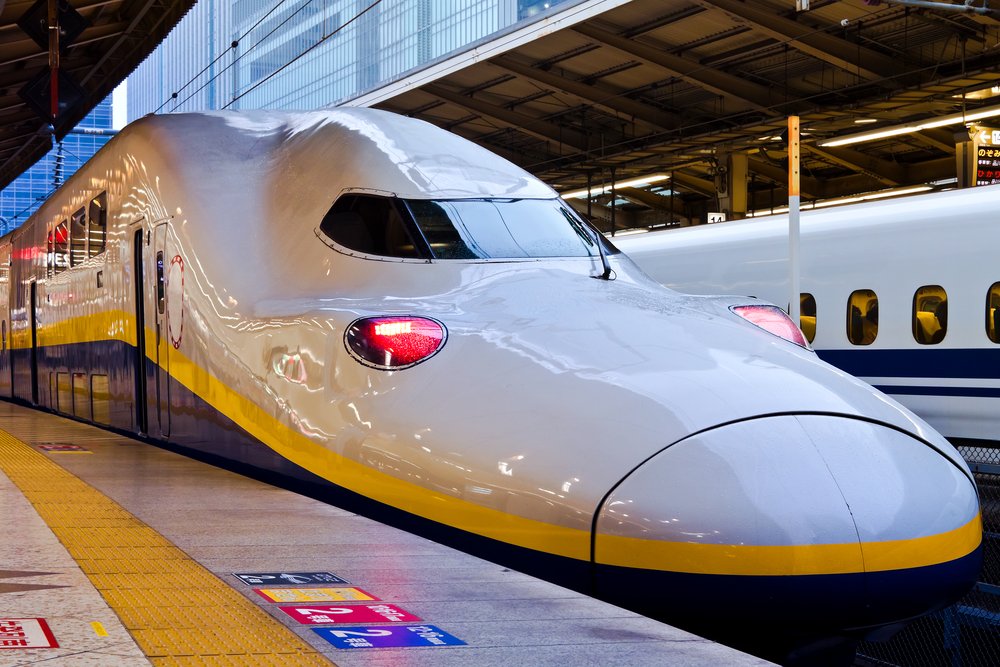
The Japanese railway privatization of 1987 stands as one of the most devastating defeats ever dealt to statist transportation mythology. The government split the bloated Japan National Railways into seven regional companies, sold them off, and watched private ownership transform a bankruptcy-bound disaster into the world's most efficient rail system.
JNR hemorrhaged money for decades before privatization. By 1987, the state railway carried debt equivalent to $200 billion in today's money while delivering mediocre service plagued by strikes and inefficiency. Politicians treated it as a jobs program rather than a transportation service. The predictable result: chronic losses, deteriorating infrastructure, and customer service that reflected government monopoly arrogance.
Private ownership changed everything overnight. The new JR companies slashed operating costs by 40% within five years while dramatically improving service quality. JR East alone now generates annual profits exceeding $3 billion. These companies invest billions in cutting-edge technology, maintain punctuality rates above 99%, and operate the world's most advanced high-speed rail networks. They achieved this without a single yen of operational subsidies.
The transformation reveals a core dynamic of transportation infrastructure: private companies must satisfy customers to survive, while government monopolies need only satisfy politicians. JR companies diversified into real estate, retail, and hospitality around their stations, creating integrated profit centers that cross-subsidize rail operations. Government railways never innovate this way because bureaucrats face no market pressure to generate returns.
Meanwhile, Amtrak burns through $2 billion in annual subsidies while delivering third-world service across most routes, and European state railways require massive taxpayer bailouts every few years to stay solvent.
📢MUSINSA TOKYO POP-UP STORE 2026
To those who follow and repost this post,
we'll immediately deliver a [Summary of Perks] you should check out before visiting 💌
Plus, one winner will be drawn to receive
a [MUSINSA Shopping Coupon worth 100,000 yen] as a gift 🎁
@Matt_Bedsole I live 5mins walk away from this street in Nakameguro. In my opinion, the architecture is awesome and feels real in an age of homogeneous aesthetic city buildings/suburbs
🇫🇮 After helping secure promotion to the Eredivisie this week, ADO Den Haag centre-back Diogo Tomas gave one of the all-time interviews.
✅ Smoking
✅ Swearing
✅ Referring to himself in the third person.
🗣️ "I AM WHO I AM."
Rachel Reeves should be very careful arguing only graduates should pay for their degrees
Would be a lot of cold pensioners without our generation’s taxes. I don’t make much use of the nuclear deterrent either
Education is a public good, not a commodity
BIG news for the @BeeNetwork!
The Government is backing it with £2.5 billion to become the UK’s first fully-integrated, all-electric public transport system by 2030. 🐝




![musinsa_japan's tweet photo. 📢MUSINSA TOKYO POP-UP STORE 2026
To those who follow and repost this post,
we'll immediately deliver a [Summary of Perks] you should check out before visiting 💌
Plus, one winner will be drawn to receive
a [MUSINSA Shopping Coupon worth 100,000 yen] as a gift 🎁](https://pbs.twimg.com/media/HE-ErsAWcAA1_8g.jpg)