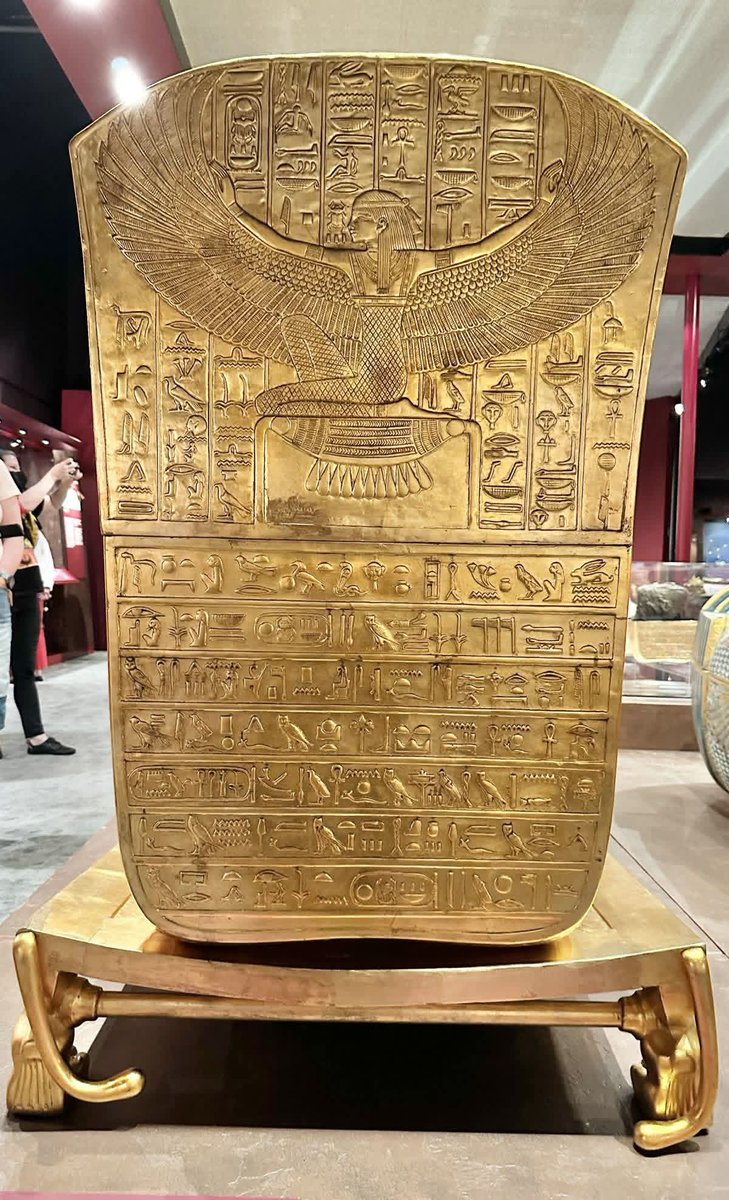
Displayed today within a museum setting, this gilded funerary stele originates from ancient Egypt and dates to the Late Period or early Ptolemaic era (c. 7th–3rd century BCE). Fashioned from hammered gold, its surface is densely engraved with hieroglyphic texts and sacred imagery. At the center, a winged goddess—most likely Isis or Ma’at—extends her wings in a protective gesture above the deceased, symbolizing divine shelter, rebirth, and cosmic order.
Below, carefully ordered lines of inscriptions invoke spells, names, and prayers intended to guide the soul safely through the afterlife. The precision of the engraving and the luminous material reflect both exceptional craftsmanship and profound religious belief. Encountering this object today evokes reverence and intimacy: a reminder that gold was not merely wealth, but a sacred substance associated with eternity, light, and the hope of resurrection beyond death.
#archaeohistories
@TheoryWiseOS Zone designs feel like there is someone walking every 5 yards and noting the mountain on horizon needs be 5 pixels larger and 2px to the left.
@SteveOnSpeed Keynote:
"What a TIME to be alive! Now we can live at least 11% longer.
This is but a precursor...
Introducing, the human immortality chip Snake V1.
A marvel of engineering.
You can que up immediately for $10,000 a pop"
@Natsu_of_Laguna@elonmusk@cristianoamon@Qualcomm It's already done with 5g. You've not been targeted yet or noticed.
6g will be more precise, activate individual neuron connections.
5 is like brain confetti