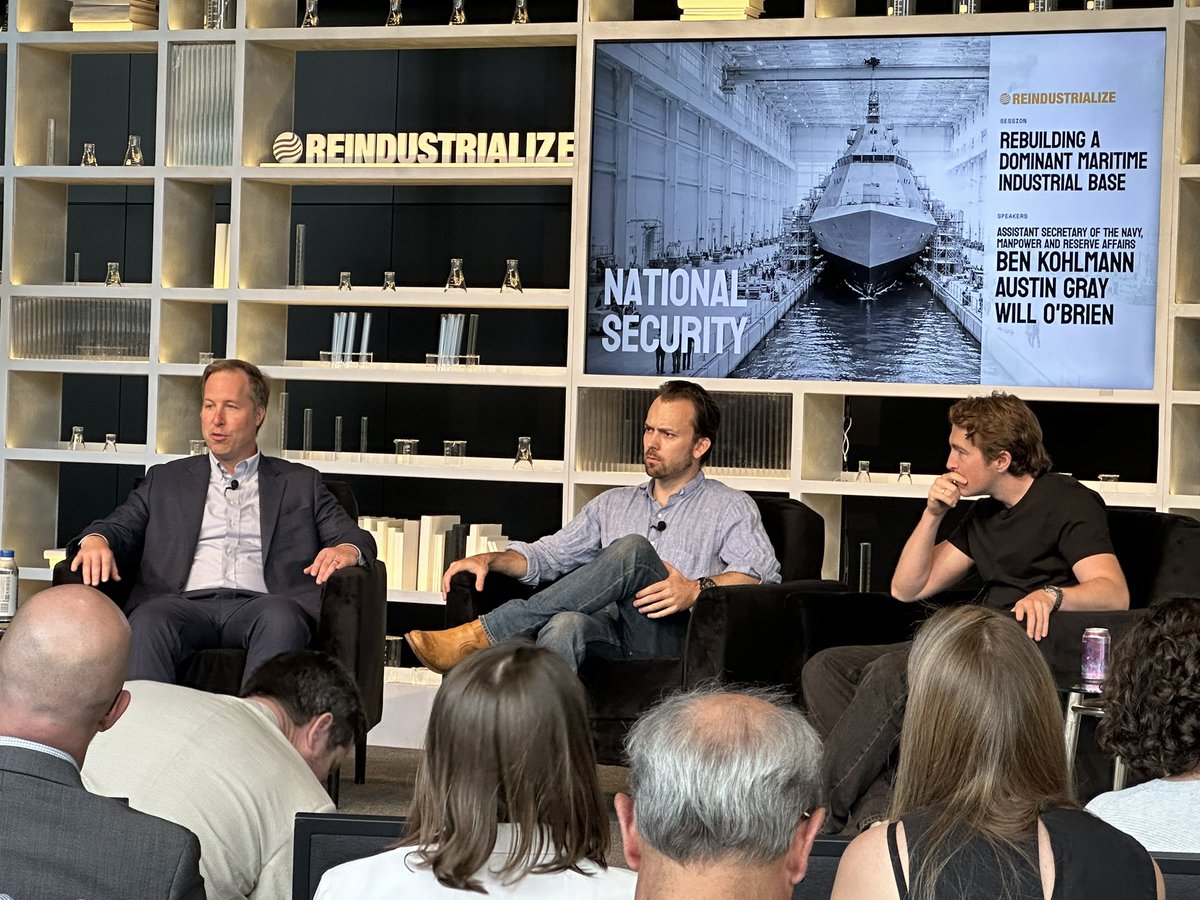
The biggest constraint on rebuilding America’s maritime industrial base is not steel, it’s talent.
Great discussion @reindsummit on workforce readiness, Project Patriot Pipeline, and connecting more Americans to the mission of strengthening our national security.
The 24th Marine Expeditionary Unit, designated Littoral Combat Force-24, deployed to SOUTHCOM, replacing the Iwo Jima ARG.
The Marine Air-Ground Task Force, with more than 1,300 Marines and Sailors, will operate from both shore-based nodes and aboard USS Fort Lauderdale. "Distinct from a standard Amphibious Ready Group/MEU deployment, LCF-24 is a purpose-built MAGTF engineered for distributed operations."
Since the carrier picture is largely unchanged compared to last week, this week's @thewarzonewire tracker highlights America's fleet of nine amphibious assault ships: https://t.co/gafKQAkLwA
The UConn basketball team took down Duke with a last-second 3-pointer to make the Final Four.
60 Minutes sat down with Hurley last season as he burned sage on the court, spritzed holy water on the net, and placed garlic bulbs under the bleachers. All of this to appease the basketball gods. https://t.co/6EDvg6Damr
Conor Neill on the 3 best ways to start a speech (most people get this wrong):
"I guarantee if you go to conferences, 19 out of 20 speakers will start in one of these ways: 'My name is Conor Neill. I'm from Tango, and this talk is about the latest trend in monitoring strategies.' But all of you are sitting with a piece of paper that already says who I am and what I'm going to talk about. By repeating what you already know, I'm giving a signal that it's time to get your BlackBerry out."
Conor explains the three best ways to start instead:
Third best: A question that matters to the audience.
"How do you phrase a problem that the audience faces in a question?"
Second best: A factoid that shocks.
"There are more people alive today than have ever died. Every two minutes, the energy reaching the earth from the sun is equivalent to the whole annual energy usage of humanity. Does that change how you think about energy?"
The best way: Start like you'd start a story to a child.
"How do we start a story to a child? 'Once upon a time.' And what happens when you say once upon a time? My daughter leans forward, gets ready to hear, engages. We were all trained as kids to know when a story's coming. We also know when a teacher is about to deliver a 40-minute boring lecture."
He explains the grown-up version:
"In business, you don't hear Jack Welch saying 'once upon a time.' Steve Jobs doesn't start his speeches with 'once upon a time.' So there's a grown-up way of saying it: 'In October, the last time I was in this room, there were 120 people here. I was having a conversation with one of the world's experts on public speaking and he said something to me that changed what I think about what's important in speaking.' Now I can pause for 30 seconds, and you want to know what he said."
Conor concludes:
"Stories are about people. They're not about objects. They're not about things. If you want to tell a good story about your company, don't talk about the software talk about the people who built the software. What they do. How they are. What's important to them. What they sacrifice."
Hello Professor Nichols,
You spent twenty-five years at the Naval War College. You taught the officers who would go on to run America's wars. Famously, you never served in any of them.
In February 2003, you were at your desk in Newport when you wrote this, about Colin Powell’s presentation to the United Nations: “There is only one thing to say about Secretary Powell’s presentation at the U.N.: If this doesn’t do it, nothing will.” You were confident. You were expert. You were wrong. You acknowledged this twenty years later in The Atlantic — the invasion was, in your own words, “one of the greatest geopolitical disasters in American history.”
You wrote that from the same institution you are now defending.
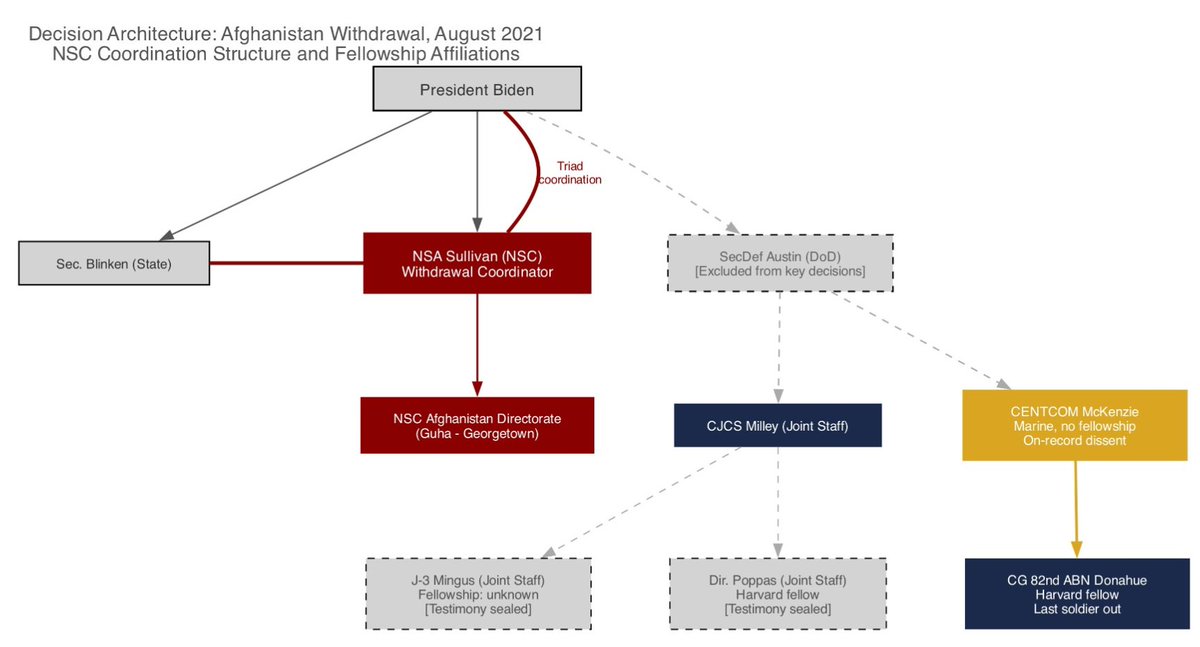
The Senior Service Colleges produced the officers who managed the Afghanistan withdrawal. General Mark Milley, Chairman of the Joint Chiefs. General Kenneth McKenzie, CENTCOM commander. On September 28, 2021, both testified before the Senate Armed Services Committee that they had recommended keeping 2,500 troops in Afghanistan.
The recommendation was not followed. They did not resign or say a word publicly. Then 13 American service members died at Abbey Gate on August 26, 2021. Only after that did they testify.
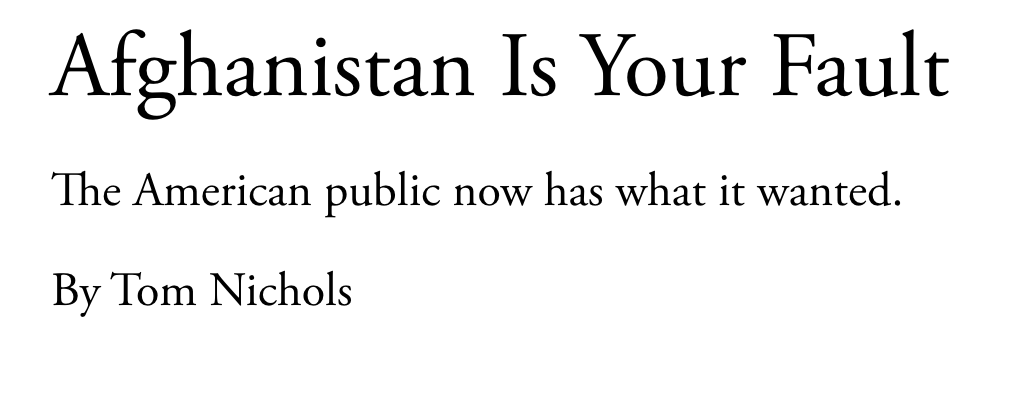
Your response, in The Atlantic, August 16, 2021: “Afghanistan Is Your Fault.”
Not the generals your institutions trained and credentialed. Not the curriculum that built the career-preserving, NSC-deferring officer class that drove those decisions to their conclusion. The American public, with our short attention span and our SUVs.
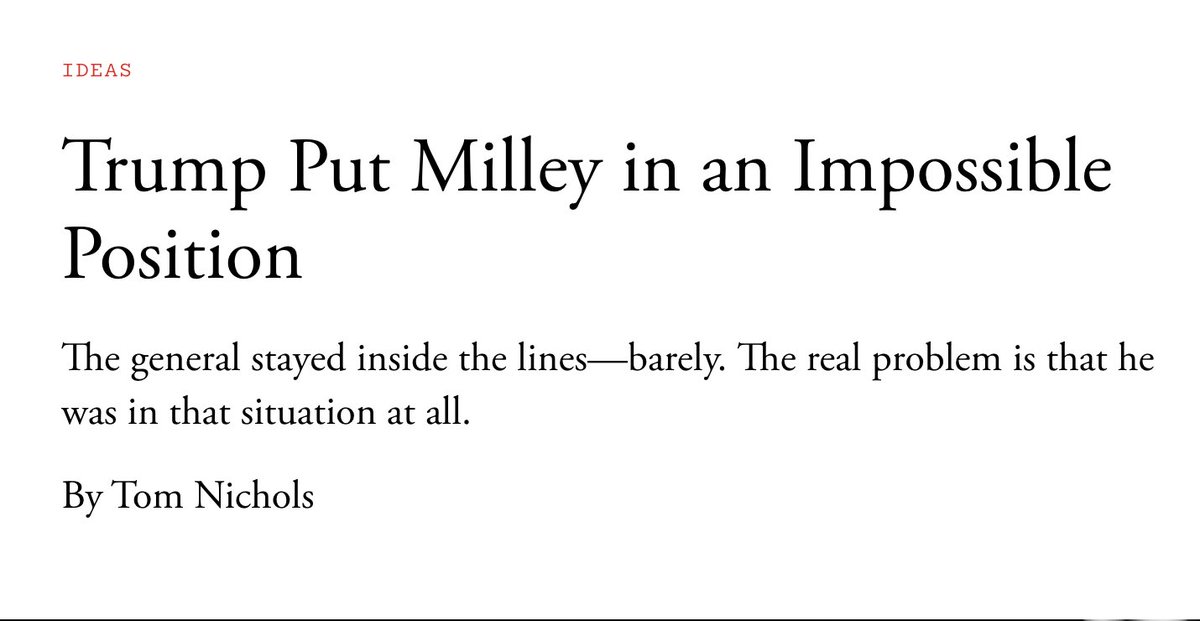
General Milley, whose career your institution shaped, secretly called his PLA counterpart twice, October 30, 2020 and January 8, 2021, and assured him the US would not strike China, and that Milley would warn him personally if an attack were ordered. You wrote “Trump Put Milley in an Impossible Position.”
That's not all. Secretary Austin concealed a cancer diagnosis from the White House and Congress for weeks while incapacitated; the DoD Inspector General documented it. At his farewell address in September 2023, Milley publicly called his former commander-in-chief a “wannabe dictator.”
You found none of this worth a column.
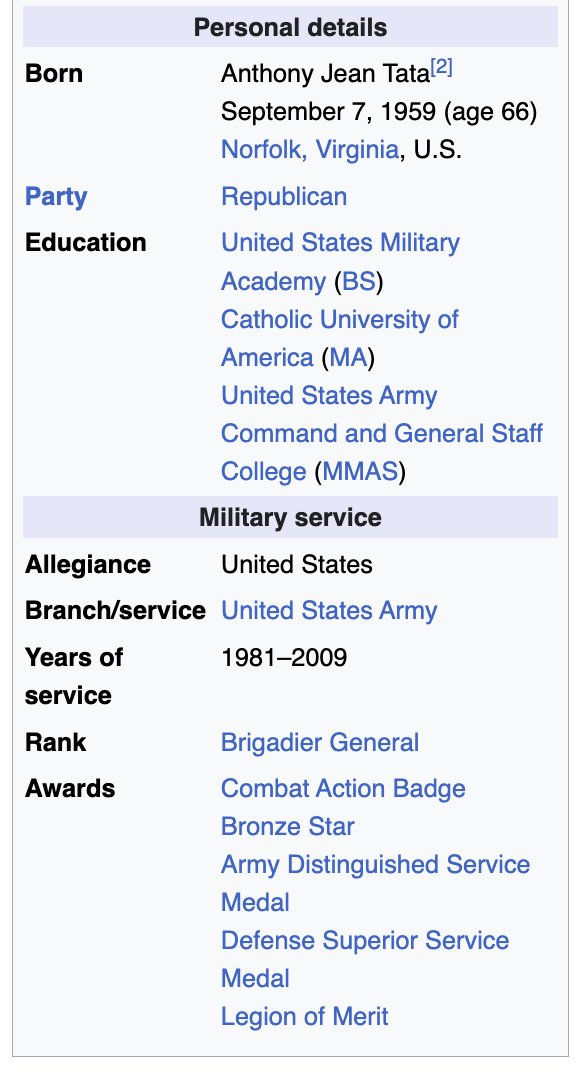
Anthony Tata is a retired Brigadier General. He commanded forces in Afghanistan and Iraq. He led soldiers in both wars. And now he has been asked to conduct a 90-day curriculum review of the Senior Service Colleges. Your objection is that he lacks the credentials for the job.
You wrote a whole book about credentials. The foundational knowledge of the average American is, in your assessment, “plummeting to aggressively wrong.” Institutions must be insulated from the ignorant. Expertise must not be questioned by those who haven’t earned it.
The men who earned your institution’s credentials - over twenty-plus years of your tenure - presided over two of the longest military failures in American history. They managed those failures in line with everything the War Colleges taught them: subordinate military judgment to civilian direction, preserve the relationship, testify about it later. They retired with honors.
That is what "expertise" means to you.
The question Pete Hegseth is asking isn't whether the War Colleges have credentials. It's whether the credentials mean anything. After twenty-five years on your faculty training generals who only know how to lose war, Professor Nichols, you are the wrong man to answer that.
Periscope footage of a US Navy Submarine torpedoing the Iranian Frigate Dena off the coast of Sri Lanka.
The Mk. 48 Torpedo’s 650 pound warhead can be seen detonating under the Iranian Frigate’s stern.