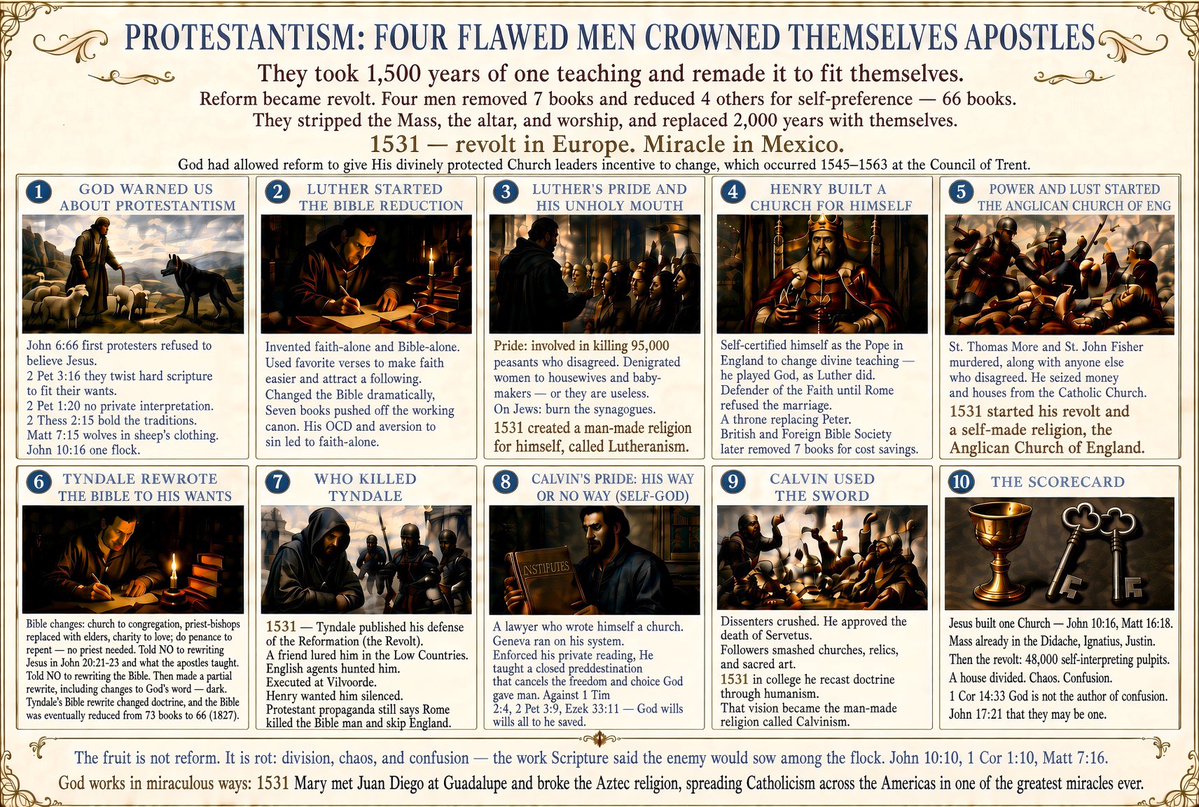
God showed 17 times in the OT: you get to the King through the Queen. Daily, true, Disney-like stories of Mary’s supernatural visits bringing the world to Jesus
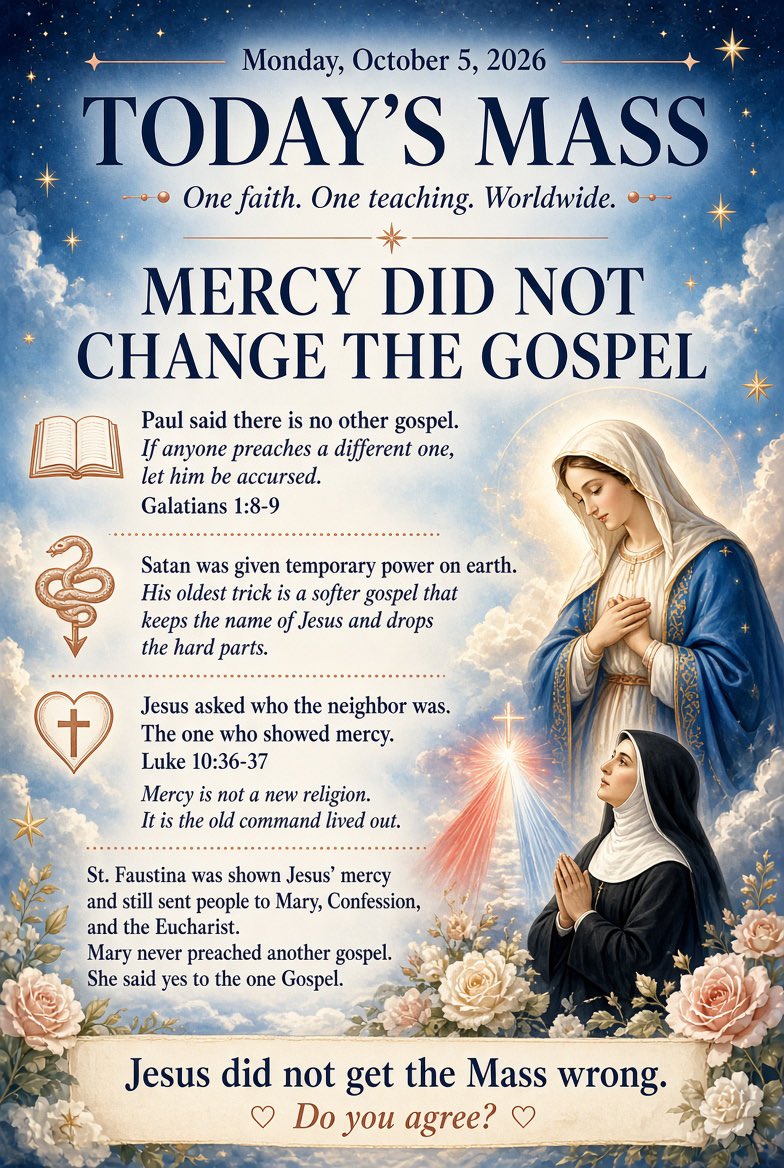
Today’s Mass divinely protected from protester self-serving changes: 🙏
Monday, October 5, 2026 — Jesus’ Church.
One faith. One teaching. Offered in unison at 400,000+ Catholic churches.
*Paul said there is no other gospel. If anyone preaches a different one, let him be accursed. Galatians 1:8–9
*Satan was given temporary power on earth. His oldest trick is a softer gospel that keeps the name of Jesus and drops the hard parts.
Jesus asked who the neighbor was. The one who showed mercy. Luke 10:36–37
Mercy is not a new religion. It is the old command lived out.
St. Faustina, whose memorial it is today, was shown Jesus’ mercy and still sent people to Mary, Confession, and the Eucharist. Mary never preached another gospel. She said yes to the one Gospel.
Holy Mary, Mother of Mercy, pray for us.
#Catholic #Protestant #Christian #Galatians1 #Faustina
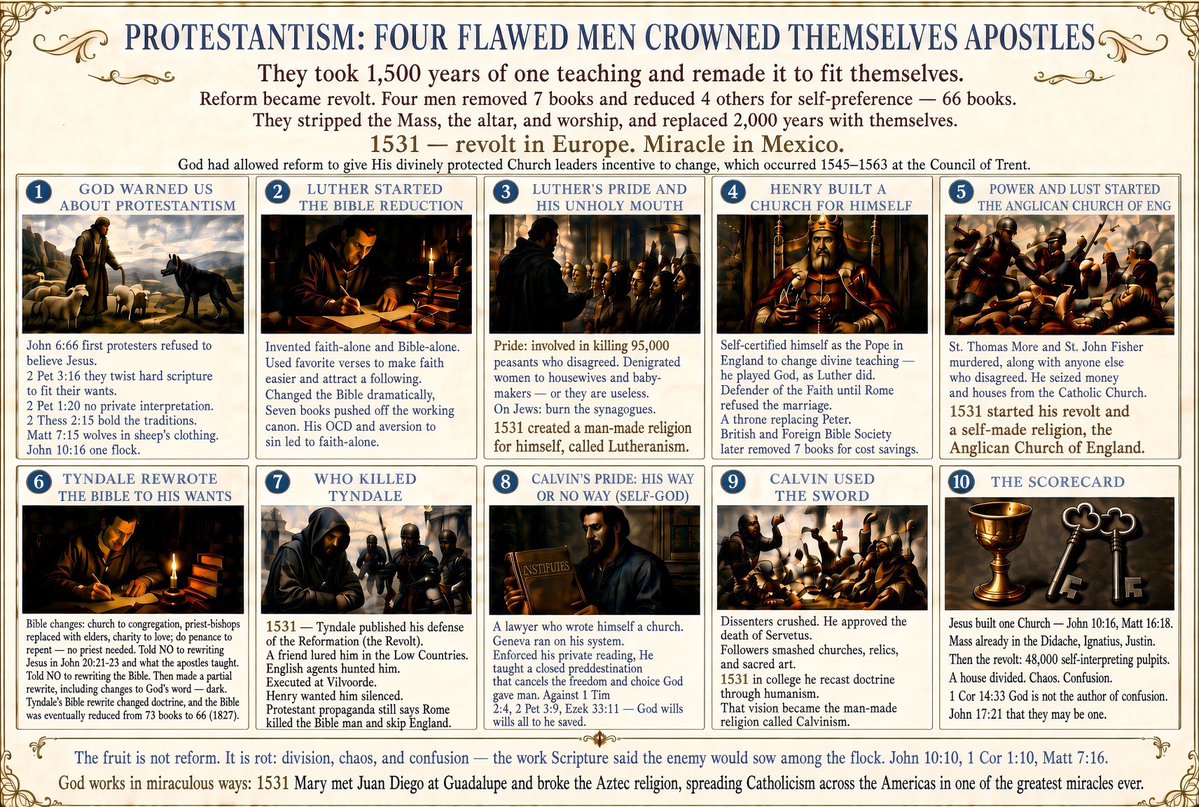
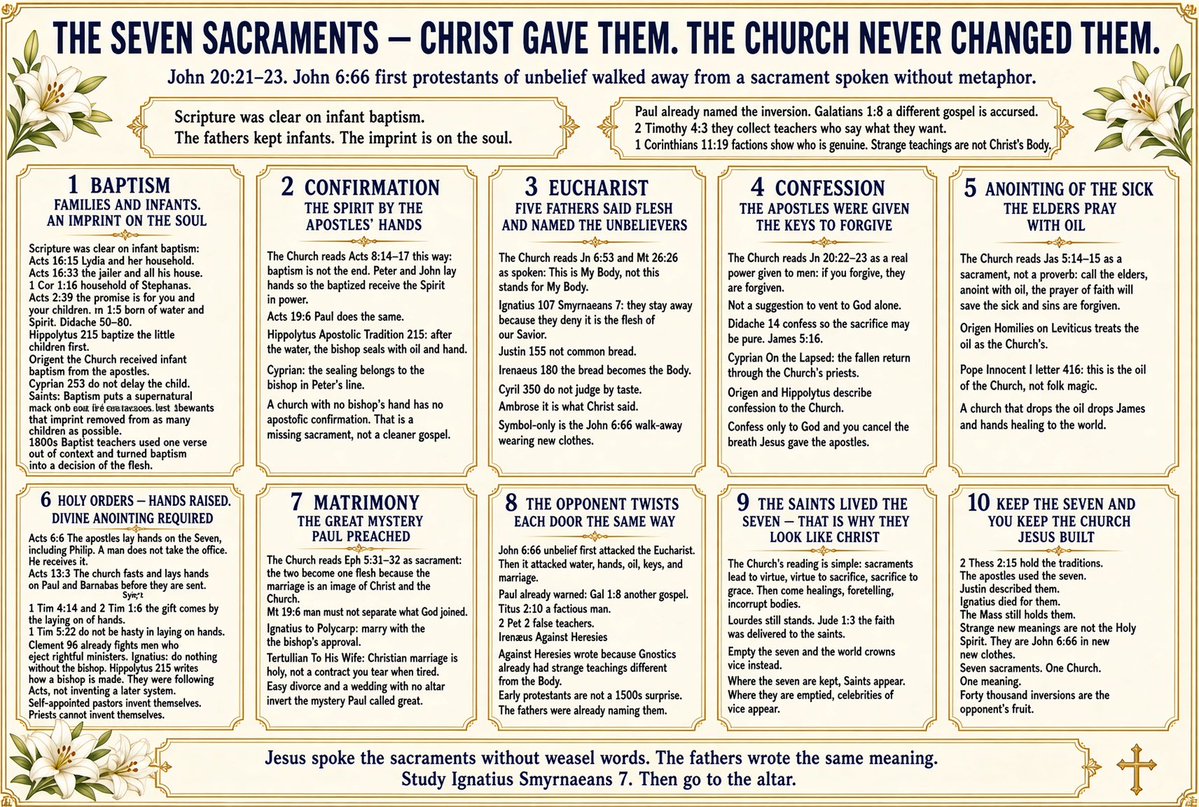
@JesusSaves1500 The 7 sacraments used by the church, from scripture, for +2000 years. Also, the 4 flawed men, who tried to change them, in the name of, there are some bad priests charging for indulgences (a good reform issue). But not worth destroying in revolt the 7 blessed sacraments.
Sister, thank you for pressing the point instead of waving it away. The distinction you named is real, and Catholics should not skip it.
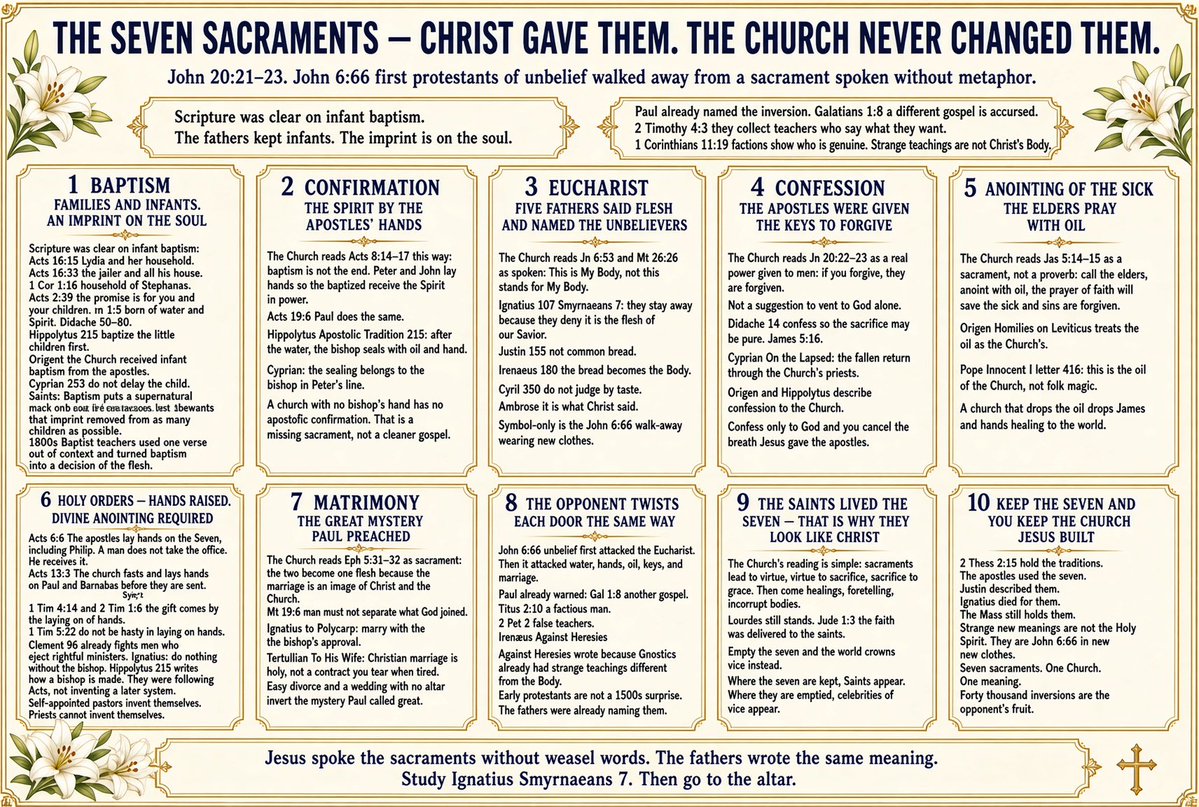
We agree on the foundation. Forgiveness belongs to God. Only God can remove guilt before God. The Catechism says that in the first sentence of its teaching on this sacrament: “Only God forgives sins.” Christ did not hand His divinity to the apostles. He handed them a ministry.
That is exactly what John 20:21–23 describes. The risen Lord says, “As the Father has sent me, even so I send you,” breathes the Holy Spirit on them, and then says, “If you forgive the sins of any, they are forgiven them; if you withhold forgiveness from any, it is withheld.” He does not say, “Announce that God has already forgiven whoever believes.” He ties the heavenly result to their act: forgiven, or retained.
The word “retain” is the hard part for a purely declarative reading. A messenger can declare a pardon the King has already signed. He cannot withhold a pardon the King has already given. Retention only makes sense if the apostles were given a real judgment, with effect before God, not a microphone. The same logic is already in Matthew 16:19 and 18:18: what they bind or loose on earth is bound or loosed in heaven. Heaven ratifies the act. It does not merely get described by it.
So the Catholic claim is the stronger one, and we should say so plainly. This is not “the priest tells you God forgives you.” It is “Christ forgives you through the priest.” The priest is an instrument, the way the man who baptizes is an instrument. No one thinks the baptizer replaces the cross. The minister acts; Christ effects. The words of absolution say the same thing: “I absolve you… in the name of the Father, and of the Son, and of the Holy Spirit.” Not “I forgive you by my own power.”
You are right that Jesus spoke these words to the apostles, not to a job description written in medieval Rome. The question is what He did with the men He sent. He sent them as He had been sent. They appointed elders in every church (Acts 14:23), told Titus to appoint elders in every town (Titus 1:5), and told Timothy to entrust the deposit to faithful men who would teach others also (2 Timothy 2:2). The ministry was handed on, not retired with the Twelve. By the third century, Cyprian of Carthage is already describing sinners restored to communion by confession and the laying on of hands of the bishop and clergy, and he cites this very passage as the Church’s authority to remit or retain. That is not a later Roman invention looking for a proof text. It is the apostolic Church reading the text the way the sentences run.
James 5 fits the same pattern. The sick man calls for the presbyters of the Church; they pray over him and anoint him; “and if he has committed sins, he will be forgiven.” Confession of sins is named in the next verse. Forgiveness is still God’s. The ordinary path runs through the men the Church has set apart.
Scripture already shows God acting through the anointed, not around them. People were healed when Peter’s shadow fell on them (Acts 5:15). No one thinks the shadow forgave or healed by its own power. God was pleased to act through the man He had sent. Absolution is the ordinary form of that same mercy: Christ forgiving through the ministry He breathed on the apostles on the night of the resurrection.
None of this competes with the cross. The cross is the source. The sacrament is how the fruit of the cross is applied to a particular sinner, by name, with a voice he can hear. “Your sins are forgiven” was shocking on the lips of Jesus because only God can say it. It is no less His word when He says it again through the ministry He instituted on the evening of the resurrection.
If that reading is wrong, the alternative has to explain what “retain” means, and why heaven is said to ratify an earthly act.
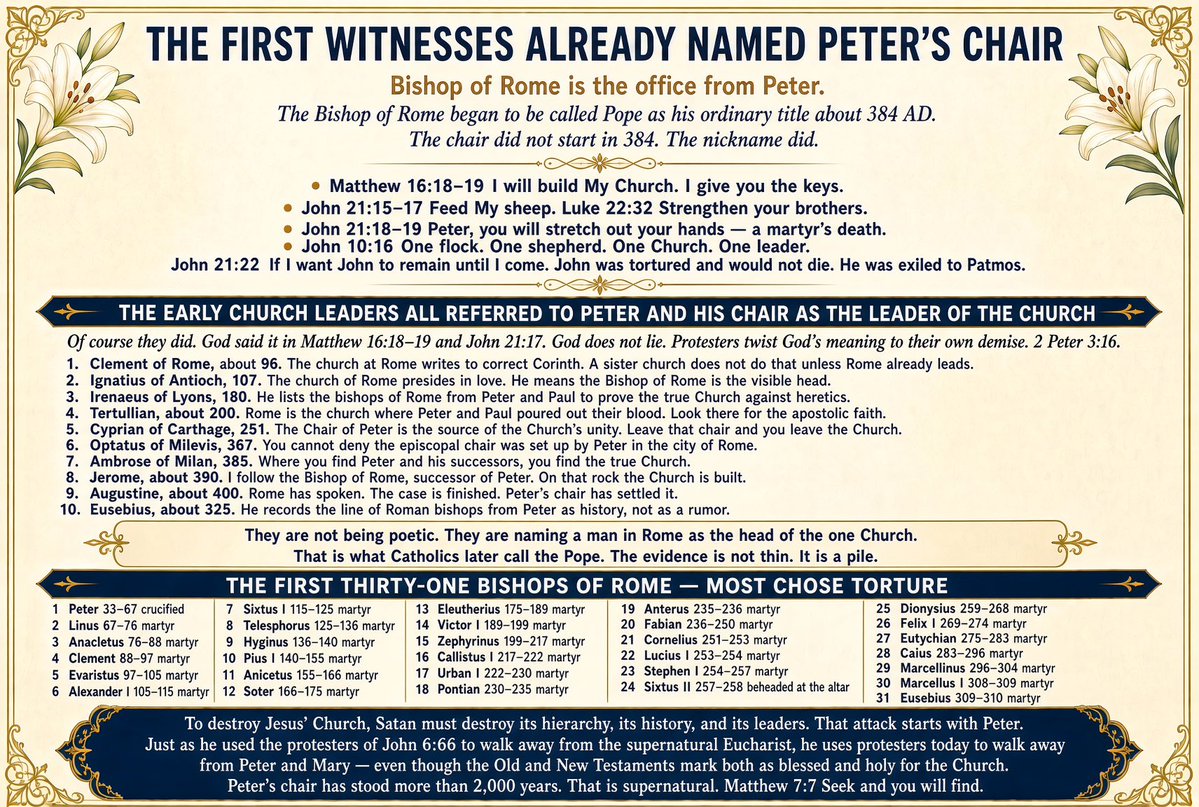
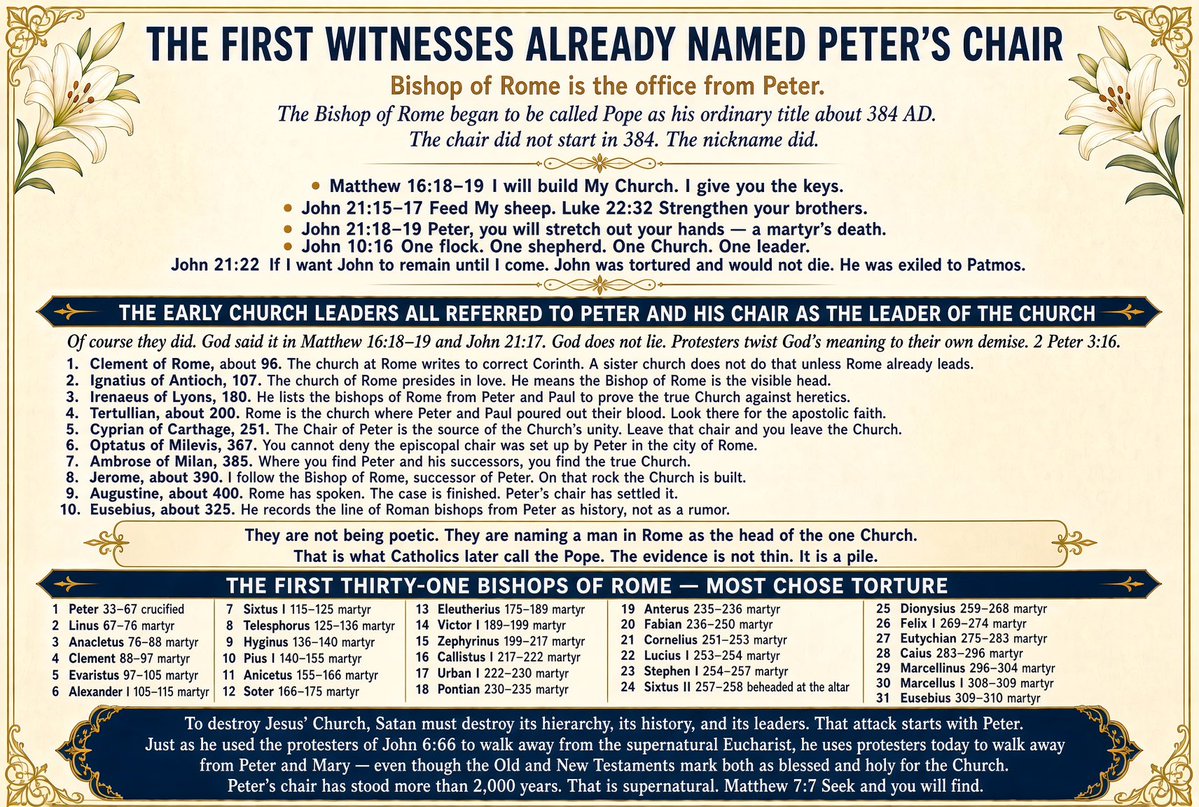
I have attached a summary of the future Priesthood assigned by God, including what the early church fathers said.
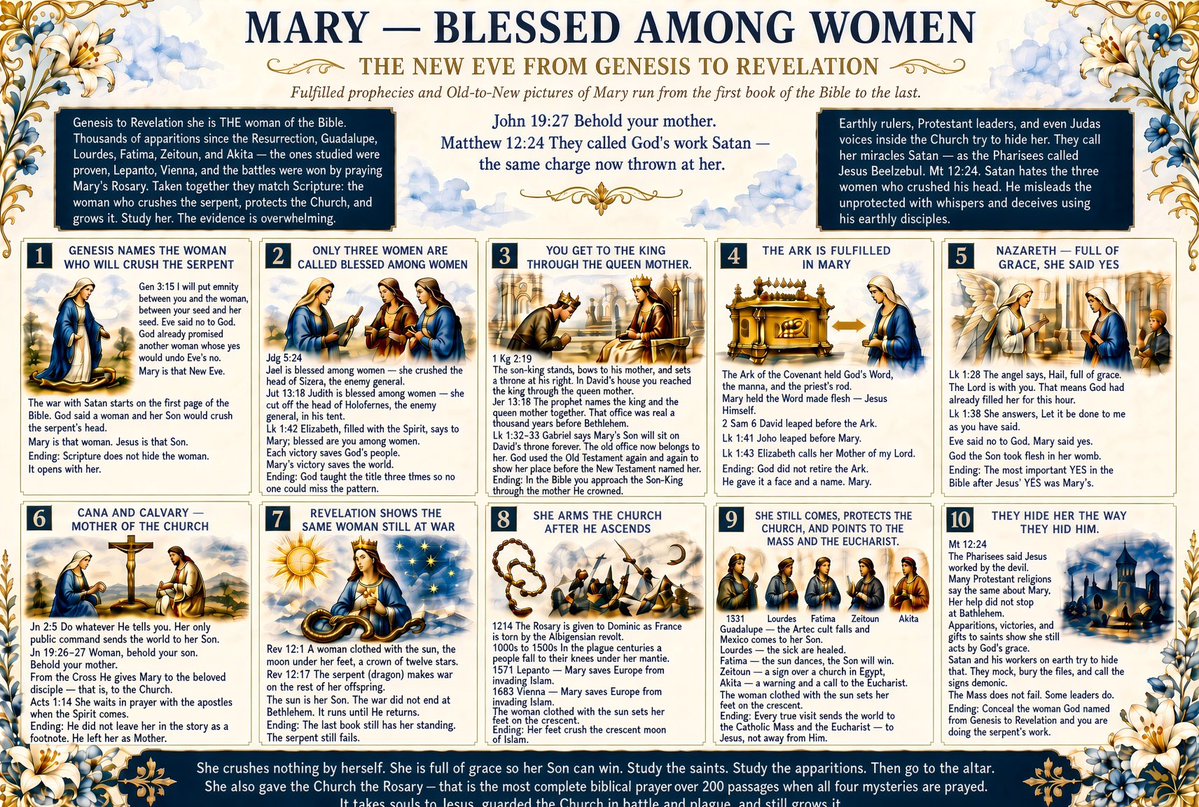
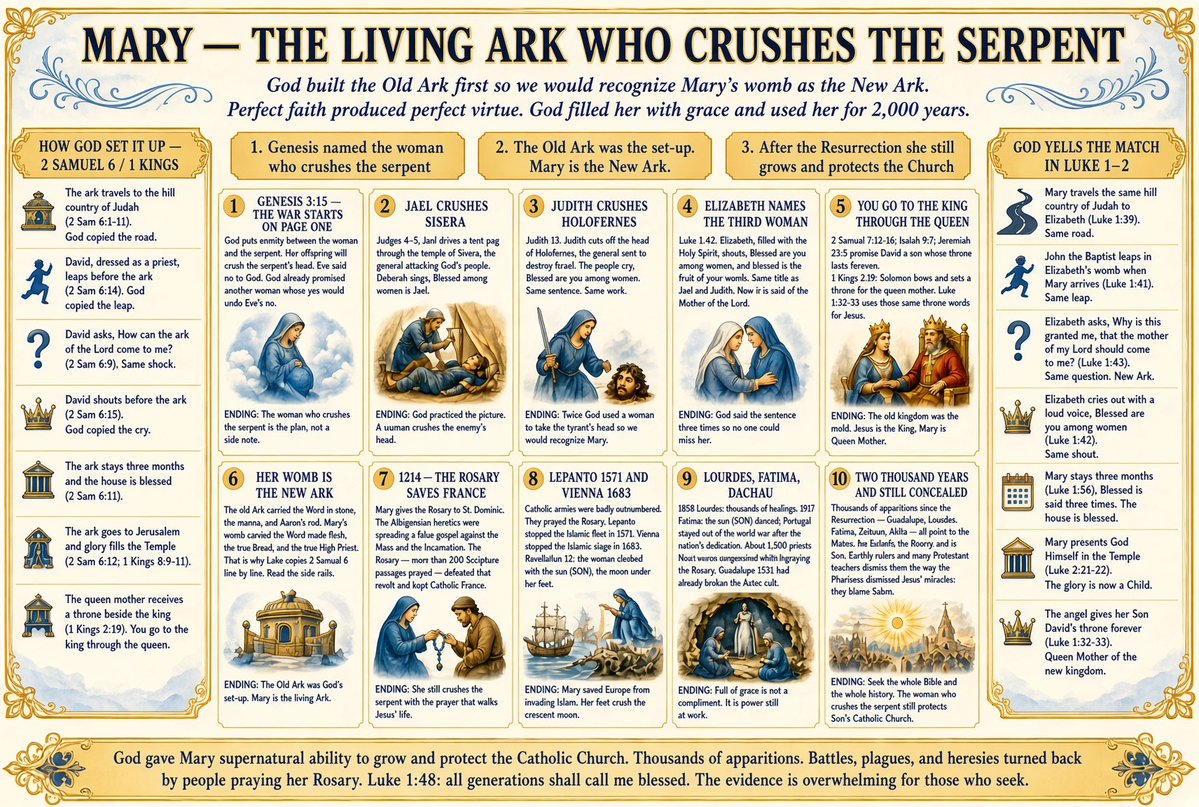
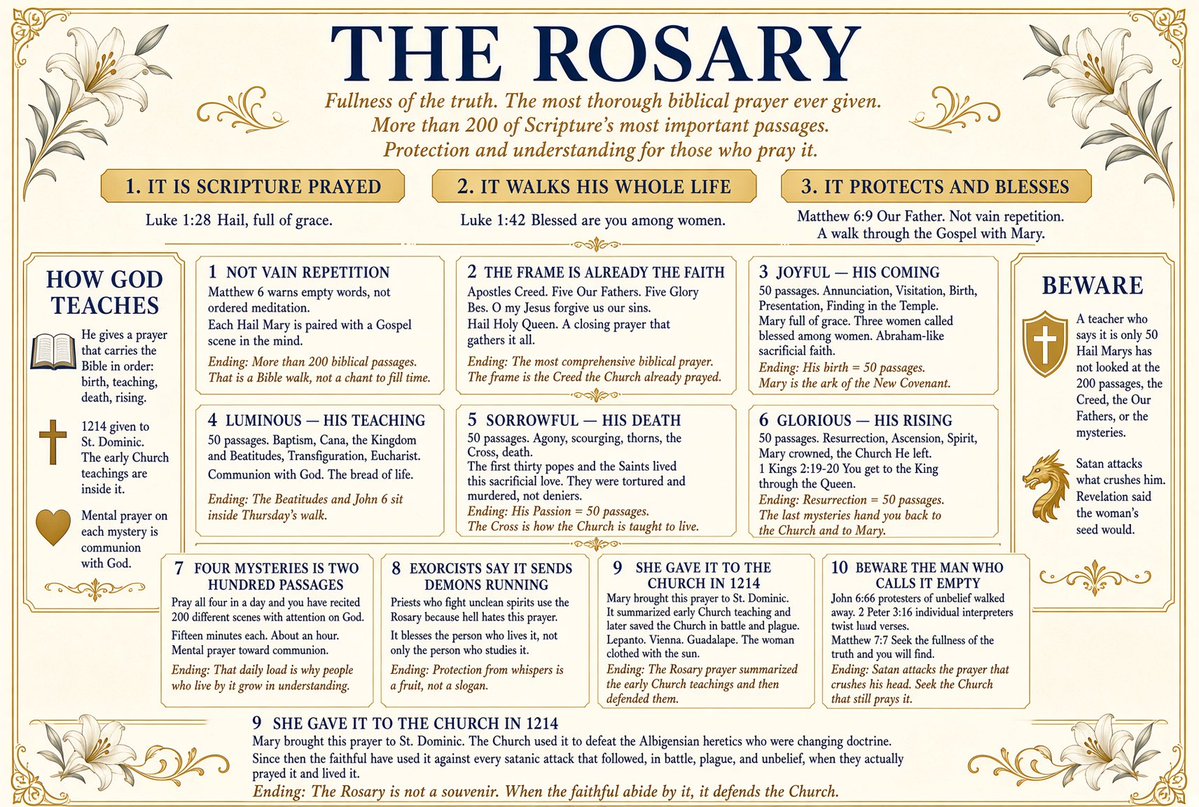
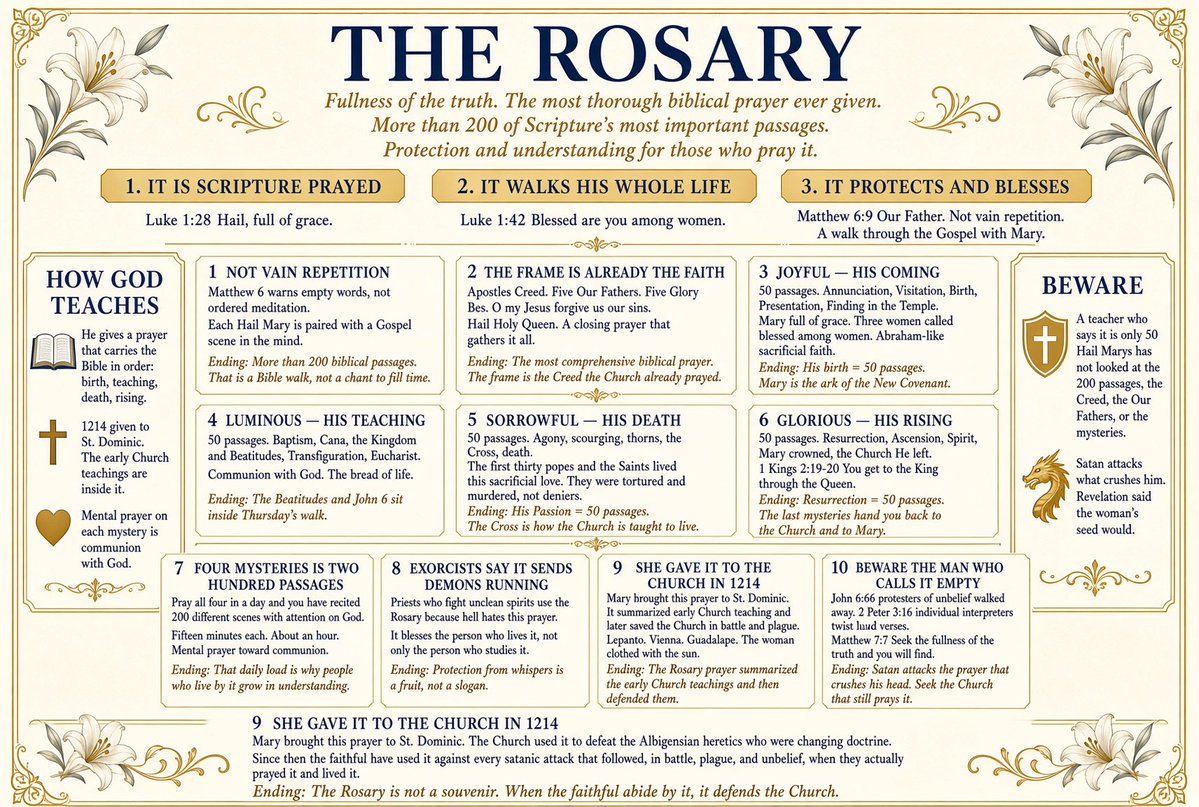
I apologize if your mind is made up on Mary, but just in case you are open to some new information. She is likely the most biblical human, after Christ, in the Bible with incredible typology between 2Sam6 and Luke1 &2. Also, one of the 3 blessed women, all who crushed Satan and obviously she is the Ark of the New Covenant when studied in totality. Attached are a couple of helpful summary walks. I threw in a summary of the Blessed Rosary, the most comprehensive biblical prayer that I know of. Her miraculous apparitions are in the thousands, since Jesus resurrection. I can supply significant material on them if interested.
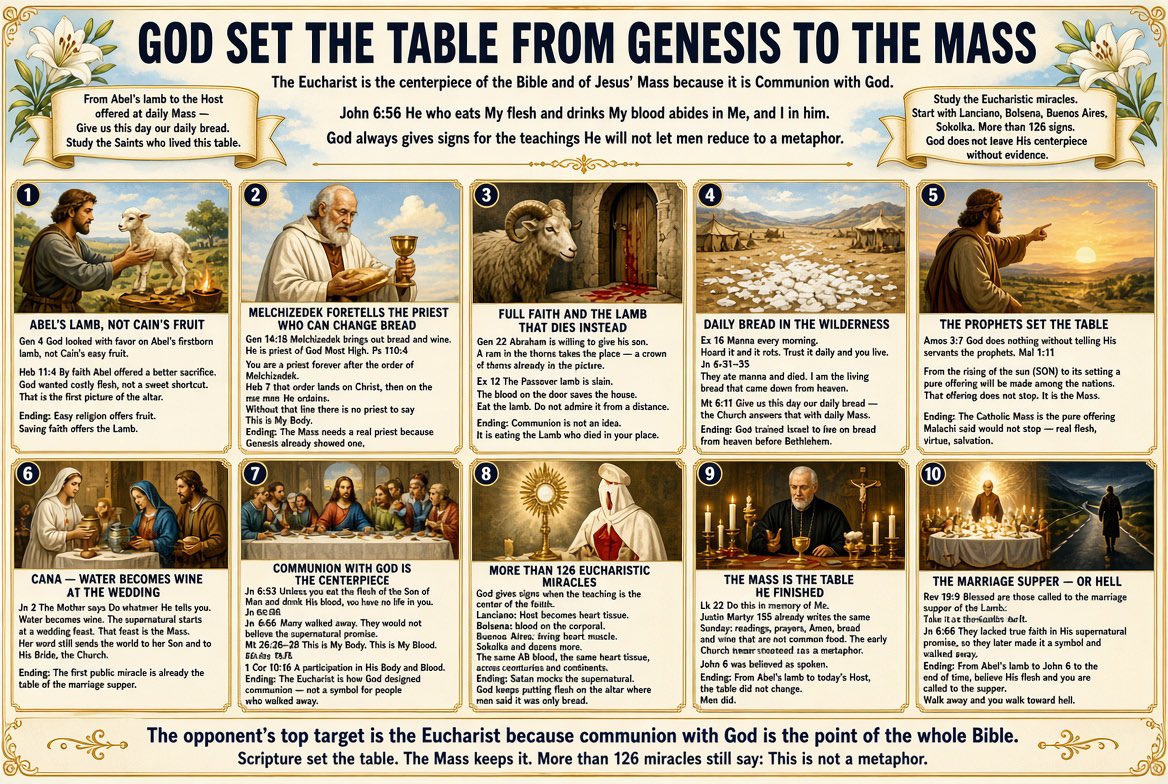
I found this summary of the benefits from receiving Christ daily in the Eucharist that St. Terese of Calcutta had stated. Most Saints, many of whom, bodies did not decompose in the grave (God yelling to honor and follow them is my guess), lived receiving the Eucharist as often as possible. One Saint lived on the Eucharist alone for like 24 straight years-amazing to me. If interested, I can send her story. Much can be found on these Saints for those who “seek” with the humility of a child, as Jesus said. Summary of St. Teresa of Calcutta: She treated daily Mass and Holy Communion as the source of the strength, joy, and self-giving her work required, not as an extra devotion beside it. She said the Mass was “the spiritual food that sustains me, without which I could not get through one single day or hour in my life.” When people asked where her sisters found the energy to keep serving the dying in the streets of Calcutta, her answer was simply, “The Eucharist.”
She put the same conviction in writing to the Archbishop of Calcutta while the Missionaries of Charity were still being formed: “If we have our Lord in the midst of us, with daily Mass and Holy Communion, I fear nothing for the Sisters nor myself; he will look after us. But without him I cannot be — I am helpless.” In the first rule of the order she required Holy Mass as “the daily meeting place, where God and his creature offer each other for each other and the world,” because the sisters were to “imbibe the Spirit of Holy Mass, which is one of total surrender and offering.” At the 1976 Eucharistic Congress in Philadelphia she said their life of vows had to be “woven with the Eucharist,” which is why they began every day with Jesus in Holy Communion and still gave an hour to adoration in the evening. That time did not shrink the work. She said it made them love the poor “with greater and deeper faith and love.”
Her point was cumulative. “These desires to satiate the longings of Our Lord for souls of the poor… go on increasing with every Mass and Holy Communion.” Each reception filled them with Jesus, and then, like Mary after the Visitation, they were to “go in haste to give him to others.” She also tied the two hungers together: the tenderer the love for Jesus in the Bread of Life, the tenderer the love for the hungry Christ in the poorest of the poor. “We cannot separate our lives from the Eucharist; the moment we do, something breaks.”
That is the heightened result. Daily Communion does not merely console the person who receives. It hands over the life, strength, and charity of Christ so that diligence and sacrifice become possible at a level willpower alone cannot sustain. Jesus said, “Whoever eats my flesh and drinks my blood has eternal life” and “remains in me and I in him,” and that the branch bears fruit only by remaining in the vine (John 6:54–56; 15:4–5). St. Teresa’s life is that promise worked out in public: the same Jesus received in the morning was the one recognized and served in the unwanted by afternoon. The fruit was not less work or easier work. It was work done in His strength, with growing desire, and in a way that pleased Him because it was His own love passing through them.”
That’s a fair question, and I appreciate you asking it straight. Jesus does not give a calendar at the Last Supper. What He does give is the command itself.
At the Last Supper He takes bread and wine, identifies them with His body and blood, and says, “Do this in remembrance of me” (Luke 22:19; 1 Corinthians 11:24–25). Paul repeats that command and adds, “For as often as you eat this bread and drink the cup, you proclaim the Lord’s death until he comes” (1 Corinthians 11:26). “As often as” assumes the meal continues; it does not freeze the practice at one night in an upper room.
We also were not in that room. John is explicit that the Gospels are not a complete transcript: “There are also many other things that Jesus did; were every one of them to be written, I suppose that the world itself could not contain the books that would be written” (John 21:25; see also John 20:30). So the absence of a frequency clause in those few verses is not the same thing as a prohibition.
What we do have is the Church living out the command immediately. The first believers “devoted themselves to the apostles’ teaching and the fellowship, to the breaking of bread and the prayers” (Acts 2:42), and they were “day by day… breaking bread in their homes” (Acts 2:46). Later, Luke records them gathered “on the first day of the week… to break bread” (Acts 20:7). Hebrews warns against “neglecting to meet together” (Hebrews 10:25). The pattern in Acts is both frequent and tied to the Lord’s Day. The New Testament never treats the Eucharist as an optional add-on to a sermon.
Jesus also gave the apostles real authority to settle how that command would be kept: “Whatever you bind on earth shall be bound in heaven, and whatever you loose on earth shall be loosed in heaven” (Matthew 18:18; see Matthew 16:19). That is the same authority the Church used at the Council of Jerusalem when it bound Gentile believers to certain practices the written word of Jesus had not spelled out in detail (Acts 15). The Church that received “Do this” is the Church that has bound the Sunday celebration as the ordinary obligation (the Lord’s Day fulfilling the Sabbath command) and has always recommended daily Mass where a priest is available. Daily is the counsel of the Church, not a new invention; weekly is the minimum she binds.
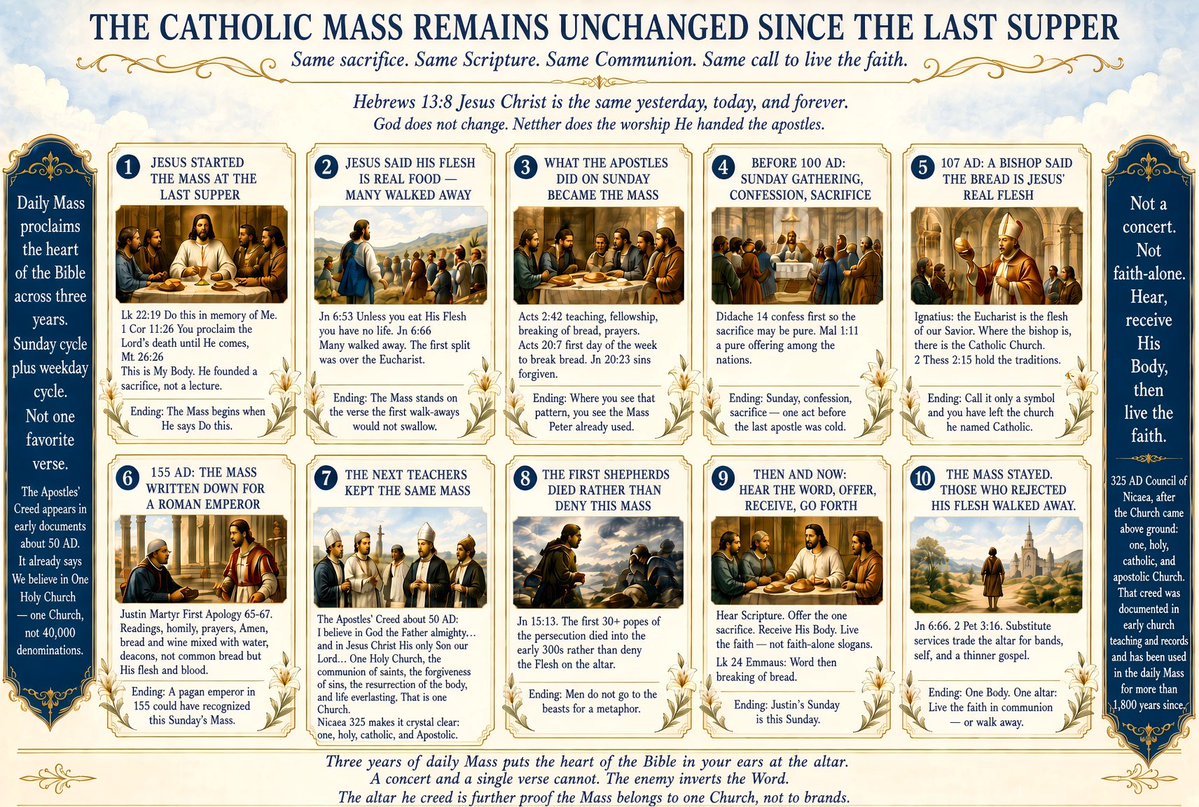
So the short answer is: Jesus instituted the sacrifice and told us to do it. The apostles and the Church they founded, under the authority He gave them, set the rhythm—Sunday as the day we must gather, daily when we can. That is not adding to the Last Supper. It is obeying it. Many of the most heroic Catholics who were the earliest scientists, they started our Universities, Hospitals, orphanages, built the churches and assembled the bible attended daily mass to be in communion with God at a heightened level. There are clear documented historical results in the form of grace for those that make the sacrifice. One of thousands was St. Terese of Calcutta.
Out of genuine curiosity, which Protestant church or tradition are you part of? Communion practice varies a lot from one to another, and I’d rather understand yours than argue with a version of it you don’t actually hold.
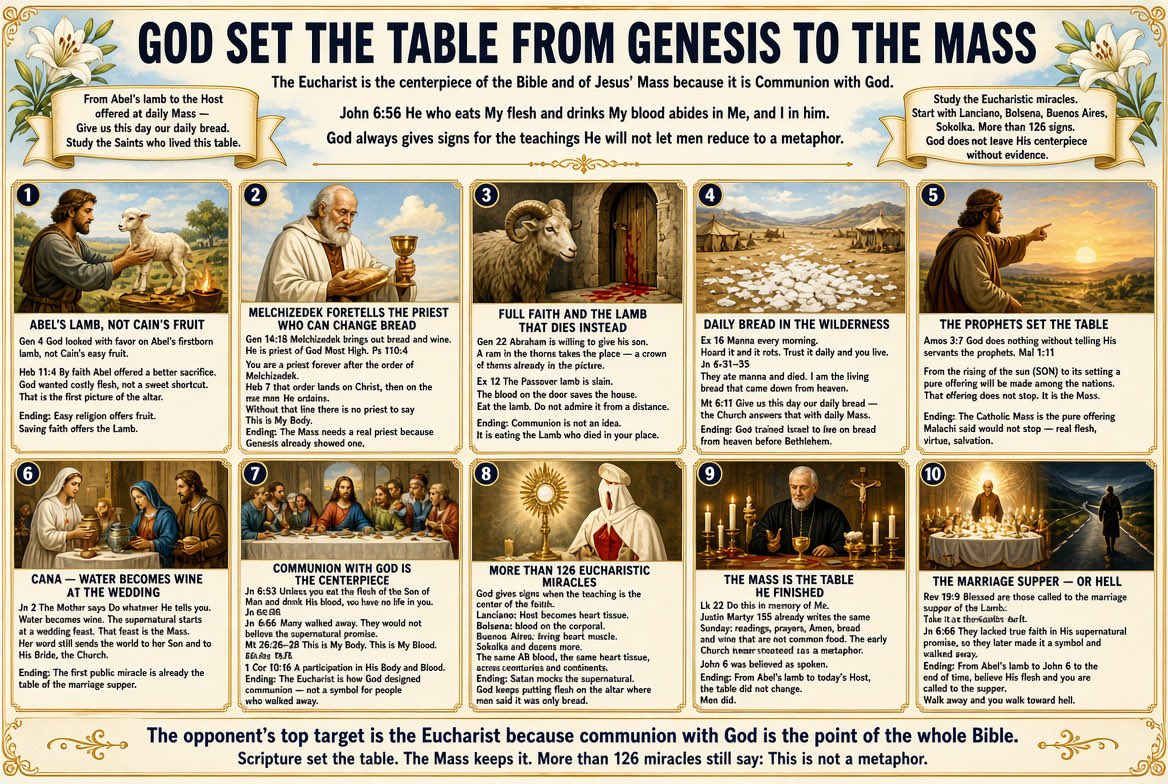
Most importantly is the center piece of the bible, which I learned from both Jesus Church, the Churches bible which it created in 397AD, 350 years after Jesus created the church-The centerpiece is “Communion with God”. Attached scripture walk - The Eucharist. It’s so beautiful. God bless we find truth together.
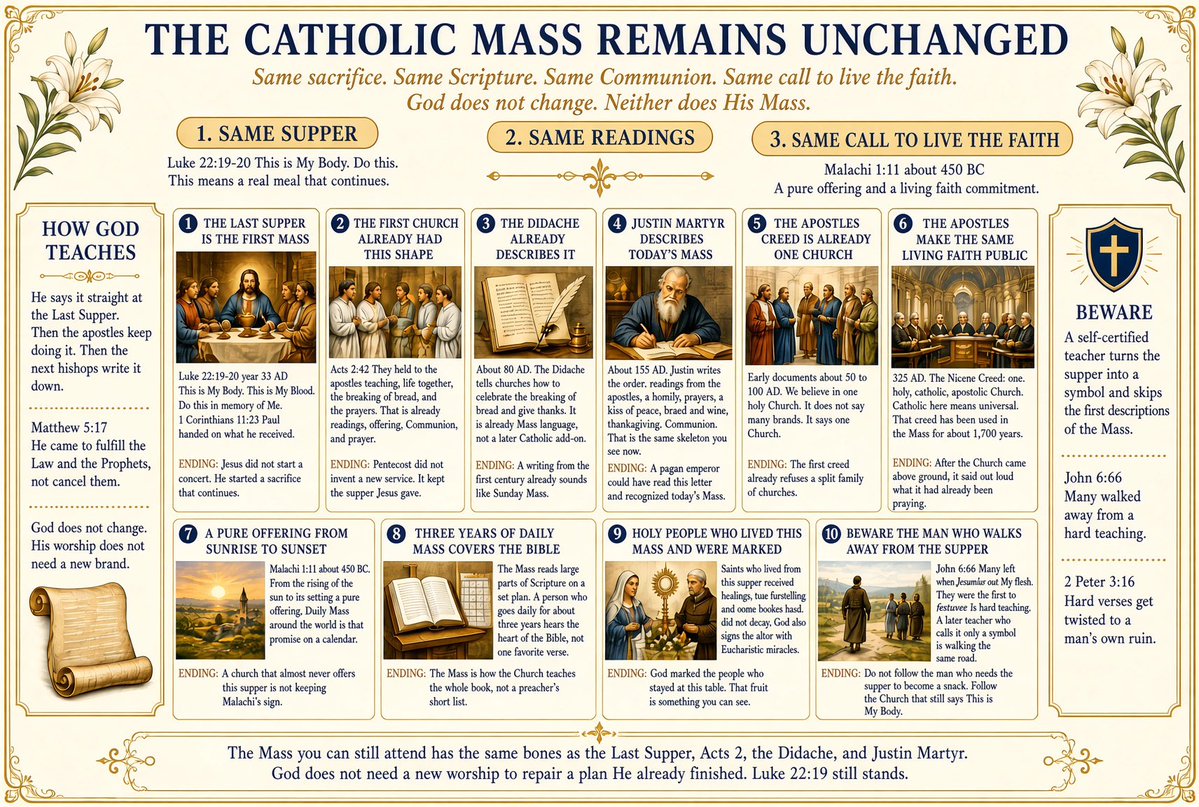
We are encouraged by Christ to Live the Faith. My living it includes reading the bible everyday. Then going to daily mass when I can (Give us this day our daily bread). The beautiful daily mass, unchanged for +2000 years is 100% scripture. https://t.co/1h8Oj6TTXl posts the daily mass scriptures. Read each, then hear them again through communion of prayer, taught the same way at over 400,000 churches around the world - spreading the gospel with unity as Christ required. Attending daily mass leads to reading, hearing and summarizing the Bible, within three years, twice, all explained in a similar way. We leave the mass in communion with God and hopefully committed to Living the Faith thru prayer, charity (mission work), and sacrificial love (virtue)….the Goal and continuous improvement with no minimization that leads to lack of effort. God Bless you for your follow-up.
@tobeawitness@JesusSaves1500 These are Jesus Church teachings. Not mine. I am not worthy or capable of discerning them as an individual with no authority to do so. There is always a chance that I got the church teachings wrong, If so, I will gladly correct them. God Bless you.
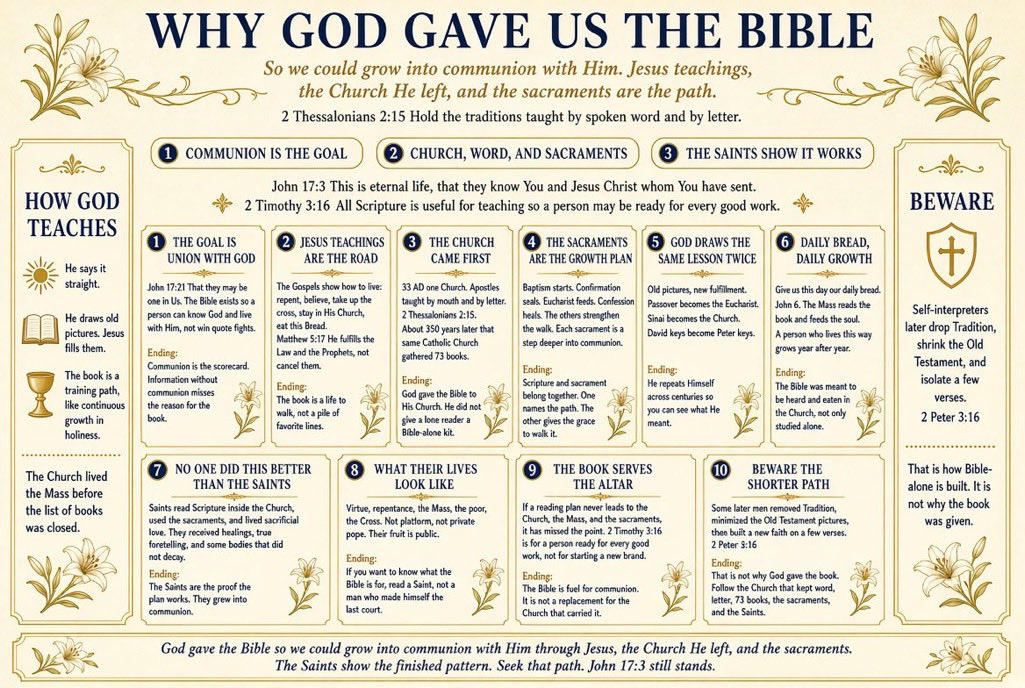
I am no expert, which is why I turn to Jesus church. Scripture is quite clear that as an individual with pride and limited intellect, I should appeal to an anointed body, Christ’s body, to help guide me and educate me. Acts 8 (The highly intelligent Ethiopian had the humility to ask Philip, an anointed teacher for help in understanding-not self-certified teachers with pride & self focus, but anointed teachers). Christ’s Church carries the authority of Christ. I carry no authority, but to seek, be humble and do my best to Live The Faith, through his sacramental blessings. Thank you for engaging in fruitful discussions. God Bless you!
God bless you for seeking. The fruits: Oneness. 400,000 different churches celebrate the same mass format used for +2000 years, daily, around the world. All using the same scripture readings found at https://t.co/AxC5T8w8cG. The mass is 100% biblical and covers dozens of biblical passages every day with a consistent interpretation, not of man, but of the founding Apostles, their anointed apostles and the Saints that gave their lives for the oneness of Christ. Humility led me to this amazing church, a church divinely protected from individual interpretation and the pride that goes with it. I pray that we all get this right. God Bless.