Distance matters! We showed in our paper published at #oecologia that out of the three #myrmecochory steps (removal, manipulation, and deposition site)#seed removal distance is the only factor playing a role in plant establishment. Check it: https://t.co/UmWr7s3yAL
#ants#ecology
Ever heard of a rodent dispersing cactus seeds?🌵🐭
Our new study shows Thrichomys apereoides 🐭 has the potential to disperse viable seeds of Cipocereus minensis 🌵, a cactus endemic to Brazil's campo rupestre!
Find out more in:
https://t.co/FAwWuYtgmQ
Big opportunity for early-career researchers! Do you speak science, sustainability & solutions?
The @ipbes Fellowship Programme is your chance to be part of #GlobalAssessment2 – a major initiative shaping the future of #biodiversity.
Apply today!
https://t.co/esPlb7cqOx
Exploring the use of drones to study 'hidden' aspects of flying #ants biology!
Researchgate: https://t.co/jpp2CVK7xX
Giannetti, D., Schifani, E., & Grasso, D.A. (2025). An adhesive drone trap to study the flight altitude preferences of winged ants. Current Zoology, zoaf002.
My last PhD student from ERC grant submitted, and will defend soon. Our research shows insects consume 6% of leaf biomass in South African savanna-forest mosaics, a hidden force shaping ecosystems! #Ecology#InsectHerbivory#SavannaResearch
https://t.co/pdAHVpG48m
🌍 Earth’s natural carbon sinks are vital for mitigating #ClimateChange.
🌱Did you know soil holds more carbon than you think? Understanding carbon storage in ecosystems is essential for advancing climate action and conservation.
Via @VisualCap
Our review on the dual role of ants as ecosystem engineers and providers of ecosystem services was published yesterday!
https://t.co/wYvXGaxp8D
Together with it, you can read a short interview I gave to the Myrmecological News blog about the article:
https://t.co/BNN5j4N9wR
🚨JOB ALERT🚨
Interested in how the microclimate mediates the coexistence of species rich insect communities?
Us too! Come and work @CUBiosciences with me, @andrewbdavies, @cjanion and @RebeccaASenior on our @HFSP funded project.
Full advert: https://t.co/qAoyzdW6lF
Thrilled to share our new article with my amazing colleagues: "Birds & bats outperform ants in top-down regulation of arthropods across strata of a Japanese temperate forest." 🦇🐦📜
Challenging fieldwork, but a big accomplishment!
https://t.co/UAlQ1lFJcD
I'm happy to share this new paper evaluating pesticides' lethal and non-lethal effects on bees. Thank you, Cristina Kita, for leading this study and inviting me!
https://t.co/UhhJMZmAlF
The Amazon rainforest doesn't just remove ~2 billions tons of CO2 every year. It also moves ~20 billions tons of water through evotranspiration, the so-called "flying rivers", critical for planetary balance.
I wish more people knew this.
New ! 🐜🌰🍄
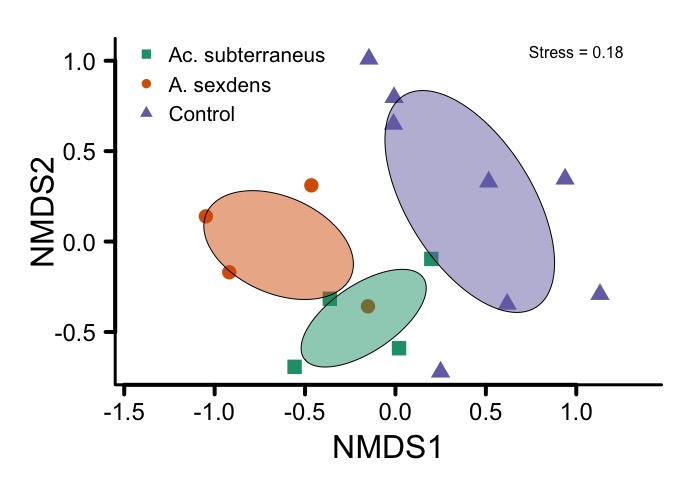
In this study, we found that seeds manipulated by A. subterraneus (ant species that impair germination) exhibited higher fungal richness and different fungi composition than by A. sexdens (increases seed germination).https://t.co/Eig6mLAesp #Myrmecochory#Seedecology
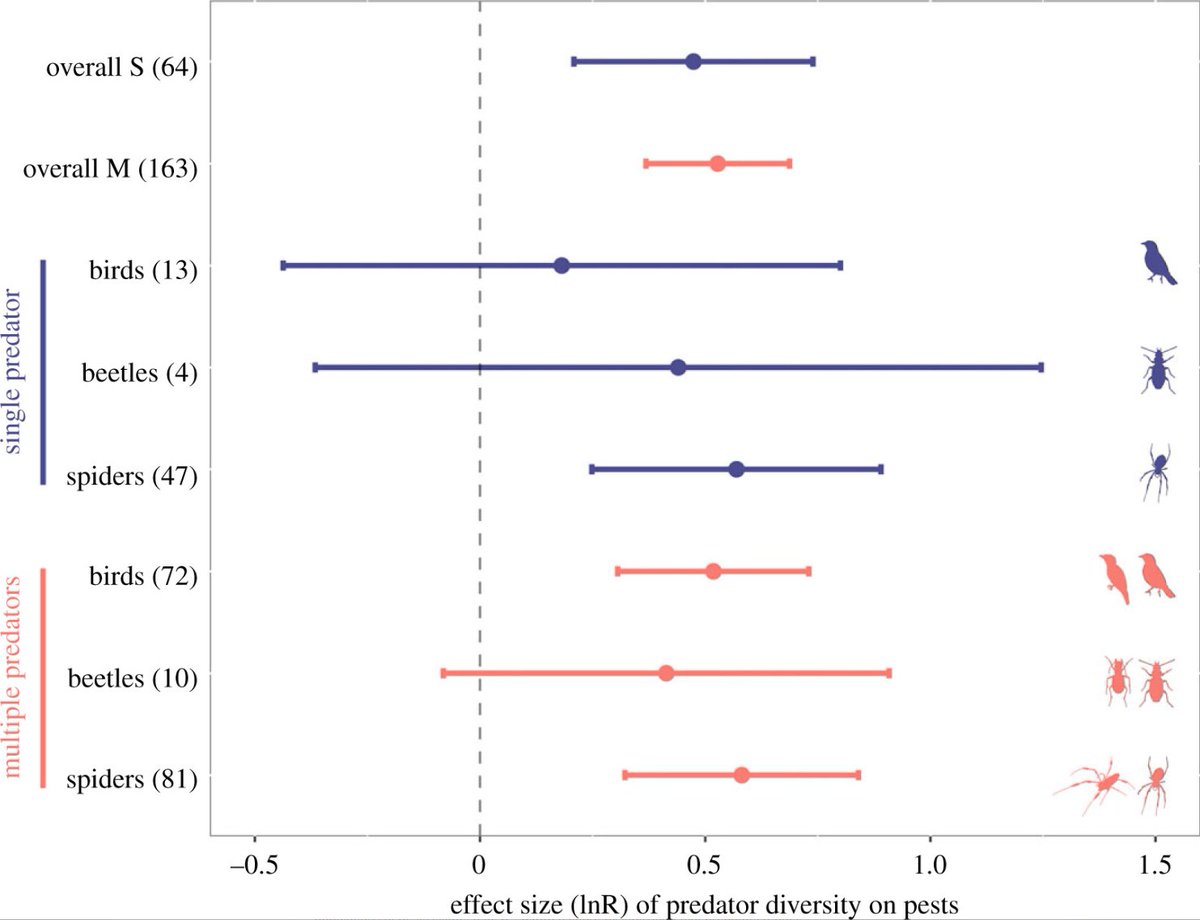
@gxboldorini just published a meta-analysis in #ProcB comparing the impacts of natural predators on pest populations and crop yields. Great collaboration with Matthew Mccary, @gqromero,@KirbyLMills, @Nate_J_Sanders, Peter Reich and Radek Michalko.
https://t.co/a1MxmuuABX
Interested in doing a PhD? Interested in understanding how species perform under different temperatures to predict the spread of zoonoses? Look no further than Project 1 of @LSHTM's projects under the @OneZooCDT.
https://t.co/MGdAWTwtLH
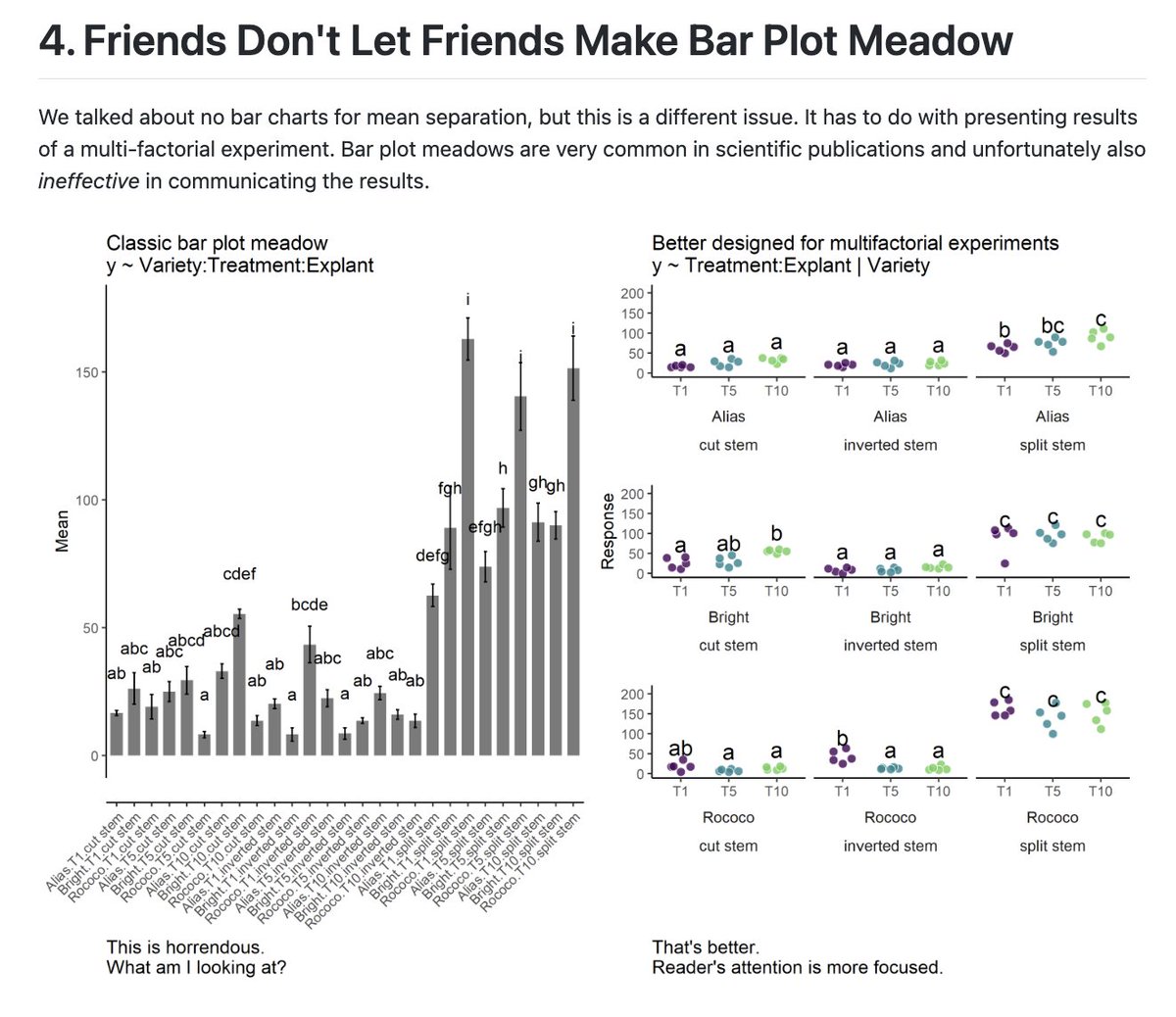
Friends don't let friends make bad charts!
Chenxin Li, pulled together a lot of great advice for data visualization, with clear "do this, not that" examples for each item.
Here are a few of my favorites, see the link below for more.
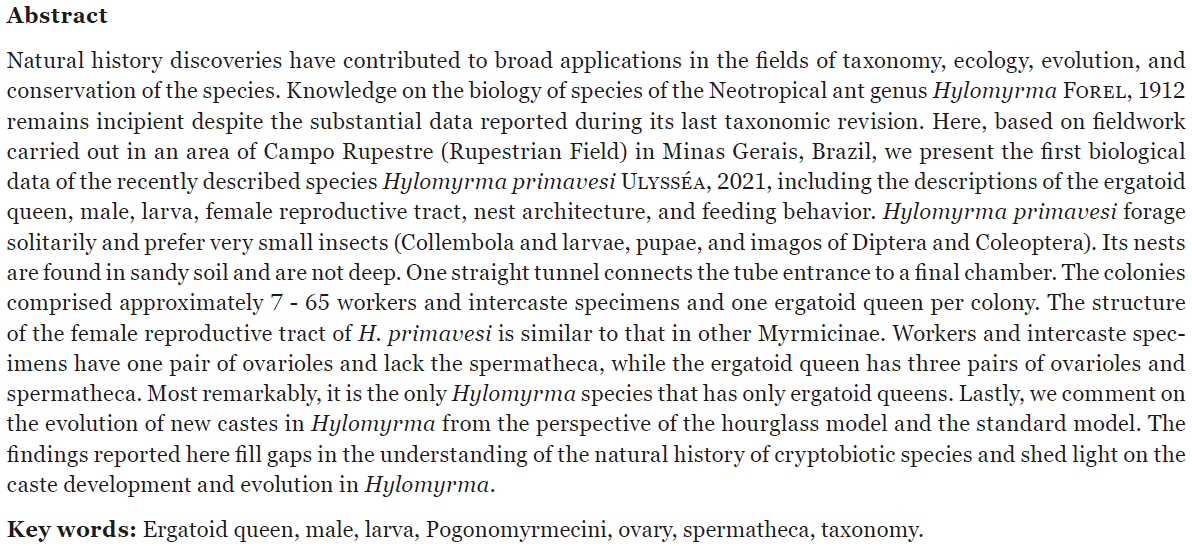
🆕paper: "Biological notes, nest architecture & morphology of the remarkable ant Hylomyrma primavesi Ulysséa, 2021".
Mônica A. Ulysséa, Cliver F. Farder-Gomes & Lívia P. Prado investigate the biological aspects of the recently identified ant, H. primavesi.
https://t.co/qQ12G20zlX
New paper in @Ecology_Letters
Inverse priority effects: the order & timing of species losses can shape community reassembly
Great work lead by @TorresAgostina_ & a wonderful collaboration with @SaraKuebbing @klstuble@SamanthaCatella & @mrodriguezcabal https://t.co/nPOEohM2Zm