Let's not forget the Hardhat Riot of 1970 in NYC, likely the point at which the working class began to pull away from the Democrats. Any other examples out there?
Pier Paolo Pasolini on the 1968 student protesters clashing with the police in Rome: "The children of the bourgeoisie throwing bricks at the children of the proletariat."
I attended a county fair and watched a child sell a pig.
The pig is worth, I am told, somewhere near four hundred dollars. I looked this up afterward because I did not believe what happened.
The girl is twelve. She walked the animal into a ring wearing a white shirt and a numbered card. She had raised it herself, from a piglet, for nine months, which I confirmed, and she had a binder of records because the program requires one.
The bidding began. Local men. A man from a bank. A man who sells tires. A woman who owns a restaurant I had eaten at the previous evening.
It did not stop at four hundred.
It stopped at three thousand two hundred.
I turned to the man beside me and asked whether the pig was of exceptional quality.
He said, "It's a fine pig."
I asked whether it was worth three thousand two hundred dollars.
He said, "No."
I asked why the price was three thousand two hundred dollars.
He said, "She's a good kid."
I stood up. I could not remain seated. I said, out loud, in a metal building that smelled of animals, that a market which knowingly and deliberately misprices a good in order to put a child through a university, and does so every year, in the open, with an auctioneer and a microphone, is not a market at all but a rite, and that I have never seen a province conduct one so cheerfully.
He said, "You want a lemonade?"
I said that I did.
Here is the part I had entirely misread. The men bidding against each other were not rivals. They were raising it together. The tire man bid, then the bank man bid, and the tire man nodded at him, and they were pushing the number upward on purpose, in public, in front of the girl. She knew. Everyone knew. The auctioneer knew. The rite requires that nobody says it.
Afterward the girl shook every buyer's hand. She writes them letters later. That is also part of it. She writes letters.
I asked the restaurant owner why she bids every year.
She said, "Somebody bought mine."
She is fifty-eight.
A Stanford statistician built a dice-rolling machine to prove board game companies have been selling you loaded dice for a hundred years.
The machine drops dice inside a glass chamber, records every landing, and runs the sequences through statistical tests. Every mass-produced die it tested was biased. Every Monopoly die. Every Yahtzee cube. Every D&D twenty-sider. Every casino die below one hundred dollars.
The bias is so small the human eye cannot see it in one game. It is so consistent it drains a player over a night at a real table.
His name is Persi Diaconis. He is 79. He ran away from home at fourteen to learn card magic from Dai Vernon. He came back twenty years later with a PhD in statistics from Harvard and became the person casinos, magicians, and mathematicians all quietly consult when they need to know how something actually shuffles, rolls, or falls.
This eight-minute Numberphile clip is Diaconis explaining exactly what the machine found.
The dots on a die are drilled holes. The paint filling them weighs less than the plastic that was removed. The six face is lighter than the one face. Every die you have ever owned has been tilted by a fraction of a gram since the day it left the factory.
Casinos already knew. A single die at the Bellagio costs one hundred and fifty dollars, is discarded after eight hours of use, and is engineered so the paint in the pits weighs exactly what the plastic did.
That is the whole difference between a game piece and a regulated instrument.
Here is what Diaconis proved on the record.
A cheap six-sided die favors the six face over thousands of rolls. A plastic twenty-sided die can favor certain numbers by a substantial margin depending on how the corners are cut. A thirty-sided die, unless the internal geometry is spherical, rolls some faces two to three times more often than others. One retired executive rolled a single die three and a half million times before it physically wore round.
Euclid worked out part of this in 300 BC. Diaconis has spent forty years finishing the rest.
"There is no such thing as a fair die. There are only dice fair enough for the purpose you are using them for."
Fairness is not a property of the die. It is a property of the die plus the throw plus the surface. Change any one and the same die stops being fair.
The video is free. Diaconis's papers are free on his Stanford page.
Everyone who has ever argued over a roll has been trusting a piece of plastic they never checked.
The math is free. The willingness to admit your die is loaded is a much rarer commodity than fairness.
WILD
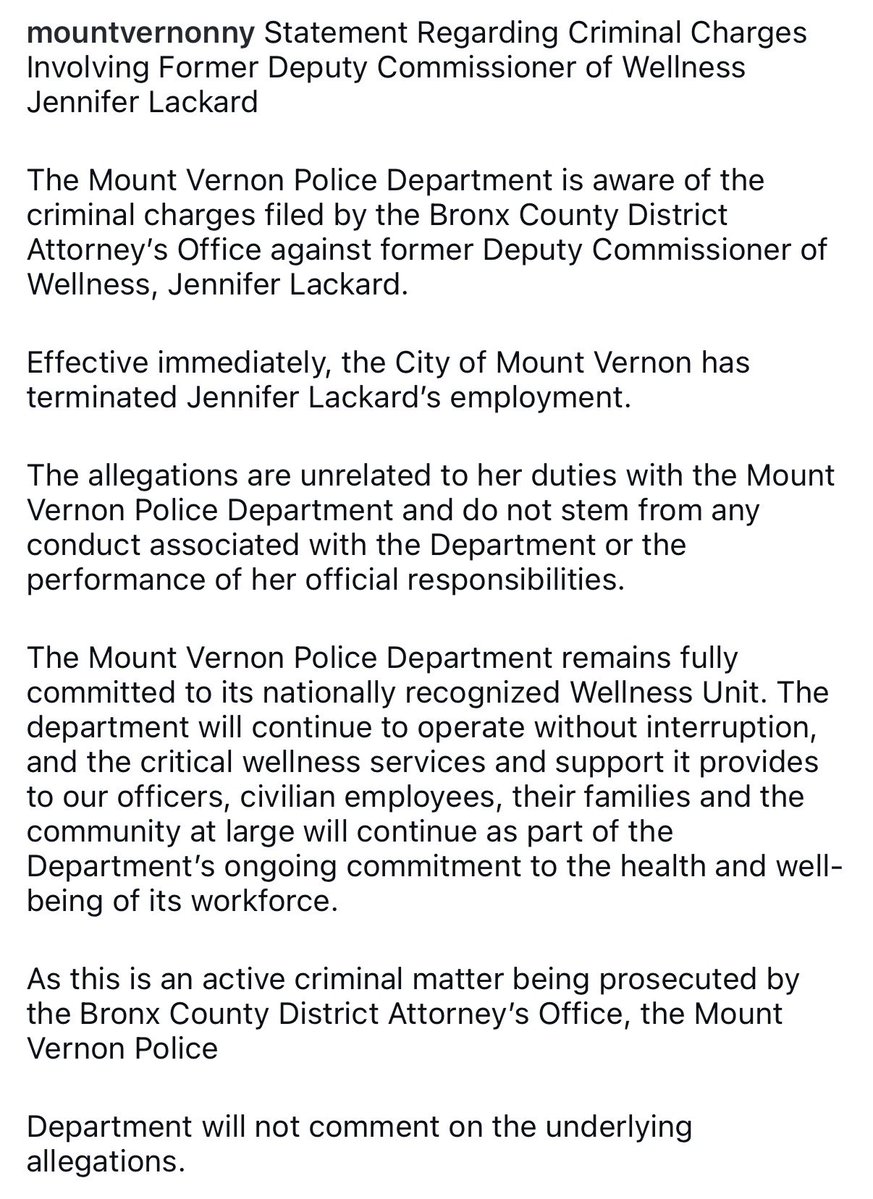
Mount Vernon, NY Deputy Police Commissioner Jennifer Lackard ARRESTED for allegedly being the GETAWAY DRIVER for her gang member son after a shooting
@realBrandonGill Please don't do this. Using sarcasm to put somebody else down does not make you a bigger man. Criticize the policy not the man. You should be winning converts, not driving them into the arms of the opposition.
LOL, this is fun.
"Are there any cities in America that have turned a profit from building new sports arenas every 10 years?"
If by **"turned a profit"** you mean that the **city or taxpayers recovered more money than they spent building a new arena every decade**, the answer is:
**No. There is no well-documented U.S. city that has consistently done this.**
In fact, this is one of the rare areas where economists are remarkably close to a consensus.
### What the research finds
Over roughly the last 30 years, study after study has concluded that:
* New stadiums and arenas rarely increase a city's total economic output by enough to justify their public cost.
* Most spending at games is **substitution spending**. Residents who spend $200 at a basketball game generally spend $200 less elsewhere in the city.
* The jobs created tend to be part-time or seasonal.
* Tax revenues usually fall well short of paying off construction and financing costs. ([Wiley Online Library][1])
A recent study examining municipal financial statements directly likewise found **no evidence that public participation in stadium construction improved long-term municipal fiscal outcomes.** ([SSRN][2])
### Why do cities keep building them?
Because the argument is often **not purely financial**.
Cities typically justify stadiums on grounds such as:
* Keeping a major league franchise from relocating.
* Civic identity and prestige.
* Downtown redevelopment.
* Tourism and convention attraction.
* Political visibility.
Those benefits may have value, but they're difficult to quantify and usually don't translate into taxpayers making money. ([Wiley Online Library][1])
### Are there exceptions?
There are a few situations that perform much better than the average.
**1. Privately financed stadiums**
Examples include:
* SoFi Stadium
* Chase Center
These may be profitable **for the team owner**, but that's different from the city profiting.
**2. Mixed-use developments**
Some newer projects bundle together:
* apartments
* hotels
* restaurants
* offices
* retail
Examples include entertainment districts around:
* The Battery Atlanta
* Texas Live!
These developments can create valuable real estate and tax revenue, but researchers generally find that much of the gain comes from the surrounding development rather than the stadium itself. The district often performs better than a standalone arena. ([Wiley Online Library][1])
### What about cities that replace stadiums every 10–20 years?
This is actually one criticism economists make.
Modern stadiums are increasingly treated as assets with relatively short economic lives:
* 20–30 years was once common.
* Some teams now seek major renovations or replacements after only 20 years.
If taxpayers are still paying debt on one stadium when discussions begin for the next, the likelihood of achieving a positive public return becomes even smaller. ([AEA Publications][3])
### Applying this to San Antonio
Since you've discussed the proposed Spurs arena before, the question becomes much more specific:
> **Will a new Spurs arena produce enough additional tax revenue to exceed its public cost?**
Based on the broader economic literature, the answer would be **unlikely** unless the project succeeds because of something *other than the arena itself*—for example, if it catalyzes substantial new private investment that would not otherwise have occurred. Even then, demonstrating that the arena was the primary cause is difficult. Local economists interviewed during debate over San Antonio's proposal made essentially this point: the economic payoff from publicly funded arenas is generally much smaller than advertised. ([San Antonio Express-News][4])
The distinction that often gets lost is that a project can be:
* profitable for the **team**,
* beneficial for a **specific neighborhood**,
* or politically valuable for a **city**,
without actually producing a **positive financial return for taxpayers**. Those are related questions, but they're not the same.
[1]: https://t.co/Rgph4cipMj "The impact of professional sports franchises and venues on local economies: A comprehensive survey - Bradbury - 2023 - Journal of Economic Surveys - Wiley Online Library"
[2]: https://t.co/0ORhLD8xHr "Stadium Financing and Local Municipal Fiscal Outcomes: Evidence from Annual Comprehensive Financial Reports by David Englund, Nicholas Wilson :: SSRN"
[3]: https://t.co/yTJ4U1Wm29 "The Economics of Sports Facilities and Their Communities - American Economic Association"
[4]: https://t.co/SbodyvJqlv "A new Spurs arena won't benefit taxpayers, experts say. San Antonio's willing to fund it anyway."
Katherine Boyle just named Elon Musk's greatest contribution to America, and it isn't sitting on a launchpad.
Boyle, General Partner at a16z: "I think that Elon's most important contribution to this country is training two generations of engineers … on how to work with their hands again."
For a decade, America's sharpest technical minds optimized ad clicks and shipped messaging apps. Software consumed ambition.
The physical world became something you abstracted into an API, not something you touched. Building real things became what you did if you couldn't code.
Elon didn't reverse that with inspiration. He reversed it by building companies where you either understood manufacturing or you failed.
SpaceX and Tesla forced engineers to learn how metal fractures, how tolerances cascade, how one physical iteration costs months and millions. No hotfix. No rollback. Physics doesn't negotiate.
Boyle: "Training two generations of engineers."
The product was never the cars. It was the people.
Look at who's founding America's hard-tech companies now. The common thread isn't Stanford or MIT. It's time on a factory floor at SpaceX or Tesla.
They learned to weld. They learned that "impossible" means unsolved engineering, not violated physics. They learned that failure in the physical world compounds, because nothing reverts.
Elon didn't just build companies. He rebuilt industrial knowledge that had been decaying for thirty years while the country's best minds chased digital scale.
He made atoms matter again. Made manufacturing the hardest problem worth solving. Made physical engineering prestigious in a way it hadn't been since humans walked on the moon.
Boyle: "Work with their hands again."
Five words that sound quaint. They describe the moment America started building again.
The blueprints for the Saturn V still exist. No one can build one from them.
Knowledge that lives in hands doesn't survive on paper. It dies in a single generation of neglect, and no archive brings it back. That is how a civilization loses the ability to make things while still holding every document that explains how.
America was one generation from that. It got the generation back instead.
The best technical talent no longer asks which app to build. It asks what should exist that doesn't. From engagement metrics to launch cadence. From scaling users to scaling factories.
That shift outlives every vehicle and spacecraft he delivered. Products obsolesce. Engineers who know how to make things do not.
We stopped coding the future. We started machining it, welding it, breaking it until physics signs off.
Those engineers are training the next wave now. The School of Elon doesn't need Elon anymore. It's self-sustaining, spreading through a generation that learned the higher calling is building real things.
That isn't a business achievement. It's a civilization remembering how to make things.
You can copy a design. You can't copy a generation that knows how to build one.
RUN THE MATH ON A PAINTING ROBOT ONCE AND YOU CAN'T UNSEE IT
Tesla's target price for Optimus is in the $20,000 to $30,000 range. That's the cost of one used pickup truck.
Now do the numbers every contractor is quietly doing.
A robot doesn't bill hours. It doesn't split the invoice with a crew. It works the night shift in an empty apartment where nobody needs the lights on or the heating running.
Clients won't even see a discount at first. Same quote, same result, same invoice. The difference all lands on one side of the ledger.
Painting was supposed to be too fiddly to automate. Watch the clip: taped outlet, clean edges, even coat. Fiddly is getting solved in real time.
The machine doesn't have to be better than a painter. It just has to be cheaper than a payroll.
Democrats are taking theater kids from well-off families, dressing them up in costumes, and trying to replicate Trump’s McDonald’s drive-thru and garbage truck strategy. It is not working. No one buys it.
Platner is a hobbyist oyster farmer whose rich parents buy all his oysters.
Troy Jackson hasn’t worked as a logger since 1998. He’s been a full-time politician for the past 28 years.
I’m not sure why they’re dressing up crazy Francesca Hong as a mechanic. They must’ve run out of straitjackets.
They’ve got Talarico dressed up as Woody from Toy Story. He has no connection to cattle ranching. He’s a middle school teacher turned career politician.
Rob Sand is a lawyer with a $7 million net worth. His family has no connection to farming, yet they’re dressing him up in Carhartt farmer workwear.
Army '81 to '86. The generals discovered jogging and just like that everybody was getting taped and measured for body fat. I'd much prefer to fight alongside linebackers than this will 'o the wisp.
Not sure about the Marines, but in the Army, fortune favored the genetically skinny. They can do 1,000 pull ups because they’re not actually lifting any weight. They can run like the wind because they aren’t actually hauling any ass. They max the PT test, and get fast tracked to promotion, even though they can’t carry a SAW on a ruck march. IMO, standards need to change to more accurately represent strength over speed. In combat, you’re actually carrying a load out, not running 2 miles in tennis shoes. That’s just my 2 cents. 🤷♂️
🇲🇽🇺🇸 Mexican forces just bagged a cartel boss with a $5M U.S. bounty on his head.
Alfonso Fernández Magallón, better known as “Poncho,” leader of the Los Reyes Cartel, got snatched in a joint air and ground op in Los Reyes and Peribán, Michoacán.
His crew immediately flipped out, setting cars on fire and blocking roads, but authorities say they’ve already cleared the mess and restored control.
Another big cartel name is off the streets.
Source: @TabzLIVE / Writer: Lynn
"Most poor and working-class people value rules, partly because they are exposed to so much misbehavior from people around them. Naturally, the luxury belief class sides not with the poor people who prefer rules and order, but those who engage in disorder" https://t.co/5EUgFqL4Zh
There is a hint of delicious irony to all this.
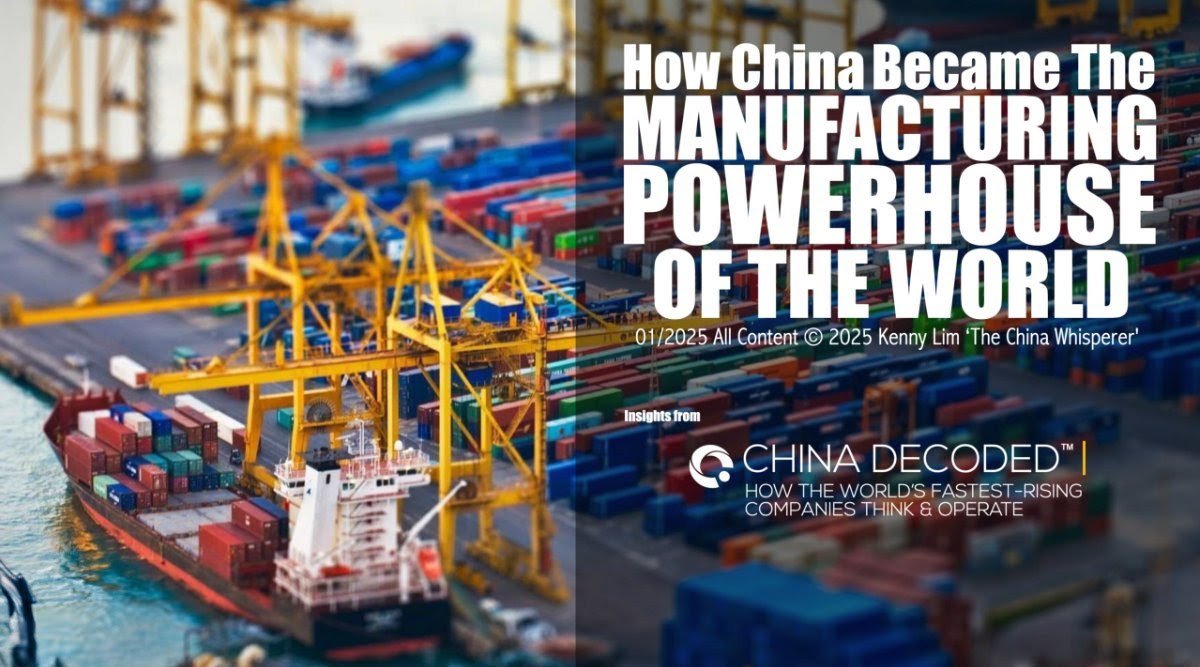
China currently manufactures 80% of the world’s solar panels, 75–80% of all batteries, 60–65% of wind turbine parts and 55% of global crude steel.
This staggering modern-day success story represents the largest, quietest transfer of industrial might and power in human history.
China's manufacturing grunt is more than the next 15 countries combined—larger than the US, EU and Japan together. To power this industrial onslaught, China commissions around six state-of-the-art coal plants a month (50–80 GW a year).
It operates over 1,200 coal plants totaling 1,271 GW—more than half the world’s total capacity. Its coal mining fleet is four times larger than second-place India.
As a result, China’s share of global manufacturing grew from 6% to 30% since 2000. Meanwhile, America’s plunged like a lead balloon from 25% to around 12%, and Europe’s collapsed from 25% to around 14%.
How? China uses abundant, reliable coal power, refuses to bind itself to net-zero, and has leadership that treats factories and steel mills as critical assets—unlike the West.
In geopolitical terms, this should be a lightning rod across the decaying West. But the job on the West is just about done, and the Western green transition is now almost entirely dependent on hardware manufactured by China.
This rise to dizzy heights was only made possible by using the same demonised dense fossil fuel energy that has already sent the Western world spiralling into a brackish, foul-tasting, latter-day mediaeval backwater.
It should be the biggest, loudest, and most outrageous news story in the Western world—but it hardly rates a mention.
📕 AI TRAILER: Unelected drops in October.
In early 2025, I helped some DOGE staffers trace where USAID money went, then spent the year figuring out what I'd walked into. It became a book: Unelected, co-written with @JoshuaLisec, out October from @PassagePress.
• If you review books and have an audience, @PassagePress will send you a copy: [email protected].
• I've stayed off podcasts for months. But I'd like to fix that before October and start doing appearances. If you host a show and want me or Joshua on, reach us at [email protected] and/or [email protected] .
For those who've already preordered: Thank you so much! Your pre-orders enabled Passage Press to be able to get this out nationwide instead of having to submit to the institutional censorship of the traditional publishing industry.
BREAKING 🚨: Florida police were right in the middle of pulling over a car full of illegal aliens driving without licenses or insurance when bam, another one comes flying in and crashes straight into the scene right next to them.
This wild video from the turnpike is absolute proof of the nonstop chaos these open borders have dumped on our roads, with unlicensed illegals everywhere causing wrecks and putting American families in danger every single day.
After years of letting millions flood in unchecked, this is the everyday reality we're stuck dealing with while politicians who caused it pretend nothing's wrong.
Florida officers are out there doing the heavy lifting to clear them off the streets, but we need that same energy nationwide before more people get hurt. If this kind of madness on our highways makes you as angry as it does me, share this video far and wide and drop your thoughts below on how we finally end the invasion for good.
FOLLOW ME, THE NEXT DROP WILL BE SHOCKING