Blind Tom Wiggins, an African-American pianist and composer, entered the world in 1849 as a slave in Georgia. Despite the challenges of being blind and autistic, he possessed remarkable musical abilities, capable of reproducing intricate compositions after hearing them just once.
General Bethune, Tom's master, recognized his exceptional talents and provided him with a room furnished with a piano, setting him apart from the typical duties assigned to other slaves.
In 1860, at the age of 11, Tom achieved a historic milestone by becoming the first African-American to perform at the White House.
Following this significant performance, Blind Tom rose to become the highest-paid pianist of the nineteenth century. His story is a testament to his extraordinary musical gifts and the recognition they garnered, transcending the constraints of slavery.
The last American slave ship docked illegally in Mobile, Alabama, in 1860, carrying about 160 West African captives.
Among them was Cudjo Lewis, who recognized how his birth culture might be erased while toiling in this new land.
So when he was freed, he purchased two acres and started a self-sufficient community of survivors of the last slave ship.
Known to outsiders as Africatown, Lewis' neighborhood was modeled on his West African home, where extended families lived together, members conversed in their regional languages, and partook in traditions that might otherwise be lost to them in America.
Today, Africatown still exists and houses the descendants of the nation's last slave ship community.
On October 9, 768, Charlemagne and his brother Carloman I were jointly crowned as Kings of the Franks following the passing of their father, King Pepin the Short. This marked the continuation of the Carolingian dynasty's rule in the Frankish kingdom.
In the division of the Frankish realm, Charlemagne was granted control over Neustria, Burgundy, and Provence, while Carloman assumed authority over Austrasia, Alemannia, and Thuringia. This division was an attempt to maintain stability in the vast Frankish territories and was a common practice of the time to share power among heirs.
However, their co-rule was marked by tension and rivalry. It became apparent that the two brothers had differing visions and approaches to governance, which often led to conflicts and challenges in maintaining a united front.
The turning point came in 771 when Carloman suddenly passed away, leaving Charlemagne as the sole ruler of the entire Frankish realm. This event allowed Charlemagne to consolidate his authority and set the stage for his remarkable and influential reign, during which he expanded the Frankish kingdom, established the Carolingian Empire, and became known as Charlemagne, or Charles the Great. His reign left a lasting legacy in the history of Europe and shaped the course of the Middle Ages.
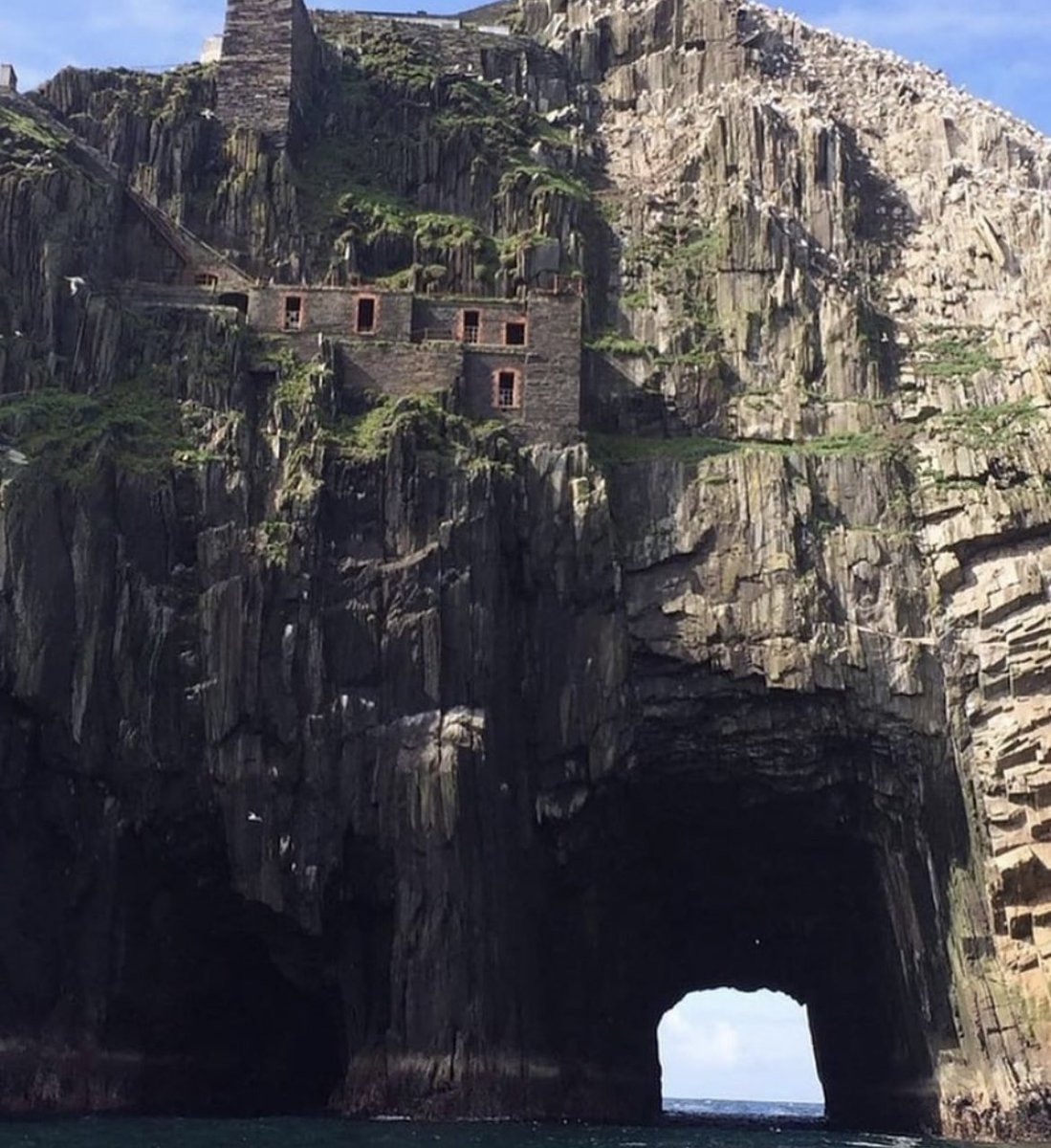
The 'Entrance to the Underworld' on Bull Rock Island in Cork, Ireland, is a striking sight. Situated 4km off Dursey Island and 9km from the mainland, Bull Rock's most remarkable feature is a narrow passage that pierces through the rock, connecting one side to the other. It occupies a strategic location at the tip of the Beara Peninsula, serving as the gateway to the Kenmare River.
In 1889, a lighthouse was erected atop the rock to replace the earlier cast-iron lighthouse from 1866. Between 1901 and 1991, a varying number of "keepers" inhabited the island, responsible for tending to the lighthouse. Their duties included maintaining the lamp, ensuring it had sufficient kerosene, trimming the wick, and cleaning the lenses. They also performed essential upkeep tasks such as painting, brass polishing, and looking after the station's boats. Over time, their roles expanded to include operating two-way radios and, in some instances, providing weather forecasts.
However, with the advancement of technology, the lighthouse transitioned to automatic operation in 1991, leading to the withdrawal of the Keepers from the station.
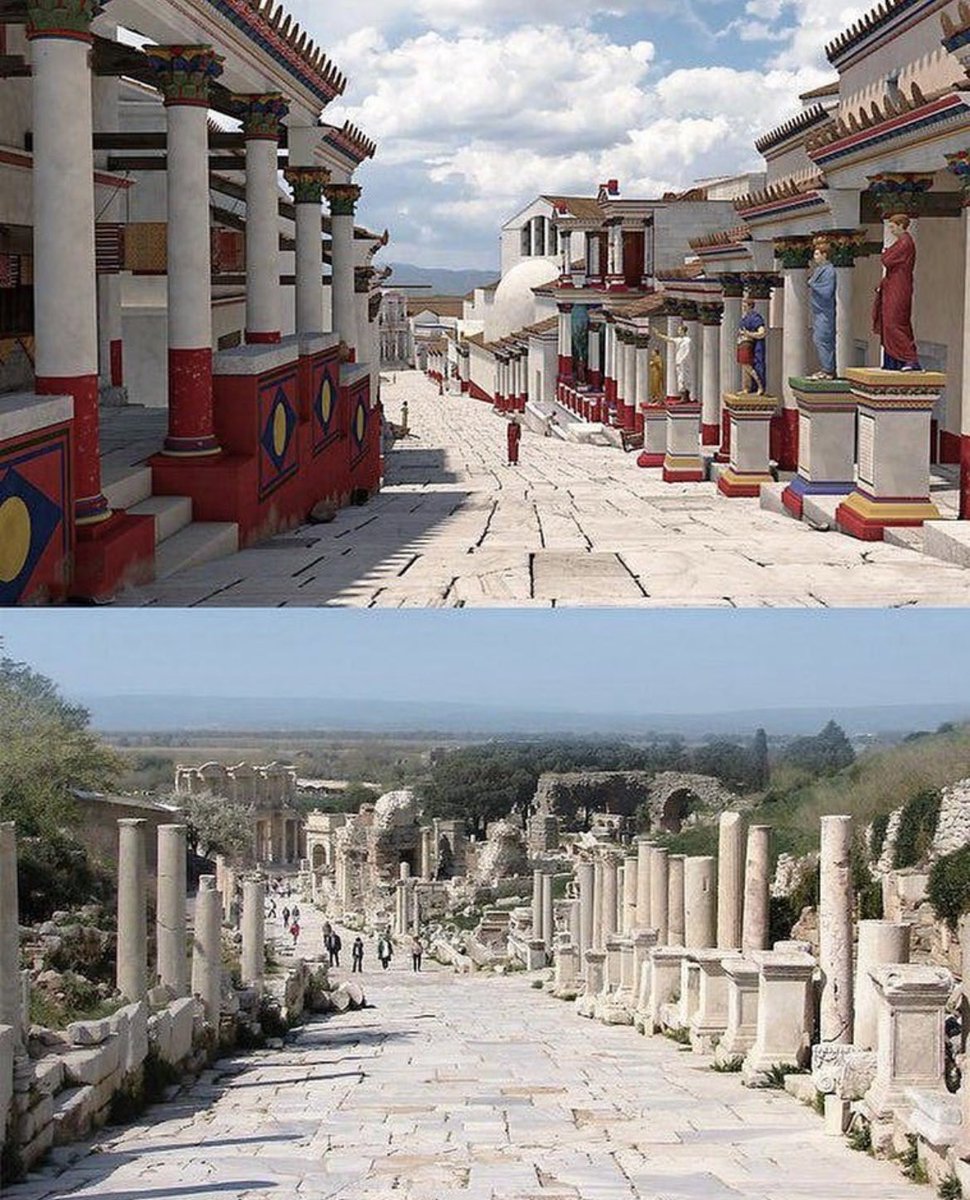
A rendering of what Ancient Greece would have looked like: Curetes Street in ancient Ephesus. Curetes Street is one of three main arteries in the ancient city of Ephesus, with its marble paving running from the Celsus Library up to the Hercules Gate. It was the heart of ancient Ephesus, lined with fountains, temples, shops under long porticoes, and the large houses of the city's most elite citizens. The facades and sidewalks of Curetes Street are filled with works of marble and mosaic tiles.
The city of Ephesus dates back 3,000 years to the 10th century BC and became most famous for The Temple of Artemis, completed in 550 BC, which was one of the seven Ancient wonders of the world. It came under Roman control in 129 BC during the days of the Roman Republic.
Though the buildings lining the streets have been damaged over the centuries by earthquakes and silt, Curetes Street still remains as a relic of the ancient world.
Frustrating for many. A lovely, historic part of #Wexford which has seen over €2m investment in recent times, but at certain times you’re just looking out over a stinking mud bath . 🙈 “Not a priority” at the moment though. 🤔 Full story 👇
https://t.co/ib9quXwEJG
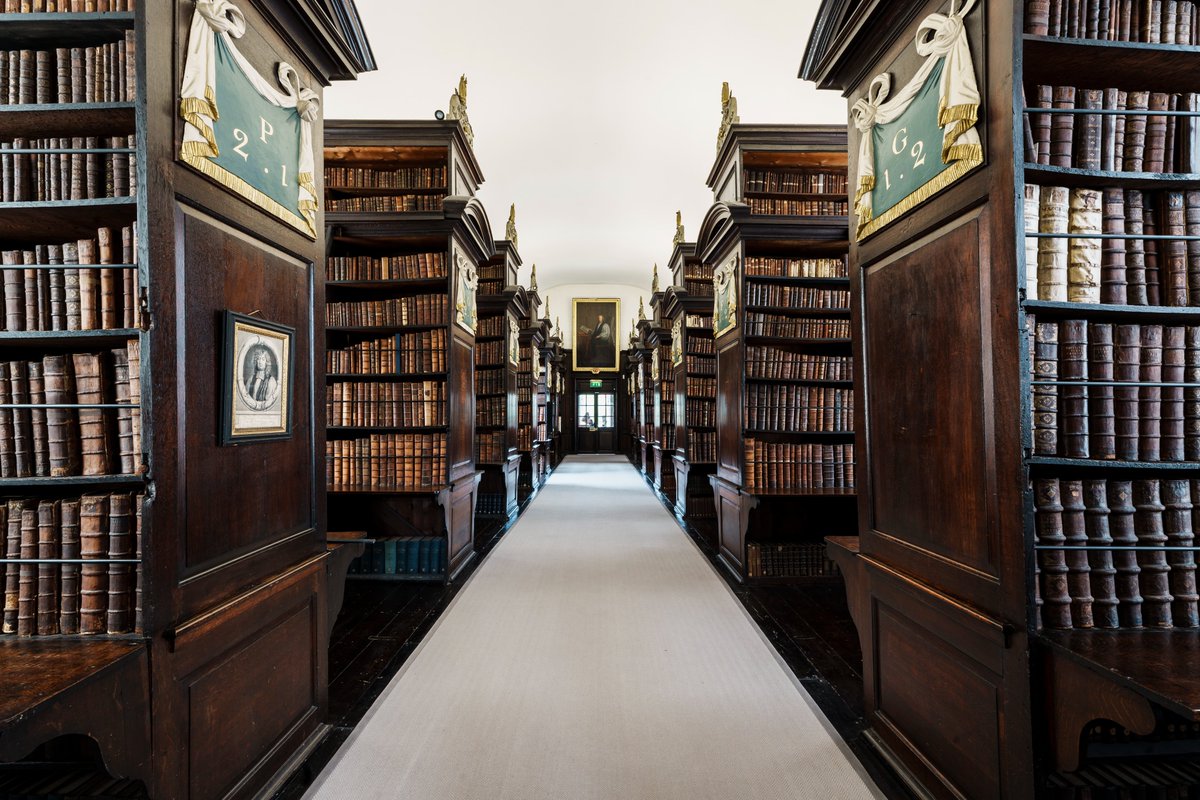
"Are the books real?"
This question is coming up more & more often on tours of Marsh's Library. Actual physical, in-person tours when people are 2 feet away from the books. It's as if some people are so used to living online that they can't quite understand physical reality.
Great concert last night by the Wexford Opera Factory singers. Wexford has progressed from being solely a Festival to also being a training centre for young opera singers and repetiteurs. Wonderful achievement. #WFO2023