WOW 🚨 Parents were asked to sign AI audio recording forms in their kids kindergarten class
The forms will authorize audio recordings to be tracked and analyzed throughout their kids time in school as they grow and age
This sounds like a long term training program for AI
“I received a packet when we got into the classroom — Right side of the folder was supposed to be stuff that we had to sign off on and return to the teacher. Here's what got me — At no point in my son's kindergarten career, or career in school period, do I find it appropriate for me to authorize you the permission, record my son's voice, him saying various different sentences, different words, to track his vocal progress, save it into a file, and then compare it later down the road to his progress through his career in school.
I was the only parent that did not authorize this permission. Why do you want to record my child's voice and save it on a file? You can track progress through different things”
There is a similar program called Amira Learning, which is an AI-powered oral reading fluency tool. The AI analyzes oral reading fluency like accuracy, rate, expression, errors and pronunciation
Recordings are allegedly stored so the teachers can track progress
So that exists, but that’s not what’s really be described by this patent. This parent says the recordings will be analyzed throughout her kids school career, meaning multiple years
This needs to be looked into
Data centers have lobbyists and cows do not. In Congress they tried to pass a bill to exempt data centers from environmental lawsuits, so more data centers could be built in pastures. I stopped them (for now) by blowing the whistle.
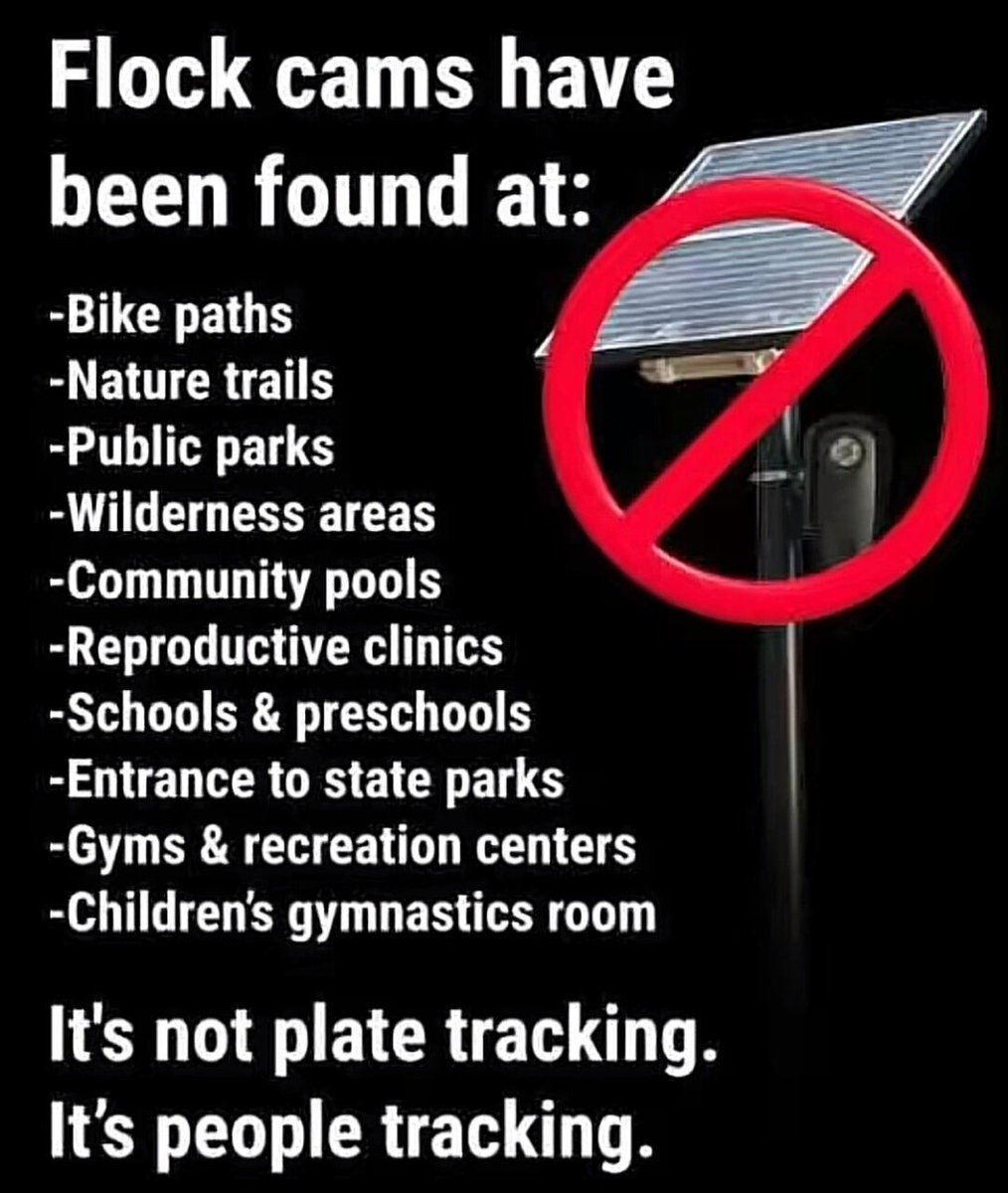
🚨 FLOCK ERROR = GUNS DRAWN
Police shut down I-94, boxed in a silver SUV, and held two people at gun point after Flock cameras flagged the car as “connected to a homicide.”
Except it wasn’t.
The alert was outdated.
Authorities forgot to remove it.
Trust the algorithm.™
🚨 Flock safety cameras are expanding to surveillance drones
“Flock just got wings — The same company behind the cameras are now putting autonomous surveillance drones in the sky”
“Now the company's automated license plate readers have spread across the country, creating one of the nation's largest interconnected video surveillance networks.
After partnering with aviation software company Aerodrome, Flock launched Flock Alpha, an autonomous police drone built to respond to emergencies before officers even arrive.
The drone sits inside a waterproof docking station waiting for a call, and when a 911 report comes in, the drone can launch automatically and fly up to 60 miles per hour. Officers don't even have to be standing nearby — And this thing isn't just flying overhead. It's got thermal imaging, high-definition cameras, and powerful optical zoom. And while according to Flock, It can even read a vehicle's license plate from 2,000 feet away. That's not terrifying at all….”
These drones are being marketed specifically as a “Drone as First Responder” used to respond to emergency calls
But that’s not really all they’re being used for. I’ve shared a video of leaked San Francisco footage of flock drones that are very clearly just roaming around looking for crimes, in other words mass surveillance
This is the surveillance state
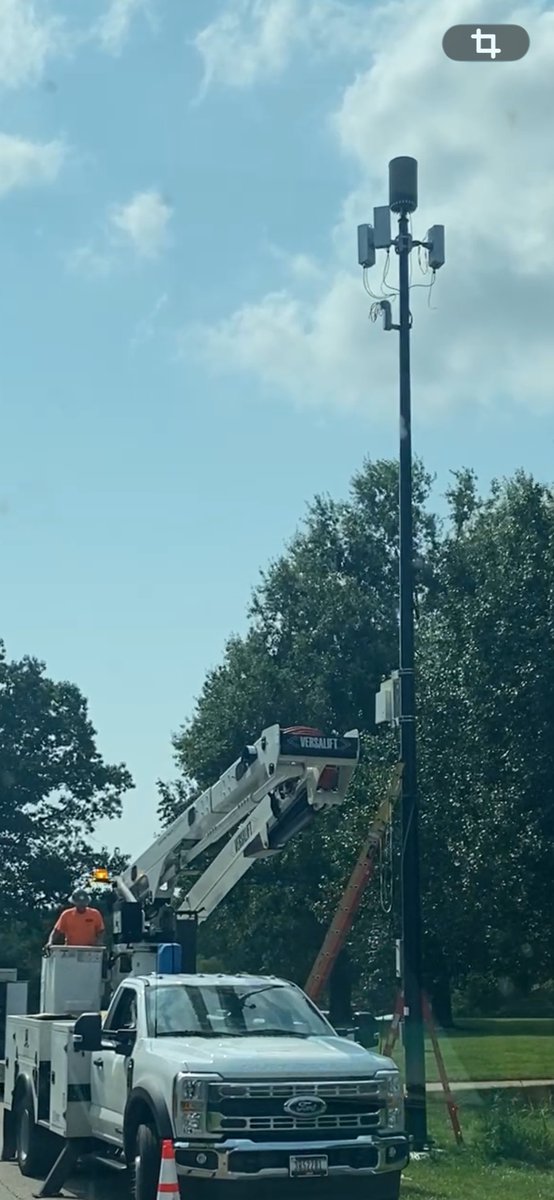
INDIANA - EVANSVILLE
LOCATION OF VIDEO: BOONVILLE - NEW HARMONY RD - BROWNING ROAD ( VANDERBURGH COUNTY)
We are being surveilled without our knowledge or consent. It was interesting the VANDERBURGH County Sheriff’s deputy was on the Jobsite; not necessarily for traffic safety but protection of the contractor installing the surveillance equipment. The VANDERBURGH Sheriff is a huge fan of these evasive data collection devices.
It’s a 5G small cell network tower and they’re everywhere, less than 1/2 Mile between poles. There’s been No notification of the proliferation of the towers. So what’s the concern, you ask?
The old towers are littering the sky scape just as the bill boards; with no intention to remove or mitigate the outdated technology.
5G small cell networks are a key part of how modern cellular systems (especially 5G) deliver faster speeds, higher capacity, and more reliable coverage in dense or high-demand areas.
What small cells are
Unlike traditional tall macro cell towers that cover several miles, small cells are lower-power, shorter-range radio nodes. They are typically mounted on:
• Slim monopoles (like in the video)
• Utility poles, streetlights, building walls, or rooftops
• Existing infrastructure to minimize visual impact
Private citizens’ phones and laptops routinely produce detailed records of location, communications, browsing, app activity, sensor data, and inferred personal attributes. This data is collected by operating systems, apps, advertisers, carriers, data brokers, and sometimes governments or third parties with network access without our knowledge and consent. The core issues are lack of meaningful control, secondary commercial use, and potential for surveillance or misuse.
What data is typically collected
• Location and movement: GPS, cell-tower triangulation, Wi-Fi, and Bluetooth beacons create precise, continuous location histories.
• Device and network identifiers: Device IDs, advertising IDs, IP addresses, MAC addresses, IMSI/IMEI (mobile), and connection metadata.
• Behavioral and content data: App usage, browsing history, search queries, contacts, calendar entries, photos/metadata, microphone/camera access (when permitted), keystroke patterns, and sensor readings (accelerometer, gyroscope).
• Inferred attributes: Algorithms can deduce health conditions, political leanings, financial status, relationships, religion, or sexuality from patterns even when those details are never explicitly shared.
• Cross-device linkage: Data from phones and laptops is often stitched together via accounts, cookies, or probabilistic matching.
Primary privacy concerns
1. Persistent tracking and profiling
Devices enable continuous, fine-grained surveillance of daily life. Location trails can reveal home, work, medical visits, religious sites, political meetings, or intimate associations. Combined with app and browsing data, this supports detailed behavioral profiles sold or used for advertising, risk scoring, or other purposes.
2. Weak or illusory consent Permissions are often presented as all-or-nothing, buried in lengthy terms, or obtained through dark patterns. Many apps and SDKs collect far more data than needed for their stated function.
Once granted, permissions can enable ongoing background collection. Users frequently have little practical ability to understand or limit downstream sharing.
3. Commercial monetization without meaningful benefit to the individual
Data is routinely packaged and sold through brokers, ad networks, and analytics firms. Citizens often receive no direct compensation or control over how their information is resold, combined with other sources, or used for purposes unrelated to the original service. This creates an asymmetry: companies profit from detailed personal data while individuals bear the privacy cost.
4. Security and breach risks: Large stores of personal data become attractive targets. Breaches, insider misuse, or insecure third-party SDKs can expose sensitive information. Even “anonymized” datasets can often be re-identified when combined with other sources.
5. Government and institutional access
Carriers, platforms, and app companies hold records that can be obtained via legal process (warrants, subpoenas, national security letters) or, in some cases, bulk collection authorities. Network-level data from cell sites (including small cells) can include connection metadata and, in certain configurations, more detailed signaling information. Concerns also arise around real-time location access or the potential for more intrusive network monitoring tools.
6. Secondary harms and discrimination:
Profiles can influence credit, insurance, employment, housing, or pricing decisions.
Inferred sensitive traits may lead to differential treatment. Aggregated data can also enable social scoring-style systems or targeted manipulation (political, commercial, or otherwise).
7. Network-side collection:
Beyond the device itself, cellular networks (including denser 5G small-cell deployments) generate connection logs, timing, and location estimates as a byproduct of providing service. While carriers are subject to legal constraints, the existence of detailed network records expands the surface of potential access or retention.
Legal and practical context (U.S.-focused)
The United States largely relies on sectoral laws (e.g., health, financial, children’s data) rather than a comprehensive federal privacy statute comparable to the EU’s GDPR. State laws such as the California Consumer Privacy Act (and similar statutes in other states) grant rights to know, delete, and opt out of certain sales, but coverage and enforcement vary.
The Fourth Amendment provides protections against unreasonable government searches, yet application to digital records held by third parties remains an evolving area of case law. Industry self-regulation and notice-and-choice models have been widely criticized as insufficient by privacy advocates.
Bottom line:
The core tension is that modern phones and laptops are powerful sensors that generate highly revealing data by default, while the systems collecting and monetizing that data often operate with limited transparency, weak user control, and incentives that favor more collection rather than less. Concerns intensify when the same infrastructure used for connectivity also enables denser location and connection logging, or when data flows to brokers and secondary users far removed from the original interaction.
The Indiana Legislature has no active sponsorship to protect the privacy of Hoosiers, truth be known, those signing the NDA’s know exactly what is occurring.
@MicahBeckwith@LGMicahBeckwith@braun4indiana@JayStarkeySen6@EvansvilleINGov@EvansvillePD@INFREEDOMCAUCUS
🫥A Midland, Texas citizen went to City Hall requesting paperwork.
He sat inside the public building for an extended period speaking with Strategic Communications Director Stewart Doreen. The footage appears to show that he never raised his voice, never became violent, and was not told what crime he had committed.
Then a Midland Police Department officer arrived.
She issued commands, placed her hands on him, and ultimately pepper-sprayed him inside City Hall.
He was taken outside in handcuffs, transported to the hospital, and reportedly handcuffed to a hospital bed. He has a heart condition and had expressed concern about being forced outside into the extreme heat.
After officials reviewed the footage and saw that he had not been acting belligerently, he was released with no charges.
No identified crime. No charges. Yet a citizen requesting paperwork from his government ended up pepper-sprayed, handcuffed, and hospitalized.
What lawful justification was there for this use of force?
This is New York Police Officer Quathisha Epps
- She made over $400,000 last year
- $204k was from her salary, the rest was from overtime which she is under investigation for “falsified overtime hours”
- Because of this, she retired and will now get $16k PER MONTH from taxpayers
Her pay was a base salary of $204,000 plus an additional $204,000 in overtime. She claimed to work over 1,600 hours in overtime
There was an internal affairs investigation that probed allegations of falsified overtime, it even included self-approving time slips (Very easy way to commit massive fraud)
Despite this she was allowed to just file for early retirement. She retired and was still eligible for roughly $16k per month
She’s receiving the money to this day
This small Greenwood neighborhood is something else.
You've got a
-Sikh community development
-Punjabi market
-Indian realtor
-CDL wanted advertising sign
-nearly 300 trucking businesses
ALL packed into the same area.
Mass surveillance is here
You see this black line above the steering wheel on this Lexus? It might not look like much but that’s the new Diver Monitor System
If you set your camera to the right frame rate, you can actually see the 2 red dots used to monitor and track your eyes
These invisible red dots are always watching you
This is the start of a mass surveillance state that can control your driving
The Lexus Driver Monitor System uses a small infrared camera and sensor
It detects drowsiness, distraction, or sudden medical issues. If you don’t respond to warnings, it can issue escalating alerts, slow the vehicle, or bring it to a stop
Now imagine if the government got a back door into these systems
Think about it this way too, this data could be shared with law enforcement or the government against your will
These systems should not be allowed on vehicles. We’ve lived fine without them for decades
In 2022 Jen Psaki was asked about claims that we were operating biolabs in Ukraine. She denied the existence of "bioweapons" programs and then called the whole thing Russian disinformation.
INDIANA - MIDDLEBURY
Middlebury is a town in Middlebury Township, Elkhart County, Indiana, United States. It is located approximately 35 miles east of South Bend, 130 miles east of Chicago, Illinois, and 165 miles north of Indianapolis. Middlebury is nestled in Northern Indiana's Amish country. As of the 2020 census, Middlebury had a population of 3,466.
"Public Comment - Privilege NOT a Right"
The Middlebury town council of baby boomer men have placed restrictions on Free Speech. The five minute video shows the counsel arguing over alleged residency requirements for the record....... The exchange is demeaning and rude during the public comment period. Just give the woman three minutes to say her truth.
I suspect these old codgers failed social studies and the chapter on the United States Constitution. It's apparent that these men have been challenged on their perceived superiority. I wonder what the State board of Accounts undercovered regarding this adminstration; we'll found out and report back....
These men are PUBLIC SERVANTS. Period....
Town council VIDEO....
https://t.co/2HMfbSYevD
@MicahBeckwith@LGMicahBeckwith@MiddleburyIN@indianagop@ElkhartCountyIN@indystar@P4PUnited@PamKeyser
SCOOP: Meet Elias Siegelman, a leftist who works for the IRS, according to his LinkedIn. He commented on a Christian non-profit's TikTok video saying, "Anyone got a grenade?"
This appears to be a direct threat to blow up Christians.
Our tax dollars pay his salary.
Is this behavior acceptable @IRSnews?
Mallory Dittmer, the Democrat nominee for South Carolina's 5th Congressional District, apparently wants Trump ass*ssinated!
She had an "8647" banner at her election watch party.
DERANGED
Democrats who call to kiII Trump shouldn’t be in elected office!
Cc @fbi