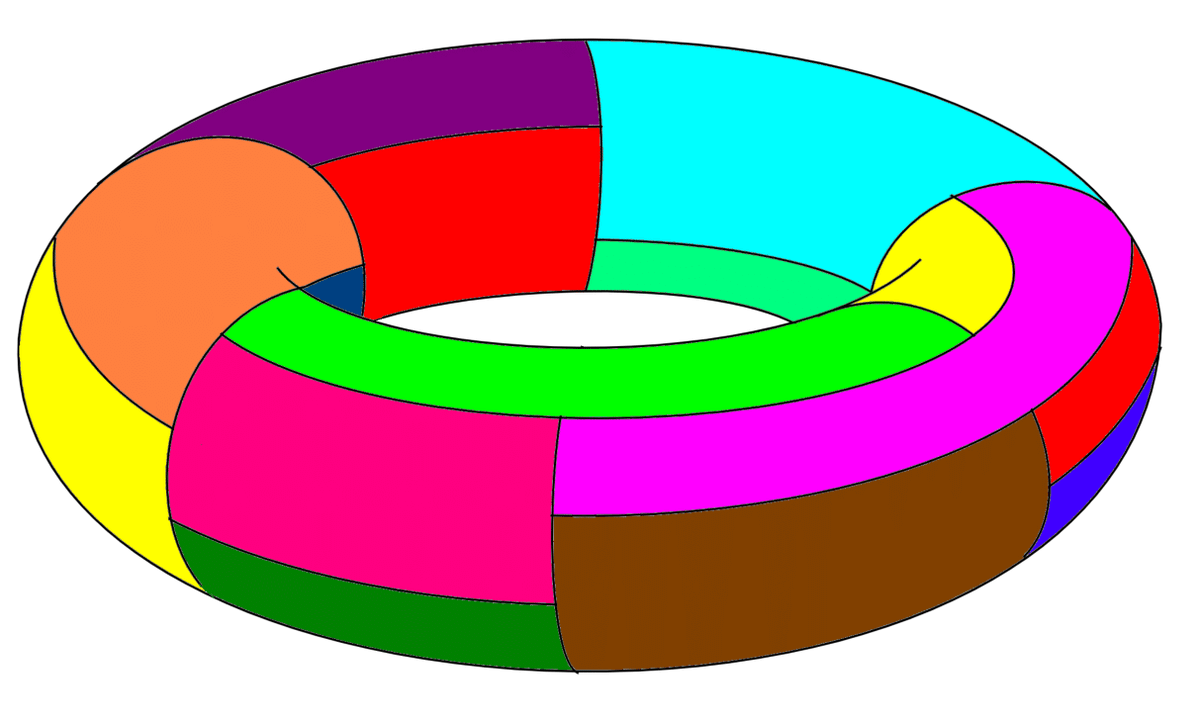
Dreyfus, Flin, Franceschi: Degenerate systems of three Brownian particles with asymmetric... https://t.co/wuxEWeLwIU https://t.co/d3HCS7dgOO https://t.co/r5s7SlPa0Q
Major breakthrough on arxiv today:
https://t.co/HLm28YnkrF
Ben Green and Mehtaab Sawhney push “Type II sum” techniques using Gowers norms, quantitative “concatenation” theorems, and the “quasi polynomial inverse theorem” to settle whole classes of major open problems about whole numbers! Their formulation is that, as p and q range over the primes, the expression p^2 + (2q)^2 is itself also prime infinitely often. (You can generalize it to p^2+n q^2 where n=0 or 4 mod 6). Mehtaab gave a beautiful lecture on this here at Princeton a few weeks ago.
I prefer the following formulation in terms of Pythagorean triples: as (x,y,z) ranges over primitive solutions to
x^2+y^2=z^2,
there are infinitely many (in fact, a Zariski dense set) for which
xyz/60
is the product of 5 prime factors! (That’s least possible, if you insist on Zariski density. The related problem for “area”, that is, xy/2, is discussed in my survey: https://t.co/Xcr0lZQbkK) After the classical parametrization
x=u^2-v^2, y=2uv and z=u^2+v^2,
with u and v of opposite parity, this amounts to the study of prime factors of:
uv(u-v)(u+v)(u^2+v^2).
So clearly you’ll generically have 5 prime factors. Basically, they can do one binary quadratic plus any number of linear terms. Amazing!!!
New paper on arxiv: https://t.co/mtRQfBx7OS
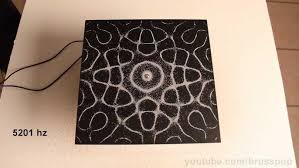
When you put some sand on a metal table, and pull a violin bow across the table’s edge, the table will find a harmonic vibrating frequency; that harmonic has some “nodal” regions, where the table isn’t actually moving, and that’s where all the sand will collect. These nodal domains form endlessly fascinating patterns, and a basic question in quantum chaos is: what happens to these shapes at higher and higher energy states; in particular, could there be, say, a single nodal curve winding all over the table, or must the nodal domains break up into millions of little curves?
As usual, it’s very difficult to answer such questions rigorously using techniques from physics alone, but in settings where there is also some number theory, more tools can come to the attack! In this paper, we look at the analogous question in the setting of eigenfunctions (harmonics) of the hyperbolic Laplacian acting on the modular surface (upper half plane modulo the fractional linear action of SL(2,Z)). The spectral resolution, due to Selberg’s “trace formula”, says that the spectrum consists of infinitely many discrete eigenvalues (corresponding to so-called Maass cusp forms), and a continuous spectrum parametrized by the (meromorphic continuation of the) non-holomorphic Eisenstein series. Here’s a picture of the Eisenstein series with spectral parameter 1/2 + 14 i.
To get at nodal domains, we look at individual geodesics, and study sign changes along those (this is an old strategy). Using some technical tools from analytic number theory and L-functions, we show that there are about as many nodal domains as there could possibly be, at least in terms of the growth exponent.
Sad to hear of the passing of Rutgers Distinguished Prof Haim Brezis yesterday at the age of 80 at his home in Jerusalem, Israel; he had just won the 2024 AMS Steele Prize for Lifetime Achievement. https://t.co/lFp8uqIBzW
(1/9) Today, I'm playing with abelian sandpile⌛️, a simple process that creates beautiful patterns. Every figure in this thread is produced by my own (sub-optimized) @Scilab code.
This better become the top election issue. https://t.co/b1VryF2AVB
Sign the petition and say yes to mathematically complicated footballs! https://t.co/SoEVpLjMEA
🏁Playing with @Scilab today, generating random permutations, drawing their matrix representations on the square [0,1]², finding LIS (Longest Increasing Subsequence) and coloring it !
On the following @overleaf document, you can visualize this method on the grid graph 𝑃ₙ×𝑃ₘ: it will draw every step of the two trajectories (ξₙ)ₙ and (ηₙ)ₙ, and the (Hamming) distance δ(ξₙ,ηₙ) between the two current configurations: have fun !
(https://t.co/4OSSDRRPHj)
🎲 Some random processes are hard to simulate (and you can't easily compute the probability of each configuration). For the Ising Model, you can use CFTP/sandwiching. Here is a #TeX/#Python code that generates an illustration of such sampling. (1/8)
🤖 #ChatGPT wrote the ‘Discussion’ section of an @MDPIOpenAccess paper in the 𝘛𝘰𝘹𝘪𝘯𝘴 journal?! The authors may have failed to remove the “Regenerate Response” label of the button when they copy-pasted ChatGPT's output 🤡 #fail Reported on @PubPeer https://t.co/6tAumNd9ym
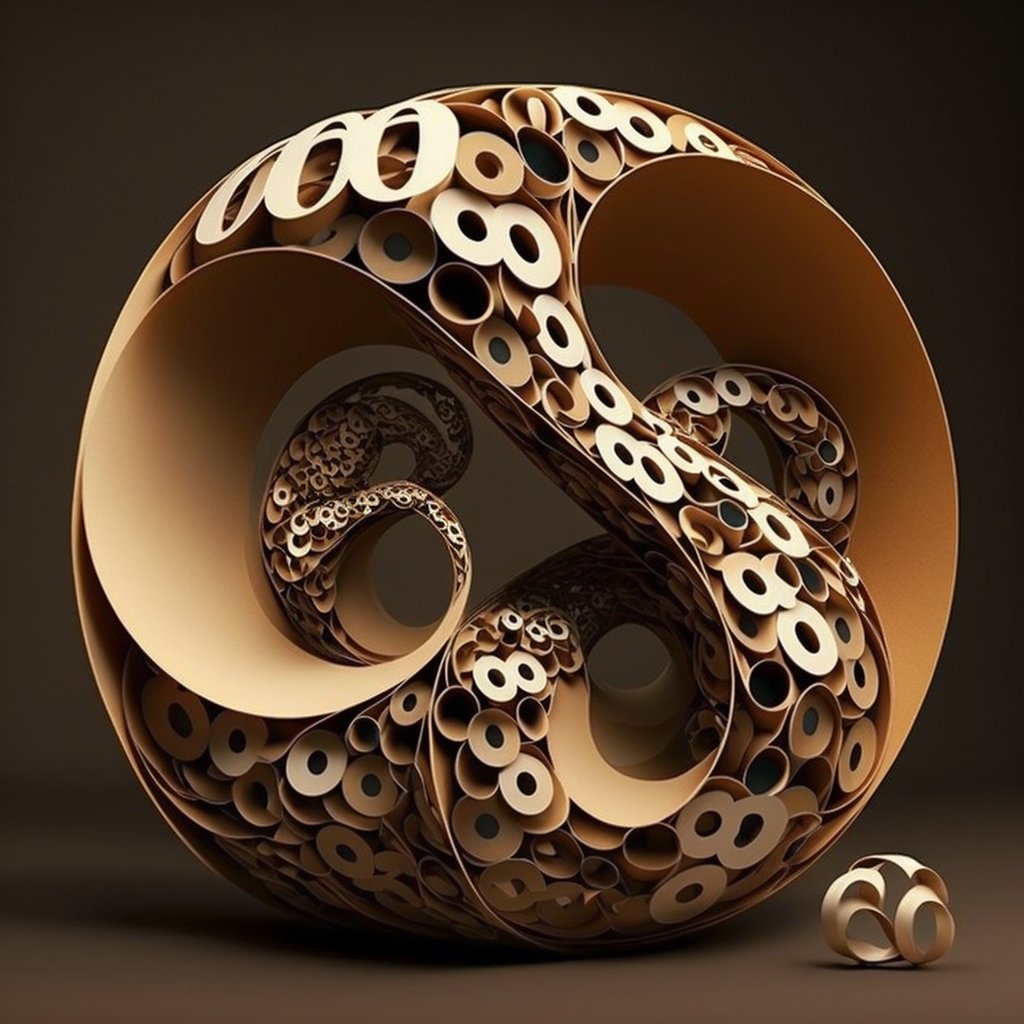
I described some of the most beautiful and famous mathematical theorems to Midjourney.
Here is how it imagined them:
1. "The set of real numbers is uncountably infinite."
One of the best known open problems in combinatorics is the union-closed conjecture, which states that if you have a finite collection X of sets such that if A and B belong to X then so does the union of A and B, then at least one element of X belongs to at least half of them. 1/










![FlinJules's tweet photo. 🏁Playing with @Scilab today, generating random permutations, drawing their matrix representations on the square [0,1]², finding LIS (Longest Increasing Subsequence) and coloring it ! https://t.co/i8JtbaZfhJ](https://pbs.twimg.com/media/F3vII3ZWwAAeKgr.png)