Check out the analysis of the #JIVEs/#MEHRLIN projects on the potential of #hydrogenbuses 🚍💧
By 2050, #Europe could have 60,000 #H2buses using 1,700 tonnes of hydrogen per day. This success depends on a viable #market scale and a strategic planning.
🔗https://t.co/YbhzaEOU5v
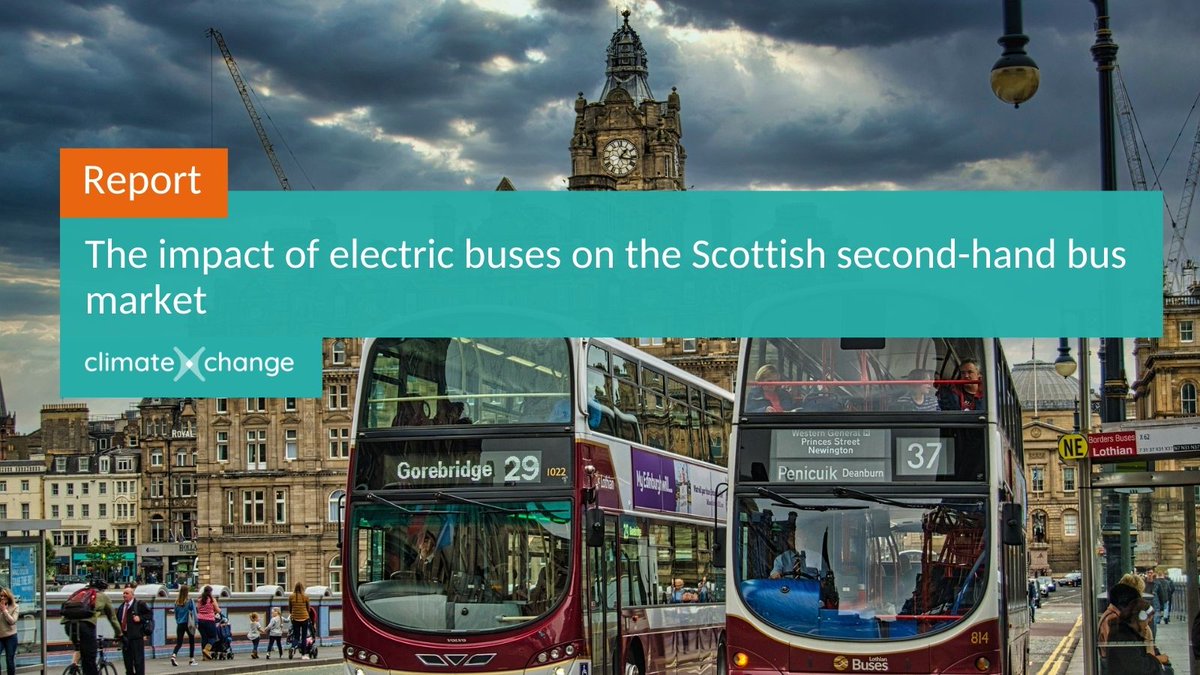
Our latest report is about a study that explored how a move to battery electric buses might impact the second-hand bus market, new buses, big and small operators in Scotland. https://t.co/jLk0NS1ycH
@TimHowgego#transport#ElectricBuses#ElectricVehicles
Thoughts on managing societal responsibility around matters of #ClimateChange policy, especially transport: https://t.co/5TMzey10Wp Comprehensible problems -> Risk of despair -> Familiarity accelerates: But focus on adequacy of process, not pace of delivery.
Fine for @grantshapps to market political narratives. Not fine for @transportgovuk to bend analytic truth in support: https://t.co/LN7SiiFYaB Consequence is future research/stats/policy work will be distrusted by the professionals that depend on it. Should concern @CommonsTrans.
40% of people in England never use National Rail in a given year (NTS0313). Less than 10% use it weekly. Ergo so long as the electorate believes trains are Great, the reality is politically less important. Contention: Stories are far cheaper to engineer than track & trains.
Narrative-vs-reality could dominate rail policy: "In a rational world they would just cut the branch lines – but they can't do that politically because ministers have said they are reversing Beeching." @christianwolmar https://t.co/G33EzZJ8Wk Full dilemma: https://t.co/Yks4I3AZqt
Sunak has given #GBR 3 years to recover or rebalance. Hoping for recovery is easiest. Reality could be 1/2 commuters lost, impling ~£2B/year (10%) cost savings. But commuter lines will remain relatively well used, so hard to cull directly. Tricky both for unknowns & for strategy.
Notably last weekend saw the first substantial drop in car traffic since it normalised in June https://t.co/V75R7zxk9S Week on week, travel by every mode was down just a little. #StormArwen or #omicron nervousness? Too early to be sure.
Latest transport use graph to November 29 2021. There's a hint of a downturn at the end of last week, perhaps new Covid variant fears? Perhaps the storm? Usual 28-day moving average, road is solid line, rail is heavy dashes, Tube is light dashes.
More fascinating evidence lurking via @IpsosMORI https://t.co/MQyIaNxPk7 Everywhere perceives rail as rather important for UK connectivity... while in most cases rail's actual use is minor vs other modes. Note the 30% in Northern Ireland, which has no direct rail links to UK.
Dissappointed but not surprised that @SirPeterHendy's #UnionConnectivityReview hasn't got to grips with why UK's nations are different https://t.co/aVeVEC8cwA & thus might need different approaches to cohere a Union. Psuedo-TENS solution = funding nation schemes in name of Union.
Killer stat on p20: 45% travelled to another UK nation in 2019, while 57% travelled abroad. So in actual popular travel, UK has less cohesion internally than externally. Fatal flaw. This is why popular perception needs to be the policy kingmaker - actual use won't justify the UK.
So #Covid-era TOCs weren't primarily reacting to passenger need or operational reality, but to their own historic ability to manage commercial risk. Hence culturally, eg @LNER maintained services for almost nobody. Conclusion: Nat Rail is first financial, trains & service second.
Hypothesis: @northernassist didn't halve timetable in response to wildly disproportionate patronage loss. Ergo was guided by prior financials: So heavier Covid-era service reductions away from London largely reflected degree of subsidy dependence: TOC commercial risk capacity?
And so it begins https://t.co/15WGBbBQfl While @transportgovuk models support @phillipinman's economic case, prevailing right-wing policy is mostly perception (see Okehampton). Protecting such networks with high fixed+sunk costs will disregard much actual local use (bus, cycle).
Sunak's frequency parity could part be achieved by London reductions🙄https://t.co/XDOIirJR53 At ward level, average Londonder has twice as many PT departures as people in Mets, x4 rest-England https://t.co/KTqJ1pM250 So morally, TfL could 1/2 services before any English bailout.
Context is important here https://t.co/SJPw0LCE8g Much local public transport is vulnerable, & any govt financial intervention needs to be considered & equitable. Which is not how TfL has been supported so far. Massive upcoming test for @grantshapps, given #RailBetrayal feelings.
(1/4) 🧵 Alongside the concern over long distance rail plans for the North, COVID continues to cast a long shadow over the future of local public transport. Here’s a short thread on where things stand.
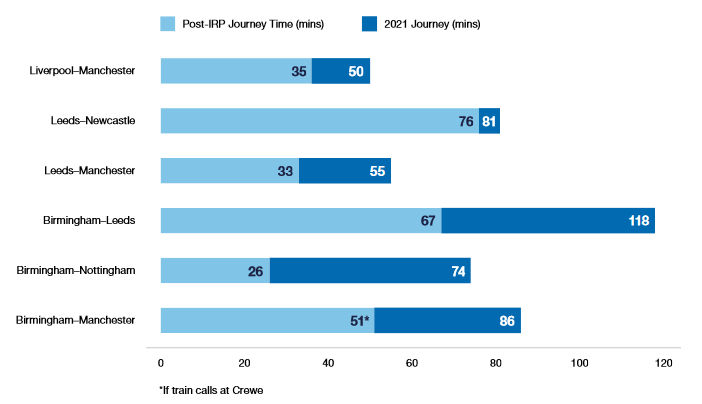
This from @helenpidd https://t.co/ethUH15VzR explains why time saving are not quoted from #Liverpool to beyond Manchester: Liverpool-Leeds/NE trains would in future need to reverse at Manchester, nullifying much of the track speed gain. Genius. Has @MayorLpool noticed yet?
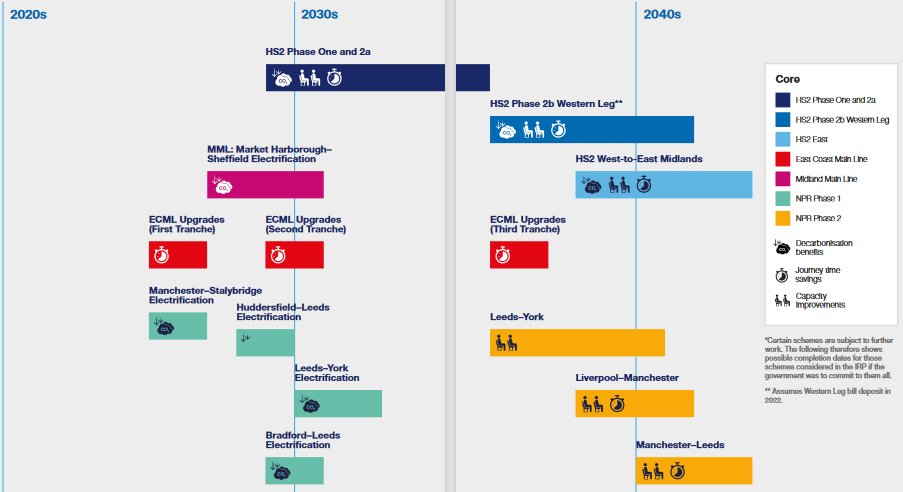
The #IntegratedRailPlan stinger is on pages 134-5 https://t.co/j7M63q7Aog:
➡️Nothing starts until at least 2025.
That's after the current parliament. Hence no money in the recent budget. And core cross-Pennine journey time improvements remain 20+ years away. Fantasy politics.
On #r4today@grantshapps referred to journey time improvements "this decade". Yet p136 lists only electrifications. There, Transpennine is "delivered by 2030-32": Next decade. 33min Man-Leeds surely presumes new track: 2040+? No budget this parliament, so aspiration, not action.