Everyone knows the vocabulary. Everyone has heard the speeches.
Whitehall must be more agile, more mission-focused, more digital, more accountable, more joined-up, more innovative, more outward-looking.
The words change a little with each administration, but the ritual is repetitive. A new government arrives, a new review is launched, a new unit is created, a new organogram is drawn, a new acronym is born. Then the system absorbs the initiative, waits for ministerial attention to move elsewhere, and carries on much as before.
If the sweeping Civil Service review just announced by the Cabinet Secretary becomes another diagnosis of known problems, it will join the crowded shelf of well-intentioned failure.
But it could mark the beginning of something different...
✍️@TimKnoxLondon & @Kakabadse
Read more: https://t.co/FhiYOavYWN
Why have people been sacked for failing to follow protocol over the hiring of Peter Mandelson, but not for the disastrous decision to appoint him in the first place?
The dirty truth is, that's how Britain's state works: process beats outcomes.
@TimKnoxLondon and Nada @Kakabadse
https://t.co/VmICIS60ke
Our state seems to think if you follow the rules, then the outcomes are secondary
✍️ @TimKnoxLondon & Nada @Kakabadse
Read more: https://t.co/kHxJdFF0Vi
ICYMI: Is it any wonder that Britain is in such a mess today?
@TimKnoxLondon on the short-termism that keeps Westminster and Whitehall from fixing anything
The average tenure of a FTSE 100 CEO is six years. For Cabinet ministers since 2019, it's eight months. On average, senior civil servants have served in post for less than two years.
Read more: https://t.co/BadTBngVXT
When experienced insiders conclude that “it’s not about people but structures”, that should prompt serious reflection.
The UK has the worst of both worlds – a highly centralised government without the capacity, clarity, and management discipline to guarantee delivery.
As EGF showed last year, leading companies are showing the better way: put power in the hands of frontline teams, shrink the corporate centre and use that centre to set a clear vision and analyse data from across government. https://t.co/wYQlDzglPj
‘Who governs Britain?’ asked Ted Heath in the February 1974 general election, only to receive an answer he neither liked nor expected.
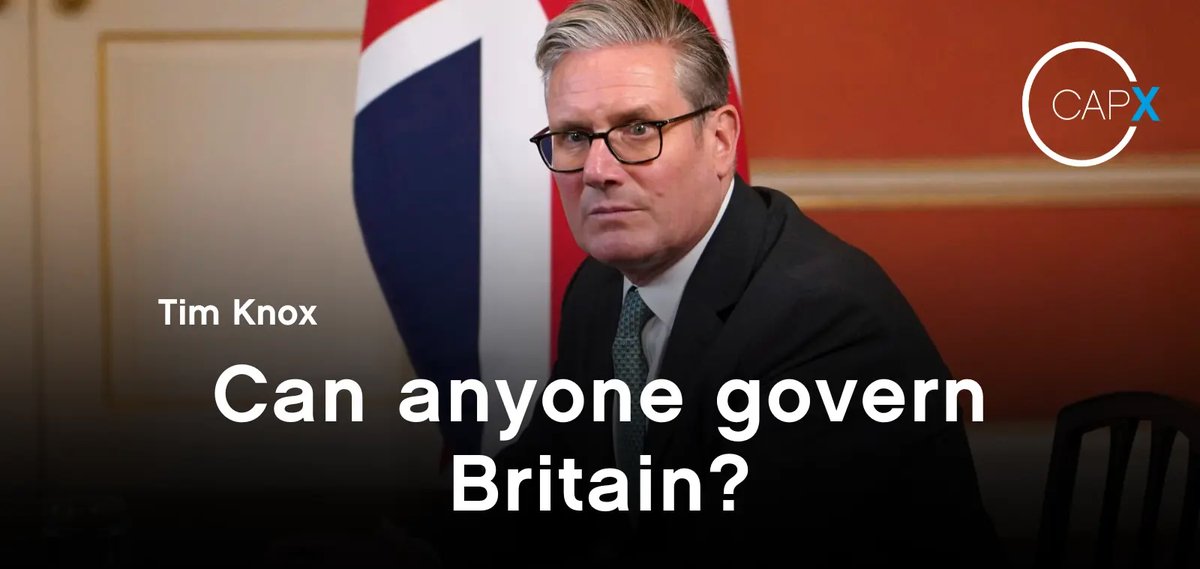
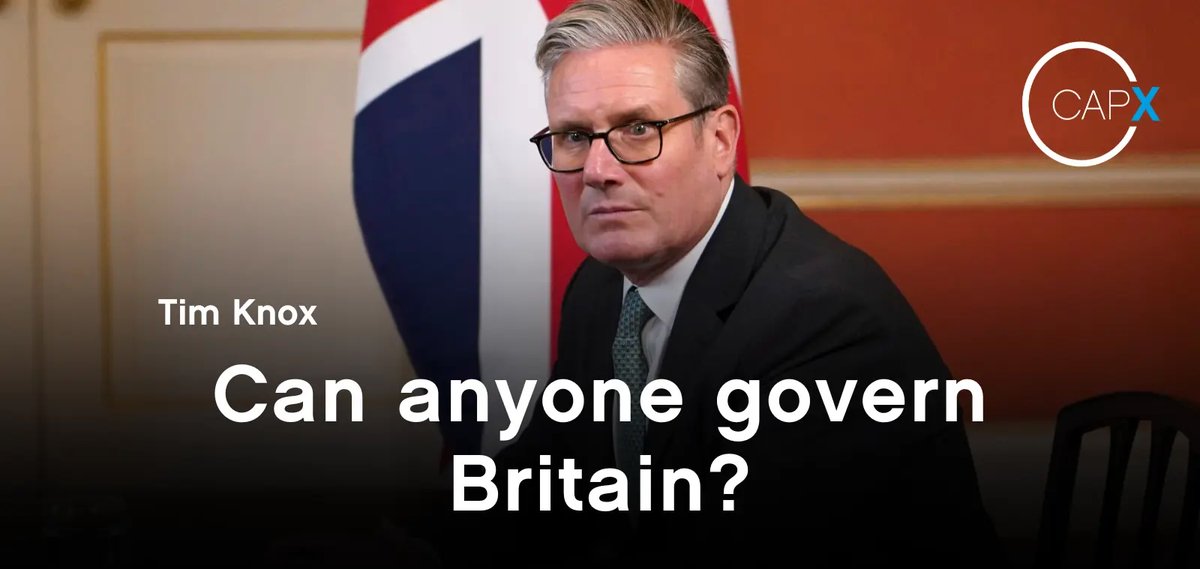
But today, when a Prime Minister with a majority of more than 150 seats is said to be fighting for his political life; when a Cabinet Secretary departs after barely fourteen months; when the average tenure of a Cabinet Minister since 2019 is just eight months – a more relevant question presents itself: can anyone stay around long enough to govern Britain?
We are getting through the leading figures in our political establishment at an unprecedented – and accelerating – rate. And the same pattern holds for the senior civil service.
How on earth can anyone possibly get to grips with any problem at these massive organisations if no one at the top has any institutional memory, no subject expertise, no time to develop and communicate a vision of what they want to achieve?
✍️@TimKnoxLondon
Read more: https://t.co/BadTBngVXT
We are burning through the leading figures in our political establishment at an accelerating rate – can anyone stay around long enough to govern Britain?
✍️@TimKnoxLondon
Read more: https://t.co/CmNnCLk5ue
Can anyone govern Britain?: We are burning through the leading figures in our political establishment at an accelerating rate https://t.co/DTzN5MxRYG via @CapX
The uncomfortable consensus of 2025 wasn’t that success is impossible. It’s that success is unevenly recognised and rarely learned from. The system doesn’t lack examples of success. It fails to scale them.
By the end of 2025, the uncomfortable consensus was clear. The problem is not effort. Not intent. Not funding alone. It is a system that rewards process over outcomes and obscures accountability. Diagnosis, at least, is no longer in doubt. The real test is what follows. Keep following us in 2026 as we explore what it takes to reform the system.
If we don’t achieve the £19bn efficiency savings, what will the future look like, and how will the Chancellor achieve her £22bn of headroom by 2029/30? We’ll unpack this more over the coming weeks.
If we want to see real and lasting change to the efficiency and effectiveness of government, if we want to realise REAL savings, we need systematic transformation.
Welcome to the @EffectiveGovUK X feed. We’re opening with our response to yesterday’s Budget and how well placed it is to deliver effective and efficient government.
The last five Prime Ministers have all had to contend with similar backdrops of rebellious backbenchers, dissatisfied ministers and plunging poll ratings. Even those who have won huge majorities at a general election have, within months, seen chaos and confusion disrupt all they tried to do.
The root of the problem is at least as much about institutional shortcomings as about the capability or integrity of any individual, and much of the problem lies in the innermost department of government – the Cabinet Office – which acts in the very opposite way to today’s most successful corporate HQs.
The size of the Cabinet Office has increased fourfold since 2010, while that of corporate HQs has halved. While corporate HQs have become more tightly focused and analytical, it has accumulated diverse responsibilities without any strategic coherence.
The problems at the Cabinet Office are so deep that it should be abolished. In its place, we need a far smaller and more effective Office of the Prime Minister (OPM). Only radical surgery can bring the heart of our government back to health.
✍️@TimKnoxLondon
Read More: https://t.co/9YYpONW7U5
Michael Jary: "Each premier at some point reaches for the same weary metaphor: the “levers of power” turn out to be disconnected. The truth is even bleaker. The government can no longer run the government. This isn’t mere frustration; it’s an emergency.
https://t.co/BmaoXCHo1q
We need to acknowledge the chronic weakness at the heart of government and make it truly comparable to an effective modern corporate HQ: flexible, dynamic, decentralising, data driven https://t.co/I8xqiN4JYu via @CapX