UNA VENGANZA FRÍA EN VIVO.
Prince subió al Rock Hall sin ensayar solo para escupir el solo de guitarra más violento de la historia y destruir los egos de la industria. Brutalidad pura en alta fidelidad. 🎸🔥👑 #Prince#RockHall
¿Es este el mejor solo de todos los tiempos? 👇
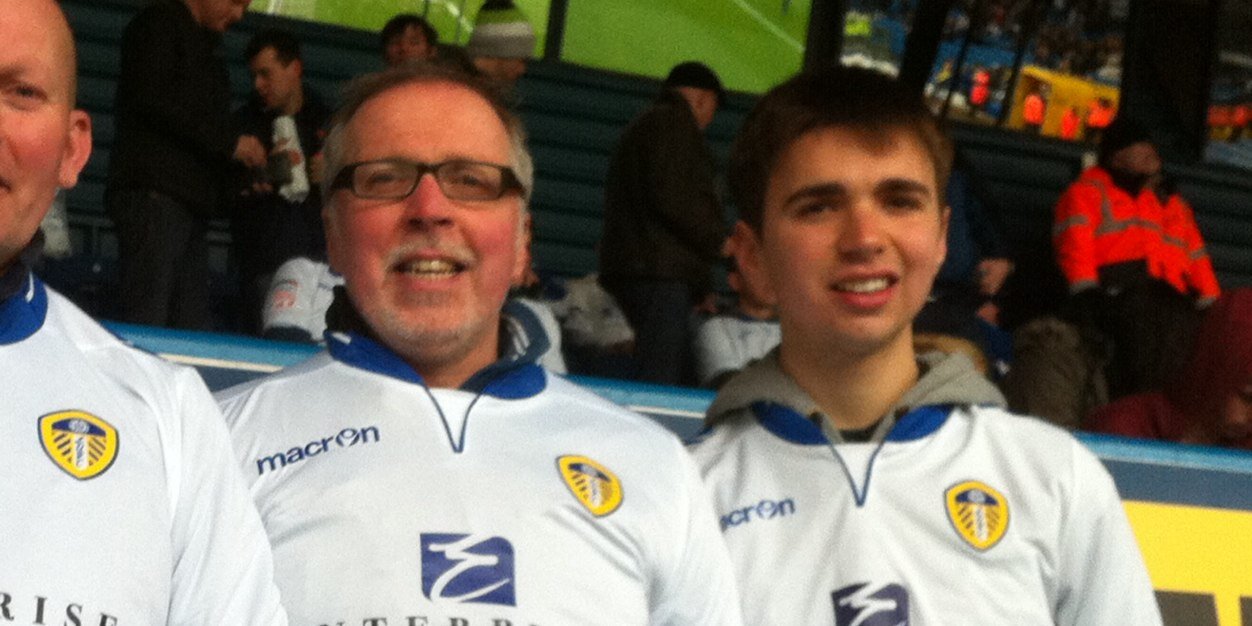
It’s not until you look back you really realise how mental this was.
The only priority in most fans heads was promotion, but to win it like that, right at the death. One of the best feelings. #LUFC
Prince was asked to do a solo on a cover of While My Guitar Gently Weeps and he showed up to the rehearsal and barely played anything. Didn’t have any solo ready at all and didn’t play one. They asked what he was going to play and he just said “Don’t worry about it.”
Then, on the night of the performance he just looms out of the shadows and plays this. The way he pivots off that F# root note into Dorian mode is so good. Massively underrated guitarist.
Freddie Mercury’s Final Bow: A Last, Unforgettable Goodbye
Director Rudi Dolezal recalls the poignant moment of the Queen legend’s last video.
“He knew how ill he was, and that this was the last time he’d ever be in front of a camera,” Dolezal says of Mercury during the filming of *These Are the Days of Our Lives*. Freddie was fully aware that his time was limited and understood this was the moment to say goodbye to his millions of fans. No longer able to perform on stage, the music video became his final opportunity to communicate with the world.
The ballad itself is tender and reflective — a wistful look back at the years gone by, made even more moving by the fragility of Freddie’s voice. It was one of the last songs the band released during his lifetime, and the video marked his final bow.
Rudi Dolezal, the acclaimed Austrian director who had worked on numerous Queen videos as well as projects for the Rolling Stones, Frank Zappa, and Tom Waits, was called in to film it. “He knew how ill he was, and that this was the last time he’d be in front of a camera,” Dolezal told *People*.
Their professional relationship began more than a decade earlier, when Dolezal was a young journalist interviewing the band for German television. After the interview, he jokingly offered, “If you need a good director for one of your next videos, give me a call.” To his surprise, Queen’s manager called him in 1985 to shoot the video for *One Vision*, marking the start of a lasting collaboration.
Dolezal and Freddie developed a unique working language. “He was very fast, incredibly intelligent and clever, always keeping you on your toes. He was impatient; often he wouldn’t finish explaining what he wanted, but he expected it immediately,” Dolezal recalls.
Freddie held himself to the same exacting standards. “If I said, ‘Freddie, we need you at 5 a.m. to catch the sunrise,’ he was there, no question,” Dolezal said.
Their relationship soon became personal as well as professional. One night, as a party wound down at Freddie’s house, Dolezal remembers him surrounded by framed gold records, saying, “You see all this gold? Why do you think I’m still doing this? I want to know I’m still number one when I’m behind the microphone. That’s the kick — it’s successful because I proved it to myself.” But success came with a cost: “For each step up the ladder, you have to leave something you love behind. You may lose friends, maybe even family — that’s the price you pay.”
By May 1991, Dolezal knew Freddie was unwell, but the band did their best to keep things normal on the *These Are the Days of Our Lives* shoot. “AIDS was never a topic. He didn’t want to talk about it. Most people didn’t even know 100 percent except the band and a few in the inner circle. He didn’t want to burden anyone with his tragedy,” Dolezal says.
Filmed in black and white to hide his physical decline, Freddie’s emaciation is still visible. “The bottom of his foot had a completely open wound,” Dolezal recalls. “He must have been in terrible pain, but you never saw it. He delivered every single time. He didn’t want special treatment. He was incredibly brave. In retrospect, it would have been so easy to act like a diva — but he wasn’t.”
As the shoot wrapped, Freddie asked for one more take on the final lyrics: “Those days are gone now but one thing’s still true / When I look and I find I still love you.” Summoning every ounce of strength, he struck a final heroic pose, collapsing softly into himself with a gentle laugh. Looking directly into the camera, he whispered, “I still love you,” snapped his fingers, and walked out of frame with grace and flair.
“In those last few seconds, he gave us a summary of his life: ‘I was a big superstar, but don’t take it too seriously.’ And then, ‘I still love you,’ for the fans. That’s how he walked out of life — artistically, on his own terms,” Dolezal said.
Even in his final days, Freddie’s advice to Rudi lingered: “Never try to be second best. Always go for the impossible.”
Long live Freddie.
CANCER HAS BEEN CURED
Ivermectin & Fenbendazole cure cancer.
Pass it on.
BREAKING NEWS: First-in-the-World Ivermectin, Mebendazole and Fenbendazole Protocol in Cancer has been peer-reviewed and published on Sep.19, 2024!
The future of Cancer Treatment starts NOW.
From True Stories on Facebook:
Jeremy Glick was 31 when hijackers seized Flight 93 and threatened to blow it up. He called his wife, told her he loved her, learned the plane was part of a larger attack, and then helped organize the passengers to storm the cockpit.
Glick had no weapon.
He was not a soldier.
He was a sales manager, a husband and the father of a three-month-old daughter.
He was also a former national collegiate judo champion and black belt.
On September 11, 2001, Glick was flying from Newark to San Francisco for business.
Then the hijacking began.
The passengers were forced toward the back of the Boeing 757.
A hijacker claimed there was a bomb.
Another had a knife.
Glick called his mother-in-law's home and asked for his wife, Lyzbeth.
When she came on the line, he told her what was happening.
Then he told her something even worse.
He had learned about the attacks on the World Trade Center.
The plane wasn't simply being hijacked.
The passengers realized the aircraft could be turned into a weapon.
Glick told Lyzbeth that he and several other men were considering rushing the hijackers.
He asked what she thought.
She told him to do what he had to do.
Then the passengers began voting.
Fight back.
Or wait.
The decision was made.
They were going to take the cockpit.
Glick remained on the phone with his wife as the plan developed.
He told her he loved her.
Then the passengers moved.
Glick, Todd Beamer, Tom Burnett, Mark Bingham and others rushed toward the hijackers.
The cockpit voice recorder captured the struggle.
The plane began pitching violently.
At 10:03 a.m., Flight 93 crashed into a field near Shanksville, Pennsylvania.
Everyone aboard died.
But the plane never reached its intended target.
The 9/11 Commission concluded that the passengers' actions prevented the hijackers from completing their mission.
Glick's wife was left with their three-month-old daughter, Emmy.
He had called her knowing he might not come home.
He had told her he loved her.
Then he went forward.
Jeremy Glick boarded Flight 93 expecting a business trip.
Less than an hour later, he was deciding whether to fight four armed hijackers at 30,000 feet.
He knew the odds.
He knew there was a bomb.
He knew the plane was probably going to be used to kill more people.
And he still went.
He was 31.
He never came home.
But Flight 93 never reached its target.
Two MASSIVE COVID shot studies involving 8.7 MILLION people confirm Fauci and Gates injected the world with CANCER:
BREAST CANCER: +54%
PROSTATE CANCER: +69%
LUNG CANCER: +53%
BLADDER CANCER: +62%
COLON CANCER: +35%
STOMACH CANCER: +34%
THYROID CANCER: +35%