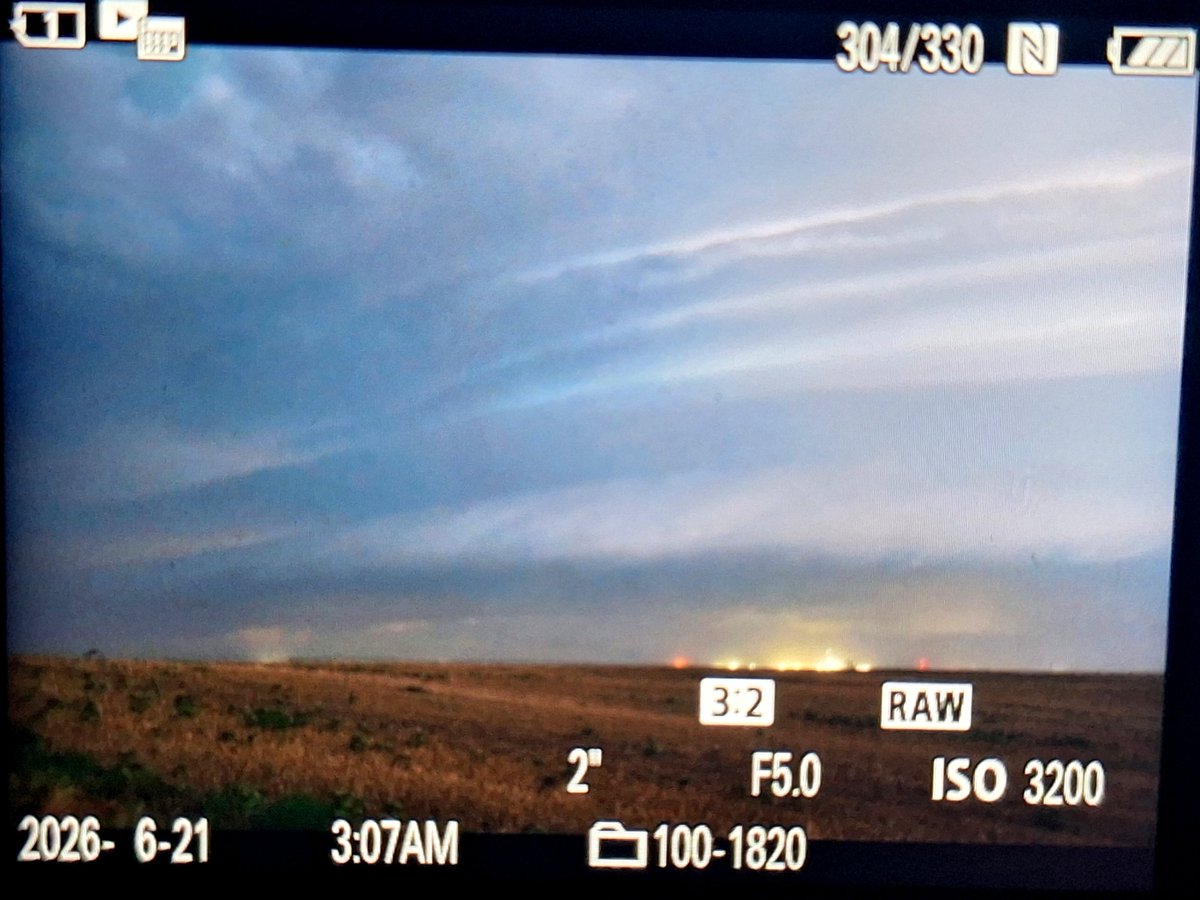
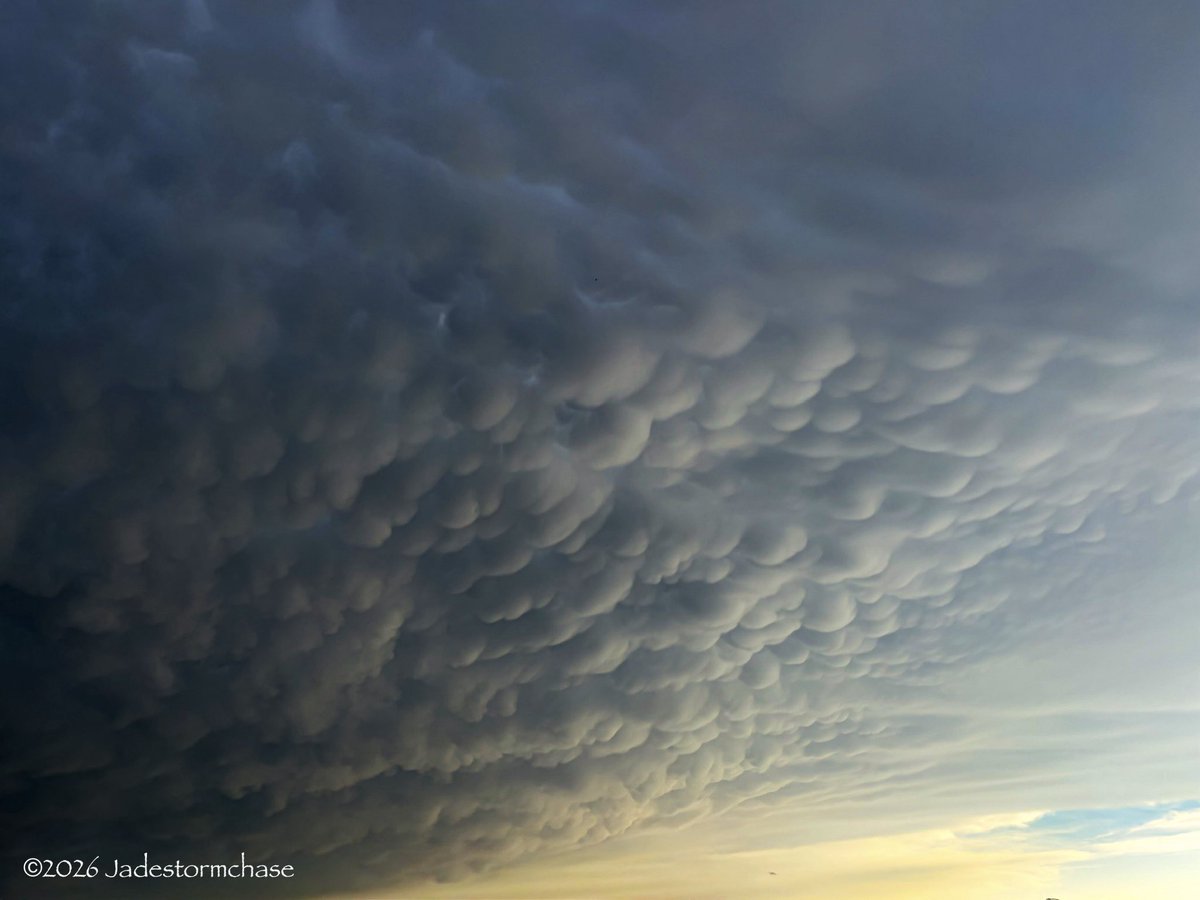
We are getting crushed. Pushing three straight hours. This is just dumb! 🤪
I’ve seen a lot in my 25 years as a Met/chaser, but damn, this is not good. The rain won’t stop! #Gulfport
Voyager 1 is 24 billion kilometers from Earth.
It communicates with us using a 23-watt transmitter.
Less than a refrigerator light bulb.
The signal takes 22 hours to reach us, traveling at the speed of light.
By the time it arrives, it's 20 billion times weaker than the power of a digital watch battery.
NASA's Deep Space Network picks it up using 70-meter dish antennas cooled to near absolute zero to reduce electronic noise.
The engineering required to hear a 23-watt signal from 24 billion km away is arguably more impressive than the spacecraft itself.
Launched 1977.
Still transmitting.
Still being heard.
We built something that works perfectly, 47 years later, in conditions no one has ever tested in.
That's what engineering for the long term looks like.
On June 6, 1944, a 56-year-old general with a secret walked onto Utah Beach under fire, armed with a cane and a pistol.
The secret: his heart was failing. He had hidden it from the army doctors so they wouldn't pull him from the mission.
His name was Theodore Roosevelt Jr. Son of the President. He had begged three separate times to lead the first wave ashore at Normandy before his commanders finally said yes.
When his landing craft drifted 2,000 yards off course, every instinct said redirect the following waves to the correct zone. Instead, Roosevelt walked the beach himself, alone, under artillery fire, cane in hand, reading the terrain.
His verdict: "We'll start the war from right here."
He then stood on that beach and personally greeted every regiment that landed after him, pointing them inland, cracking jokes under shellfire, steadying 18-year-olds who had never seen combat. He did this for hours.
Years later, Omar Bradley was asked to name the single most heroic act he had ever witnessed in combat.
His answer, without hesitation: "Ted Roosevelt on Utah Beach."
Roosevelt's son, Captain Quentin Roosevelt II, also landed at Normandy that same morning. He was named after his uncle, Quentin Roosevelt, who had been shot down as a fighter pilot over France in World War I.
Three generations. Three wars. One family.
Theodore Roosevelt Jr. died in his sleep 36 days later. Heart attack. The thing he had been hiding finally won. He never learned he had been awarded the Medal of Honor.
He was buried at the Normandy American Cemetery.
In 1955, his family had his brother Quentin, killed in WWI, exhumed from where he fell in France and reinterred right beside him. Quentin is the only World War I soldier buried there.
Two brothers. Two world wars. The same French soil.
Their father had once said: "Do what you can, with what you have, where you are."
Both of his sons did exactly that.
This is something I have never seen before on satellite.
Clouds perfectly outlining roads.
Just incredibly neat imagery of Houston, Texas this morning.
Massive shoutout to @Emokwx who discovered it.
The classic four-quadrant model for jet streaks runs into issues when the jet streak becomes curved, introducing centripetal accelerations. Here's how the conceptual model updates with the introduction of curvature:
5/19/26 Tuesday 7:20AM:
This feature just northeast of the Bahamas is called a TUTT low (Tropical Upper-Tropospheric Trough) and is heading generally west around the subtropical ridge/Bermuda High. Although it looks to have some spin, it is more of a mid to upper level feature and these typically do not make as good candidates for a tropical cyclone to develop. If a surface low ever develops under ones of these, then we would be watching for possible slow/steady tropical development. However, this one is not favored to occur but it could hold together as it approaches the SE coast for some much needed rainfall - even if just a little. Right now, most model scenarios fizzle it out, but it could gain some momentum over the next 24-48 hrs and bring rains with it unless it gets pulled around to the north - where it would get stretched out and pulled apart along an incoming cold front by Thurs night into Friday. Either way, we always watch these features closely. :)
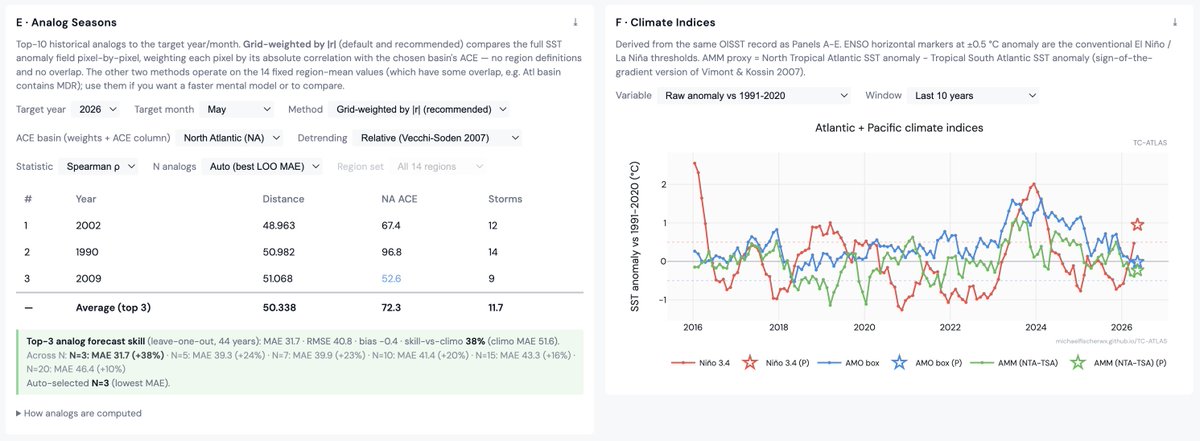
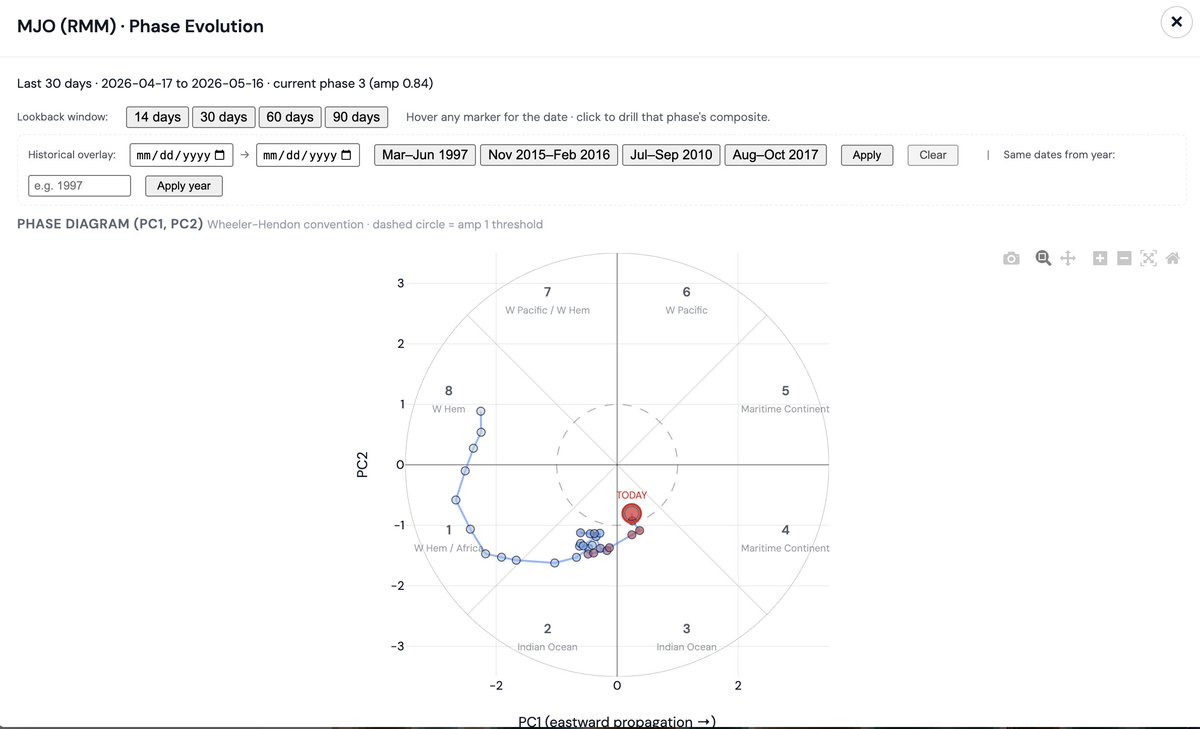
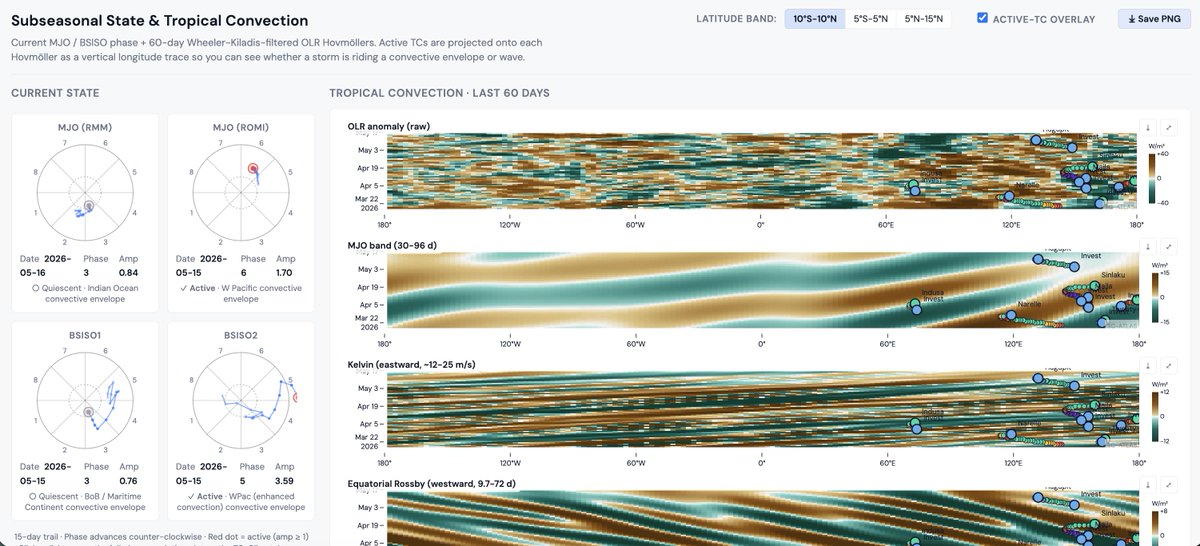
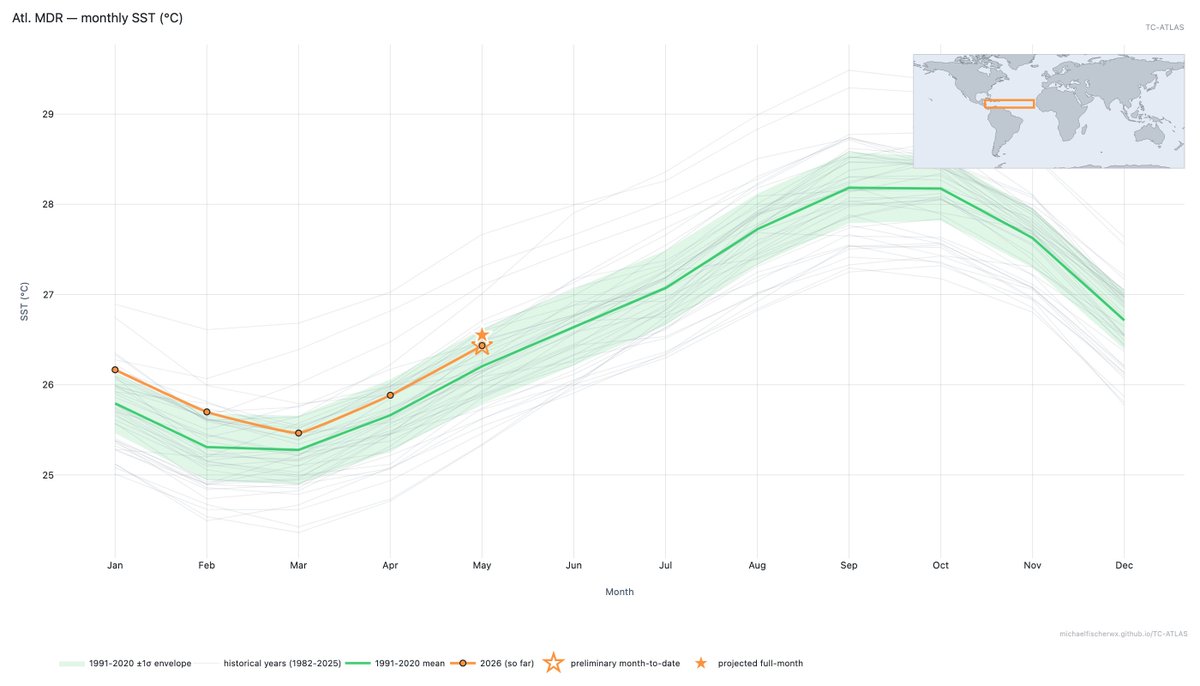
TC-ATLAS now features real-time subseasonal and seasonal monitoring pages with interactive diagnostics. Compare how the ongoing evolution differs from historical events and discover their impacts on hurricane activity here: https://t.co/KmtqoXW04a
If anyone needs a brain cleanser/tickler for the night, here's the extremely aesthetically pleasing mesolow swirly near DDC from Friday, in a multi-tilt loop for maximum smoothness!