Miten yritykset voivat auttaa taltuttamaan luontokatoa? Sitran asiantuntijat @Tim_Forslund ja Emma Sairanen kokosivat esimerkkejä pohjoismaisista kiertotalousratkaisuista.
👇Lue lisää ja hae mukaan uudelle listalle 22.10. mennessä! #WCEF2024#kiertotalous
https://t.co/V9V0S6DZUt
Did you know that 80% of biodiversity loss is due to biomass use?
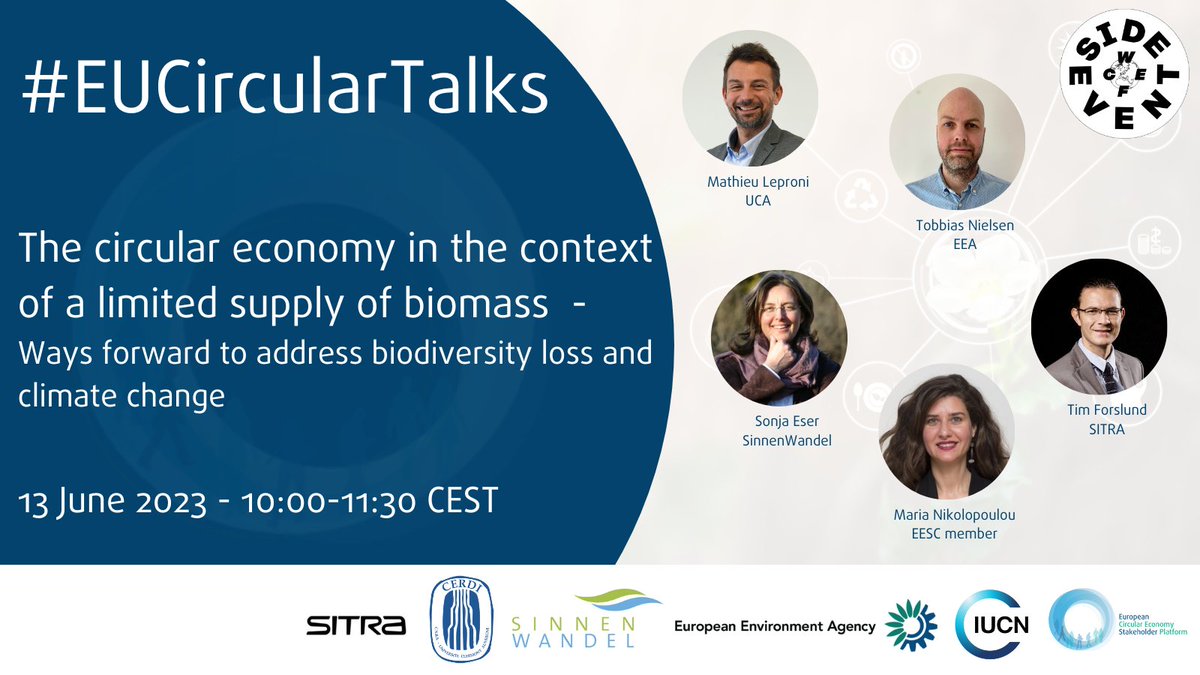
Join the webinar on Tue 13 June to hear more. Our #CircularEconomy expert @Tim_Forslund is also on stage! Sign up 👇
https://t.co/hIjvr2IEcY
#WCEF2023
@SitraFund's @jyrkikatainen emphasises market-based solutions for nature @WCEF2023: "Our world is not healthy and our economy cannot survive if only 30% of our globe is healthy, so we also have to look at the 70%. Then there's no other option but to bring the economy to the core"
@SitraFund's @jyrkikatainen emphasises market-based solutions for nature @WCEF2023: "Our world is not healthy and our economy cannot survive if only 30% of our globe is healthy, so we also have to look at the 70%. Then there's no other option but to bring the economy to the core"
@C_Stewart729 @WCEF2023: "Over the years we have seen how the circular economy can unify actors across regions, sectors and interest groups by providing a framework to respond to the climate, nature and pollution crises simultaneously, while providing new economic opportunities."
@JanezPotocnik22 sets the scene for the @WCEF2023 built environment session: Global material use has more than tripled since 1970. There's now more man-made materials than global living biomass, and if this trend continues, by 2040, there will be 3 times more man-made materials.
Circular solutions are must if we are to halt global #BiodiversityLoss. Solutions that reduce land-use pressures and give more value from biomass are particularly key. Many such solutions can already found in the Nordics. 👀 #WCEF2023 @WCEF2023 @nordicinno
https://t.co/yIfj2OkoBI
@Tim_Forslund reminds that land use and land use change is the most important driver of biodiversity loss. But luckily there are circular solutions available in food, agriculture, forestry, textiles and buildings .
Have you registered yet? Check our lineup, who will set the scene for the event & Join our panellist to discuss the circular economy's role in balancing biomass supply and demand and reducing negative impacts on biodiversity and climate change. https://t.co/rP0rkj9ADa
Circular economy reduce the need for new resources, leaving more room for nature and biodiveristy. This is important, since land-use change is the single largest driver of biodiversity loss. @Tim_Forslund@SitraFund@wbcsd @WCEF2023 #circulareconomy#WCEF2023
@TimmermansEU @WCEF2023: "the importance of CE for reducing emissions and reversing biodiversity loss is understood increasingly well. Having a UN conference for sustainable consumption and production could help bring the circular economy to the forefront of the global agenda.”
Sitra's @jyrkikatainen @WCEF2023: "We believe that biodiversity loss will be as big an issue as climate change is today within the next five years. That's why we need solutions. Only protection or setting up new conservation areas is not enough. We need businesses to be involved"
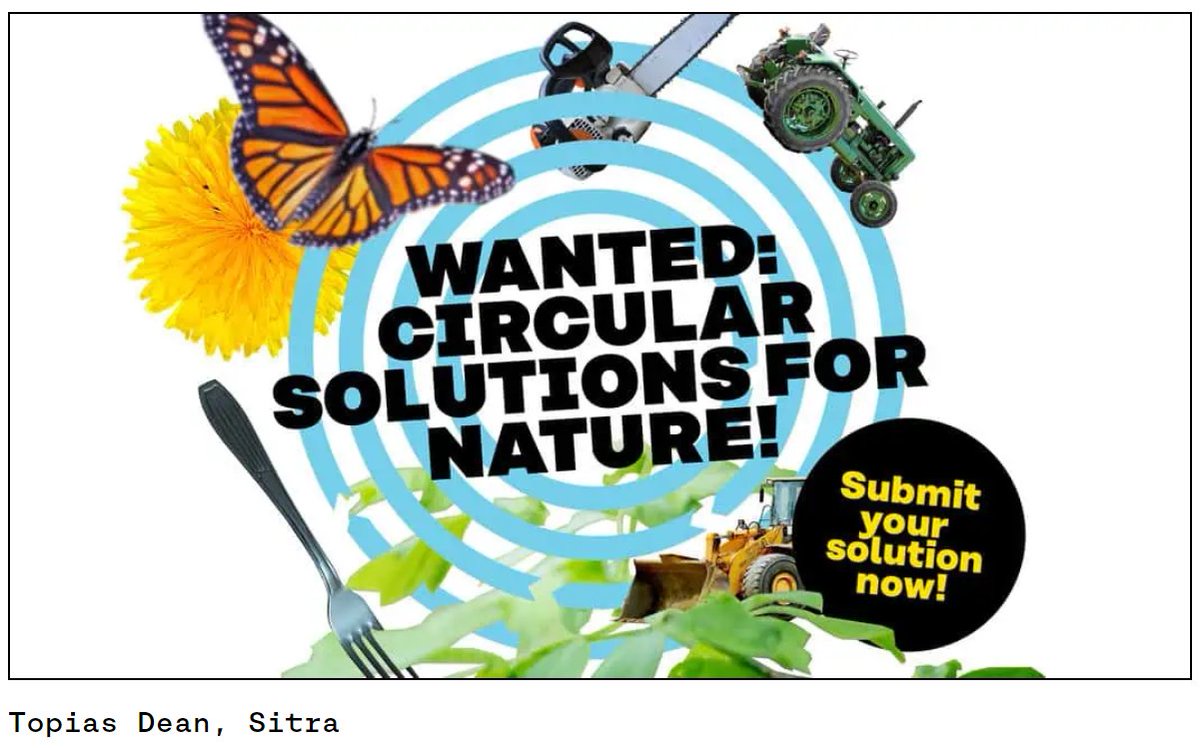
@SitraFund wants to mainstream circular solutions for nature, and for next year's forum, we will publish an EU-wide list. You can find more information about the call for applications here. Help us spread the word!
https://t.co/DsqN8lV9Yn
My @SitraFund colleague Emma and I have looked at various circular solutions to find those most relevant for halting biodiversity loss. Many of these will be featured in the @WCEF2023 30/5 - 2/6, but you can already get a sneak peek of these solutions:
https://t.co/FDVCabC3zI
However, there is no need to wait. As we show, we already have many working solutions for delivering on nature targets. Besides, the biodiversity frameworks are developing fast. @SBT_Network's version 1 was just released last week:
https://t.co/1VxkXZOuDc
@Tim_Forslund and Emma Sairanen, ahead of the @WCEF2023, presents Nordic solutions in food& agriculture, forestry, construction and textile sectors to tackle biodiversity loss. Be positively surprised by the number of solutions already available!
https://t.co/1NKT1LyhiK