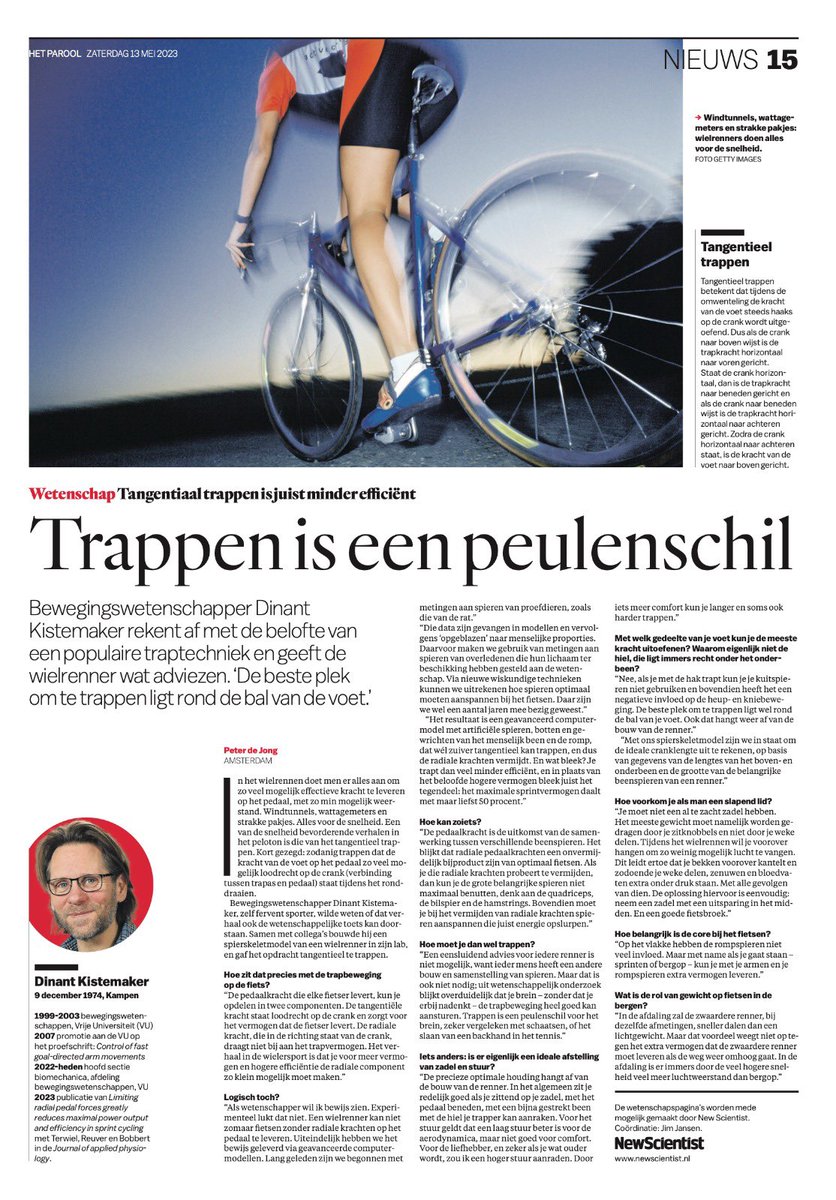
Tangentieel trappen de beste fietstechniek? Nee, concludeert bewegingswetenschapper Dinant Kistemaker “De beste plek om te trappen ligt rond de bal van de voet” @DinantKistemak1@VU_FBW@VU_FGB@VUamsterdam@VvBN_nieuws https://t.co/0jLTN70r8w via @parool
Thanks @cmotioninc for creating such a cool tutorial using our #Visual3D dataset 🙏
The tutorial explains how #Inspect3D may be used to clean and visualize the raw data files:
https://t.co/xbeMvOhkh9
I was especially pleased to see that the data were stored in #c3d files and #Visual3D#cmo files.
To facilitate the exploration of this dataset, @cmotioninc has created a tutorial using #Visual3D and #Inspect3D for modeling and cleaning the data.
https://t.co/Y62WaAa1eI
Curious how biomechanics of human walking changes with increasing step lengths, widths, frequencies and speeds?
Our data descriptor paper was published today in Nature Scientific Data (see: https://t.co/7Yfy5XcgzA). Apart from data, we also provide code for analysis on GitHub.
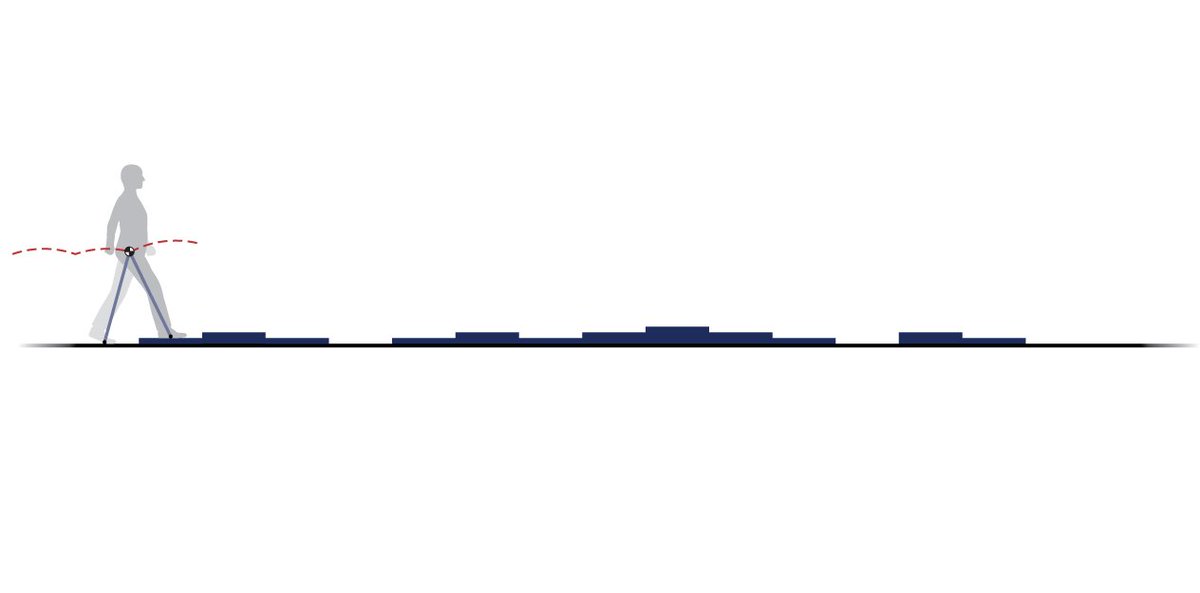
How to walk on this terrain? Optimally ofc!
Obviously, look ahead for footholds. Otherwise practically no data—most biomechanical studies only do steady level walking.
"Humans plan for the near future to walk economically on uneven terrain" Submitted ms by O. Darici & me 🧵 1/
Some say slow walking = high CoT, but that doesn't make sense. Usually wanna get somewhere, don't care about "per distance." We say slow walking = waste of time, which we DO care about. min COT not so useful.
https://t.co/xIHecFmdL6 (submitted ms) End/
Tooting our own horn, T van der Zee from my lab showed model with Zahalak style cross bridges + Ca activation + recruitment. Hill-type models aren’t mechanistic, hopeless for dynamic transient conditions (ie life). 1/
Published today in PLOS ONE: TimTrack, a new (MATLAB-based) algorithm that estimates muscle fascicle length, pennation angle, and other features from ultrasound images without drift-sensitivity
https://t.co/hTo5U1HFjl
All code and example data are freely available on my GitHub
@TaylorJMDick@NKelp@JBiomech @FrancoisHug @KylieJ_Tucker@cclemente4 @UQMedicine That’s fascinating, considering that an isolated LG will likely increase in width during shortening. Thanks for the reply, and good luck with your research!
@NealeTillin @rosshm16 That sounds interesting, but the link doesn't work for me (I'm being redirected to ScienceDirect main page), could you perhaps provide another link? (e.g PubMed). That would be great, thanks!
Our new paper on the role of soft tissue deformations in human walking is out: https://t.co/997oztoSdC
..suggesting that soft tissues dissipate substantial amounts of energy in a predictable manner
The paper is also featured in the "Inside JEB section": https://t.co/WUV7mwDKJw