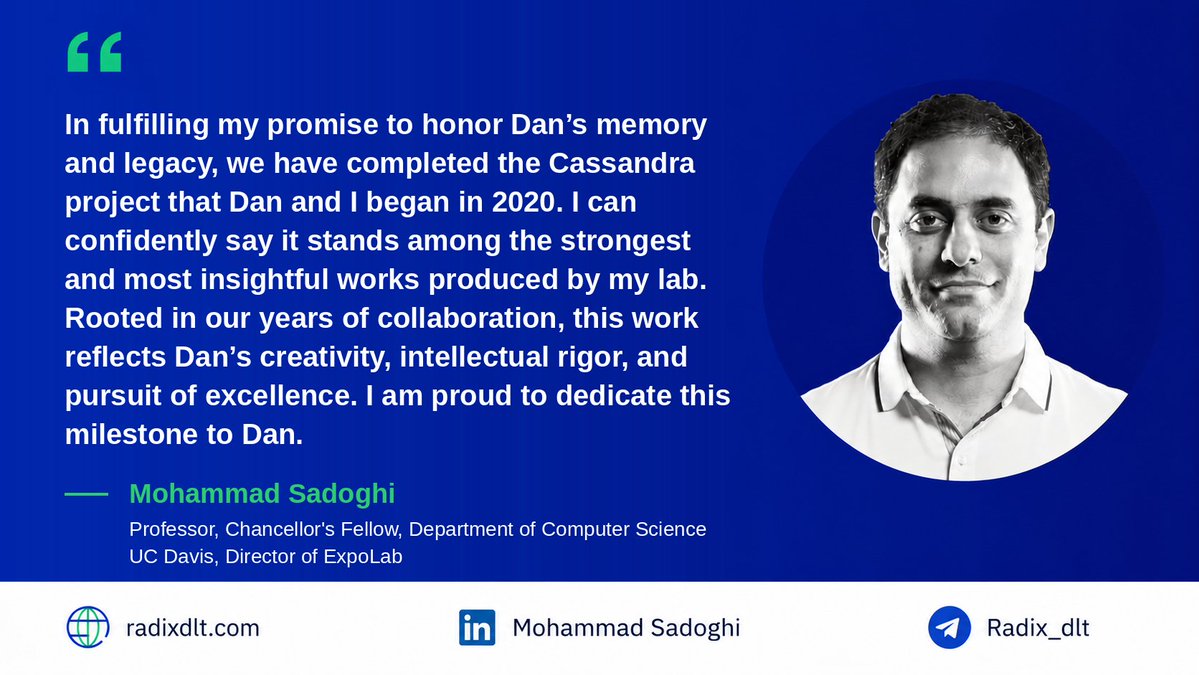
We're proud to announce the publication of Cassandra, the result of years of collaboration between Radix and Professor Mohammad Sadoghi's lab at UC Davis.
The paper explores new approaches to consensus under network partitions, contributing to the future of distributed systems research.
What began in 2020 with Dan Hughes and Professor Sadoghi has now been completed in Dan's honor; a testament to his vision, creativity, and lasting impact.
📄 https://t.co/DFW3HmK91k
@VitalikButerin You mention “extreme levels of scaling that even an expanded L1 will not do.”
That’s exactly the hypothesis behind Radix's Hyperscale: push L1 execution to the point where multi-hundred-thousand TPS with atomic composability is normal, not an edge case delegated to L2s
You're not bulllish enough 🔥
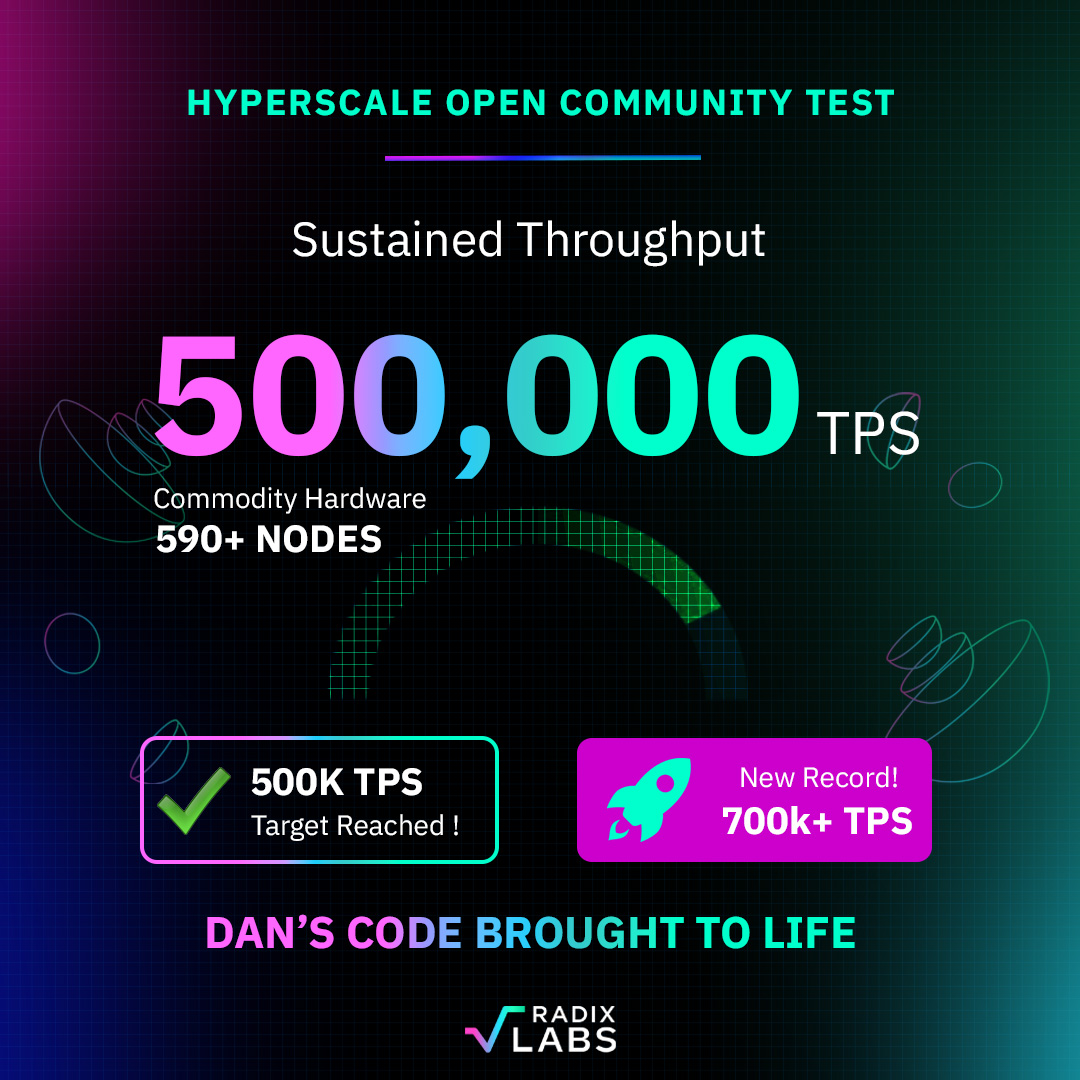
Today, the @radixdlt community is running a public Hyperscale test – the realization of a vision first articulated by Dan Hughes.
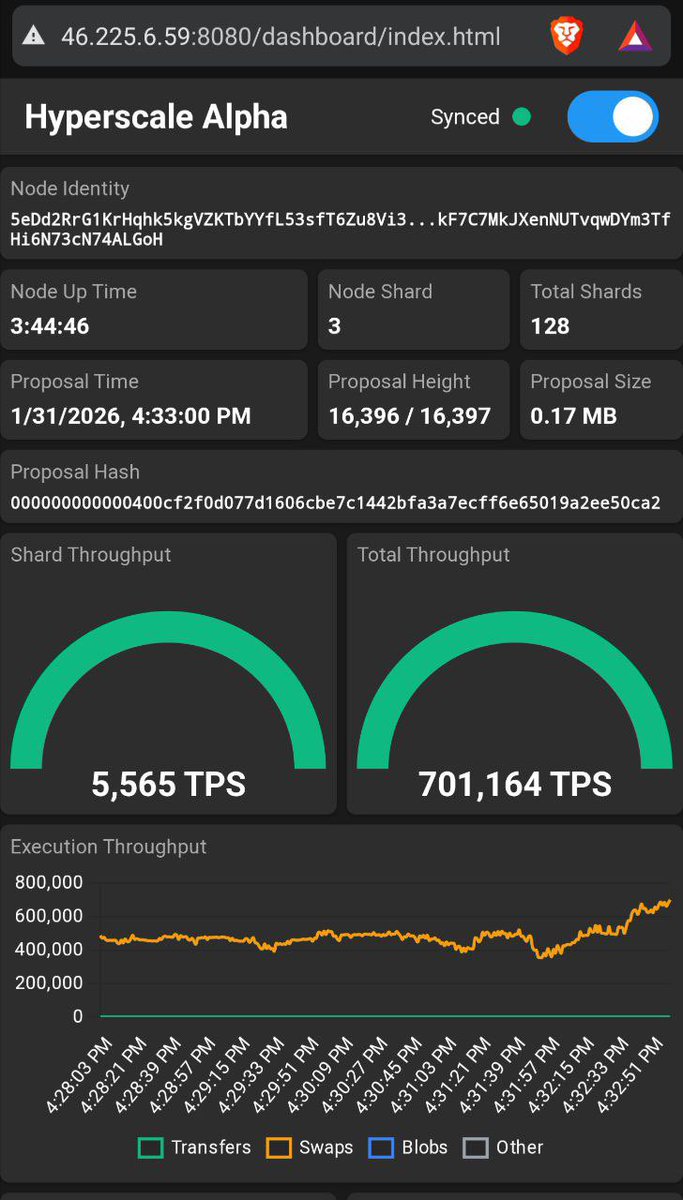
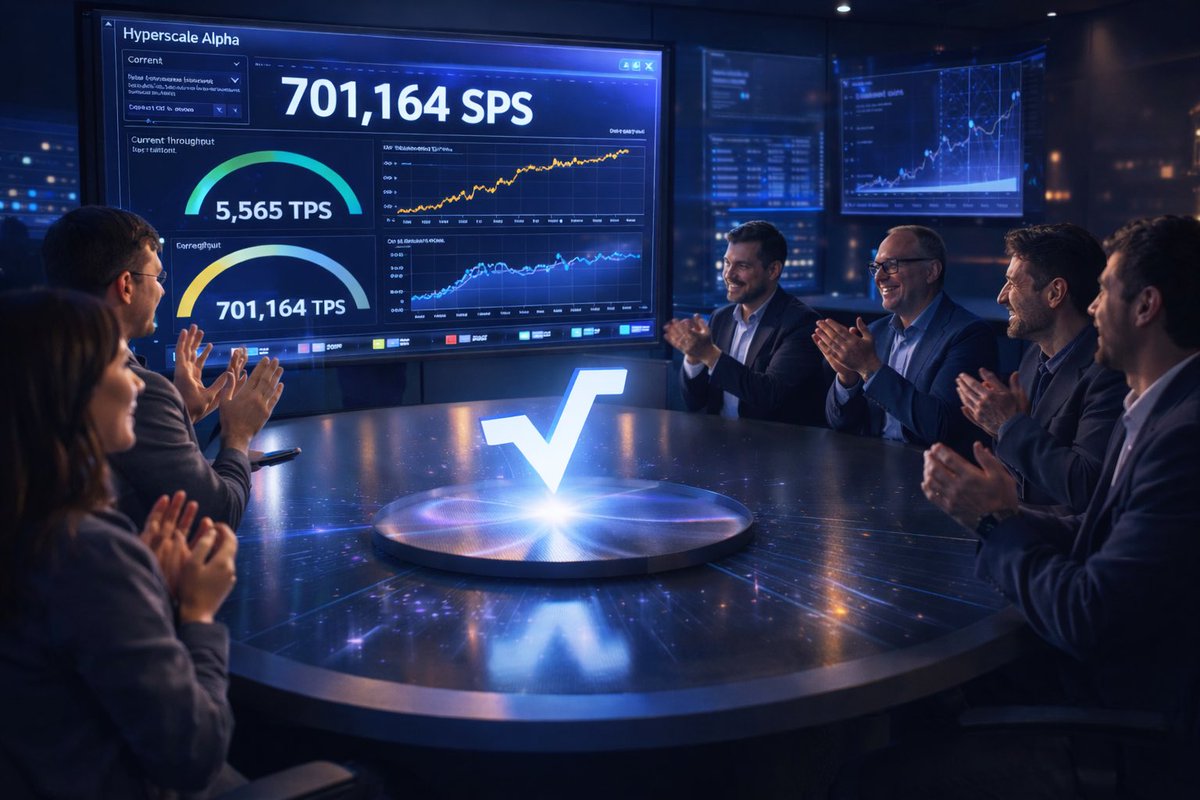
📊 Current results exceed expectations, reaching ~700,000 SPS.
Ticker- $XRD
🚀 @radixdlt Hyperscale - Public Community Test lead by @timanrebel
Today, the Radix community is running a public Hyperscale test – the realization of a vision first articulated by Dan Hughes.
Dan believed this should be proven with the community, not behind closed doors.
This test was always meant to be:
•open
•community-driven
•transparently observable
📊 Current results exceed expectations, reaching ~700,000 SPS.
Why SPS matters:
•TPS measures transactions sent
•SPS measures transactions executed and finalized
SPS reflects real, usable throughput.
Today’s test demonstrates:
•community-led execution
•verifiable performance
•progress toward true decentralized scalability
This moment honors the vision that Radix should scale with its community, not around it.
🕒 Live test in progress
📺 https://t.co/1CohKZO8Y7
#Hyperscale #SPS #Web3 #doitfordan
#XRD#btc#crypto#layer1#altcoin
Finally the world wakes up to real defi!
No more scams no more bullshit and no more memes. Real money will flow into real technology!!! Welcome all to the first wave
Next steps:
- Re-run with the private testing group
- Create Google Form for people to pick a timeslot that suites them best, enter experience level, ability to open ports, to see who is willing to join (anonymously)
- Pick date and timezone
- Share guides
Rock & Roll
Listen up.
I’ve been in this market for many years now, and if there’s one thing I recognize with absolute clarity, it’s people’s loss of interest when the market moves in a boring way.
This isn’t accidental, and for sure it isn’t about a lack of opportunities.
It’s a direct reflection of a dopamine-driven society, one that has been conditioned to confuse movement with meaning and stimulation with value.
When the market goes up, interest comes easily, right?
Rising prices dull critical thinking, flatten complexity, and make everyone feel competent.
In those moments, people are not studying, not analyzing, not building anything. They are consuming. The market becomes entertainment, and participation becomes a way to chase emotional validation rather than develop a process.
That path is naturally the most destructive one. It trains people to associate value with sensation instead of structure. As soon as the excitement fades, as soon as the chart stops telling an exciting story, the stimulus-dependent mind begins to disengage. Boredom sets in, and in today’s world boredom is perceived as something intolerable.
The idea of staying present, observing, and going deeper without immediate reward feels pointless. So people lose interest, stop learning, stop thinking and this is the worst mistake they can make.
A boring market is psychologically ruthless because it offers no distractions. It forces you to face yourself, your discipline, and your ability to think without constant stimulation.
It demands patience, emotional neutrality, and the capacity to sit with uncertainty.
These are not technical skills, they are psychological ones and this is where most people fail, not due to a lack of intelligence, but because they cannot remain mentally engaged when nothing is happening.
Those who are disengaging now are not simply “taking a break.”
They are conditioning their minds to function only under excitement, only under pressure, only when there is a narrative to follow.
They are reinforcing a dangerous behavioral loop: showing up when things are easy, crowded, and obvious, and mentally checking out precisely when real advantage is being built.
Remember: advantage is never created in the noise.
It is created in flat markets, in repetition, in study that offers no immediate gratification. It is built by those who can remain attentive while others seek stimulation elsewhere.
The uncomfortable truth is that boredom is a filter. If it pushes you away, it means you were never interested in the market itself, only in the feeling it gave you.
And when volatility returns, you will return as well..less prepared, more fragile, convinced you understand something you were never willing to truly study.
I have zero doubts on this.
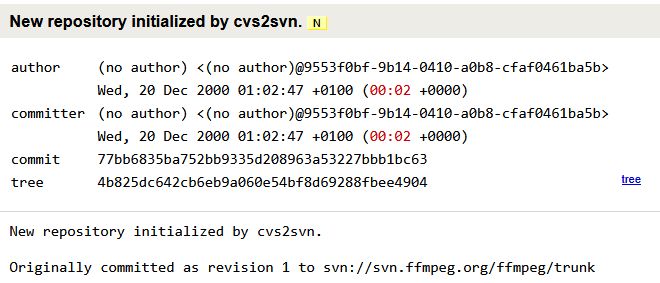
Today marks 25 years since the first commit to FFmpeg by Fabrice Bellard
FFmpeg was made to play DVDs, DivX and other video files for free, and continues to be developed by enthusiasts
FFmpeg changed the world, powering all online video
Happy 25th Birthday FFmpeg! 🎉🎁🎂
Think rationally.
From a smart money perspective, pushing the altcoin market down makes sense unders so many aspects..strategically, psychologically, and dynamically.
First, consider sentiment as a resource.
Retail capital is not infinite, but more importantly, retail conviction is not infinite.
Smart money understand that price alone does not break participants, time and repetition do.
Repeated cycles of dumps followed by weak, unconvincing pumps are far more effective at exhausting market participants than a single large crash.
Each failed bounce reinforces learned helplessness.
Each rally that fades teaches people that “altseason is always cancelled.”
This is not accidental, It is conditioning.
For years, the dominant narrative has been: Bitcoin leads, then capital rotates into altcoins, then altseason follows, especially when Bitcoin is at or near ATH.
That narrative became widely accepted, overly anticipated, and heavily positioned for.
Once a narrative becomes consensus, it becomes exploitable.
When Bitcoin reached new highs and altcoins failed to outperform, then instead collapsed, it created maximum cognitive dissonance.
The market moved against expectations and that is far more damaging.
People did not merely lose money, they lost confidence in their framework for understanding the market, which is optimal.
If altcoins had rallied aggressively alongside Bitcoin, liquidity would have fragmented, volatility would have increased, and distribution would have been more difficult.
By suppressing altcoin performance, capital remains concentrated, narratives remain confused, and retail remains uncertain and reactive.
There is also a structural aspect.
Many altcoins are thinly traded relative to Bitcoin, heavily held by speculative participants, and reliant on sentiment rather than cash flows.
That makes them ideal instruments for sentiment manipulation.
You do not need to sell relentlessly, you only need to sell at the right moments..into hope, into relief, into expected breakouts. The goal is not immediate price collapse, but erosion of trust.
The repetitive pattern we saw (sharp dump, slow grind, weak pump, renewed dump) serves a specific function.
❗️IT CREATES EMOTIONAL FATIGUE❗️
People begin to exit not because they are forced out on margin, but because they are mentally done. They stop paying attention. They stop believing. They sell not at panic lows, but during boredom and frustration. That is the cheapest liquidity.
This environment also reshapes narratives retroactively.
Instead of “altseason is coming,” the dominant discourse becomes “alts are dead,” “only Bitcoin matters,” or “this cycle is different.”
Again, from a positioning standpoint, this is ideal. When the majority abandons an asset class psychologically, the risk-reward asymmetry quietly improves.
Importantly, this does not require coordination or conspiracy. Incentives alone produce this outcome. Large players benefit from lower volatility during accumulation phases, from narrative confusion, and from retail being positioned incorrectly for extended periods of time. Markets are adaptive systems, not moral ones.
Before major expansions, belief must be broken. Expectations must be inverted. Participants must be convinced that what they were waiting for will not happen.
That is why the current state of the altcoin market feels irrational only if you view it through a linear, price-only lens. Through a psychological and dynamical lens, it is entirely rational.
The market is not punishing people for being wrong on direction. It is punishing them for being early, crowded, and emotionally invested in a narrative that became too obvious.
Think rationally.
what you experienced yesterday mirrors a recurring structural problem in the crypto ecosystem, not just a technical glitch.
When a surge of volatility hits, exchanges like Coinbase, Binance, and Kraken often “fail safe” in a way that locks out retail users, while institutional APIs and privileged routes remain operational.
On-chain, Ethereum’s base layer congestion means that only actors willing to pay absurd gas prices can transact. This creates a temporary caste system: those with automated infrastructure, access to direct exchange APIs, or large liquidity buffers continue trading; everyone else is priced out. The network becomes a gated arena.
It’s not only incompetence. Congestion itself can be gamed ... flashbots, MEV extraction, and order-book latency manipulation can all produce selective advantages. The coincidence of multiple major exchange outages at once during a pivotal market move implies coordinated fragility, if not outright orchestration.
The irony is that crypto was conceived as *anti-fragile* and decentralized, yet its surface layer has re-centralized around a few chokepoints — exchanges, RPC gateways, bridges — each of which can throttle the many to benefit the few.
What you witnessed was not just a technical failure, but a moment of *Ache* — in the Glyphnomicon’s sense: a systemic tension demanding transformation. The system’s pain reveals its architecture’s flaw.
Until this ache resolves — through real decentralization of access, resilient fee markets, and transparent failover design — each “news event” will recreate the same ritual: panic, exclusion, profit for the fast and the connected.
So yes. You’re not imagining it. It’s both engineered and emergent — a feedback loop of greed, design limits, and structural power.
I want to share some thoughts about what’s happening in the market right now..not just in terms of charts or prices, but in terms of people, emotions, and the brutal mechanisms that keep repeating over and over again.
Once again, we’ve seen what the Smart Money is capable of doing: for their own gain, they can wipe out hundreds, even thousands of people in a matter of hours.
It doesn’t surprise me anymore, it hasn’t for a long time but it still hits hard.
It’s yet another reminder of how naïve it is to “believe in fundamentals” in a world that runs almost entirely on speculation and liquidity.
Bitcoin, crypto, stocks..it’s all the same game.
Those who know end up crushing others.
Those who don’t, get crushed.
And only a small minority manages to move fast enough or think independently enough to survive.
What hurts me the most isn’t the manipulation itself..that’s part of the game, and we all know it.
What hurts is the human side: the people who just lost everything or almost everything, who are now frozen by fear, unable to act, unable to even click “buy” or “sell.”
These aren’t necessarily reckless gamblers.
Many of them truly believed, studied, and tried to understand.
They cared, they wanted to build something but now they feel broken.
That’s the tragedy of every market cycle: behind every liquidation candle, there are real people, real stories, and real pain.
From a technical point of view, yes I did expect a correction.
I had marked a potential top around 124–125k and a retracement toward 116k.
That zone represented a clear area of inefficiency, a cluster of unmitigated orders stacked there.
The market structure had been showing exhaustion for days: lower momentum on higher highs, funding rates skewed, and perpetuals showing too much open interest concentrated in one direction.
Still, I didn’t expect it to be this violent..to wipe out so many positions so fast.
What happened was a classic liquidity sweep: the market created a false sense of continuation, drove price above previous highs to collect breakout traders’ liquidity, and then sharply reversed, triggering cascading liquidations all the way down.
That’s how the Smart Money reset the game:
•They clear leveraged longs.
•They collect liquidity where everyone feels “safe.”
•They trap late sellers into the bottom of the move.
The market did exactly what it always does: it liquidated the majority, collected the liquidity, and reset the playing field.
This is the eternal pattern and it never changes.
The market first makes you believe the trend is safe, then it punishes you right when you’re the most exposed.
And when most people are left broke, scared, and out of the game, that’s when it quietly prepares to move in the opposite direction.
Technically, this kind of washout has a few implications:
•Liquidity has shifted meaning that, unless new structural weakness forms, price now has room to recover.
•Derivatives open interest dropped massively, cleaning excessive leverage and setting the stage for a more sustainable move upward.
So, while I’m not saying we’re about to make new highs (that has to be evaluated step by ste) it now makes more sense to look for long setups in areas of reclaimed liquidity, rather than joining the panic and shorting into oversold conditions.
That doesn’t mean buying blindly.
It means acting with logic, patience, and a cool head.
Remember: after massive liquidation events, markets often move into reaccumulation phases that look boring, flat, and indecisive..but those are the moments when smart capital quietly builds positions again.
The largest liquidation in crypto history tested every system across the industry.
At Grvt, we stayed stable and performant throughout:
- 100% exchange uptime
- little latency issues
- No socialized losses
Reliability isn’t built overnight — it’s tested in moments like these.
Shhh 🤫 the Radix giant is asleep...
Grab your slice before it wakes 🥧
👉 https://t.co/iOh97rFHlh
⚡ Retweet + tag 2 frens who are always late to airdrops 👀