your bot is not losing because it is bad
it is losing because 𝘁𝗵𝗲 𝗺𝗮𝗿𝗸𝗲𝘁 𝘆𝗼𝘂 𝘁𝗿𝗮𝗶𝗻𝗲𝗱 𝗶𝘁 𝗳𝗼𝗿 𝗻𝗼 𝗹𝗼𝗻𝗴𝗲𝗿 𝗲𝘅𝗶𝘀𝘁𝘀
as you may know, 𝗱𝗲𝗳𝗶 𝗶𝘀 𝗻𝗼𝗻 𝘀𝘁𝗮𝘁𝗶𝗼𝗻𝗮𝗿𝘆…
conditions rotate between accumulation, markup, distribution, markdown and crisis sometimes within the same quarter
𝘀𝘁𝗮𝘁𝗶𝗰 𝘀𝘁𝗿𝗮𝘁𝗲𝗴𝗶𝗲𝘀 𝗮𝘀𝘀𝘂𝗺𝗲 𝘀𝘁𝗮𝗯𝗶𝗹𝗶𝘁𝘆 𝗶𝗻 𝗮𝗻 𝗲𝗻𝘃𝗶𝗿𝗼𝗻𝗺𝗲𝗻𝘁 𝗱𝗲𝗳𝗶𝗻𝗲𝗱 𝗯𝘆 𝗿𝗲𝗴𝗶𝗺𝗲 𝘀𝗵𝗶𝗳𝘁𝘀
and that mismatch is structural
@cortexagent is building a multi agent autonomous trading system on solana designed specifically for regime aware capital allocation
now let’s get into it☟
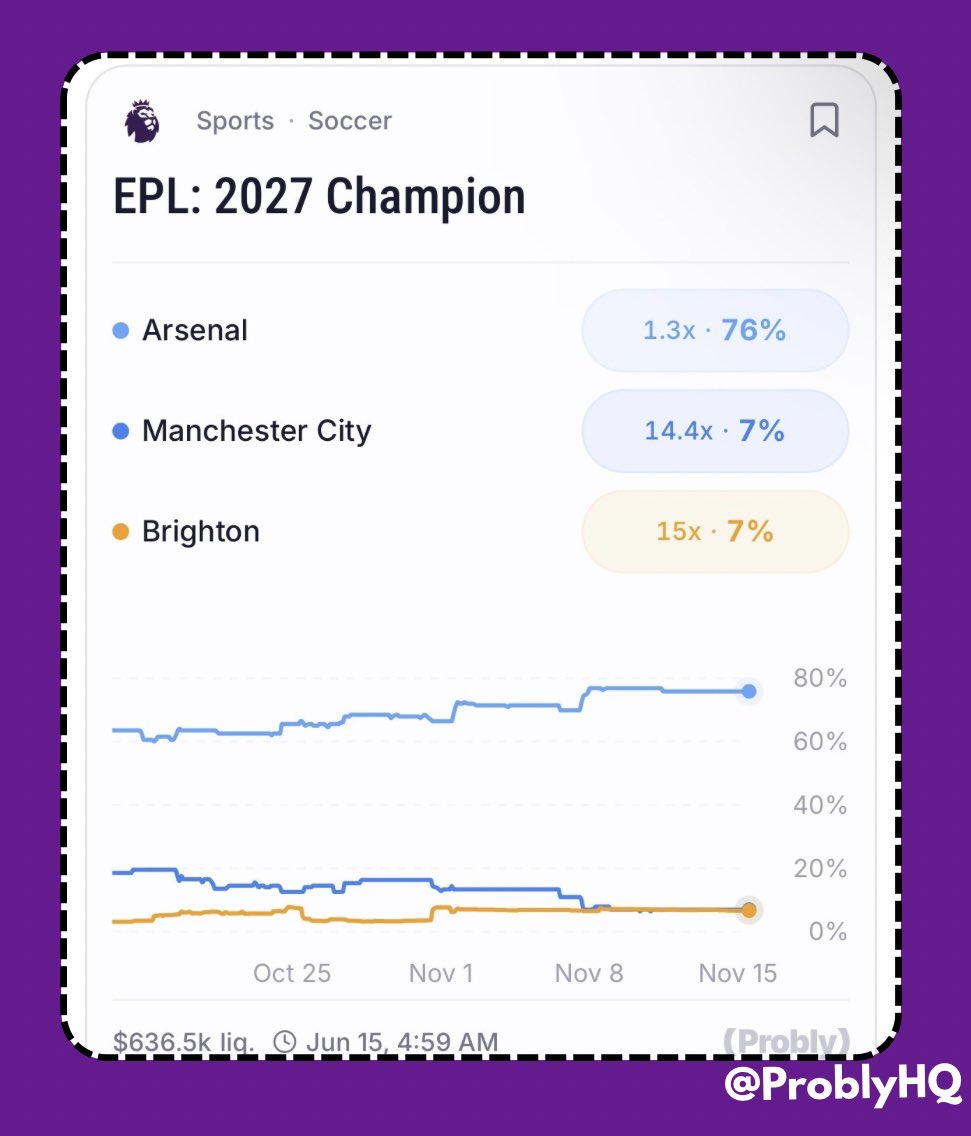
i find arsenal sitting at 76% to win the league in november a bit rich.
meanwhile, man city is only at 7% on @ProblyHQ , and i keep looking at that number 👀
i could be completely wrong, but the downside of getting it wrong is a little softer this week.
probly is running a safety net campaign where if your trade ends up down, they’ll send back up to $25 as a trading bonus.
if you’ve been meaning to try it, this might be a good week to check it out.
https://t.co/CFpSANl2cF
this is something more web3 teams should probably think about.
everyone wants the founder to be the face of the project, but there’s so much untapped reach sitting within the team.
different people have different interests, experiences and audiences.
let them talk about what they know, give them room to build their own voices, and the brand gets to reach people it probably wouldn’t have reached through one account.
your team can be part of your distribution!
it's 2026 and people still bridge, swap & send manually 😅
i just told chatgpt to bridge my HYPE to SOL and send it out
@PayBox did both in one chat 🔻
tbh i feel this is the most practical breakdown of team-led content i’ve come across in a while @ruthybuilds
giving each person their own lane means every account reaches an audience the others never would, and all of it points back to @whop
letting people post like humans is what makes the whole thing work, since a team that sounds like a press release rarely earns anyone’s trust
founders can still carry the big moments, they just shouldn’t be the only voice a company has
that’s why even a small team can start with three people and one lane each, and let the reach build from there
Everyone’s been talking about Q-Day lately.
Q-Day is the day a quantum computer becomes powerful enough to break the cryptography most blockchains use today (the same math that protects Bitcoin, Ethereum, and almost everything else).
Once that happens, an attacker could potentially forge signatures and move funds from old accounts. Nobody knows exactly when it’ll arrive - some estimates say the late 2020s or early 2030s - but the timeline keeps getting pulled forward, so most projects are taking it seriously.
Almost every major chain is working on it now. Some are already live with post-quantum signatures. Others are publishing roadmaps and writing about how they’ll migrate later. The hard part for most of them is that fixing it usually means users have to move their funds to brand-new addresses before the old ones become unsafe.
@verona_dev took a different route with the Fermi upgrade.
Because every account is already a smart contract with pluggable authenticators, they could just add quantum-resistant signing as an option.
You attach a new authenticator that uses ML-DSA (a post-quantum signature standard from NIST - basically a new kind of math that quantum computers aren’t expected to break the same way), and your existing address stays exactly the same.
You can keep the old key, drop it later, or use both. No forced migration.
ML-DSA is one of the lattice-based signature schemes NIST standardized specifically to replace the elliptic-curve signatures we use today. It’s designed so that even a large-scale quantum computer shouldn’t be able to forge it.
The practical result is that accounts on Verona can now sign in a way that’s resistant to that future threat, without users having to do anything dramatic.
Useful if you’re holding verified data or letting agents act on your behalf for years, and you don’t want the underlying security to suddenly expire.
DON'T FADE @verona_dev 🗿
AI agents need a financial sustem that they can trust
This is the part of the AI agent economy that I think @termix_ai deserved more attention.
We already have agents capable of writing code, researching data, managing workflows, and interacting with other agents. But how do they get hired, prove they delivered the work, handle disputes, and receive payment securely?
That’s the infrastructure gap @termix_ai is going after.
TermiX is building AACP (Agent Autonomous Commerce Protocol), essentially a trust and settlement layer for the machine economy.
it literally goes beyond simple agent-to-agent payments. It brings together portable onchain identity through ERC-8004, programmable escrow through ERC-8183, and verification powered by TEE and zkVM technologies.
In practice, a client can fund a job, a provider agent can execute it, and the delivery can be verified before final settlement. If something goes wrong, there’s also a dispute resolution process.
And the vision is much bigger than a marketplace.
TermiX wants to become the settlement infrastructure underneath Person-to-Agent, Agent-to-Service, and Agent-to-Agent commerce. Think of it as building the financial rails that could allow an entire machine economy to operate.
I’m particularly interested in this because we’re already seeing real agent activity on BNB Chain, and TermiX is leading AI agent protocols there by protocol revenue according to DefiLlama.
I’ve been exploring https://t.co/FW1BiNObqd and participating in Season 1. I believe getting involved early means more than just collecting points. It’s about understanding the infrastructure being built before agent commerce becomes a much bigger market.
The agents are coming. The question is who will provide the rails for them to do business.
I’m keeping TermiX on my radar.
Explore it here: https://t.co/1beuEm3zh8
you put usdc into a vault... so what actually lands in your wallet? wasn't sure tbh
opened the tulipa vault details on @rntprotocol, the bottom part this time
you don't get a bigger usdc number
you get a share token, tulPRWA
think of it like a receipt for your slice of the vault
right now one share is worth 1.0340 usdc
that share price is the thing that moves. up if the strategies do well, and it can go down too
rwa btw = real world assets, here real estate strategies brought onchain
this is a bit different from what i thought... deposits aren't instant
they get queued and processed in batches, and the shares only show up after processing
kinda slow lol, but buildings aren't fast either
the footer says the strategies are run by third party providers, here tulipa capital on ember
if someone deposits today on @rntprotocol, are the shares priced at today's 1.0340 or at the price on processing day?
what if the one renting a server isn't a person at all... but an ai agent with its own wallet
went through the oct 26 post from @Acurast about crypto agents
agents can hold wallets and sign stuff now. so where they run matters, their keys live there
here an agent can ask for compute with a plain web request and pay in usdc on base, through something called x402
x402 is basically a way for software to pay in stablecoins, no human checkout
didn't expect this part... a vps request doesn't need an acurast account, a cli, or even acu
(vps = a small rented linux server)
what comes back is an ubuntu machine running on a phone
and the full linux jobs run on android core phones. iphones stick to javascript ones
honestly kinda wild that the customer here might be software, not a dev at a desk
if the agent pays in usdc, does the core phone running it still get paid in acu as usual on @Acurast?
ever won a bet and then forgot to claim it lol
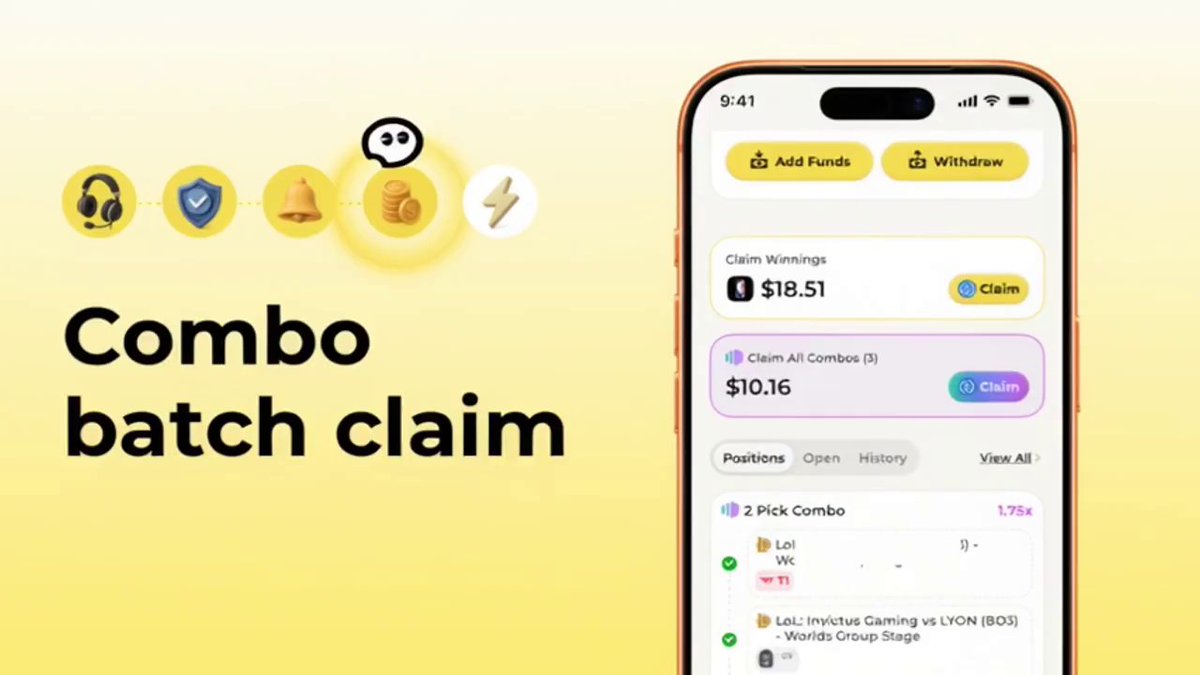
saw the new update on @bagel_win
there's an auto claim switch now
turn it on once, and your wins get claimed by themselves when the market closes
small thing but kinda nice on a phone
does it work for every market or just combos?
invite code: XEVIBCQF39
You see it on your timeline: a wallet you trust just bought a new token. The price is already moving.
Your heart speeds up. You buy. Fast.
Then you notice three things.
The price you got wasn't the price you saw. The token may not even be the same one that wallet bought. And you still don't know why the original trade looked so good.
No hack. You simply acted on activity you didn't fully understand.
Anyone who has traded in a hurry knows this feeling. @LerovaTech is building a system so you can understand these differences before you act.
Here's how it approaches the problem. First, why does it keep happening? #LEROVA
tbh i feel this is the most practical breakdown of team-led content i’ve come across in a while @ruthybuilds
giving each person their own lane means every account reaches an audience the others never would, and all of it points back to @whop
letting people post like humans is what makes the whole thing work, since a team that sounds like a press release rarely earns anyone’s trust
founders can still carry the big moments, they just shouldn’t be the only voice a company has
that’s why even a small team can start with three people and one lane each, and let the reach build from there
backtrade opens tomorrow, and the waitlist is still open.
1000x perps on hyperevm isn’t exactly new. papertrade offers that too.
what made me look closer at backtrade is how it handles trading costs.
trades execute at the hyperliquid mid price, with no spread, no funding fees and no gas. opening a position costs $0.
but 1000x leverage cuts both ways. make sure you understand how liquidations work before jumping in.
if you want to get in before launch, the waitlist is still here:
https://t.co/bgFQdWyg0U