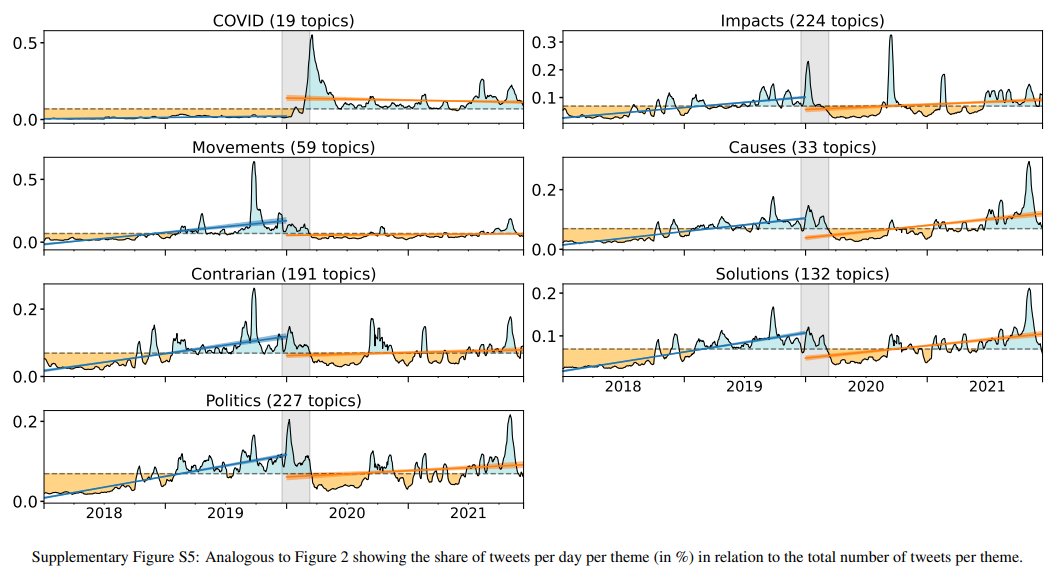
Something fun that didn't make it into the paper is the "average number of tweets/user over time". It shows how some themes attract more people who tweets only once, whereas in others users tweet repeatedly. Also, the pandemic lead to behaviour shifts.
Our article "How global crises compete for our attention: Insights from 13.5 million tweets on climate change during COVID-19" is not published in ERSS!
https://t.co/emqhY8mW80
We show that the pandemic only temporarily diverted attention away from climate change
We manually summarised the 983 topic clusters into 7 themes to grained fine-grained understanding of the data while providing high-level findings.
Unfortunately, this attention to detail and a robust evaluation often is neglected in data-driven research.
Der WWCS (https://t.co/R1rYwhomAm) zeigt, dass wir Überblicke über den Stand der Forschung zu spezifischen Fragen zu schaffen; insb. für Entscheidungsträger.
Der https://t.co/UdOaoFOE5i ist eine wichtige Quelle zum Thema CO2-Entnahme.
Report und alle Daten sind frei verfügbar!
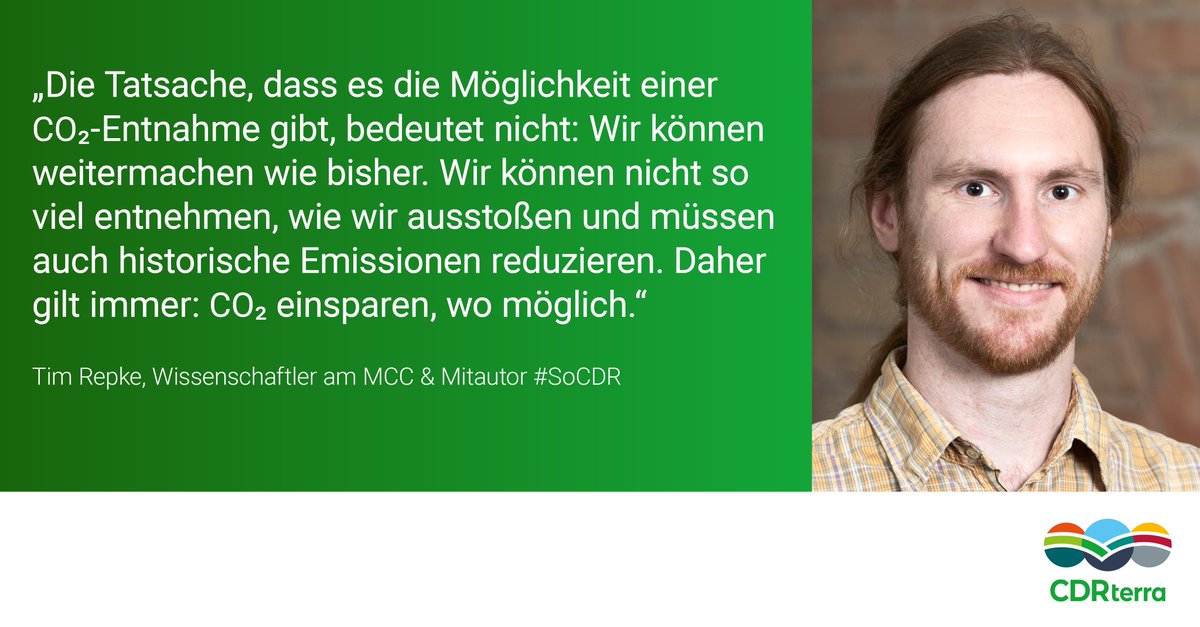
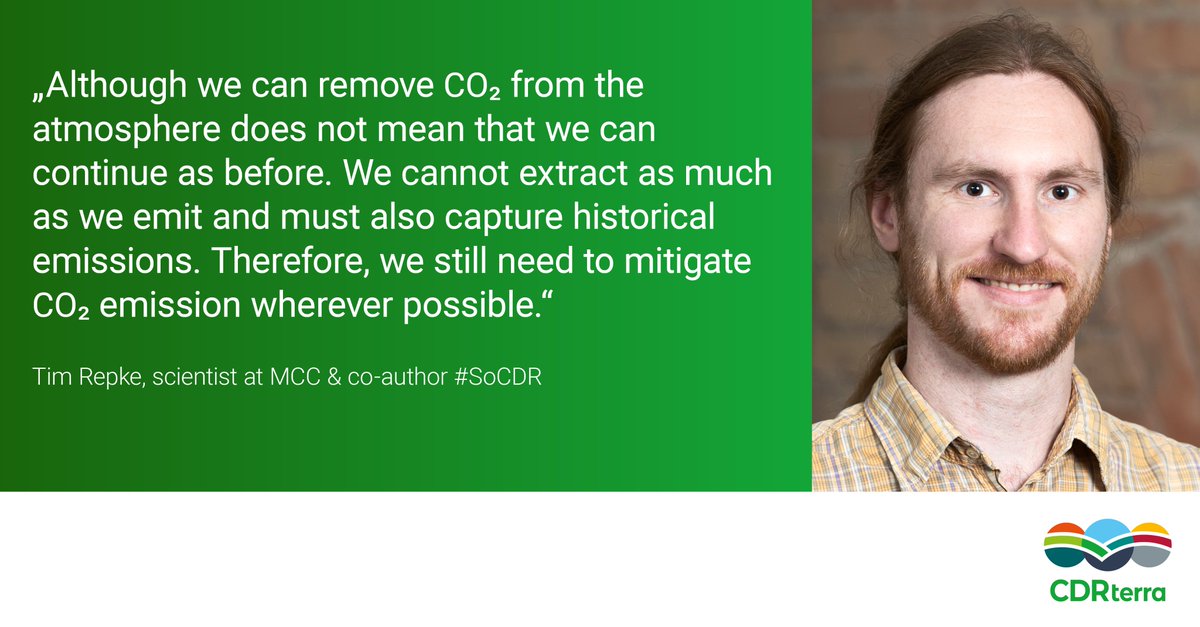
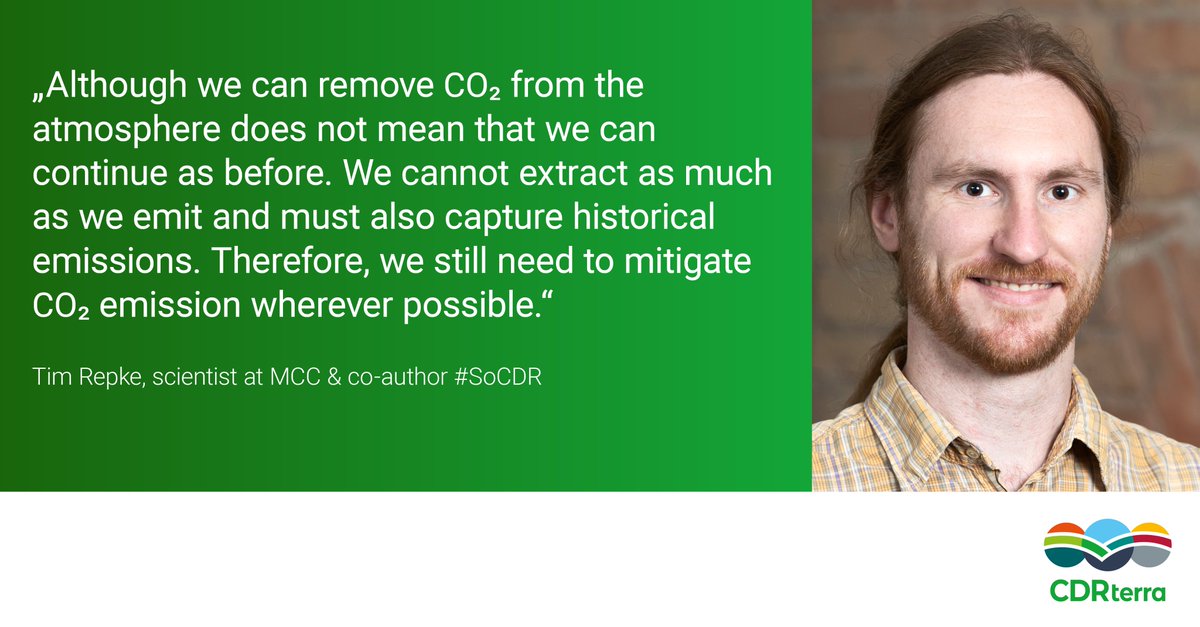
Was sagt CDRterra-Forscher Tim Repke @Timmothey vom @MCC_Berlin zur nun veröffentlichten 2. Auflage des #StateofCDR-Berichts? Er ist Mitautor der weltweit führenden Studie, die den aktuellen globalen Stand der #CO2Entnahme wissenschaftlich bewertet. #SoCDR
https://t.co/fdOCHY6QGS
@VozSilvestre@arauco That is indeed a tricky an complex subject. Politics could cap emissions, finance transition, put a price on it,...
Carbon markets are a mechanism to let markets do their thing. Emission-heavy products would eventually be too expensive.
Requires trust in "the market" though...
@VozSilvestre@arauco The report is very clear on that.
CDR *is not* for offsetting.
Mitigation is the primary objective. However, CDR is necessary to 1) cover hard-to-abate emissions and 2) address historic emissions.
The report only provides evidence to make informed decisions about pathways.
I've been wanting to develop this for years.
Thanks @MCC_Berlin for allowing me to finally do this and @benmschmidt@nomic_ai@enjalot @flekschas @clured for showing it's possible.
We hope to establish review ecosystems around or large-scale literature synthesis projects.
All data for the #StateOfCDR is openly available here:
https://t.co/n8nS4sHnQM
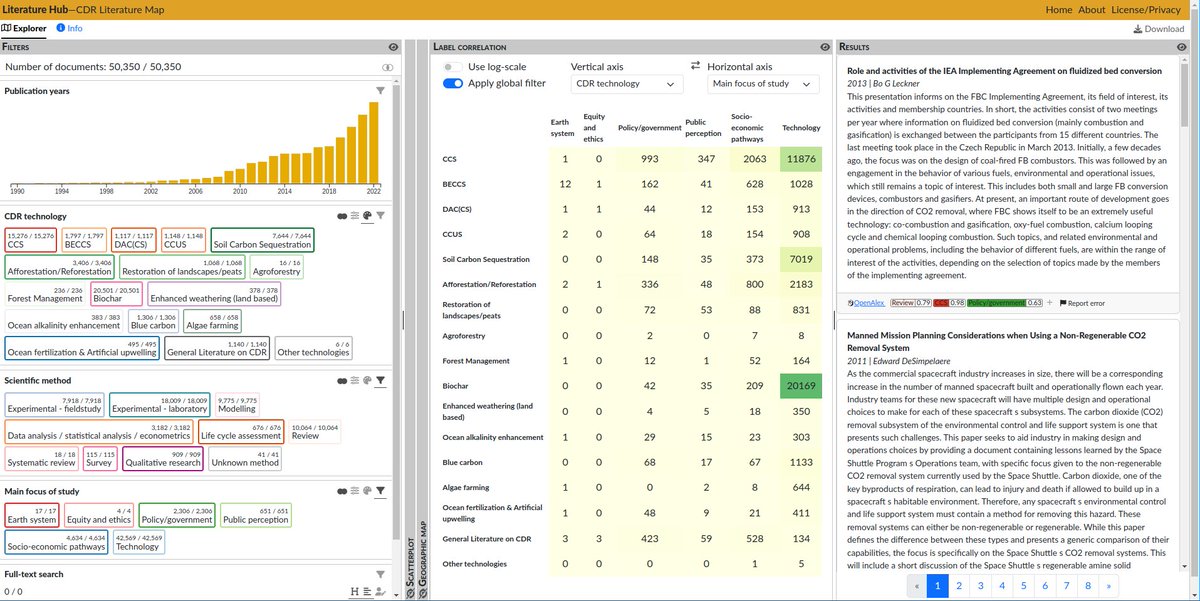
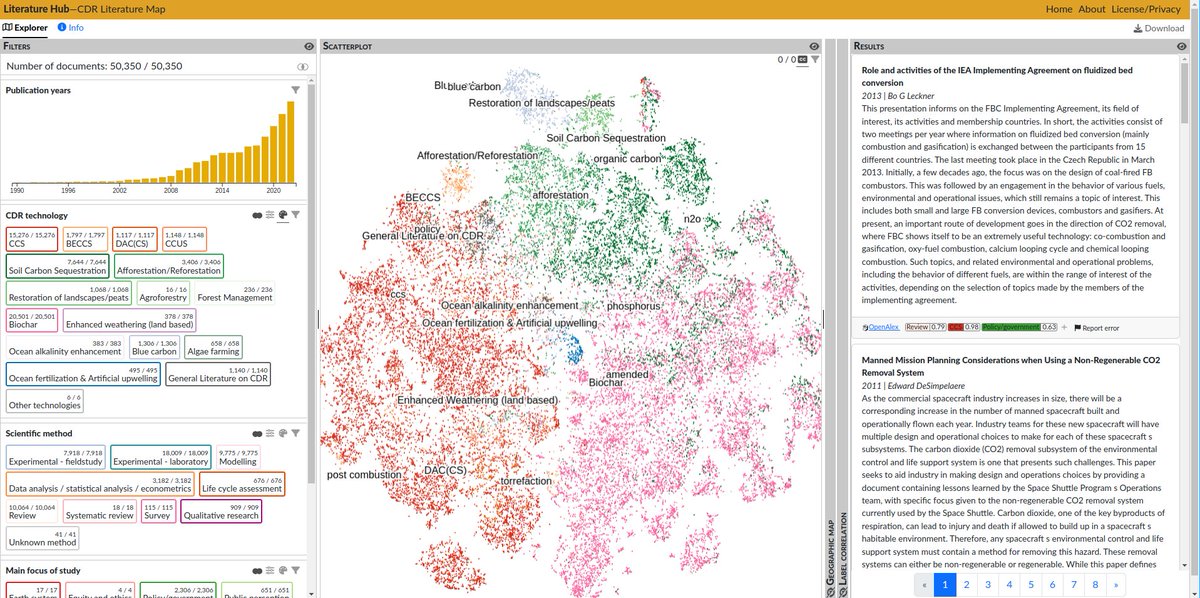
The scientific literature map is also available on our new climate literature hub, where we plan to share *and update* all our synthesis projects!
https://t.co/YlObejonLL
@VozSilvestre Thanks for the feedback. You are right, making this distinction is important. However, our report only sets out to neutrally summarise all available evidence around key indicators. We do qualify/discuss some aspects, this might have been something to mention more clearly.
Check out key findings, get the full report, or explore all the underlying data in our free and open interactive portal!
Openness and transparency is key to provide policymakers and the public with relevant evidence for a rapid and just scale-up.
https://t.co/UdOaoFPbUQ
What does CDRterra researcher Tim Repke @Timmothey from @MCC_Berlin have to say about the new edition of the #StateofCDR report? He is co-author of the world's leading study that scientifically assesses the current global state of #Carbondioxideremoval.
👉https://t.co/KMsvSuLBLY
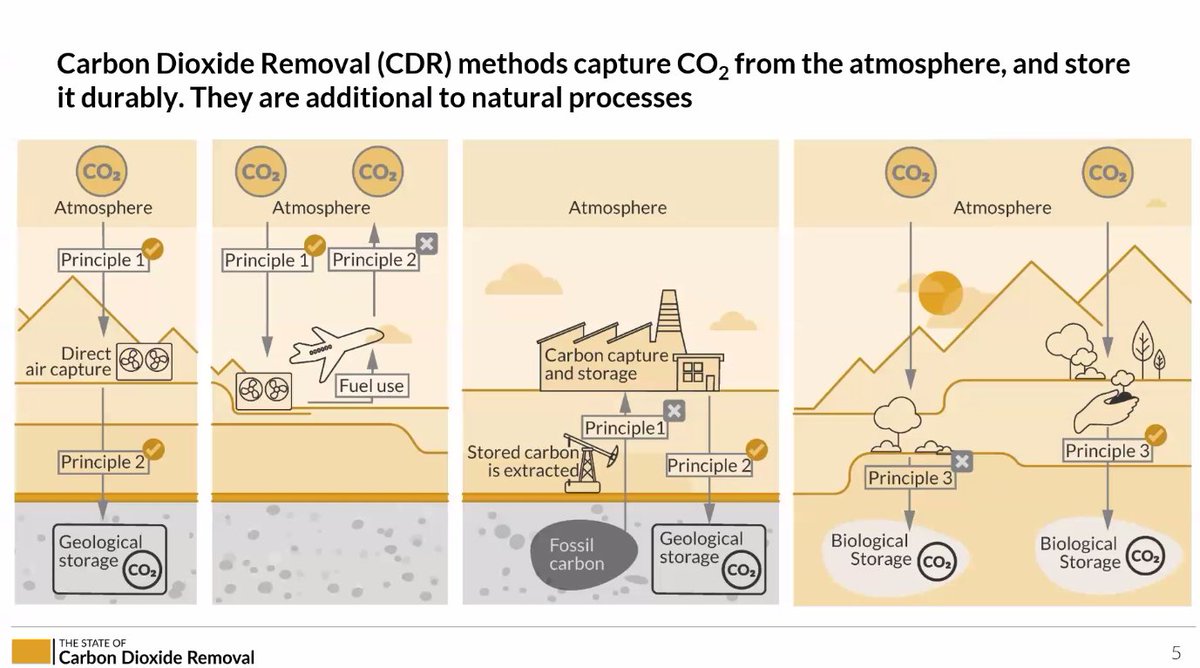
Brilliant visual definition of what is or is not CDR.
1) Captured CO2 must come from the atmosphere, not from fossil sources
2) Storage must be durable, such that CO2 is not soon reintroduced to the atmosphere
3) Removal by human intervention, additional to natural processes
EVENT—The State of Carbon Dioxide Removal Report- Launch of 2nd Edition by @TheSmithSchool of Enterprise and the Environment
🗓️04 June 2024
📍Online (Live streaming on YouTube)
2/13
https://t.co/8SDbwe9ffK
The next State of Carbon Dioxide Removal will be released in 2h!
Still time to sign up for the overview presentation!
https://t.co/UdOaoFPbUQ
#StateOfCDR#CDR
@drvolts Thanks for sharing!
We now also published a story on this on our GENIE knowledge hub (the hub and this work is funded by ERC GENIE project).
https://t.co/Jw6tbybW1p
https://t.co/BMsxH9Yc7m
New story on the GENIE hub on our assessment of global urban CO2 removal potentials!
TL;DR: With C storage in vegetation, soils & built environment and DAC in HVAC systems possibly up to 1 GtCO2/year.
Surface albedo modification also important aspect.
https://t.co/BMsxH9Yc7m
New story on the GENIE hub on our assessment of global urban CO2 removal potentials!
TL;DR: With C storage in vegetation, soils & built environment and DAC in HVAC systems possibly up to 1 GtCO2/year.
Surface albedo modification also important aspect.
https://t.co/BMsxH9Yc7m