@JerryS007@RTLZ Nee zit niet in de business, maar denk gewoon vanuit gezond verstand. Ik ken Lidl als een organisatie waar gezond verstand op 1 staat. Die gaan dit echt niet doen als ze er zelf niet beter van worden. Het feit dat ze het dus doen, zegt mi dus veel.
Gas spent 20 years owning the evening peak. Batteries took a year to crash the party.
That's disruption. Not gradual, but a rapid shift in who supplies grid's most valuable hours.
The battle was never about total generation. It was about the peak & batteries are winning it.
@TheoBuysStocks Ik zoek nog een praktische fiscalist die mij de voordelen van de BV uitlegt. Tot nu toe niet kunnen vinden. Die lui zijn te theoretisch. Jij nog tips?
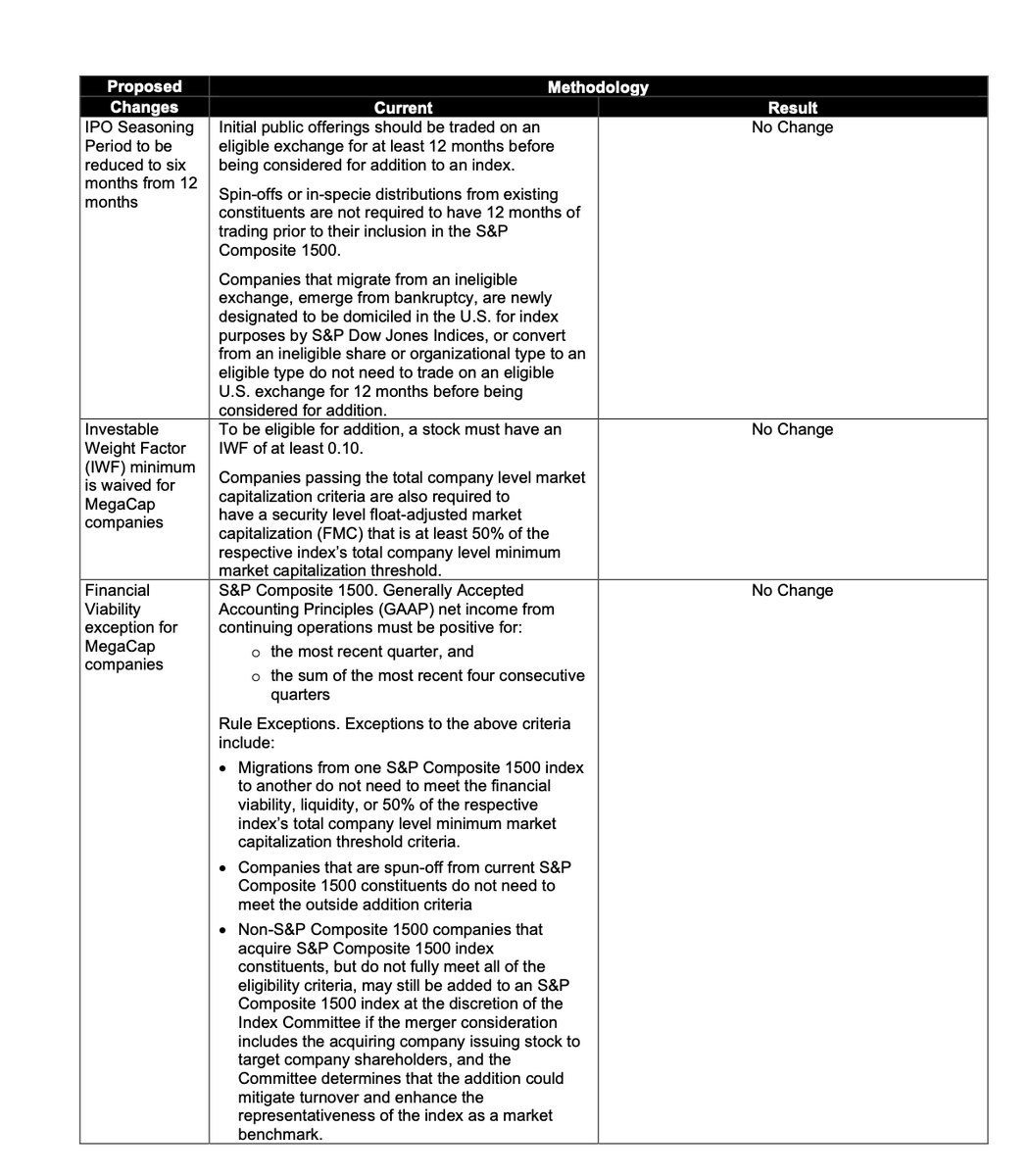
Wow, the S&P Dow Jones Indices has just officially announced that they will NOT be changing their inclusion rules to make it easier for “MegaCap” companies (such as @SpaceX) to be fast-tracked into the S&P 500.
Their reasoning:
"S&P DJI determined that exceptions to the financial viability, seasoning, and IWF requirements should not be granted solely based on market capitalization. The decision not to adopt the proposed exceptions preserves core index principles by maintaining consistent application of these key requirements. Although there may be trade-offs between strict adherence to these eligibility requirements and broad representativeness, the current methodology provides substantial market coverage and sector balance. As a result, the indices can continue to meet their stated objectives while preserving their role as representative and investable benchmarks for the U.S. equity market.
No changes will be made to the eligibility criteria including financial viability screens, seasoning period, or minimum IWF, for the S&P 500, S&P MidCap 400, or S&P SmallCap 600 as a result of the S&P Dow Jones Indices consultation on the treatment of MegaCap companies. Accordingly, there will be no changes to existing methodology for this index family."
This means that the earliest @SpaceX could be eligible to be added to the S&P 500 would now be June 2027.
The requirements that will now remain in place are:
• No changes to S&P 500 eligibility rules for mega-cap companies.
• Mega-cap companies will still need to wait 12 months after their IPO before being considered for S&P 500 inclusion.
• S&P will not waive profitability requirements for mega-cap companies. The company must have positive GAAP net income in the most recent quarter, and the sum of the most recent four consecutive quarters.
• S&P will not waive minimum public float requirements for mega-cap companies. At least 10% of a company's shares must be publicly tradable ("free float").
The S&P rejected proposals that would have:
• Reduced the IPO seasoning period from 12 months to 6 months
• Waived profitability requirements
• Waived minimum public float requirements
@JerryS007@RTLZ Ja wel dus. Minder diesel, dus minder olie. Dus minder olietransport via, je weet wel, olietankers. Dus minder afhankelijk van oliestaten. Kortom, echt alleen maar voordelen. En dan weeg ik de gezondheidsvoordelen nog niet eens mee.
Minister Sjoerdsma is hersteld van zijn eigen blessure en tackelt nu de Nederlandse belastingbetaler.
Om zijn eigen hachje te redden, smijt Sjoerdsma even 380 miljoen euro naar het buitenland.
Helemaal knettergek!
https://t.co/FW0QFOQPq4