SHODIPO AYOMIDE, HEAD OF DEVELOPER RELATIONS AT NUKLAI, TO SPEAK AT BITCOIN 2026 🚀
Shodipo brings over 13 years of software engineering experience to the stage 🙌
I’m not laughing but it’s real.
@thekitze
Devs don't like learning new skills
And "vibe coding" might seem like "just writing english" but it's actually a new skill that involves
• knowing the limits of the model
• knowing the capabilities of the agent
• knowing which context to pass
• knowing context limits (when to start a new conversation)
• knowing how to write rules
• "sigh* knowing pRoMpT eNgiNeErInG
• being chronically on twitter
• PLUS technical knowledge (turns vibe coding into vibe engineering)
My First Books vs Now:
Then:
• Random ideas
• Based on gut feeling
• No research
• Hoping for the best
• Chaos
Now:
• Demand-driven topics
• Data-backed decisions
• Reverse-engineered success
• Predictable outcomes
• Control
The difference?
I stopped creating.
I started listening.
Let's be honest about something most people won't admit
you've probably spent hours watching coding tutorials, nodding along, typing exactly what the instructor types, and at the end you felt... nothing. Maybe a bit accomplished for finishing, but also kind of empty.
Here's why:you didn't learn anything. You just proved you can copy.
I know that sounds harsh, but think about it. When you follow along step-by-step, your brain is on autopilot. You're not making decisions. You're not problem-solving. You're basically a human Ctrl+C, Ctrl+V machine. And the second you close that tutorial, everything is gone. All of it.
Real learning happens in the uncomfortable middle ground where you're trying to remember what to do next, and you can't. That moment when you think, wait, why did they use a LEFT JOIN here instead of an INNER JOIN?" — that's when your brain actually wakes up.
Here's how I learn, and it should work for you, too.
After you finish a tutorial, close it. Don't rewatch it. Don't peek at the code. Instead, grab a different dataset — it could be from Kaggle, could be your own data, doesn't matter — and try to solve a similar problem from memory.
You're going to fail. You're going to forget the steps. You're going to write code that doesn't work. Perfect. That's exactly where learning lives.
When you get stuck, then go back and check. But only after you've tried. Because that struggle — that annoying, frustrating feeling is your brain actually building the skill.
You'll be slow. You'll make mistakes. You'll wonder if you learned anything at all from that tutorial. But here's what's happening: you're forcing your brain to retrieve information instead of just recognizing it. Retrieval is what builds real memory.
If this changes how you think about learning, follow me for more honest takes.
xAI Hackathon – the ultimate arena for the most hardcore product builders.
24 hours & exclusive access to upcoming Grok models & X APIs
Apply by 11/22 🔗 https://t.co/zsbk9SHglq
Starlink is connecting more than 22,000 students across 85 schools in remote areas of Ghana with reliable high-speed internet from space.
With download speeds soaring from under 5 Mbps to over 200+ Mbps, students can now access online learning, unlocking a world of knowledge and possibility → https://t.co/ogZultrwX2
The U.S. Marine Corps turns 250 years old today. 🇺🇸
Here is a picture of Elon Musk during his visit to the 1st Marine Raider Battalion Ball, a special operations unit of the Marine Corps. He was presented with a ceremonial paddle by a Marine Raider in 2017.
The single most important thing to pay attention to when it comes to robotics isn’t the design
…it’s the context of the world it’s being built for.
Because as the needs of society evolve, so must the purpose of technology.
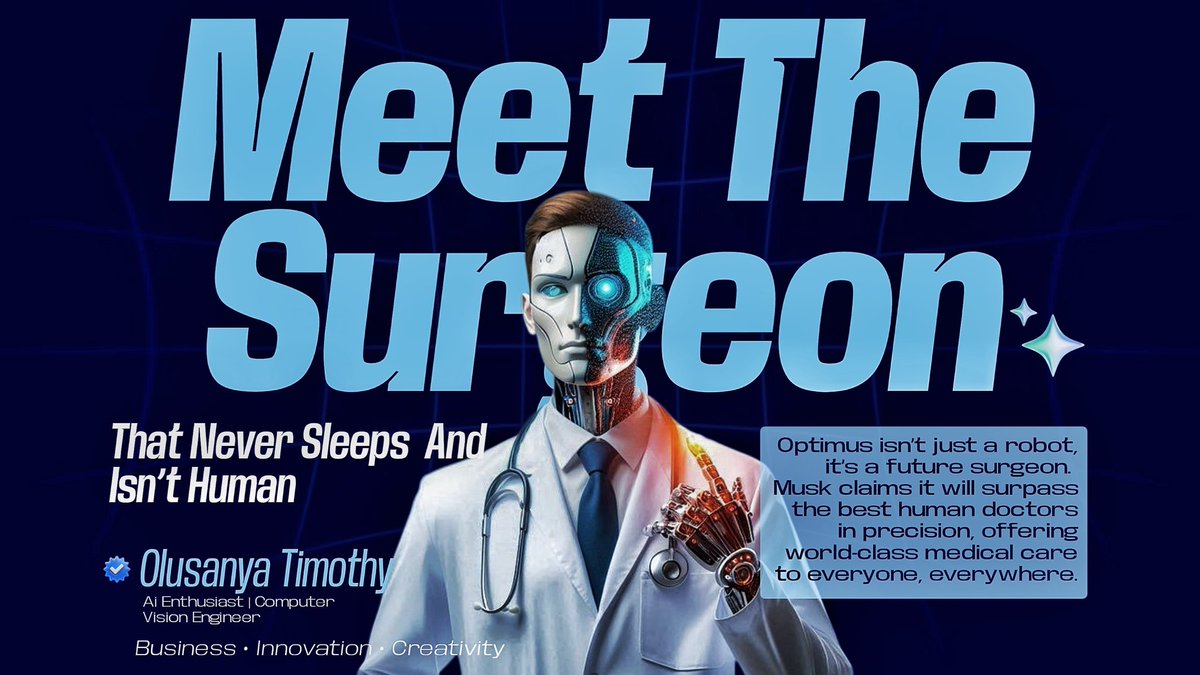
Take Optimus, for example.
(Thread 🧵)
And in a world where millions still lack access to proper healthcare, a robot that can perform surgeries with precision isn’t just innovation… it’s necessity.
Optimus isn’t just a robot — it’s a bold step toward universal healthcare through robotics.
Most people see a humanoid robot. Elon sees a future surgeon.
Two years ago, robots were built for automation. Today, they’re being built for empathy — to assist, to heal, to operate.
AI, medicine, accessibility — everything has changed.