Living in the future!
Was watching @MostlyTechPod in a cybercab, @IanLandsman brought up @AmpCode, realized I should be orbin’ instead
There’s no general web browser in a cab, so I left a comment on YouTube with the amp url which let me open it
It’s orbin’ time
@merlindru Orbs are one part of the overall infrastructure. Agent durability, thread coordination, teams, inference, plugins, etc. are outside of orbs.
Think of it as similar to the classic control-plane/data-plane split but with orbs rather than data.
A lot of apps currently feel jank on the iPhone Duo and he estimates it might take 6 months on average to update them to be good.
Somehow I doubt it will take that long in this day and age…
PSA for big enterprises affected by any of today’s security insanity: Sourcegraph provides a way to apply remediations across all your organization’s repositories.
This saved many a Christmas during the log4j incident.
You’ll likely want this for what’s coming.
PHP released patches for two critical vulnerabilities, CVE-2026-109618 and CVE-2026-109619, that could allow attackers to execute code remotely without authentication.
Finding every affected PHP version across hundreds or thousands of repos is a challenge. We're sharing Sourcegraph search queries and Agentic Batch Changes specs to help you find and fix #php2shell vulns.
Learn more: https://t.co/3POXS763xs
Need help? Post a comment and we'll help you get Sourcegraph set up to find potentially affected repos and roll out patches.
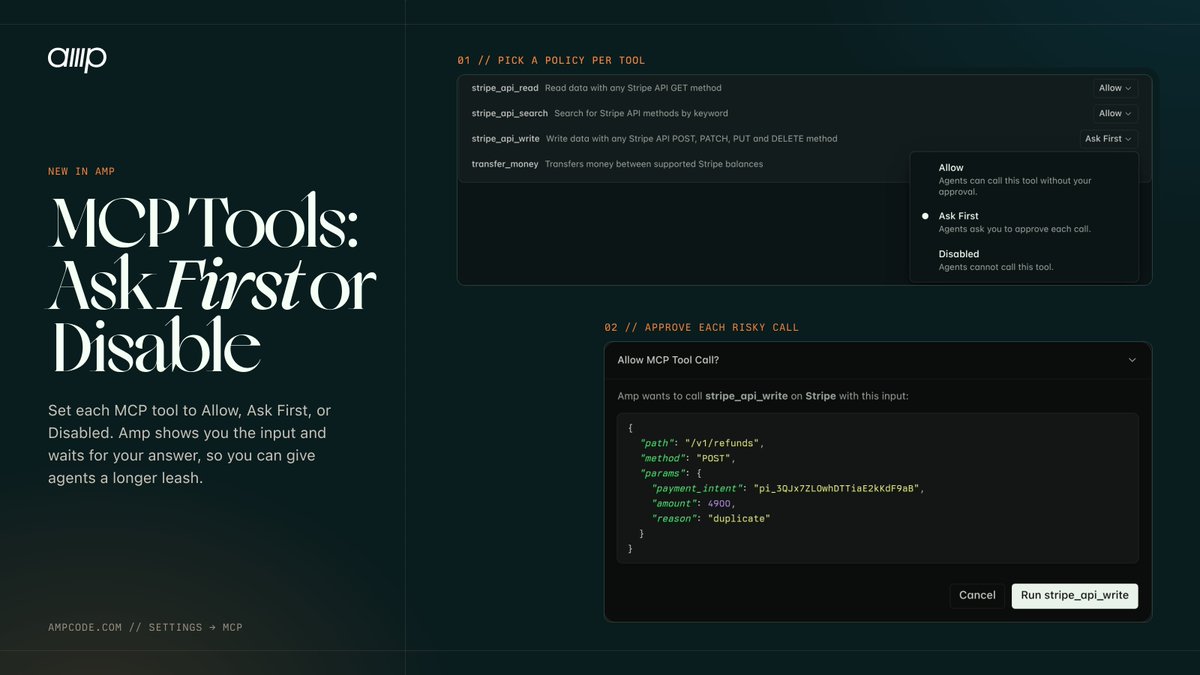
Amp can now (deterministically) Ask First before running certain MCP tools, like transfer_money or send_gmail.
(We talked in https://t.co/wARGJEqVw3 how this kind of thing let us trust the agent to do a lot more, like granting credits and emailing users who hit bugs.)
The way we work has to keep up with what the technology is capable of. So much of software development best practices in the past 20 years was founded on axioms that no longer hold.
21 people, a single meeting a week, no quarterly goals, no pull requests, no mandatory code review, no titles (except one dictator), a hundred releases a day, bugs fixed in minutes, famous for killing features.
@sqs and @thorstenball on how the Amp team works:
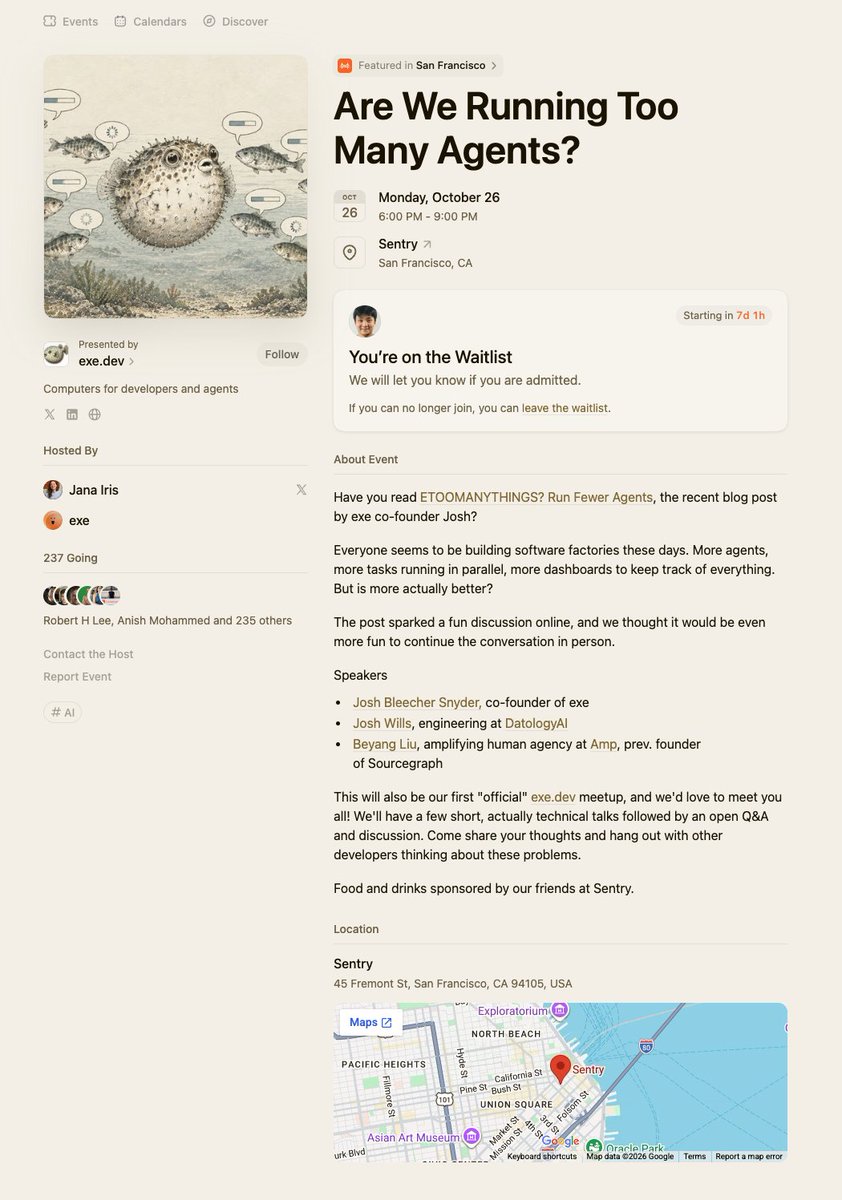
I'll be speaking at this event organized by @exedev and @jana_iris at @sentry next week to share a bit about what we've found effective when working with agents and maybe some idiosyncratic viewpoints and demos. Hope to see you there!
https://t.co/jTTgo5r98h
1/4 Today, we’re releasing Mercury 3. Mercury 3 is by far our most powerful model and the most intelligent diffusion LLM ever released. It outperforms GPT-6 Luna and Haiku 5.5 on quality while running at 1000+ tok/sec.
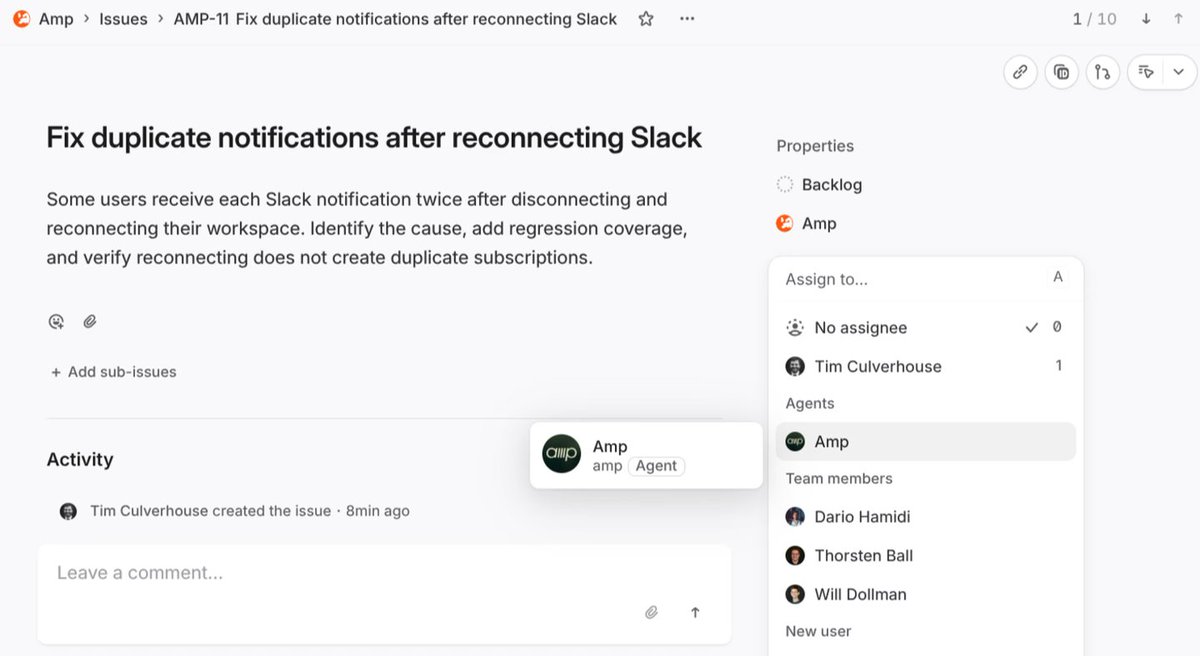
.@vanamerongen is going to lead a pretty wild experiment: turning https://t.co/G4X6nv1uzR into the world’s first agentic social network
the idea: our users open issues directly on the app; those issues get picked up automatically by remote @AmpCode agents running in the cloud.. the agents dig in, propose a pull request, and then self-evaluate their own work.. if the fix is obvious and low-risk (think a small frontend change), it gets merged automatically
no human in the loop! let's see how far we can push it
The Model K was incredibly overpowered. It could do 60mph, insane for those days. But Ford called it a waste of money because what kind of roads would support that kind of speed?
Reminds me of coding agents with legacy codebases and legacy processes.
At the California Automobile Museum and the docent explains that Henry Ford originally didn’t build the engine or really any of the important pieces of a car, he just assembled the parts.
Ford Motor Company was just a wrapper.