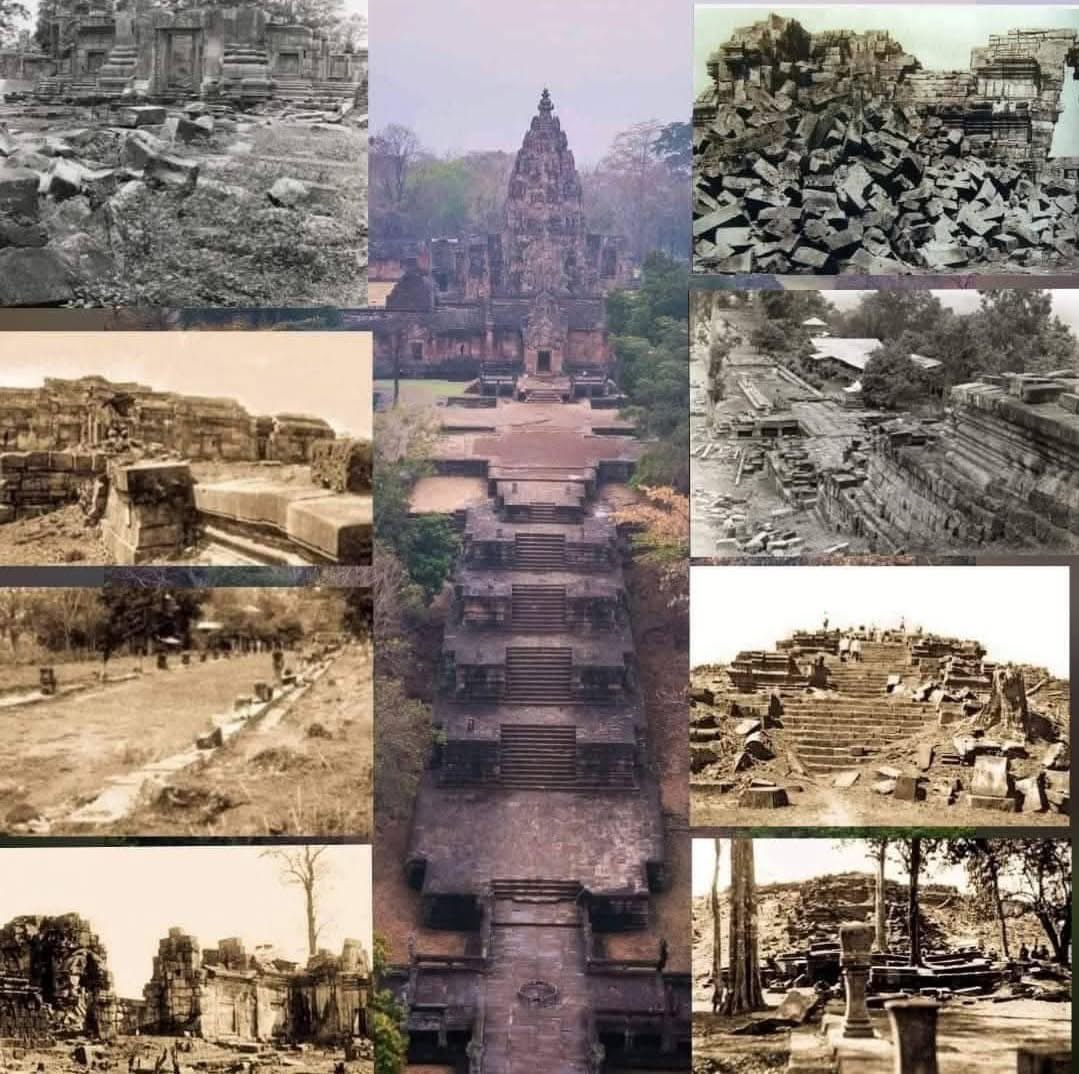
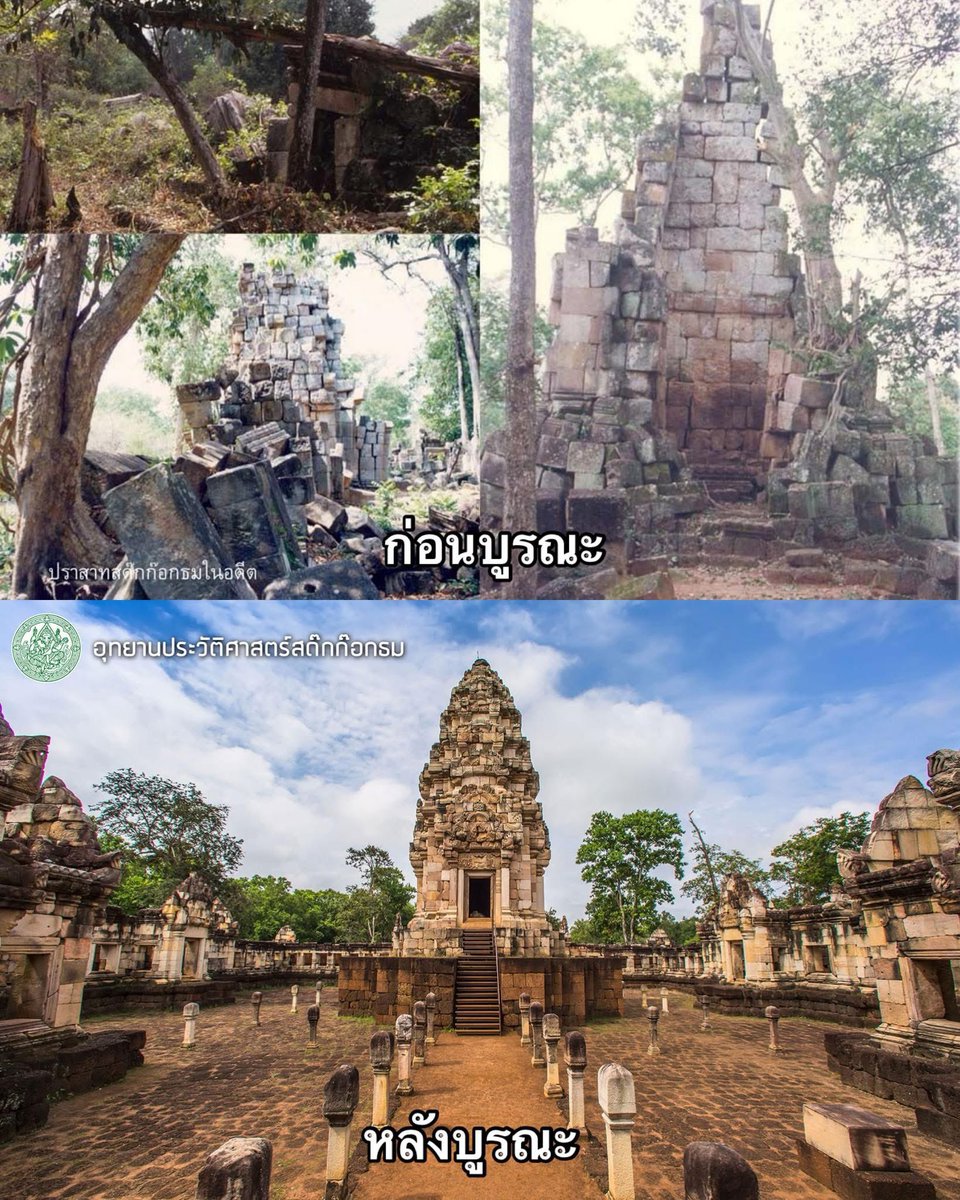
อีกหนึ่งตัวอย่าง … การบูรณะปราสาทของไทย ที่ยกนิ้วให้เสมอ
#เฃมรทำปราสาทสด๊อกก๊อกธมพัง
ปราสาทสด๊กก๊อกธมได้รับความเสียหายและอยู่ในสภาพพังทลายจากผลกระทบของสงครามเขมรแดง โดยพื้นที่ปราสาทถูกใช้เป็นที่พักพิงของชาวกัมพูชาผู้ลี้ภัย ทำให้มีการขุดหาแหล่งน้ำในบารายจำนวนมาก ซึ่งส่งผลต่อโครงสร้างดิน และมีการนำหินปราสาทไปใช้ประโยชน์ จนกรมศิลปากรต้องเข้าบูรณะยาวนานหลายปีด้วยวิธีอนัสติโลซิส (ต่อจิ๊กซอว์) เพื่อคืนสภาพให้กลับมาเป็นอุทยานประวัติศาสตร์อีกครั้ง.
สาเหตุหลักที่ทำให้ปราสาทเสียหาย:
เป็นที่พักพิงผู้ลี้ภัย: ในช่วงสงครามเฃมรแดง (ประมาณปี พ.ศ. 2518) ผู้ลี้ภัยชาวเฃมรอพยพเข้ามาอาศัยในบริเวณปราสาทจำนวนมาก.
การขุดบาราย: ผู้ลี้ภัยชาวเฃมรขุดหลุมหาแหล่งน้ำในบารายหลายร้อยหลุม ทำให้ชั้นดินกักเก็บน้ำเสียหาย และบารายไม่สามารถเก็บน้ำได้เหมือนเดิม.
การใช้ประโยชน์จากตัวปราสาท: มีการนำหินปราสาทไปใช้ประโยชน์ (แม้จะไม่ได้ระบุชัดเจนว่า 'เฃมรขุด' ทั้งหมด แต่เป็นผลจากสภาวะสงครามและการใช้พื้นที่) ทำให้โครงสร้างเสียหาย.
กรมศิลปากรเริ่มสำรวจและบูรณะในปี พ.ศ. 2536 และดำเนินการอย่างต่อเนื่องด้วยวิธีอนัสติโลซิส (Anastylosis) ซึ่งเป็นการต่อหินเก่าคืนตำแหน่งเดิมคล้ายจิ๊กซอว์.
บูรณะเสร็จสมบูรณ์ในช่วงปี พ.ศ. 2538-2553.
เปิดเป็นอุทยานประวัติศาสตร์ สด๊กก๊อกธม ในปี พ.ศ. 2562 และเปิดศูนย์บริการข้อมูลในปี พ.ศ. 2565. ดังนั้น ปราสาทเสียหายจริงจากผลกระทบของสงครามและการใช้พื้นที่ ซึ่งรวมถึงการขุดของผู้อพยพชาวเฃมรที่เข้ามาพักพิงด้วย.
Khmens damaged Prasat Sdok Kok Thom.
Prasat Sdok Kok Thom suffered damage and fell into a ruined condition as a result of the Khmen Rouge war. The temple area was used as a shelter for Khmen refugees, which led to extensive digging to find water sources in the baray (reservoir). This affected the soil structure, and stones from the temple were also taken for use. As a result, the Fine Arts Department had to carry out restoration over many years using the anastylosis method (reassembling like a jigsaw puzzle) in order to restore the site and return it to the status of a historical park once again.
Main causes of the damage:
• Use as a refugee shelter: During the Khmen Rouge war (around 1975), large numbers of Cambodian refugees migrated and lived in the temple area.
• Digging in the baray: Khmen Refugees dug hundreds of pits in the baray to find water, damaging the water-retaining soil layers and causing the reservoir to lose its ability to store water as before.
• Use of the temple itself: Stones from the temple were taken for practical use (even though it is not explicitly stated that all of this was done by “Khmens,” it was a result of wartime conditions and land use), which caused structural damage.
The Fine Arts Department began surveys and restoration work in 1993 and continued the process using the anastylosis method, which involves reassembling original stones back into their original positions, similar to a jigsaw puzzle.
The restoration was completed between 1995 and 2010. Prasat Sdok Kok Thom was opened as a historical park in 2019, and an information center was opened in 2022.
Therefore, the temple was indeed damaged due to the impacts of war and land use, including digging carried out by Khmen refugees who sought shelter in the area.
Cr 📸 : กรมศิลปากร
#Thailand #ThaiCulture #ThaiStoneCastle #ThaiTraditionalDress.
ไทยเรียนรู้วิธีการบูรณะปราสาทหินจากฝรั่งเศสด้วยวิธีอนัสติโลซิส คือการรื้อของเก่ามาวางเรียงต่อเป็นเหมือนจิกซอว์ไว้ด้านล่างแล้วค่อยเอาขึ้นไปประกอบบนคาน และได้เรียนรู้วิธีการบูรณะปราสาทหินแห่งแรกคือปราสาทหินพิมาย นั่นคือจุดที่คนไทยเรียนรู้จนสามารถเอาความรู้ส่วนนี้มาซ่อมแซมปราสาทที่เหลือๆได้อย่างสวยงาม ไม่ใช่แค่ปราสาทหินที่ไทยสามารถบูรณะได้ แต่ปราสาทหินแบบสมัยใหม่ไทยก็สร้างได้ คนเราไอคิวมันต่างกันอะเนอะ ขนาดให้ต่างชาติอย่าง อินเดีย ญี่ปุ่น จีน เกาหลีบราๆ มาช่วยซ่อมแซม สมองยังไม่จดจำวิธีการบูรณะนี้ พอทำออกมาเองก็บูรณะแบบปลวกกัดหนูเทะ ยอมรับเทอะค่ะว่าสมองของพวกหล่อนมันคือสมองทาสไม่ใช่สมองนาย ทำได้ดีสุดแค่แรงงาน
#ภาพนี้คือภาพปราสาทหินพนมรุ้งก่อนบูรณะและหลังบูรณะ
Thailand learned the method of restoring stone castles from the French using anastylosis, which involves dismantling old pieces and reassembling them like a jigsaw puzzle at the bottom before reassembling them on beams. The first stone castle to learn this restoration technique was Phimai Castle. This was the point where Thais learned the skills to beautifully repair other castles. It's not just stone castles that Thais can restore; they can also build modern stone castles. People's IQs are different, aren't they? Even when foreigners from India, Japan, China, Korea, etc., help with restoration, their brains don't remember this restoration method. When they try to do it themselves, the result is like termites eating away at it. Let's admit it, their brains are slave brains, not master brains. At best, they're just laborers.
#This image shows Phanom Rung Castle before and after restoration.