Great coverage of my report "Green gold" in the @FinancialReview this week. And I was glad to get a supportive nod from Guy Debelle 😁
You can read the full report here: https://t.co/aGBU04xeot
https://t.co/9PNjf6yuBF
Great to be cited in @TobyMPhillips@CentrePolicyDev report on a strategy to kickstart Australia's renewable industry future
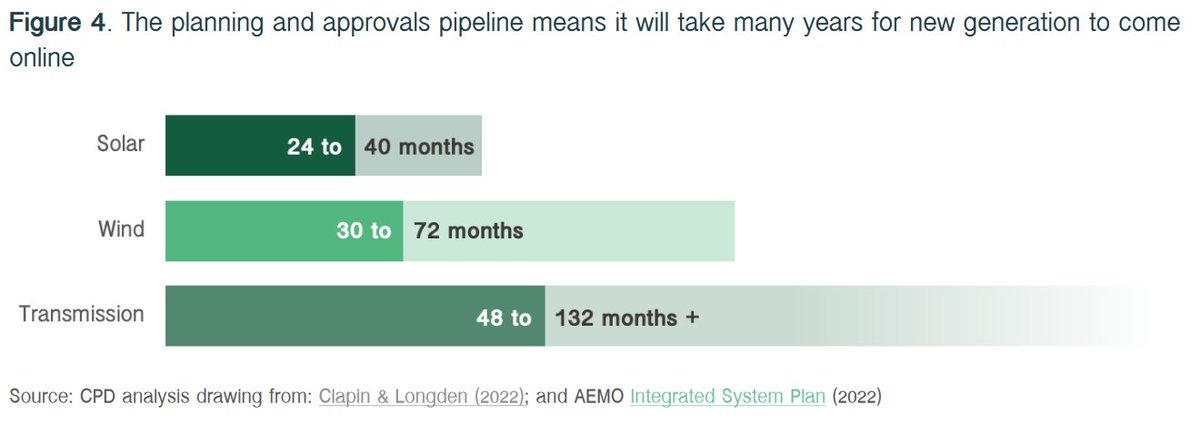
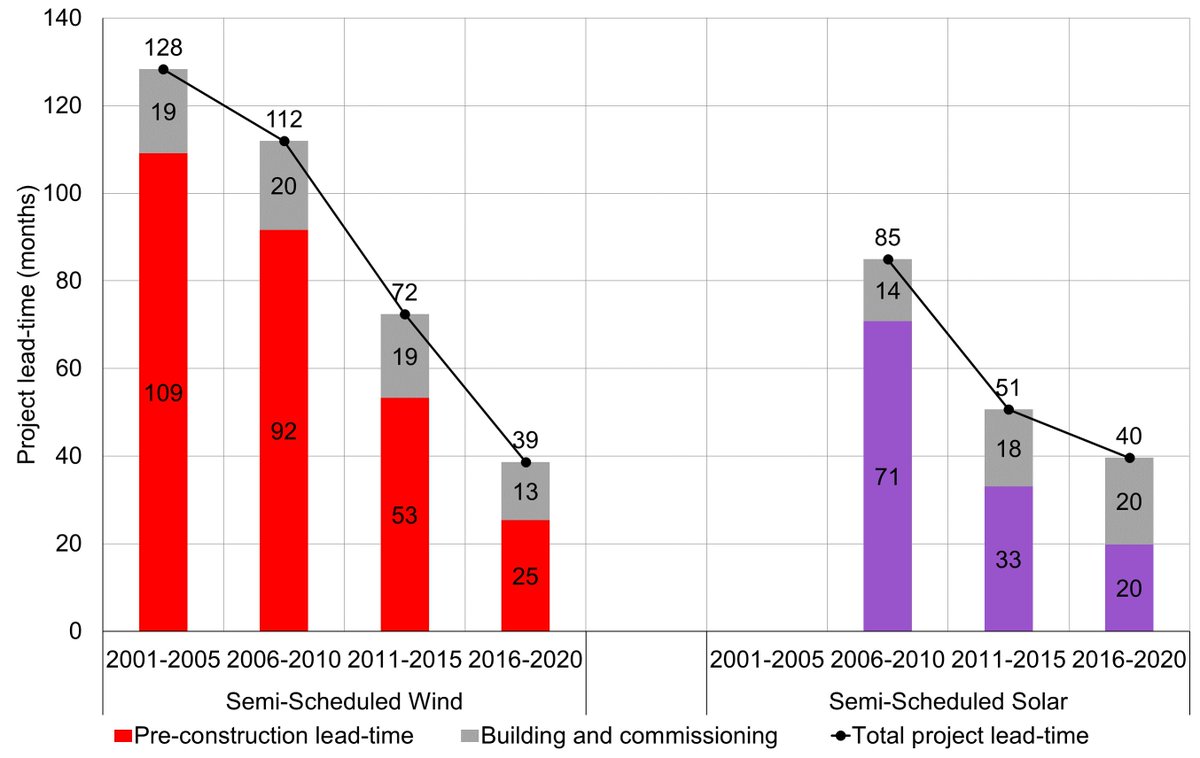
Our numbers were used to assess the renewables planning and approvals pipeline
@ANU_ICEDS working paper: https://t.co/Mqr0pL83S9
https://t.co/LnCGnWXNvL
This 1-page exec sum says how the government can make this happen with $60-100bn over 20 years. In short:
- half to support first-movers and pioneers
- a quarter for fast followers
- a quarter for communities, loans, research grants and regulatory reform
https://t.co/aGBU04xeot
In a new report out today, I look at how Australia can seize the golden opportunity to build green export industries in iron, ammonia, and aluminium.
In the short term, this will require at least $60-100 billion in government support.
Read more at: https://t.co/aGBU04xeot
In the short term, governments need to help bridge the cost difference between low-emissions production and fossil-fueled production.Part of this is about the additional cost of new tech; but the biggest issue is the discount given to emissions-intensive production
💥ANNOUNCEMENT💥
The Oxford COVID-19 Government Response Tracker has now published and archived our *FINAL* dataset and working paper, creating a permanent global record of COVID-19 policies https://t.co/usQ3kCBBvD
For me, this project was many wonderful things. It started with no money, the challenge of having to largely anticipate government policies. But with incredible colleagues @thomasnhale@TobyMPhillips to name just two, and support from across @BlavatnikSchool...
This will be a great celebration of the work of hundreds of volunteers that made the Oxford Covid-19 Government Response Tracker possible 🎉
You can watch the event here: https://t.co/DiU15M2KkA
We’re gearing up at @BlavatnikSchool for a big celebration this afternoon if 3 years of collecting and publishing covid policy data.
The event will include contributions from @UniofOxford VC Irene Tracey, @davidnabarro, @DrTedros and more.
Coming up on AM - the Future Fund under pressure to better declare exposure to climate change risks like other sovereign wealth funds. A report from the Centre For Policy Development says the $250b fund is failing to meet investor expectations @abcnews@CentrePolicyDev
@ZacGross@TheKouk@peter_tulip the presence of the risk is idiosyncratic and to some degree predictable, and so it can be managed.
ideally the market prices it in, riskier debt becomes more expensive, and all is well: stable economy
We're not there yet, hence role for the RBA in market stewardship
@ZacGross@TheKouk@peter_tulip There is a global movement in capital markets to better articulate these risks (eg. TCFD disclosure, which the Treasurer has signalled may become mandatory for listed entities)
Many central banks are incorporating this sort of analysis, as are other sovereign debt holders.
2/2
@ZacGross@TheKouk@peter_tulip oh, right. We are coming at this from fundamentally different directions: my answer is ~100%
Climate risk exposure is continuous, not binary. So almost every asset has *some* level of climate risk (although it may not be a significant or consequential level for many)
1/2
@ZacGross@TheKouk@peter_tulip all of them. All the more reason to understand this risk
As I said yesterday, my suggestion on that front is about relative prices, haircuts etc. Not outright exclusion.
I feel like you are arguing against a straw man, or a headline written by an editor, not my actual proposals
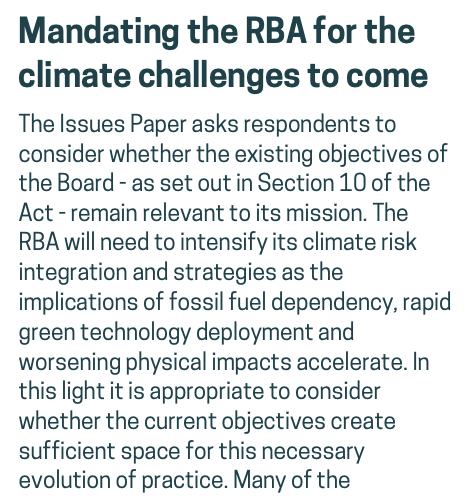
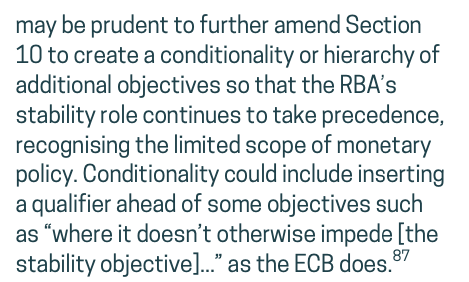
@TheKouk@peter_tulip On mandate: not a hill I'm going to die on. Our recommendation is mandate change OR ministerial statement
to be clear: I am not saying that *interest rates* can (or should) be used to achieve climate goals!
of course, nuance is lost in op-ed
https://t.co/cTVNqo9ZpU
2/2
@TheKouk@peter_tulip hi Peter and Stephen, author here.
on world peace – RBA collateral framework already screens out corp. bonds from unstable countries. More sophisticated than their approach to climate risk.
Our submission is about market stewardship and preparing for new macro risks/shocks
1/2
@SHamiltonian why? I can think of 3 objections:
1. climate transition does not pose risk to macro-stability
2. there is risk, but RBA is already fully up to task
3. RBA could do better, but don't touch mandate
On #1 or #2: agree to disagree
On #3: I suggest several options beyond the headline