What are the brain’s “real” tuning curves?
Our new preprint "SIMPL: Scalable and hassle-free optimisation of neural representations from behaviour” argues that existing techniques for latent variable discovery are lacking.
We suggest a much simpl-er way to do things.
1/21🧵
Great work and a relevant read for neuroscientists and machine learners alike. Made me fundamentally reconsider how I thought about layer normalisation! Well done @RoyEyono
How do neural circuits in the brain implement normalization? 🧠
In our new paper, we show that just normalizing sensory input isn't enough. Crucially, we must also normalize the error signals! 🧵👇
Paper: https://t.co/IMZPSulQAH
A little overdue but happy to announce that I
1) Got my PhD🎓
2) Started a postdoc and CNS Fellowship with Guillaume Lajoie and Blake Richards (@g_lajoie_@tyrell_turing)
Come find me at @Mila_Quebec in Montreal working on new things NeuroAI!
A great article from SWC on our neural data analysis technique (now accepted into ICLR). More updates to come soon...plus will be @CosyneMeeting presenting this too!
How does the brain represent imagined locations?
Researchers at SWC, @GatsbyUCL and @UCL developed SIMPL, a method to refine neural tuning curves by correcting distortions from imagined locations—sharpening our view of place cell activity.
Read more: https://t.co/qzf6WEzKZy
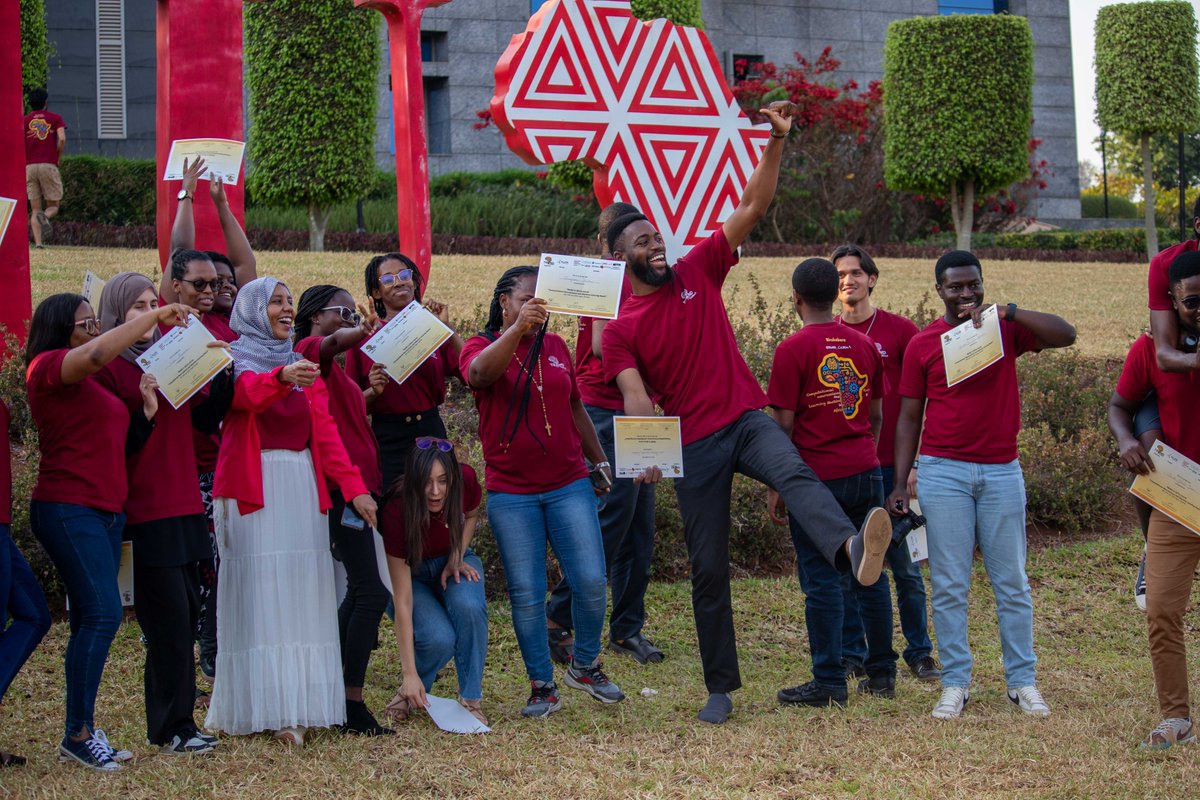
Good news!🎉 The application deadline for TReND-CaMinA has been extended to ❗️31st January❗️
Don’t miss this chance to boost your computational neuroscience journey and become part of our community🧠✨
Apply now: https://t.co/P49RfKW1dx #Neuroscience#Education#ScienceForChange
🌍🧠💻Applications are well and truly open for the third CaMinA.
African nationals studying biology, medicine, engineering, maths etc. can, and should, apply for this summer school in Zambia.
Neuro and ML are changing the world and now I the time to get into them, please RT!
🎉Happy New Year! Start 2025 by investing in your future!🚀
Just 2 weeks left to apply for our Computational Neuroscience & Machine Learning course🧠🤖
Let’s make this year one for growth & discovery. RT to spread the word!🙌
🔗https://t.co/P49RfKW1dx
#Growth#Opportunity
@vineettiruvadi ((also I'm not saying it shouldn't still be used - in many cases its still quite useful...just that perhaps we could look a bit deeper))
@vineettiruvadi I think we should! (my experience with a lot of contemporary work in HPC is that tuning curves == spikes fitted to behaviour is still dominant)
CaMinA is back for its 3rd year...this time we're going to beautiful Zambia🇿🇲!
I'm proud to see this course grow and bring together the smartest students across Africa with leading neuro institutes like @AllenInstitute and @SWC_Neuro
Applications open soon, please share widely!
🌍Exciting news! The 2025 TReND-CaMinA Course will be held in Lusaka, Zambia 🇿🇲 from July 7th–23rd. Dive into computational neuroscience and machine learning with us!
📅 Applications open: December 15th
🔗More info: https://t.co/P49RfKW1dx
Stay tuned & spread the word! 🧠✨
🌍Exciting news! The 2025 TReND-CaMinA Course will be held in Lusaka, Zambia 🇿🇲 from July 7th–23rd. Dive into computational neuroscience and machine learning with us!
📅 Applications open: December 15th
🔗More info: https://t.co/P49RfKW1dx
Stay tuned & spread the word! 🧠✨
What are the brain’s “real” tuning curves?
Our new preprint "SIMPL: Scalable and hassle-free optimisation of neural representations from behaviour” argues that existing techniques for latent variable discovery are lacking.
We suggest a much simpl-er way to do things.
1/21🧵
@EliSennesh Good question! In the space of a tweet that might be too much to answer but can I direct you to section 2 of the paper where I think you'll find the answer https://t.co/ZcmcGCUYSV
@zilong_ji nice I hadn't seen this one! Muller and Kubie 1989 did the same thing with place fields. Was an inspiration for SIMPL (which is like an automatic and much less constrained version of this idea)
@sai_prasanna thanks! Yes SIMPL will be most applicable to relatively "simple"/low-D/continuous latent spaces (of which there are a few obvious contenders in the brain)
@dlevenstein • Ultimately its a trade off…we assume Gaussian (therefore unimodal) posteriors which therefore allows Kalman filtering which is a SUPER fast E-step. If you want multimodal posteriors (ie encode multiple positions) then expect big slow-downs :(((