These two images were taken by @astro_reid only minutes apart. The stark difference is the result of camera settings. In the first, a longer shutter speed let in much more light from Earth, while the shorter shutter speed in the second emphasizes our planet's nighttime glow.
How to make planet Jupiter:
1) be on the @Space_Station
2) make a thin film sphere of water
3) add food coloring
4) blow on the edge to create swirls
This is way cool!
@Brady_H Cool study, but they weren’t trained athletes. This looks more like a deconditioned population effect than a serious performance hack for people who already train.
@foundmyfitness How much of the effect was sauna itself vs just a lower starting fitness level in the sauna group?
Would the same benefit show up in trained athletes, or mainly in sedentary adults with risk factors?
Thousands of distinct vehicle and pad criteria had to be met prior to catching the Super Heavy booster. Thanks to the tireless work of SpaceX engineers, we succeeded with catch on our first attempt.
Starship’s fifth flight test lifted off with our most ambitious test objectives yet as we work to demonstrate techniques fundamental to Starship and Super Heavy’s fully and rapidly reusable design.
And on our first try, Mechazilla caught the booster → https://t.co/hibmw2lVv1
An out of frame moon creates a lens flare and illuminates the Dragon perched atop the International Space Station.
Photo taken looking out Starliner’s window.
1/1.3 s exposure, 2000 ISO, f1.4, 24mm lens
Comet rises above the horizon just before orbital sunrise amongst aurora and swirling satellites.
Timelapse composed from 1/4s, 50mm, f1.2, ISP 6400 images played at 30fps.
Tonight (Aug. 19) through Wednesday, look up to see a full moon that is both:
A supermoon—when the Moon is within 90% of its closest approach to Earth
A blue moon—which doesn't necessarily mean the Moon will look blue.
What *does* it mean? Read on: https://t.co/ByNDVSbRr0
The moon makes it way towards the horizon to set amongst red and green aurora . . . I was setup in a different window and saw this through another window. I made a quick camera, camera mount, and shroud teardown and setup. Felt so lucky to grab this shot.
15mm, T1.8, 1s, ISO 6400
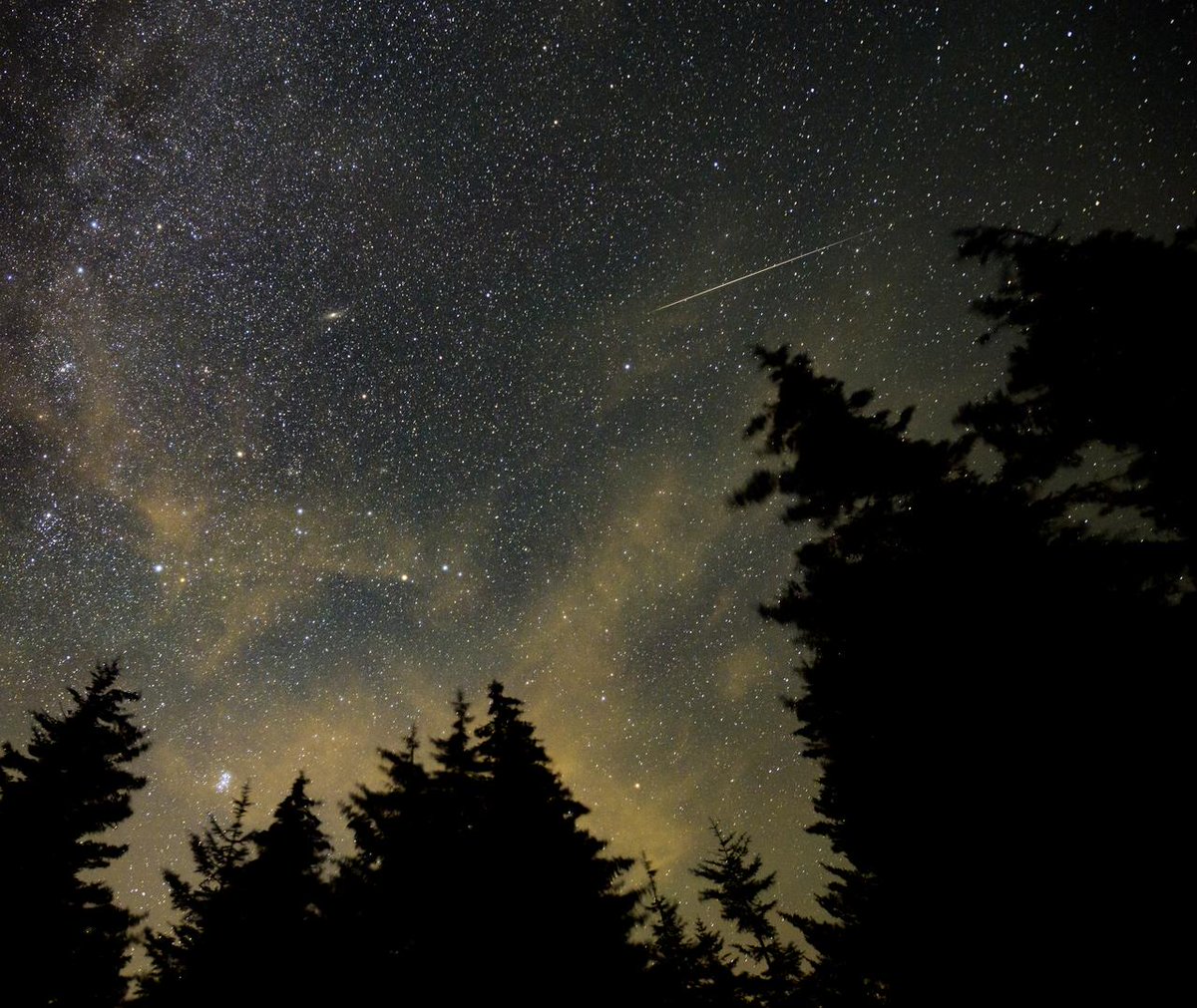
Stargazers, look up! It’s time for the Perseid meteor shower. Head out the night of Aug. 11 and before dawn on Aug. 12 for a chance to see some celestial fireworks. https://t.co/lWKxd8inbD