What does an ovary actually look like as it ages—one oocyte at a time?
We mapped >85,000 oocytes in >100 intact mouse ovaries, in 3D, across the reproductive lifespan. And the ovary turned out to be much more organized than we expected. 🧵 1/5 https://t.co/BUeZBI3vJA
Conception’s mission is to turn stem cells into human eggs and redefine fertility.
We have an exciting update - we've generated the first early human egg cells derived from stem cells.
Why 50% of human fertilized eggs fail to complete pre-implantation development?
Latest work from my lab in @CellCellPress now clarifies the two causes that contribute to the low efficiency of early human embryos and provides one of the solutions. (1/7)
https://t.co/NyKUdWQBv0
MEIOSIN retains an intrinsic STRA8-independent activity that drives meiotic entry across vertebrate evolution https://t.co/MPaG4knnHl This paper will be published from Genes Dev
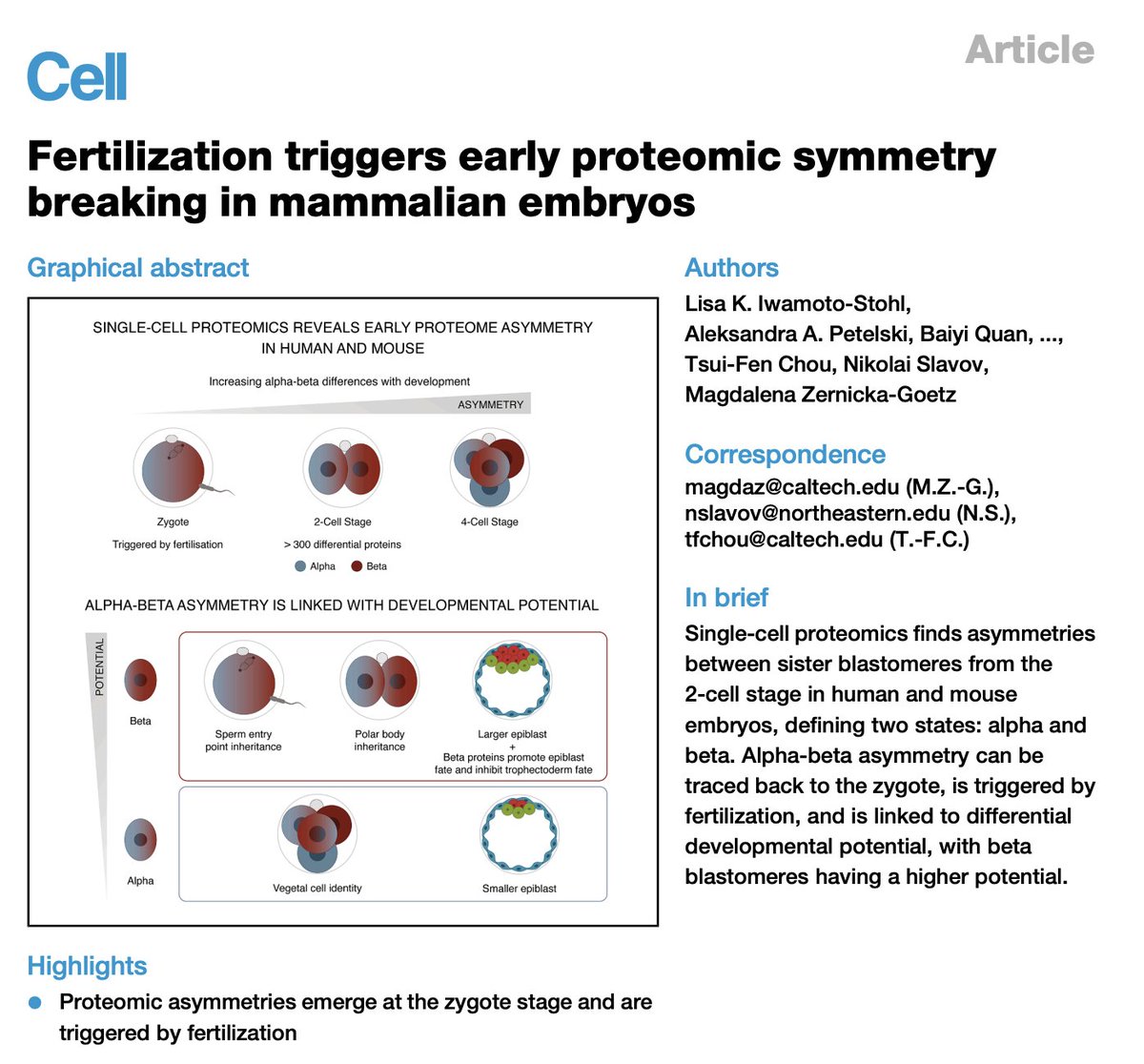
Single-cell proteomics illuminated new mechanisms of mammalian development.
We found that spatially polarized protein distributions and intracellular protein gradients emerge during the earliest stages of mammalian embryogenesis and help bias subsequent cell fate decisions. Critically, these developmental mechanisms are not reflected in mRNA abundance: the key biology resides in the spatial organization, abundance, and asymmetric localization of proteins within and between cells.
The results show that early developmental patterning is associated with polarized localization of specific proteins and coordinated proteomic asymmetries across blastomeres, linking protein organization directly to lineage specification. These findings support a model in which cell fate in the mammalian embryo is not determined solely by stochastic transcriptional programs, but is strongly shaped by inherited and dynamically regulated protein states that establish developmental competence before overt differentiation: https://t.co/lvpZ2TOaIC
Our results depended critically on single-cell proteomics analysis, on direct measurement of the molecular effectors that execute developmental decisions — capturing gradients, localization, stoichiometry, and post-transcriptional regulation. The future of developmental biology will depend increasingly on quantitative single-cell protein measurements capable of resolving the molecular architecture of cell fate determination: https://t.co/92S1z9WEBp
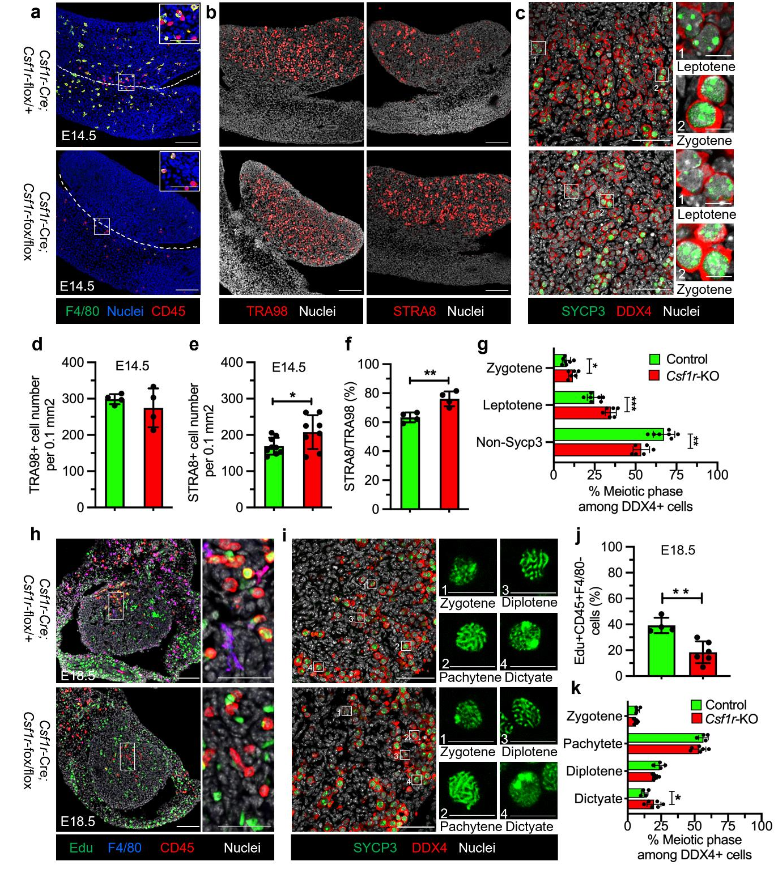
Funny😆"CSF1R-dependent macrophages ... facilitate...
developmental germ cell loss, which may be important for ensuring the quality and appropriate
number of oocytes during ovarian maturation"
https://t.co/aaJVmXDzQ5