Ever wondered what @NaturalEngland does?
I was pleased to record this podcast with the Civil Service Climate & Environment Network, answering questions about our work, why we do it & the context.
https://t.co/nlP59Wkwse
El Niño is arriving on our doorstep in the coming months with 90% certainty.
The world must treat it as the urgent climate warning it is.
The only effective response is #ClimateAction equal to the crisis – ending the addiction to fossil fuels, accelerating the shift to renewables, protecting the most vulnerable, and delivering early warning systems for all.
https://t.co/owmmCChyb3
Wanting growth. Go green! CBI report shows Britain’s green economy growing by ten per cent a year, as are green jobs, now totalling over a million, paying better and more productive than others. Scrapping net zero would be economic madness.
https://t.co/31rbt1Cixn
Mapped: How extreme weather is destroying crops around the world | @orladwyer_ w/ comment from @AndyChallinor Prof Elena Piedra-Bonilla, Dr Monica Ortiz, Ananta Prakash Subedi #CBarchive
🎨 @tomoprater
Read here: https://t.co/vf69tOrbQa
Quand les oiseaux chantent dans votre jardin, votre cerveau reçoit un signal qu'il interprète depuis des centaines de milliers d'années comme une seule information : il n'y a pas de danger. Pas une impression. Un mécanisme.
Dans toute l'histoire évolutive des mammifères, le silence soudain des oiseaux précédait la présence d'un prédateur. Leur chant continu signalait l'inverse : l'environnement est sûr, les ressources sont disponibles, le système nerveux peut sortir de sa vigilance. Ce câblage n'a pas disparu. Des chercheurs de l'Institut Max Planck pour le développement humain à Berlin ont soumis 295 participants à six minutes de chant d'oiseaux ou de bruit de circulation, dans une expérience randomisée publiée dans Scientific Reports en 2022. Le chant des oiseaux a réduit de manière significative l'anxiété et les pensées anxieuses — des effets mesurables sur l'état mental après six minutes d'écoute.
Une étude plus récente a suivi 233 personnes lors d'une promenade de trente minutes dans un parc, en mesurant la pression artérielle, la fréquence cardiaque et le cortisol salivaire avant et après. Le cortisol a chuté en moyenne de 33 %. Les participants qui avaient activement prêté attention au chant des oiseaux autour d'eux ont obtenu des résultats encore plus marqués. Pas besoin d'identifier les espèces. Pas besoin de connaître leur nom. Juste écouter.
Ce qui rend ce signal plus fragile qu'il n'y paraît : la LPO, le Muséum national d'Histoire naturelle et l'Office français de la biodiversité ont publié le bilan de trente ans de comptages. Entre 1989 et 2019, la France a perdu près de 30 % de ses oiseaux communs. Dans les milieux agricoles, un tiers des effectifs a disparu. Merles, mésanges, pinsons, rouge-gorges — les espèces des jardins ordinaires déclinent à mesure que les haies disparaissent, que les insectes se raréfient, que les façades se rénovent sans laisser de cavités.
Le chant du matin n'est pas un fond sonore. C'est un rapport sur l'état du vivant autour de vous.
Ce que votre jardin attire, votre cerveau l'entend.
250 editions later, the climate conversation has changed — but so has the planet via @fionaharvey@guardian
Since COP26, we’ve seen record heatwaves, rising climate costs, political setbacks, and growing pressure on communities, businesses, and governments. Yet at the same time, clean energy is accelerating, climate innovation is scaling, and public awareness has never been stronger.
The fight against climate change is no longer about predictions. It’s about adaptation, resilience, finance, and action at speed.
The real question is not whether change is happening.
It’s whether leadership is happening fast enough.
An important reflection from The Guardian’s 250th climate edition. 🌍
https://t.co/veN835pSch
#ClimateChange #NetZero #ClimateAction #Sustainability #EnergyTransition #ClimateFinance
@AndersWijkman@ClimateArena@IRENA@ClimateBen@UNFCCC@mattiasgoldmann@AHallbarhet@YaleClimateComm@jonathonporritt
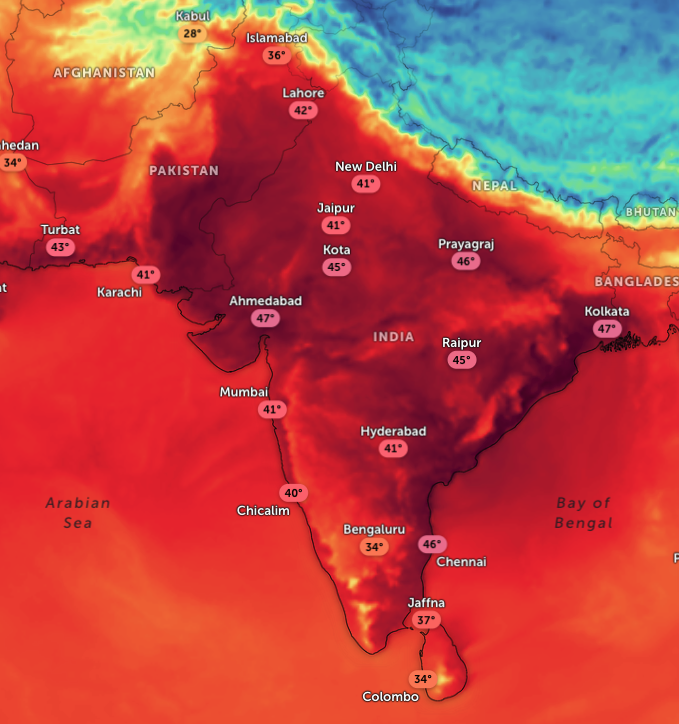
This is about a thousand more people than died in the attack on the World Trade Centre in 2001, yet hardly a mention in news bulletins. Extreme heat is becoming so frequent to the point where it’s no longer noteworthy, while some say we should slow down on emissions reductions…
One Day Of Extreme Heat Causes 3,400 Excess Deaths Across India
With temperatures touching 48°C (118 F) in Rajasthan, India is facing intense heatwaves driven by climate change
People are dying in these oven like temperatures
Food crops are being devastated
https://t.co/y9sLtxQvfy
Así estalló hoy el juguete en forma de cohete del magnate capitalista Jeff Bezos, que sufrió una enorme explosión durante una prueba espacial en Florida (EEUU).
Una explosión así puede emitir CO₂ equivalente a cientos o miles de coches diésel circulando durante un año completo.
Mientras los capitalistas contaminan por hobby como si no hubiese un mañana, a ti te piden que hagas un esfuerzo por salvar al planeta.
@markrwilliamson There are still a few, but well down compared with not so long ago. Sad, but hopefully recoverable. Anyone with a garden can help (nest sites, no chemicals, shady cool areas etc)
Another shining example of food production and nature recovery working side by side.🌾
Our Chair @TonyJuniper recently visited Codicote Bottom Farm to see @JordansCereals Farm Partnership in action - where farmers are dedicating almost 30% of their farmed land to wildlife. ⬇️
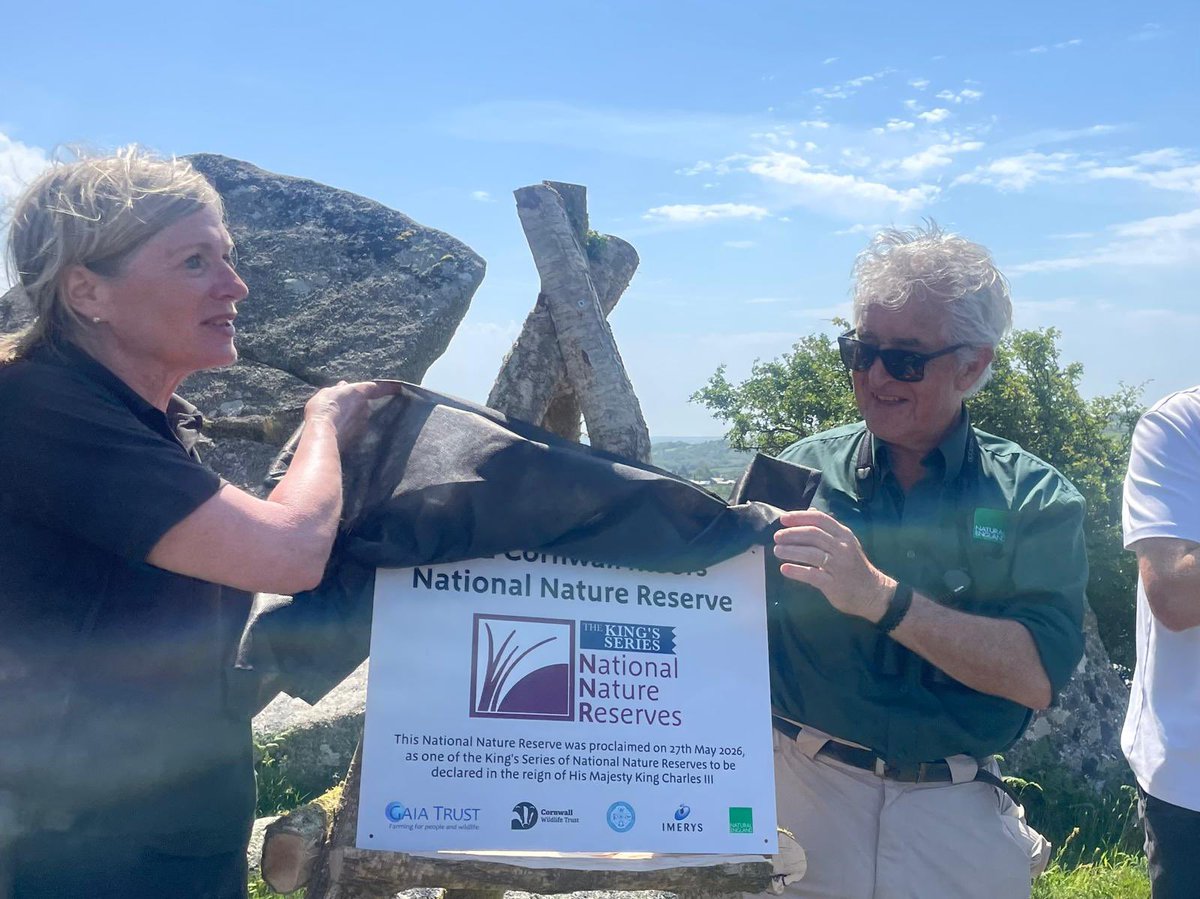
An ancient moor has been protected for wildlife after Natural England declared it a new national nature reserve.💚
More than 1,100 hectares (2,718.1 acres) of moorland in Cornwall has been marked out as an area of focus for conservation and nature restoration.
The land near St Austell boasts a rich mix of habitats including wet woodlands, heaths and bogs, which are havens for rare species such as willow tits, sphagnum moss, butterfly orchids, royal fern, Cornish moneywort and the carnivorous round-leaved sundew.
Named the Mid Cornwall Moors, it becomes the 14th site to be declared a reserve as part of the King's series of National Nature Reserves, with 25 new protected areas planned by 2028.
https://t.co/wnM0iS5z3x
A very nice @BBCNews report on yesterday’s declaration of the Mid-Cornwall Moors NNR: Nature, culture, history & landscape celebrated via a cross-sectoral partnership.
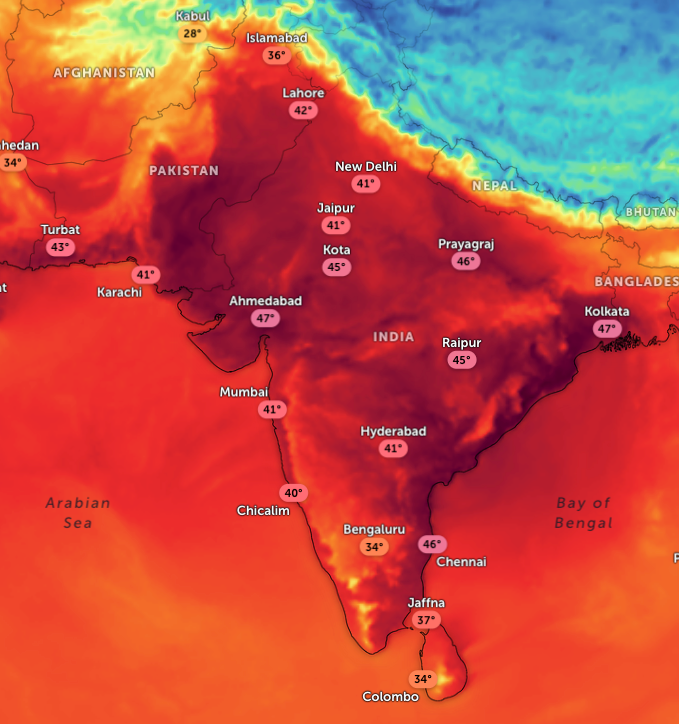
Nearly 2 billion people live in the red area.
It is becoming completely uninhabitable.
What do the climate deniers, who also hate immigration, think is going to happen?
A bricklayer in East Yorkshire has spent 35 years putting up barn owl nest boxes on weekends. This year, the region saw 308 owlets hatch.
His name is Robert Salter. He's 56 and does bricklaying full time. In 1990, he saw a piece on the news about a man in Lincolnshire installing barn owl boxes, and decided he'd do the same. He started with five.
He now has more than 350 boxes scattered across fields, farms, outbuildings, and trees in East Yorkshire. Every June, he takes four weeks off from bricklaying and visits them with his wife Sue. Scrambling up ladders, ringing chicks, cleaning boxes, repairing the ones the weather got to. He's a licensed bird ringer for the British Trust for Ornithology.
In 2024, the region ringed 95 owlets. In 2025, the count was 308. The Barn Owl Trust says that nationally, this year was "pretty poor" for barn owl breeding, but east Yorkshire is the exception, and it's the exception because of one man with a ladder.
The barn owl population in the UK was estimated at 4,000 pairs in the mid-2000s and crashed to roughly 1,000 by the early 2010s. The species is still recovering.
Most of conservation is one person who refuses to give up.
The song thrush has lived in England for thousands of years.
Long before modern England existed, its song echoed through woodland, orchards and hedgerows across the country.
And unlike most birds, the song thrush repeats each musical phrase several times before changing tune, giving it one of the most distinctive songs in the countryside.
Robert Browning captured it perfectly: 'That's the wise thrush; he sings each song twice over'"
They are also known for using stones to smash open snail shells, often leaving small piles of broken shells behind.
For centuries, the song thrush has appeared in English poetry and countryside writing as a symbol of spring, renewal and the changing seasons.
Yet despite once being common, their numbers have fallen sharply since the 1970s.
Still, across gardens, churchyards and hedgerows, that ancient song can still be heard.
One of the oldest sounds in the English countryside.
Do you still hear song thrushes where you live?
Follow @oaksandlions for the sounds, stories and heritage of the English countryside.
#England #EnglishCountryside #Birds #NativeBirds
Back in the 1990s some expected that climate action would ramp up as the scale of the disaster became evident. As it happens, the opposite is the case. Ever more catastrophic impacts are accompanied by diminished ambition & political attacks on decarbonisation. Hard to explain.
Large parts of India have been approaching “feels like” temps near 50°C. Some coastal regions may reach ~33°C wet-bulb. At 35°C wet-bulb, heat and humidity overwhelm the human body’s ability to cool itself. Survival becomes measured in hours, especially for the elderly & infants
Finnish scientists trucked in real forest dirt and grass and laid it over the gravel at four daycare yards. They let the kids dig around in it for a month. The blood tests came back with changes the researchers hadn’t expected to see so fast or so clear.
The study ran at ten daycares in two Finnish cities with 75 kids aged three to five. Four of the yards got the forest treatment: about a tennis court worth of soil and grass laid over the gravel, plus planters and peat blocks the kids could dig and climb on. Three others stuck with their normal gravel yards. The last three were daycares where the kids were already visiting real forests every day.
After one month, the variety of bacteria living on the kids’ skin shot up, and the kind that helps train the skin’s immune defenses jumped the most. Their gut bacteria started to look like the gut bacteria of the forest-visiting kids. Their blood showed more of the immune cells whose job is to keep the body from freaking out at harmless stuff like pollen and peanuts, and overall inflammation dropped. The kids on the plain gravel yards showed none of this.
Childhood asthma in the US doubled between 1980 and 1995. Food allergies in kids jumped 50 percent between 1997 and 2011, then jumped another 50 percent between 2007 and 2021. And peanut allergies in one-year-olds tripled between 2001 and 2017.
The Finnish researchers think one of the reasons is simple: kids today don’t get dirty enough. 37 percent of American preschoolers now spend an hour or less outside on a normal weekday. Their immune systems are getting trained in environments stripped of the bacteria humans have always lived around.
Aki Sinkkonen, who led the study, put it in plain words: “It would be best if children could play in puddles and everyone could dig organic soil.” The Finnish government is now helping pay for daycares across the country to make the same changes.
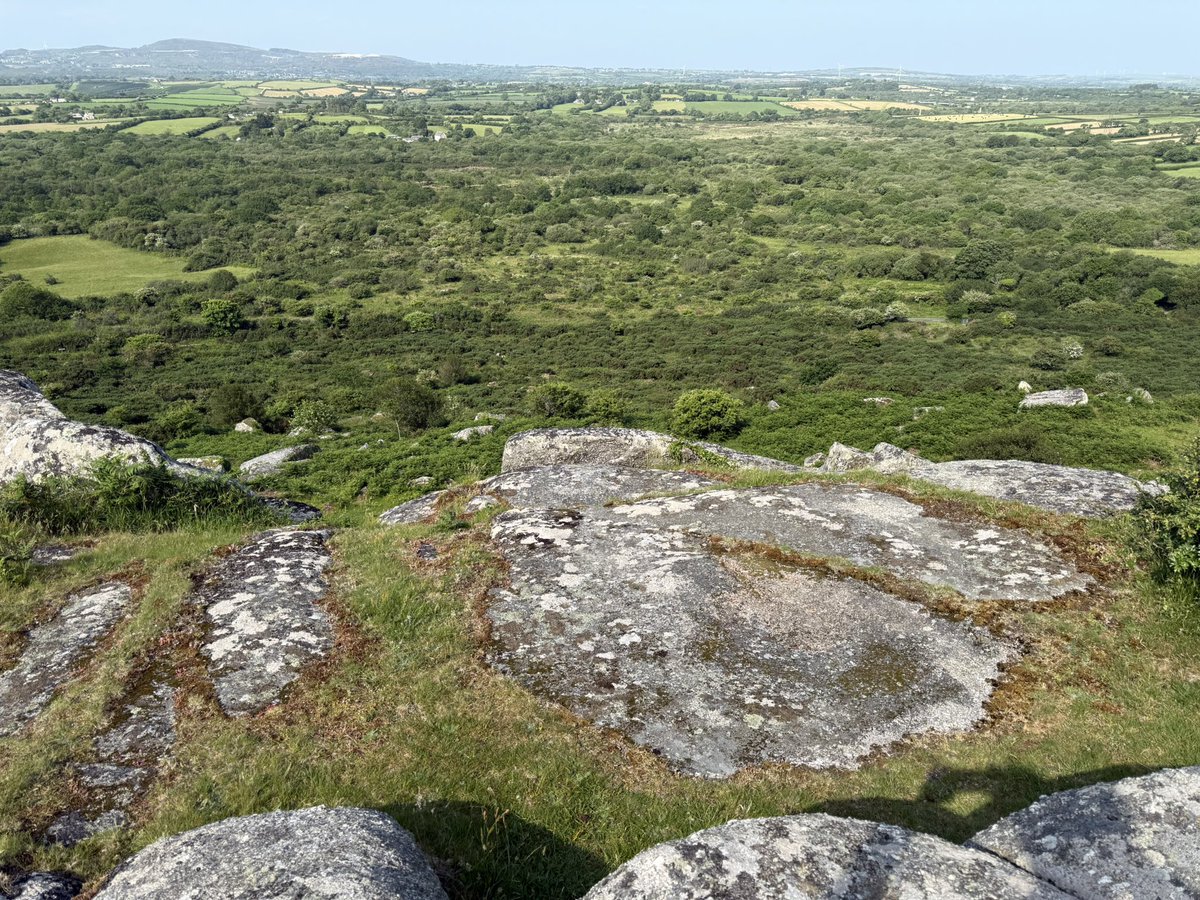
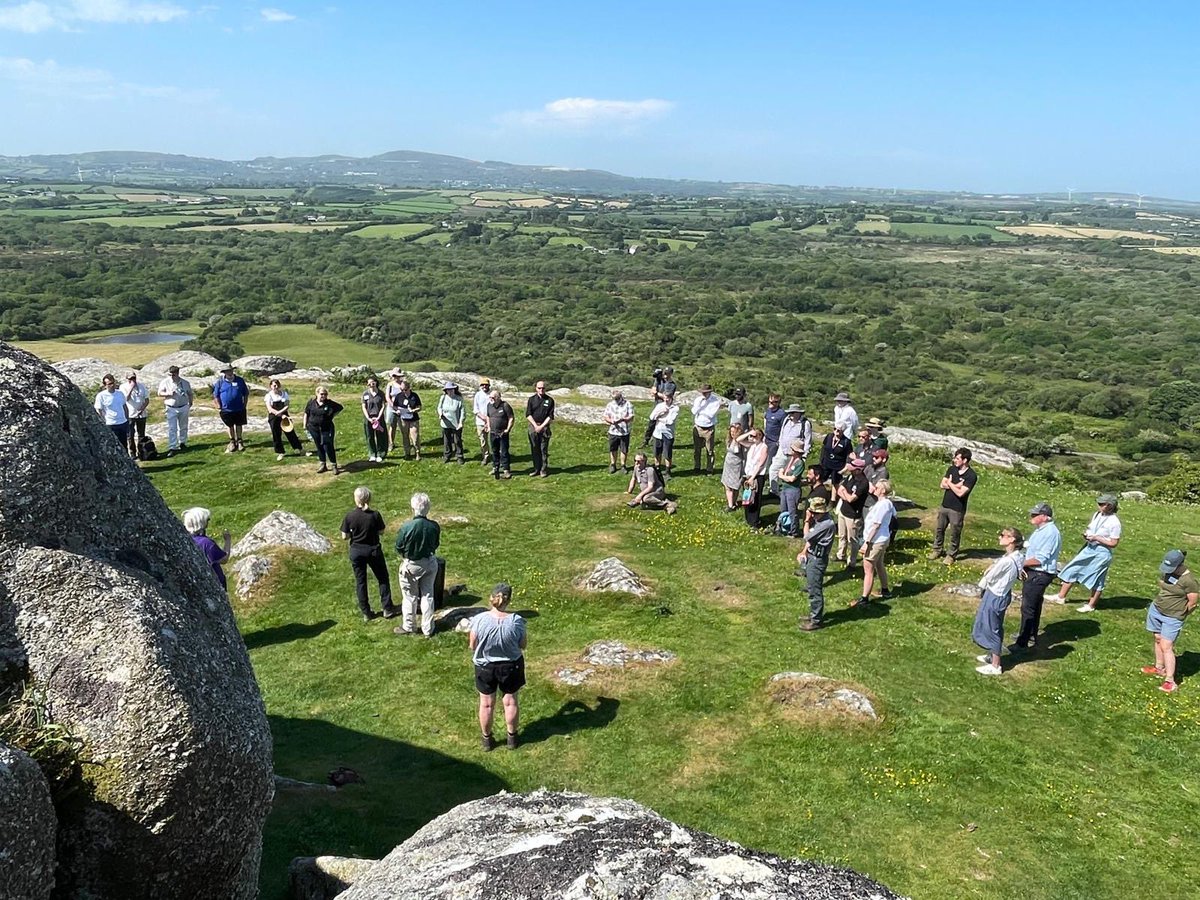
A new National Nature Reserve declared today - The Mid-Cornwall Moors NNR. Excellent to join the @NaturalEngland team to mark the moment & to meet the partner organisations who have made it possible. 1100 hectares of outstanding habitat included in number 14 of the King’s Series.
Today we celebrate the declaration of Mid Cornwall Moors National Nature Reserve. 🌿🎉
Over 1,100 hectares of moorland, rare wildlife such as the elusive willow tit and thousands of years of Cornish heritage.
https://t.co/hM4tjdZQoN