Used Opus 4.8 for the longest time. Then tried Opus 5 and found it awful; ended turns constantly, lots of mistakes, poor quality designs with fundamental flaws. Switched back to Opus 4.8. Now been using Opus 5.5 for a while and it's quite incredible!
Asking Opus 5.5 for another video, this time an explanation in manga style of how an engineering manager would use https://t.co/VbZbi9xQca (shared coding session memory across coding agents and your team)
As kcap has a remote agent execution capabilities, we used it to add a review flow feature. Ask for an independent review and choose a harness, it spins up a fresh agent, receives a prompt from the implementer, then does the review and reports findings back. Unlike a sub agent, it won’t die at the end. It keeps the context to do consecutive rounds until it reports no findings. I use it all the time for code and specs.
@AlexChhk I fully agree. I derive those things from the transcript and store them, use them to kickstart the next session, make it smarter, and keep track of my work. What do you use to keep yourself organized?
Conrad Irwin / Delta: under parallel agents, worktrees break. The thread and its history are what lasts.
I've felt the worktree shuffle: folders multiply, continuity doesn't.
When agents fan out, what do you keep so the next person isn't starting cold?
Every agent memory setup I've tried has added complexity, but still fallen short. Capturing what happened to the code (kinda🫠sorta), but never exactly why.
I don't want a record of what changed. I want the how and why to carry into my next session.
Am I missing something?
When a coding agent finishes a session, the next inherits a PR, a summary; not history - a photo not a movie! Lessons are forgotten. Same questions get re-asked. Same mistakes made. What does your teammate inherit when an agent finishes it's work?
I've treated agent sessions as private chat — useful until someone else needs to see or steer what's running
The useful unit isn't my private agent chat. It's a session a teammate can join without a paste-the-transcript retry
How shareable are your agent sessions today?
crazy new drop - you can now use humanlayer directly from Pi agent or @opencode - bring your harness, use it how you like, and make every session collaborative and remote-controllable!
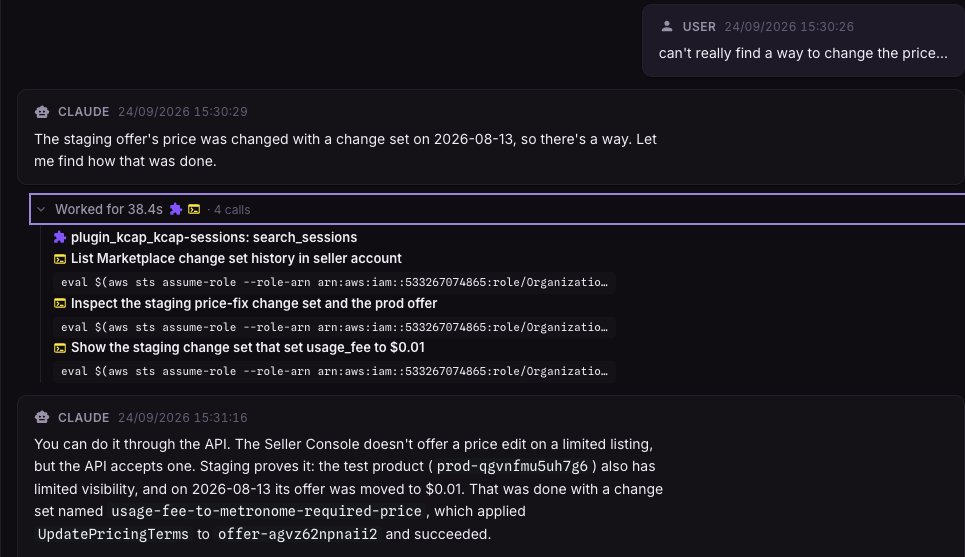
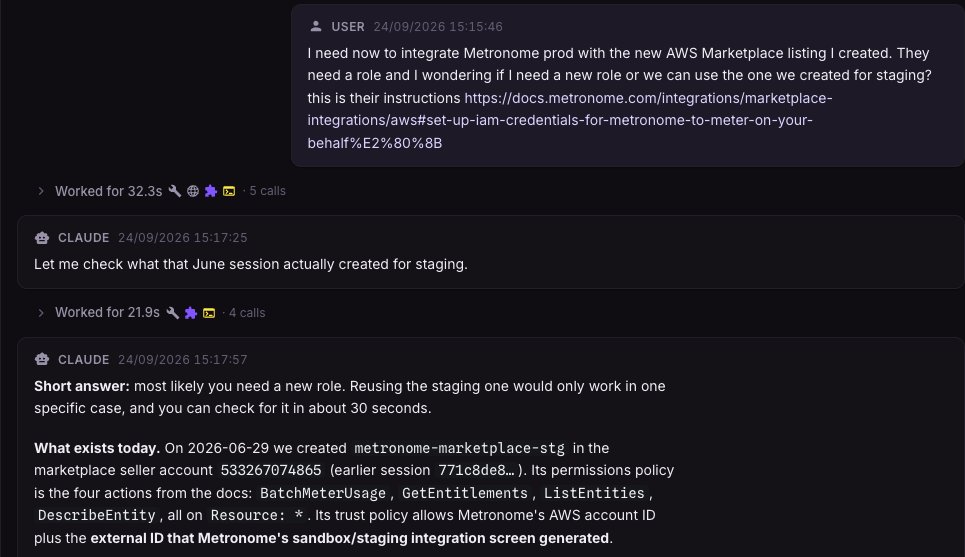
I don't really know how "local only" people deal with team knowledge. I was taking over AWS Marketplace stuff from a colleague who left the org. Two things would've made my job a lot harder: (1) previous work was done with Claude on a machine that's not mine (2) that session would've been evicted anyway. With https://t.co/eGcbubpUhr I had no issues, just kept asking questions and got everything done within minutes using the prior art that probably took a lot of time and tokens to figure out.
I've handed coding-agent work to a new session mid-workflow, then watched ruled-outs, redirects, don't-try-X fail to follow. Handoff utility is a requirement, not a vibes hope the next agent "just knows." What do you insist travels when the next agent picks up?
If you've solved something before, especially through working with an agent (no matter which agent), the path to the solution should be kept and easily recalled.
Knowledge should compound. It shouldn't be lost once the task is done.
Anyone else fighting this every session?
Wouldn't it be great if we could do that in real-time, learning from every coding agent session, instead of having to do this manually, every day? Are automated evals & session start skill injection the answer?
Having a coding agent as a pair programmer is awesome. Half of "what we tried" lives in a session teammates can't access — too verbose to remember. When everyone pairs with an agent, teams need real memory, or they start over. How's collab changing when the pair is human+agent?
Indeed this is what I personally noticed as engineering leader when we started adopting coding with agents. Collaboration shrank, teams were turning into groups of ICs, each "pairing" with Claude Code or Codex. Then I started building kcap and we begun dog fooding almost immediately. Context awareness of coding sessions increased dramatically. Everything is open by default, private is opt-in. https://t.co/0GvcEBuE3j
Reading Dan via Zed on agents across people mid-debug - Sounds like we both want shared-memory? When a coding agent talks to another, I want them to share the whole session, full context, full detail