El Auftragstaktik alemán era mucho más que dar libertad al subordinado, ya que englobaba:
- Confianza institucionalizada
- Formación muy exigente de oficiales
- Educación para la iniciativa.
- Aceptación del error como parte del proceso de mando.
¿El internet es un derecho humano… o solo una herramienta?
Esta semana para mi clase de Technology and Human Rights, revisamos un texto donde el autor sostiene algo que me pareció muy interesante y que abrió un gran debate entre nosotros: El internet no es un derecho en sí mismo.
La idea es esta:
El internet funciona como una vía. Como lo sería, en su momento, un caballo, o hoy un teléfono o una televisión. Es el medio que te permite hacer otras cosas, como comunicarte, informarte, discutir ideas o acceder a la cultura.
Pero no existe el derecho a tener un teléfono, una televisión o un caballo... lo que sí existe realmente son los derechos que están detrás de las herramientas, como la libertad de expresión, el acceso a la información o la participación en la vida pública.
Si consideráramos que el internet es un derecho humano en sí mismo, eso implicaría que los Estados tendrían que garantizarlo como tal, con todos los costos y obligaciones que eso conlleva. Cuando en realidad sigue siendo una herramienta para ejercer otros derechos.
El propio debate (a nivel incluso internacional) va en ese sentido... El internet puede ser indispensable para ejercer derechos, pero no necesariamente es un derecho por sí mismo.
Ustedes que piensan legales, ¿Debe tratarse como un derecho humano que los Estados tienen que garantizar ¿O como una herramienta esencial… pero no un fin en sí mismo?
Les dejo el link al articulo aquí:
https://t.co/mbapa9kMA7
Middle powers today are “suddenly back in fashion,” writes Michael Beckley. They are becoming more visible not because they are more powerful but “because they are more exposed.”
https://t.co/jW0kGVAPwG
Sharing my letter, published @FT in response to the ever-generous @SoumayaKeynes (go read her new book!) op-ed last week on why Europe needs tariffs.
My bottom line: Why and how go hand in hand. Tariffs are not credible commitments, but rules are.https://t.co/smYVxEv4dD
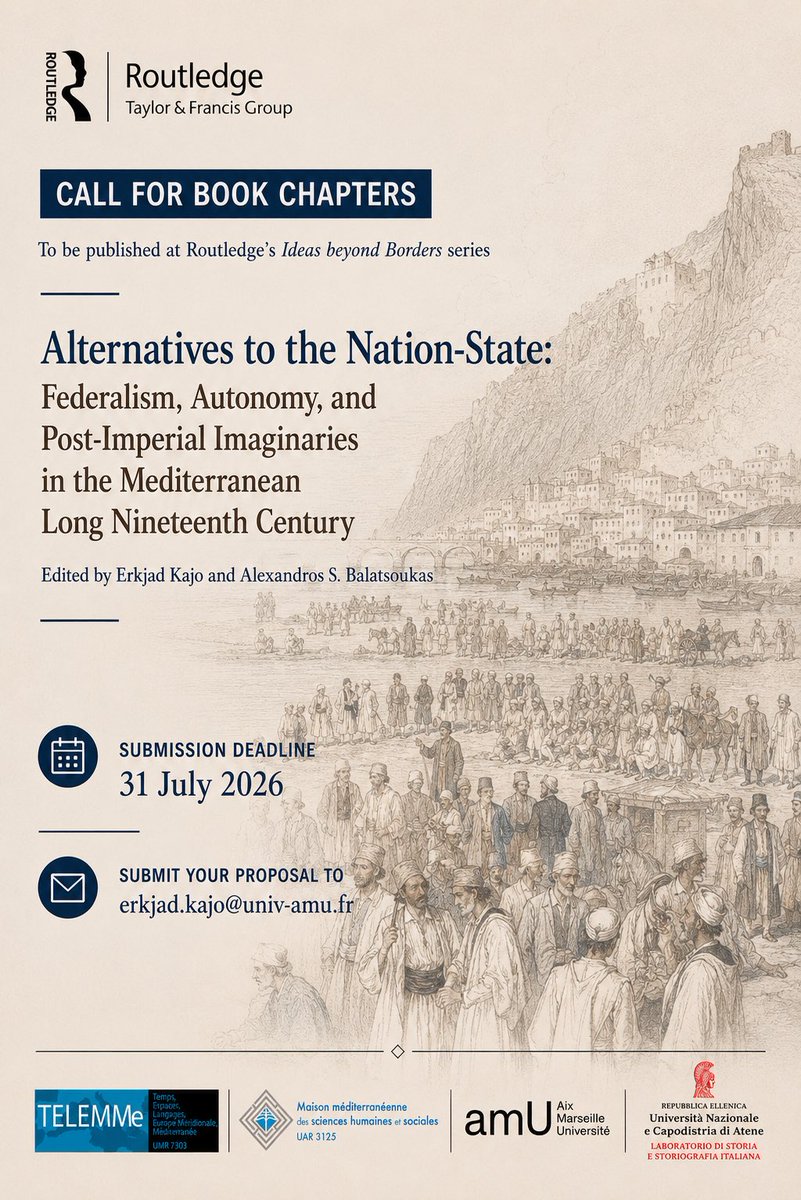
Was the nation-state an inevitable outcome for the Mediterranean, or just the most aggressive one?
We’re editing a new volume exploring the "lost" alternatives that didn't fit the nationalist mold.
We’re looking for contributors to join the discussion. DM or email for more info
🧩Are international organisations actually "power centres"?
New research by UNU-CRIS Professorial Fellow Samuel Standaert & Anja Jetschke reveals a surprising truth: as regional organisations grow, they don't centralize power—they disperse it.
Read here: https://t.co/pKXpVbaapJ
El poder de la tierra
Este libro de @mikealbertus argumenta que la posesión de la tierra determina si una sociedad es igualitaria, se desarrolla económicamente y cuida el medio ambiente. Analiza varios casos de América Latina.
Para un resumen, ver: https://t.co/bqWQZU2gPT
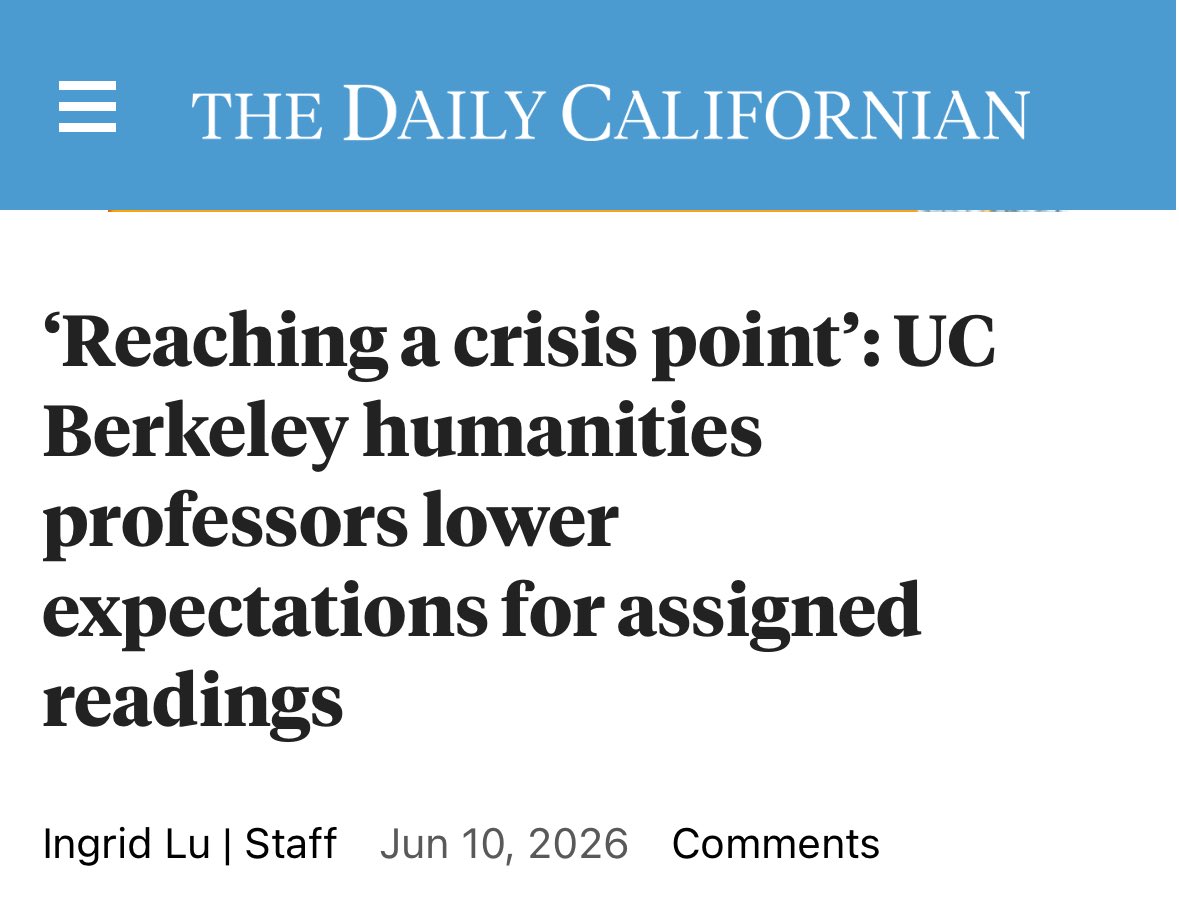
A Berkeley history professor said he’s gone from assigning 100 pages of reading per week to 35.
Another “said the earliest version of the…course he taught required seven full books, while his most recent iteration exclusively consisted of excerpts.”
“We are now reaching a crisis point where if the number (of pages) goes down further, it’s unclear to me whether my discipline of history can really be taught,” the first one said.
Kelsen y la única respuesta correcta: «Cuando el científico del derecho recomienda a la autoridad legal uno de los distintos significados de una norma legal, está intentando influir en el proceso elaborador del derecho y ejerciendo una función política, no científica. Si presenta esta interpretación como la única correcta, está actuando como político disfrazado de científico. Está cubriendo la realidad legal. Pero la ciencia tiene que dejar al descubierto la realidad; las ideologías políticas son las que encubren».
"[La teoría de Dworkin es] una ficción que permitiría al juez, en la equívoca manera de encontrar, detrás del derecho positivo, lo que el derecho realmente es, investir sus propias opiniones personales, morales o políticas, con una espuria objetividad de derecho ya existente" (Hart).
📺📻🗞 #DerechoUCenlosMedios | Profesor y director del Centro de Estudios Internacionales UC, Jorge Sahd, se refiere al impacto global de la política arancelaria de EE.UU.
Vía @EmolTV@jorgesahd@cei_uc
Más información aquí 👉 https://t.co/pGSPRpTua8
Moral Superpower in the Cold War by James Petrie Brown explores how East and West competed over human rights—showing how both the US and USSR claimed moral authority to win hearts, minds, and global influence.
Discover the book 👉 https://t.co/QyflMB7JFx
I am very pleased to announce the publication with Melrose Legal Publishers in The Hague of my new book International Law and the High Court of Australia which traces the High Court's approach to cases involving international law from Federation to today. https://t.co/gy3RWllvAD
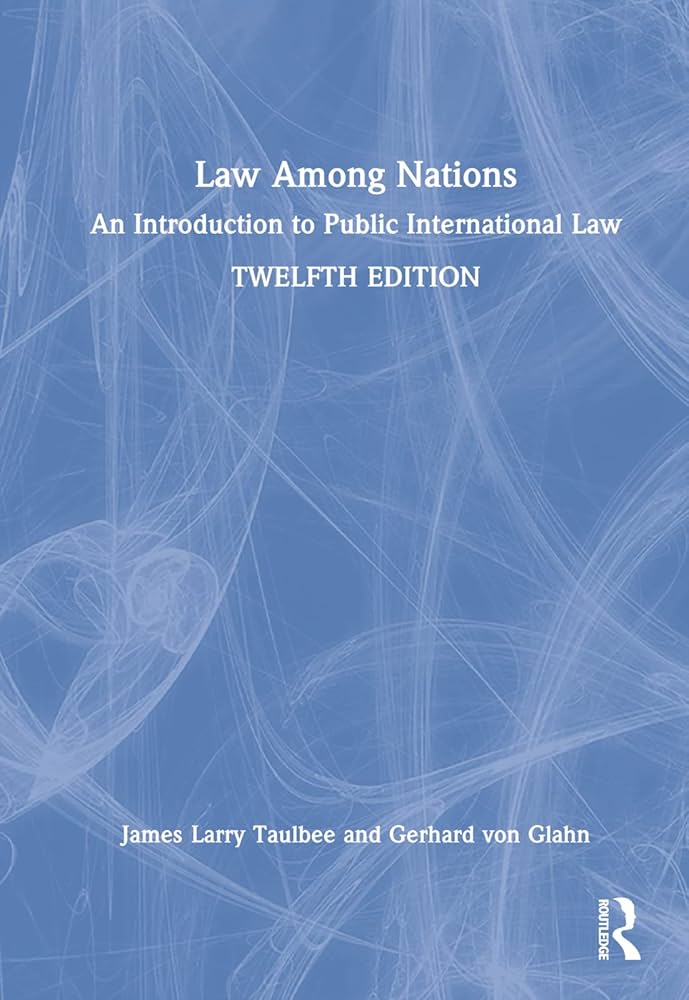
New acquisition 📚 Von Glahn, Gerhard, and James Larry Taulbee. Law among Nations : An Introduction to Public International Law. Twelfth edition, Routledge, Taylor & Francis Group, 2022. https://t.co/djLzY6zeyQ
This is turning out to be a pretty interesting book. It explores the intertwining of Korean court politics and imperial rivalries of China, Russia, and Japan in shaping modern Korea.
#ArticleSnapshot📸: "On the Idea of a Critical History of Political Thought" by Christopher Holman "intervenes in recent methodological debates in the #HistoryOfPoliticalThought" by advocating an approach that uses "historical and philosophical techniques"
https://t.co/fagf8ZnxA6
The Society invites you to register for ASIL Abroad: Buenos Aires! We are busy preparing an exciting program for attendees of the 2026 iteration of the event. Head over to https://t.co/boQ1ReJUCR to sign up today. #ASILAbroad#InternationalLaw#IntlLaw#ASIL#Argentina
🟡 Manuel Aragón Reyes recensiona "El derecho a comprender el lenguaje del poder", de Santiago Muñoz Machado, en la #REDC136.
🔗Acceso a través de https://t.co/VNoPxXZrYm