Jensen Huang: “The best career advice I got was from a gardener”
“Very few people know this but I don’t wear a watch,” Nvidia founder Jensen Huang begins. “And the reason I don’t wear a watch is because now is the most important time. Just dedicate yourself to now.”
Jensen explains by telling a story:
“The best career advice I got was from a gardener. I was on a family trip in Kyoto, and we went to the temple that had the largest moss collection in the world . . . All of the moss is perfect, and every species of the world’s moss is there. It was a hot summer day — anybody who’s been to Kyoto knows how incredibly hot it is during the summer — and my family walked by this old man who was squatted down working on the moss with a bamboo tweezer. His bamboo basket was nearly empty with only two or three small pieces of dead moss.”
“What are you doing?” Jensen asked the old man.
“I am taking care of my garden,” the old man replied.
The old man told Jensen that he has been working on the garden for almost 30 years.
“But this garden is so big and your tweezer and basket are so small. How can you take care of the whole garden?” Jensen asked.
“I have plenty of time,” said the old man.
Jensen reflects:
“That’s the best career advice I can give you. Most of the time I wait for things to come to me. I’m rarely chasing things. I don’t have a watch. I’m focused on now. I’m enjoying my job. I’m the longest-running tech CEO in the world . . . Dedicate yourself to learning all the time, doing the best possible work you can, and leave everything on the field. By the time I go to bed I’m exhausted, and I’m happy about my day because I did everything I could . . . You’ll be surprised. I’m not at all ambitious. I don’t aspire to do more. I aspire to do better at what I’m currently doing. I’m not reaching for more. I wait for the world to come to me.“
He continues:
“People who know me also know that Nvidia doesn’t have a long-term strategy. We have no long-term plan. Our definition of a long-term plan is, ‘What are we doing today?’ . . . You have plenty of time. Enjoy your work. Do the best you possibly can. Just keep learning every day, and good things will come to you.”
A 24-year-old Polish tennis player arrived in Paris last week ranked 114th in the world, with no sponsors, no guaranteed income, and no certainty she could even pay for her hotel room.
She had to win three qualifying matches just to enter the French Open main draw. Prize money is only paid at the end of the tournament, so a Polish sports drink brand quietly stepped in and covered her hotel bill.
Her name is Maja Chwalinska. And today, she plays in the French Open final.
Before this tournament, she had won exactly one Grand Slam main draw match in her entire career. She had battled depression so severe that in 2021 she couldn't get out of bed. She underwent knee surgery in 2022. She spent years grinding through small tournaments across Europe just to stay afloat.
Then she arrived in Paris, won three qualifiers, and kept winning. Zheng Qinwen. Elise Mertens. Maria Sakkari. Diana Shnaider. Nine straight matches. One set dropped.
She is now the first qualifier in French Open history to reach the final. The last time a qualifier reached a Grand Slam final, it was Emma Raducanu at the 2021 US Open. Raducanu won.
By simply making the final, Chwalinska has earned more prize money than her entire career combined. The runner-up cheque alone is $1.6 million. If she wins today, she takes home $3.25 million.
One week ago she couldn't pay for her hotel room.
After Valerii Zaluzhnyi’s speech in Prague, many of his recent statements can be summed up into one central idea: he is no longer speaking only about Ukraine’s war, but about the birth of an entirely new world.
Zaluzhnyi argues that the old global security system is effectively dead. The principles that once seemed untouchable — international law, deterrence, security guarantees, and the inviolability of borders — have proven weak against a new generation of technological warfare. Ukraine, he says, has become the first country forced to experience this brutal transformation in real time.
According to him, war no longer has a clear frontline. Today, the entire territory of a country becomes a battlefield. Civilian infrastructure, energy systems, the economy, logistics, and even the psychological condition of society are now just as much a part of war as trenches or artillery.
Distance no longer guarantees safety. Cheap drones, missiles, digital technologies, and the mass accessibility of advanced weapons have fundamentally changed the nature of conflict. Capabilities that once belonged only to major powers are now spreading far more widely.
Zaluzhnyi stresses that much of the world still thinks in terms of past wars, while modern warfare has already changed completely. In the 20th century, victory depended on massive armies and manpower at the frontline. Today, the decisive factors are technology, analytics, automation, drones, communications, and the speed of adaptation.
He notes that the traditional frontline is gradually becoming “empty,” while the real struggle moves deeper — into command systems, production, logistics, information warfare, and economic resilience.
He also argues that Ukraine itself can no longer rely on outdated models of mobilization and state organization. Zaluzhnyi speaks about the need for a “smart mobilization” system — one that preserves human lives, strengthens the military technologically, and honestly explains the realities of war to society.
Without deep reforms in the army, military training, and the defense industry, he warns, surviving a long war will be impossible.
His recent speeches increasingly sound not only like warnings for Ukraine, but for Europe as well. According to Zaluzhnyi, Europe lived for too long under the illusion of permanent stability and security. Building a new security system, he says, will take years and will be painful, because democratic societies struggle to accept rapid change and unpopular decisions.
Yet the new reality has already arrived, and there is no hiding from it.
What stands out in Zaluzhnyi’s words is the absence of emotional rhetoric or political theatrics. Instead, there is a cold recognition that the world has entered a new era — an era of technological warfare, exhaustion, and constant adaptation.
And in this new era, survival will belong not to those who were strongest under the old rules, but to those who learn to adapt the fastest.
‼️🇺🇸🇨🇳 Blinken’s Stark Warning: America Alone May Not Beat China
Former U.S. Secretary of State Antony Blinken delivered a blunt assessment of the global balance of power:
“If we’re competing with China one on one, that’s a game that we may lose.”
Blinken pointed to the scale of China’s advantages:
A larger domestic market
Manufacturing output roughly three times that of the U.S.
Higher purchasing power parity
More scientific papers and patents
The world’s largest navy by ship count
His conclusion: the United States cannot outmatch China alone.
But when Washington aligns with Europe, Japan, South Korea, India, Australia, and Canada, the equation changes dramatically.
Together, that coalition represents 50–60% of global GDP, creating an economic and technological bloc that Beijing cannot easily challenge.
Blinken’s message was clear: America’s greatest strategic advantage is not acting alone, it is leading an alliance too large for China to ignore.
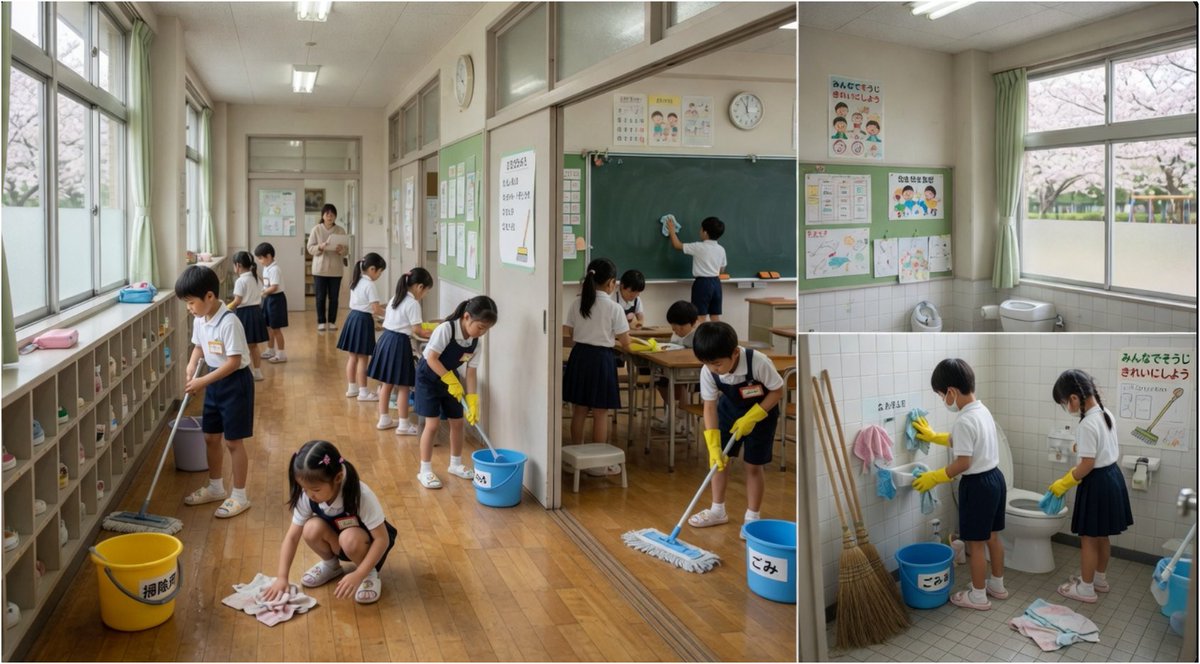
In Japan, children clean their own schools.
Every day. After lunch.
About twenty minutes.
Classrooms.
Hallways.
Toilets.
Not because the schools are too poor
to hire someone.
Because in 1947, this country decided
that cleaning your own space
is part of becoming a person.
The cleaning rag
is on the school supply list.
Right next to the pencils.
Egypt teaches it now.
So does Indonesia.
So does Mongolia.
Think about the last time
you watched a seven-year-old
mop a floor without complaining.
Japan does that
in every elementary school
in the country.
Not as punishment.
As education.
Europe keeps asking how much Ukraine needs help. Stubb asked the question that changes everything.
ㅤ
Finland’s President Alexander Stubb said he has always supported Ukraine’s EU and NATO membership. But his strongest point was bigger than membership: he said no military in Europe — or even the United States — can conduct modern warfare the way Ukraine is doing it now.
ㅤ
His message was simple: Europe should stop seeing Ukraine only as a country that needs protection and start asking what Europe needs to learn from Ukraine.
ㅤ
Ukraine is not waiting outside Europe’s security system. Ukraine is already teaching it how to survive.
ㅤ
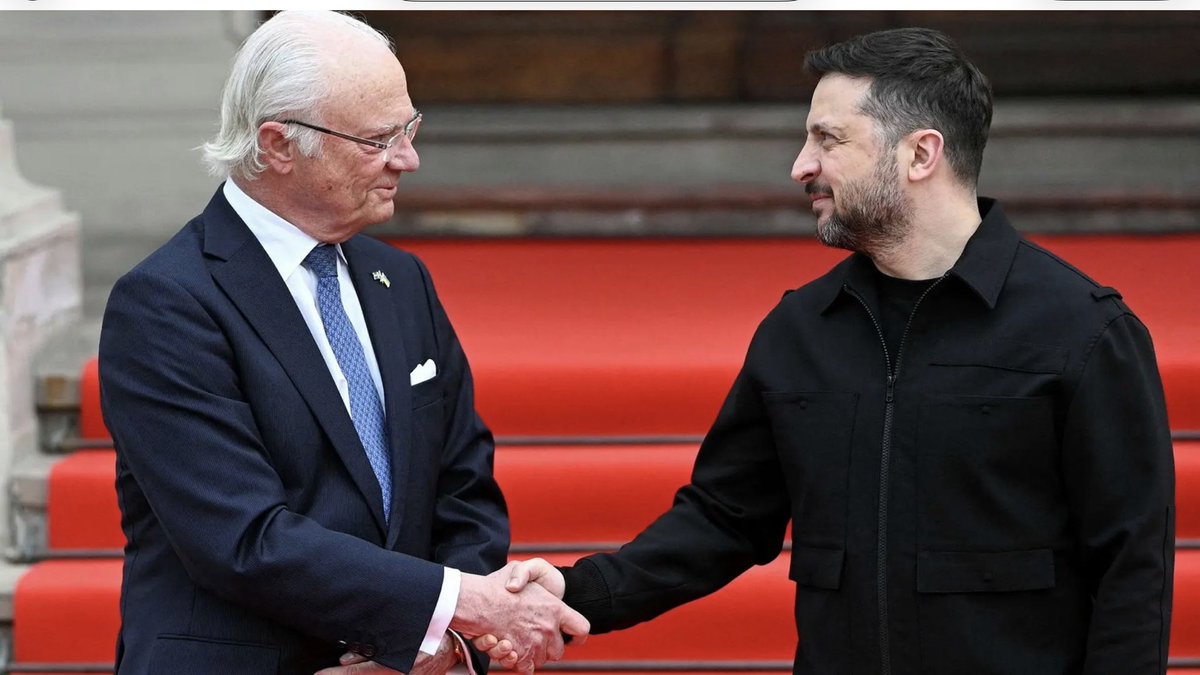
For the second time since the restoration of our independence, King Carl XVI Gustaf of Sweden has come to Ukraine. A government delegation also accompanied him. I thank His Majesty for his visit and for supporting our people. Sweden is among the five largest donors in terms of support for our Armed Forces and our citizens. This is very important for our defense and resilience.
Support for Ukraine and possibilities for strengthening the Air Force of Ukraine, including with Gripen aircraft, were among the key topics of the talks. We also discussed continued humanitarian support and energy assistance.
Particular attention was paid to defense cooperation. Ukraine is interested in a long-term, mutually beneficial partnership that will strengthen the defense capabilities of both Ukraine and Sweden. I informed the King about Ukraine’s security agreements with countries in the Middle East and the Gulf region, as well as European countries. We are ready to share our experience and technologies with Sweden and to expand cooperation in the defense industry.
Look, y'all... this is eight minutes. I know that's far stretching the bounds of social media attention. But you should watch @AmbassadorRice completely dismantle Trump's foreign policy. It's comprehensive. It's precise. It's a wake-up call for those who need it.
Wondering why no NATO country is helping America in Iran? Really?
Trump spent 13 months talking down a NATO and 700 million people. He bullied their leaders, questioned their sovereignty, threatened their economies and made clear he considered them obstacles rather than allies.
And now Washington is surprised by the silence.
When people say Trump is effectively siding with Russia against America’s largest trading partners, that is not a conspiracy theory. That is a description of events.
This week, American congressmen gave a guided tour of Capitol Hill to Russian State Duma deputies. In the fifth year of Russia’s full-scale invasion of Ukraine. A war with documented atrocities, mass graves, bombed hospitals and deportated children.
To European eyes. To Canadian eyes. To Australian, New Zealand and Japanese eyes. This is not a diplomatic misstep. This is the equivalent of inviting Hitler’s inner circle for a friendly tour of Washington while the death camps were already known to the world. The same moral category. The same historical weight.
There is no walking this back. There is no reset button. No charm offensive, no summit photo, no carefully worded statement will undo what has been seen.
America’s allies are not drifting away. They are making a decision.
Follow Gandalv @Microinteracti1
Former CIA analyst and now Michigan Democratic senator Elissa Slotkin: Words won’t be enough — allies won’t just believe “America is back.”
After years of swings, only consistent actions will rebuild trust, and that won’t happen until the US resolves its internal issues.
1/
Trump does not connect actions he takes on one day to events that occur weeks later. Allied leaders know that if they help him in the Persian Gulf, he won't be grateful, or even remember.
https://t.co/T41LaJfTWa
Let me explain what NATO actually is, since the President clearly missed that briefing.
NATO allies have poured trillions of dollars into American defence companies. Lockheed Martin. Raytheon. Boeing. General Dynamics. Every F-35, every Patriot battery, every warship component ordered by a European ally is American jobs, American profit, American industrial capacity kept alive by allied money. Europe doesn’t just participate in the alliance. Europe subsidises the American defence industry.
Then there are the bases. Ramstein. Rota. Aviano. Sigonella. Naples. The United States operates across Europe from facilities that cost America nothing in rent and everything in strategic reach. Remove those bases and American power projection in the Middle East, Africa and Eastern Europe collapses overnight.
And then there is the hardware. European allies provide components, maintenance, intelligence and logistics for American military platforms that could not function at current capacity without them.
This is the alliance Trump just called useless in capital letters.
The man who built NATO’s legal and strategic framework had an IQ that could run circles around the current occupant of the Oval Office. He understood that America’s strength was never just its military. It was the fact that the most powerful country in the world had friends.
Trump has just announced, in writing, that America doesn’t need friends.
China read that statement too and so did Europe.
Gandalv / @Microinteracti1