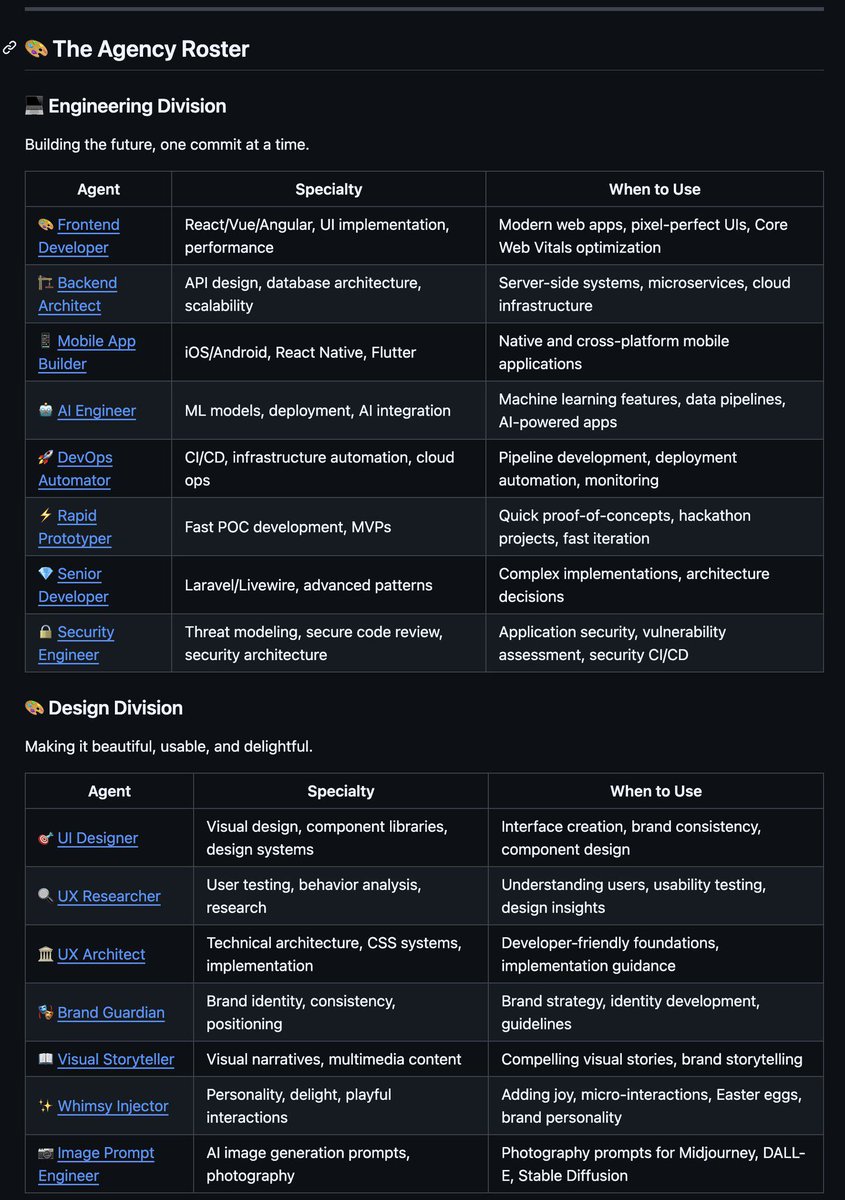
SOMEONE CREATED A GITHUB REPO WITH AN ENTIRE SETUP FOR AN AI AGENCY
Engineers, designers, growth marketers, product managers.
Broken down how even a rookie could understand.
It has over 10K stars in 7 days
GitHub: https://t.co/VYdwzJuCtB
We'd like to send a big Thank You to our Soft Launch players! We had an amazing time in all the tournaments & events. We're really excited to play with you guys once again on August 20th. See details in thread about your soft launch items 🧵
@cereofficial The price has been falling terribly over the past time, so does the team have any plans and a clear timeline to show the development roadmap and support for the token price in the ecosystem?
In 2021, we set out to do something big with @cereofficial; building a completely decentralized data cloud, with a clean separation of protocol and cloud, to disrupt the massive data infrastructure space.
Between reliable and truly decentralized data storage, retrieval, and delivery, we had a long path ahead of us..
THREAD 🧵
Tl;dr -> https://t.co/Yc5UFqhss9
Top 5 common ways to improve API performance.
Result Pagination:
This method is used to optimize large result sets by streaming them back to the client, enhancing service responsiveness and user experience.
Asynchronous Logging:
This approach involves sending logs to a lock-free buffer and returning immediately, rather than dealing with the disk on every call. Logs are periodically flushed to the disk, significantly reducing I/O overhead.
Data Caching:
Frequently accessed data can be stored in a cache to speed up retrieval. Clients check the cache before querying the database, with data storage solutions like Redis offering faster access due to in-memory storage.
Payload Compression:
To reduce data transmission time, requests and responses can be compressed (e.g., using gzip), making the upload and download processes quicker.
Connection Pooling:
This technique involves using a pool of open connections to manage database interaction, which reduces the overhead associated with opening and closing connections each time data needs to be loaded. The pool manages the lifecycle of connections for efficient resource use.
Over to you: What other ways do you use to improve API performance?
--
Subscribe to our weekly newsletter to get a Free System Design PDF (158 pages): https://t.co/uc5M7CdXXC
We are focused on bringing #BTC utility with the cross-chain interoperability of tBTC. 🐂
@mhluongo chatted with @Austin_Federa of the @solana Validated Podcast about everything Threshold & tBTC 🚀
🎬 Watch @ValidatedPod here: https://t.co/IoQh3NSoOY
Let’s slay this #Bitcoin pet rock meme!
𝗛𝗲𝗿𝗲 𝗶𝘀 𝗠𝗮𝗿𝗴𝗼𝘁 𝗥𝗼𝗯𝗯𝗶𝗲, 𝘁𝗼 𝗯𝗿𝗲𝗮𝗸 𝗱𝗼𝘄𝗻 𝗣𝗼𝗹𝗸𝗮𝗱𝗼𝘁 𝟮.𝟬 𝗳𝗼𝗿 𝘆𝗼𝘂 – 𝗯𝘂𝘁 𝘄𝗶𝘁𝗵 𝗽𝗮𝗻𝗰𝗮𝗸𝗲𝘀.
Right now, Polkadot's like a big kitchen that only makes pancakes but only sells them as huge batches. That’s great for some who don’t want to worry about being hungry later on, but what if you don't need 10,000 pancakes at once?
Polkadot 2.0 is like this kitchen starting to offer not just giant batches, but also single pancakes, or even just the ingredients – eggs, flour, milk. Now, builders can make just what they need, be it one pancake or a smaller batch.
And it gets better. Polkadot 2.0's kitchen is expanding its menu. Not just pancakes anymore, but also crepes, cakes, pasta, even souffles. It's about giving chefs (builders) the flexibility to cook up whatever they fancy.
This kitchen is top-notch, Michelin-star quality. 𝗪𝗲'𝗿𝗲 𝘁𝗮𝗹𝗸𝗶𝗻𝗴 𝗮𝗯𝗼𝘂𝘁 𝘂𝗻𝗱𝗲𝗿 𝗮 𝗺𝗶𝗻𝘂𝘁𝗲 𝗳𝗼𝗿 𝘆𝗼𝘂𝗿 𝗼𝗿𝗱𝗲𝗿 (𝗳𝗮𝘀𝘁 𝗳𝗶𝗻𝗮𝗹𝗶𝘁𝘆), 𝗮𝗻𝗱 𝘄𝗶𝘁𝗵 𝗮 𝗵𝘂𝗴𝗲 𝘀𝗲𝗰𝘂𝗿𝗶𝘁𝘆 ( ~$𝟯.𝟯𝗕 𝘀𝘁𝗮𝗸𝗲𝗱 𝗗𝗢𝗧) 𝗯𝗮𝗰𝗸𝗶𝗻𝗴 𝗶𝘁 𝘂𝗽, you know you're getting the best.
And imagine a marketplace where you can trade these ingredients – eggs, flour, whatever – with other chefs, based on what you need to boost your recipes. All of these traded as NFTs. That’s the first novel utility for NFTs.
𝗔𝘁𝗼𝗺𝗶𝗰 𝗰𝗼𝗺𝗽𝗼𝘀𝗮𝗯𝗶𝗹𝗶𝘁𝘆 𝗮𝗻𝗱 𝗶𝗻𝘁𝗲𝗿𝗼𝗽𝗲𝗿𝗮𝗯𝗶𝗹𝗶𝘁𝘆?
Now imagine you're at a huge international food market/Polkadot ecosystem with various food stalls (parachains). Now, you want to make the perfect breakfast, which involves getting ingredients from different stalls. How do you make sure this process is smooth, efficient, and trustworthy?
𝗫𝗖𝗠 : This is like having a 𝘂𝗻𝗶𝘃𝗲𝗿𝘀𝗮𝗹 𝗹𝗮𝗻𝗴𝘂𝗮𝗴𝗲 or a set of hand signals that everyone in the market understands. You can point, gesture, or speak in this language to tell a vendor what you want. It's great because it helps you communicate your intentions, like "I want eggs" or "I need flour."
The catch?
Just because you've communicated clearly, there's no absolute guarantee the vendor will give you exactly what you asked for. Still there is a trust. Same happens within Cosmos with IBC.
𝗔𝗰𝗰𝗼𝗿𝗱𝘀: Now, imagine some of these food stalls sign a special agreement (an Accord). They agree to always provide certain ingredients or services in a specific way, no matter what. It's like a binding contract. So, if you go to a stall that's part of this Accord and use your universal language, you can be much more confident you'll get exactly what you asked for. These stalls are held to a higher standard and can't just change their minds or rules on a whim.
𝗔𝗰𝗰𝗼𝗿𝗱 𝗦𝗽𝗮𝗰𝗲: Picture these Accord stalls having an extra layer of oversight, almost like they're part of an exclusive club that ensures they stick to their promises.
It's like having embassies from different countries in your city. Each embassy follows the laws of its home country but exists physically in your local space. In the food market, this means certain stalls (chains) can offer unique, reliable services or ingredients that aren't typically part of their usual offerings.
With that DEXs is going to operate seamlessly across multiple chains. With Accords, you could use this DEX locally on any chain without the hassle of setting up complex, bi-directional channels.
So, you can enjoy your favorite food stall that can magically appear in multiple markets at once, offering you the same great service wherever you are.
In short, Polkadot 2.0 isn't just upgrading the kitchen; it's changing the whole cooking experience for the crypto space.
Turning a bustling, chaotic market into a well-oiled machine, where every stall understands you, and you can trust them to deliver exactly what you need.
And the best part? You can mix and match these ingredients to create the perfect breakfast, just the way Margot Robbie likes it.
8. tldraw
Turn Your Sketches into Websites in Seconds.
Sketch anything and let our AI transform it into a fully-functional website.
Try now:
https://t.co/td9TCeUcnD
Have you heard of Mixture of Experts (MoE) models? 🤔 With the release of @MistralAI Mixtral 8x7B, MoEs are gaining attention, it is also rumored @OpenAI GPT-4 is an MoE👀
But what exactly are MoEs, and how do they work?
We created an in-depth blog.
https://t.co/a4DL1A8zCe