🚨 The $1.4B Bybit Hack That Still Haunts Crypto: How They Got Tricked (Full Breakdown)
One of the biggest crypto exchanges in the world got hit with the largest hack in history $1.4–1.5 Billion stolen in Ethereum.
“Even though this happened in Feb 2025, the lessons are still critical in 2026 👇”
Hackers didn’t crack Bybit’s security.
They tricked the people who controlled the wallet into signing the wrong transaction.
Think about it like this:
🏦 The bank vault was secure.
🔑 The keys were secure.
👮 The guards were secure.
But the guards were fooled into opening the vault themselves.
That’s exactly what happened.
How Bybit Kept Their Funds
They used a multisig wallet on Safe (Gnosis Safe) normally one of the strongest setups:
• 3-out-of-6 signers needed to approve
• Funds in cold (offline) storage
• Hardware wallets for signing
This is supposed to be bulletproof. But it wasn’t.
The transaction looked normal on the computer screen, but hidden inside was code that gave the attackers full control of the wallet.
Once the signers approved it, the hackers took over and drained roughly $1.4B in ETH.
The biggest lesson?
✅ Your hardware wallet is your last line of defense.
✅Never trust what the website shows.
✅Never trust what the app shows.
✅Always verify what your hardware wallet is asking you to sign.
Sometimes the biggest hacks don’t happen because code fails. They happen because humans get tricked.
Security is not just technology. Security is attention.
What’s your biggest takeaway from this?
Drop it below 👇
#CryptoSecurity #BybitHack #Web3 #SmartContracts
🧵 Thread: 3 Powerful Ways to Prevent Forex Trading Addiction
Many jump into Forex chasing big wins and the mental thrill. But when “winning at all costs” takes over, passion quietly turns into addiction wrecking accounts and peace of mind.
Here’s how to spot it early and protect yourself. Let’s break it down 👇
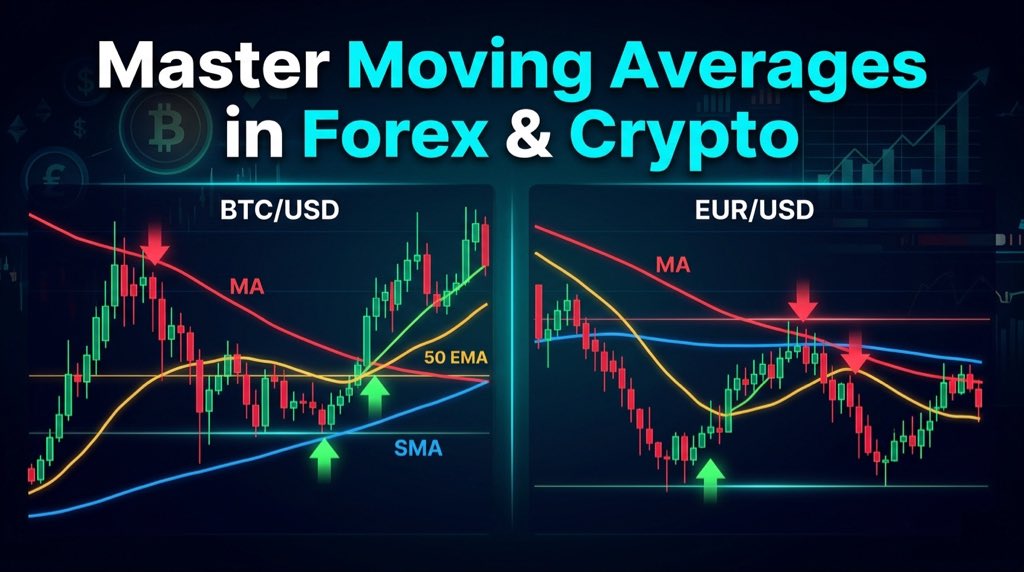
🧵 Forex & Crypto Trading: Master the Moving Average Indicator (The Most Popular Tool)
If you’re trading Forex or Crypto and not using Moving Averages (MA), you’re leaving money on the table.
It’s one of the simplest yet most powerful indicators for spotting trends, support/resistance, and buy/sell zones.
Let’s break it down step-by-step so you can actually use it.
🧵 Ethereum Transaction Lifecycle (Explained) ✅💯
Every time you send ETH, swap a token, or mint an NFT, your transaction goes through this 7 clear process:
1️⃣ You Create a Transaction
You click “Confirm” in your wallet. The tx includes: who receives it, how much, and gas fees.
2️⃣ You Sign It
Your wallet uses your private key to digitally sign the transaction proving it’s really you.
3️⃣ Broadcast to the Network
The signed transaction is sent to Ethereum nodes.
4️⃣ Waits in the Mempool.
It sits in the “waiting room” with other pending transactions.
5️⃣ Validator Picks It
Every ~12 seconds, a validator builds a new block and usually selects higher-fee transactions first.
6️⃣ Confirmed
The tx is added to a block. Other validators verify and agree it’s valid.
7️⃣ Finalized
After further checks (~13 minutes total), it becomes permanent and irreversible.
Transaction Statuses:
✅ Pending → Still waiting
✅ Confirmed → Successfully added to the blockchain
✅ Finalized → Locked in forever
✅ Failed → Execution failed (gas still paid)
✅ Dropped → Never got picked
Simple Example:
Before: You have 1 ETH, Friend has 0 ETH
After sending: You have 0 ETH, Friend has 1 ETH
This “state change” is what actually updates the blockchain.
Key Takeaway:
Ethereum uses a secure, step-by-step system so only you can authorize your actions, everything is verified, and once finalized it can never be changed.
HOW PROP FIRMS ACTUALLY MAKE MONEY💰📊
Fam, prop firms are booming in the trading space, but how do they really profit? Unlike regular brokers that live on spreads alone, prop firms have a different game.
They make money mainly through, challenge fees, profit splits, and even from traders who fail. Many don’t even send your trades to the real market they just simulate everything.
Here’s the breakdown 👇
Web3 gaming just leveled up 🔥
Play-to-earn is BACK in 2026 and this time it actually works 💪
No more grindy hype traps.
Now it's fun-first gameplay with rewards as the cherry on top.
What changed?
☑️ Better designs people actually enjoy
☑️ Sustainable economies built to last
☑️ High-quality graphics + deeper mechanics
☑️ Real ownership with true utility
☑️ Easy entry: low/no fees, mobile-first
Top games popping off right now:
Axie Infinity (@AxieInfinity), Illuvium (@Illuviumio), Pixels, Gods Unchained, The Sandbox + more rising
BOTTOM LINE:
P2E didn't die it evolved. The 2026 version is less about getting rich quick and more about enjoyable games where your time and skill can generate real, sustainable value through owned assets.
If you're into gaming + crypto, this is one of the most active and promising corners of Web3 right now.
What are you grinding in 2026? Drop it below 👇🚀
#Web3Gaming #PlayToEarn #GameFi
UNDERSTANDING HARD FORKS AND ETHEREUM UPGRADES 🧵
Ethereum evolves through upgrades that improve security, performance, and features. Since it is decentralized and has no central authority, these upgrades require coordination among developers, node operators, and the community. The main mechanism for implementing major changes is called a hard fork.
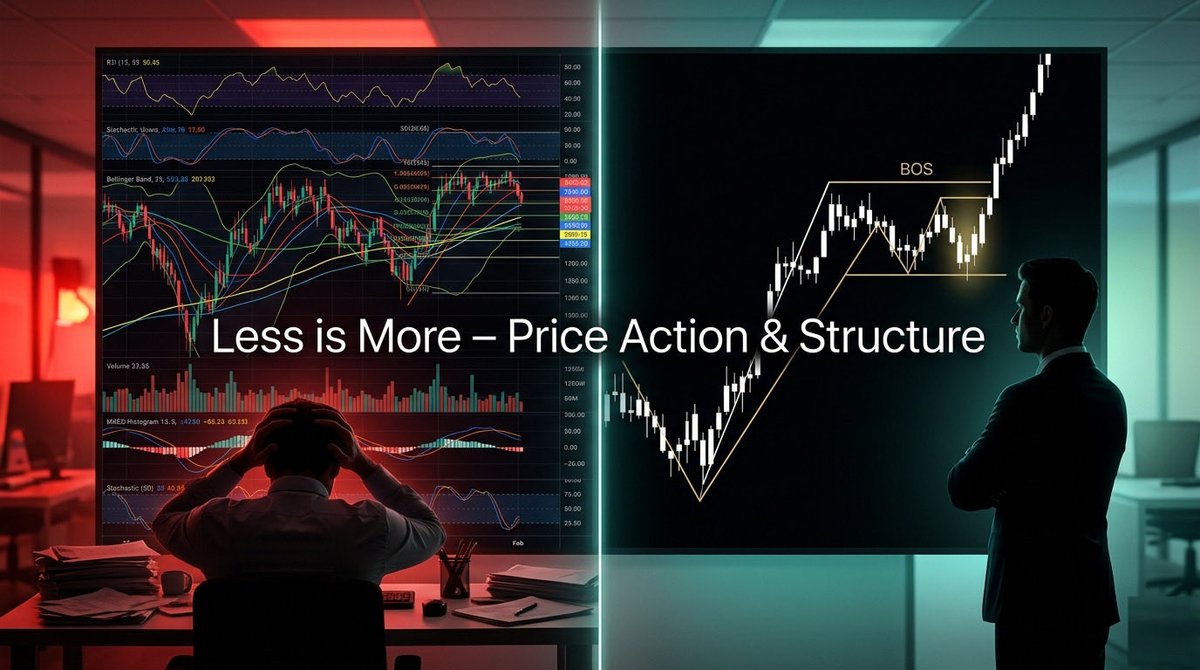
TECHNICAL ANALYSIS USING PRICE ACTION AND STRUCTURE
Many traders struggle with technical analysis because they rely on too many indicators that give conflicting signals. A simpler and often more effective approach is price action trading, which focuses directly on price movement instead of indicators.
The framework works in three main steps:
1️⃣ IDENTIFY MARKET STRUCTURE
Determine the overall market direction:
•Uptrend: Higher highs and higher lows (buyers in control).
•Downtrend: Lower lows and lower highs (sellers in control).
•Range: Price moves between support and resistance without a clear trend.
Understanding structure helps decide whether to follow the trend, trade within a range, or wait.
2️⃣ MARK KEY SUPPORT AND RESISTANCE LEVEL
These are zones where price has previously reacted, showing where buyers or sellers tend to step in.
•Support: Areas where price previously bounced upward.
•Resistance: Areas where price was pushed downward.
These zones help traders plan entries, exits, and stop losses.
3️⃣ READ CANDLESTICK BEHAVIOR AT THOSE LEVELS
Instead of many patterns, focus on three key signals:
•Engulfing Candle: Shows strong buying or selling momentum.
•Pin Bar (Rejection Wick): Indicates rejection of higher or lower prices.
•Inside Bar: Signals consolidation and potential breakout.
CORE IDEA
Combine these three elements:
•Market structure
•Key levels
•Candle behavior
When all three align, a trading opportunity becomes clearer. If one element is missing, it’s usually better to wait.
KEY TAKEAWAY
Effective technical analysis doesn’t require many indicators. By focusing on structure, support/resistance, and candle reactions, traders can read market behavior more clearly and make more confident trading decisions.
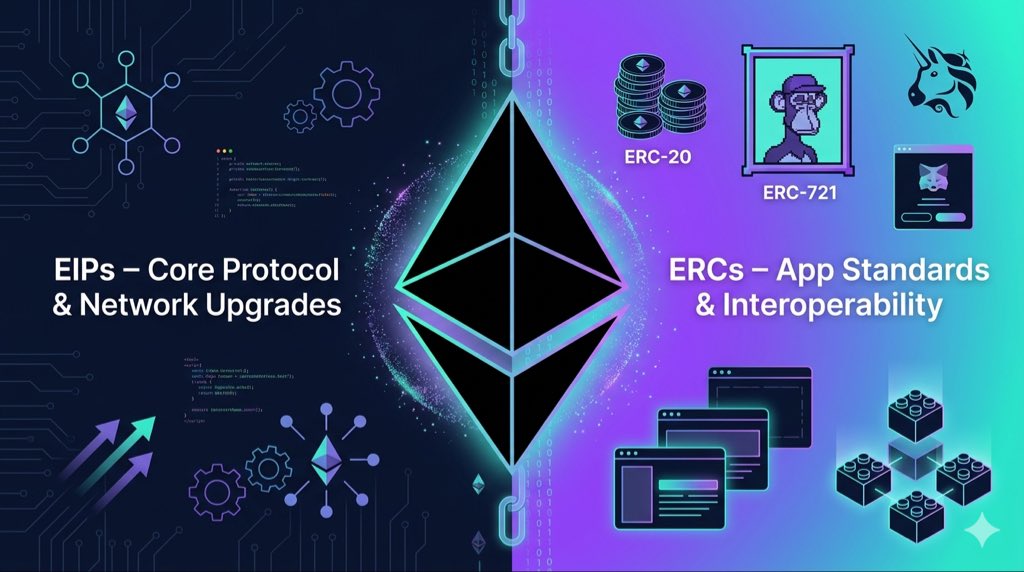
EIPs vs ERCs: THE BACKBONE OF ETHEREUM DEVELOPMENT
EIPs (Ethereum Improvement Proposals) are formal proposals used to suggest, improvements to the Ethereum network.
They can introduce new features, standards, or changes to the protocol. Anyone in the community can submit an EIP, and it goes through stages such as Draft → Review → Last Call → Final before becoming an official standard.
EIPs are grouped into categories like Core (protocol changes), Networking, Interface, ERC, Meta, and Informational.
ERCs (Ethereum Requests for Comment) are a special type of EIP that define application-level standards, mainly for smart contracts and tokens. Their goal is to ensure different apps, wallets, and platforms on Ethereum can interact smoothly.
In simple terms:
All ERCs are EIPs, but not all EIPs are ERCs.
ERC standards enable interoperability across the ecosystem. For example:
•Wallets like MetaMask can read token balances because many tokens follow ERC-20.
•DEXs like Uniswap can trade tokens using the same standard.
•NFT marketplaces like @OpenSea display NFTs because they follow ERC-721.
Some key ERC standards include:
•ERC-20 – fungible tokens
•ERC-721 – NFTs
•ERC-1155 – multi-token standard
•ERC-165 – interface detection
•ERC-4626 – tokenized DeFi vaults
•ERC-712 – secure structured message signing
Overall:
EIPs drive Ethereum’s evolution, while ERCs create standards that allow applications and tokens to work together across the ecosystem. 🚀
Every business uses software to manage business processes, communicate with employees, customers, etc, and perform other tasks.
In most cases, software products require activation of licenses or acceptance of “terms and conditions” before programs can be installed or accessed.
DeFi vs. Traditional Finance 🏦 Access: Traditional Finance requires ID, paperwork, and approval.
Many people get excluded. DeFi is open to anyone with a wallet and an internet connection.
This code snippet shows part of a MetaTrader 4 Expert Advisor (EA) that:
Calculates lot sizes dynamically
Restricts only one trade per direction
Handles hedging, trailing stops, and ATR-based SL/TP
Includes debug logging and risk percentage settings
This code snippet shows part of a MetaTrader 4 Expert Advisor (EA) that:
Calculates lot sizes dynamically
Restricts only one trade per direction
Handles hedging, trailing stops, and ATR-based SL/TP
Includes debug logging and risk percentage settings
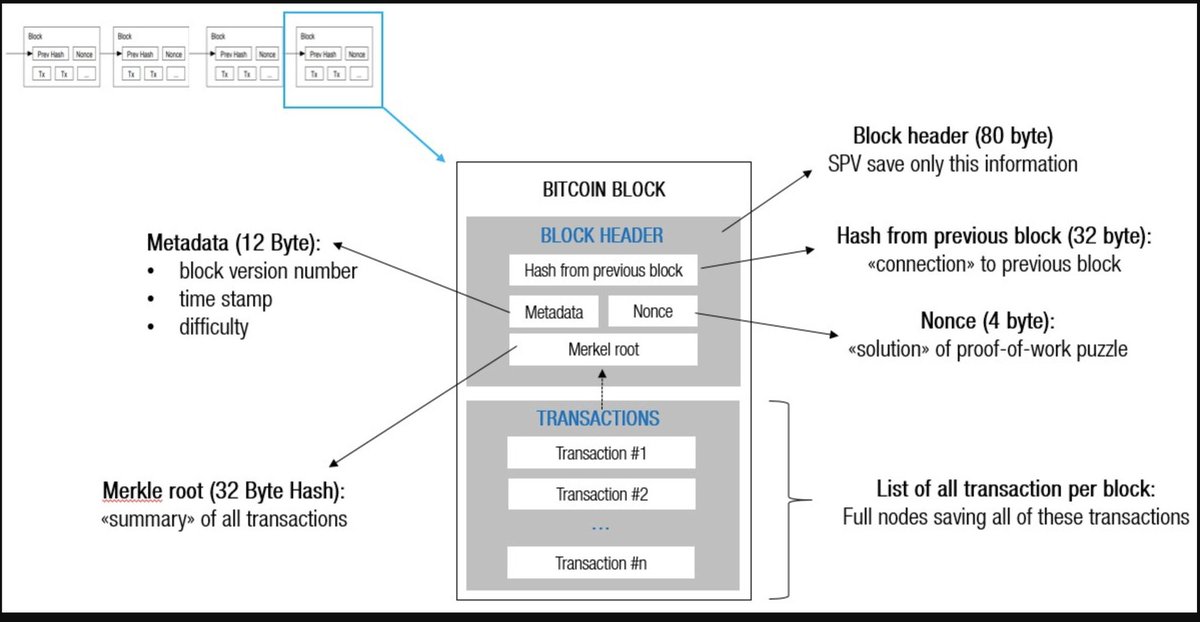
ON #Blockchain POW. BLOCKS are built on hashes.
Each block contains:
• Transactions
• Previous block’s hash
• A nonce (random number miners' guess)
To validate a block, miners must find a nonce for which the block’s hash starts with the target number of zeros.