Study previous bottoms like @Moneytaur_ says. And don't just glance over a couple majors, go as in depth as humanly possible. This is what it will take to win. What are the top 100 alts doing before, during and after a macro bottom? What type of shorts and longs work, etc.
@_MaxO22_@barnc0re as a fellow mentee this is very bang on! Only thing I would add is absorption wicks at supply and quick over extended moves should also be TP’d and don’t always have to wait for a trendline break depending on your hedge exposure and market context.
Every reasonable trade you don’t take that aligns with your system and where you would have managed your risk properly, is nothing more than opportunity cost.
Most people are not stuck because they take too much risk, but because they never take any risk at all.
Look around. At least 80% of people are stuck in life situations they dislike, yet almost nobody takes the risks necessary to escape. We are obsessed with security, comfort, and certainty. The system provides a streamlined, but ultimately illusory, path to meet these needs. In reality, it is opportunity cost that holds most people back. Everyone is playing it safe, therefore, there is no edge in doing so.
"You miss 100% of the shots you don’t take."
Of the remaining 20% who do venture out, the majority fail because they are poor risk managers. They take risks, but they have no idea how to limit their downside or think through the variables. In high-risk, high-reward environments, you must be calculated and in control. To do this, you should constantly ask:
▸ What is the worst-case scenario?
▸ What is the potential reward?
▸ How can I minimise the risks involved?
▸ What is the worst case if I don’t take this risk?
The opportunity cost of never pushing beyond your comfort zone is real. Take the stock market: Participating puts you, statistically speaking, in the highest probability bracket for becoming a millionaire. Not participating immediately puts you behind everyone who does. Yet, 90% of participants still lose money, not because they showed up, but because they didn’t understand the rules or the risks involved.
Entering the market is the first step, it moves you into the 20% of people with a genuine chance of realising their material goals. If you then become a master of risk management, by understanding statistics, learning the rules of compounding, and gaining control over your emotions, you move into that tiny fraction of people who actually "make it."
It takes time and dedication, but it is one of the best shots available today. Understanding the market doesn't mean you will live off small funds immediately, but it provides the leverage for all the cash flow you create. If you are disciplined enough, you may eventually earn a living solely from that skillset.
Fulfilling your wildest dreams does not only happen by getting rich:
▸ Finding your soulmate involves significant emotional risk, the risk of rejection, for example.
▸ Building your dream physique involves the risk of social friction. Missing gatherings to stay on track or confronting the temporary unhappiness of your current state.
▸ Even traveling the world, which many claim is a top priority, involves the risk of uncertainty, leaving comfort behind, and the "fear of missing out" on what is happening back home.
In every pillar of life, the price of admission is the willingness to be uncomfortable. If you aren't willing to risk the ego bruise of a "no," the social pressure of a lifestyle change, or the anxiety of the unknown, you remain stuck by default.
True growth requires you to trade the certainty of the present for the possibility of a better future.
Life does not reward those who always take the easiest path. If you are smart, you don't make it harder than necessary, but ultimately, it is the calculated risk-takers who shape their own lives instead of following the rules and dreams of others.
Before elaborating on it, i'd just say this: people will always have money available at some point, whether every month or every couple of weeks, which means they can always keep gambling. There are people with gambling addiction who have been going to casinos almost daily for years. Crypto is simply a casino disguised as investing, airdrops are the "comps" to keep people playing, which allows many to hide behind the "investor" label while continuing to feed the exact same addiction.
It's not really about how many times the herd will fall for it. It's about how long whales can keep the machine effective enough to extract from them. Not how many mistakes retail can make, but how long the system remains efficient at monetizing those mistakes. As long as enough people still believe, still hope, still think the next cycle will "make it all back" the game can continue. But once enough people learn the hard way, once enough capital is destroyed, once enough trust is gone, the efficiency of the trap declines. There'll be the people who got wrecked for life, and there will be the people who never played the game but is aware of the majority getting wrecked over several years playing the game, thus scared.
And that's when the real strategic question appears: Do whales keep milking the same game with lower efficiency, or do they gradually shift attention to the next shiny object, the next narrative, the next scam large enough to absorb mass hope?
Bitcoin gives them a unique advantage in this regard. With the "last coin mined" roughly a century from now
the dream can technically be kept alive for decades.
That long timeline is not just a feature. It's also the perfect psychological weapon. It allows people to project wealth far into the future, to build life plans around eventual riches to remain emotionally invested for years, sometimes for life. And that's where the trap becomes deeper than price, because now they’re not just holding bags. They're holding identity, belief, future expectations, and the hope that one day all the pain will be justified.
If you think like a whale, why would you rush to end that? Why would you kill a system that can keep people voluntarily attached to the dream for decades?
A dream that keeps them buying, holding, waiting, and explaining away every rug as "part of the cycle"
That's the brilliance of it, not the tech. Not that people lose once, but that they can be conditioned to lose repeatedly while believing they're still on the path to winning. So the real danger isn't that people get rugged once. It's that they spend the rest of their lives planning around a future that never arrives.
What can you use to understand whether crypto cycles will keep playing out?
1] In my opinion, everything changes dramatically once whales turn openly pro-Bitcoin. I said that many times before, and then they did. That matters because by the time whales are publicly bullish, the game is no longer early accumulation, but positioning, narrative control, and distribution into belief.
2] You need to find ways to measure whether there is still enough belief, hope, and deployable capital in the system. Not just money, but money willing to sit through volatility for the promise of insane gains. You also need to ask whether whales are even interested in playing a game where the herd is already poor. If the crowd is too drained, too traumatized, and too broke, the upside of running the same cycle becomes weaker.
Sometimes whales "give away" money first. Incentives, rewards, grants, random pumps, sudden strength across the board. People read that as opportunity, but often it is preparation. They create conditions that make people feel early again, confident again, hopeful again. Then the herd chases, leverage returns, greed comes back, and the rug becomes much more effective. In that sense, the money they "gave" was never kindness. It was bait, or more precisely, a temporary redistribution designed to be reabsorbed later at scale.
It is also important to understand how much whales may have extracted over certain periods, because that tells you how financially comfortable they are, how aggressively they can build in the real world, and how patient they can afford to be before needing another major harvest. They may be extracting constantly through normal market behavior, but that is different from the large extraction events, the real resets, the violent crashes, the moments presented as random when in reality they function as massive wealth transfers.
So the question is not just whether crypto cycles still exist. The real question is whether the ingredients for an effective cycle are still there: enough belief, enough fresh or recycled capital, enough patience from whales, and enough despair in the herd to make them chase the next breadcrumb as if it were salvation.
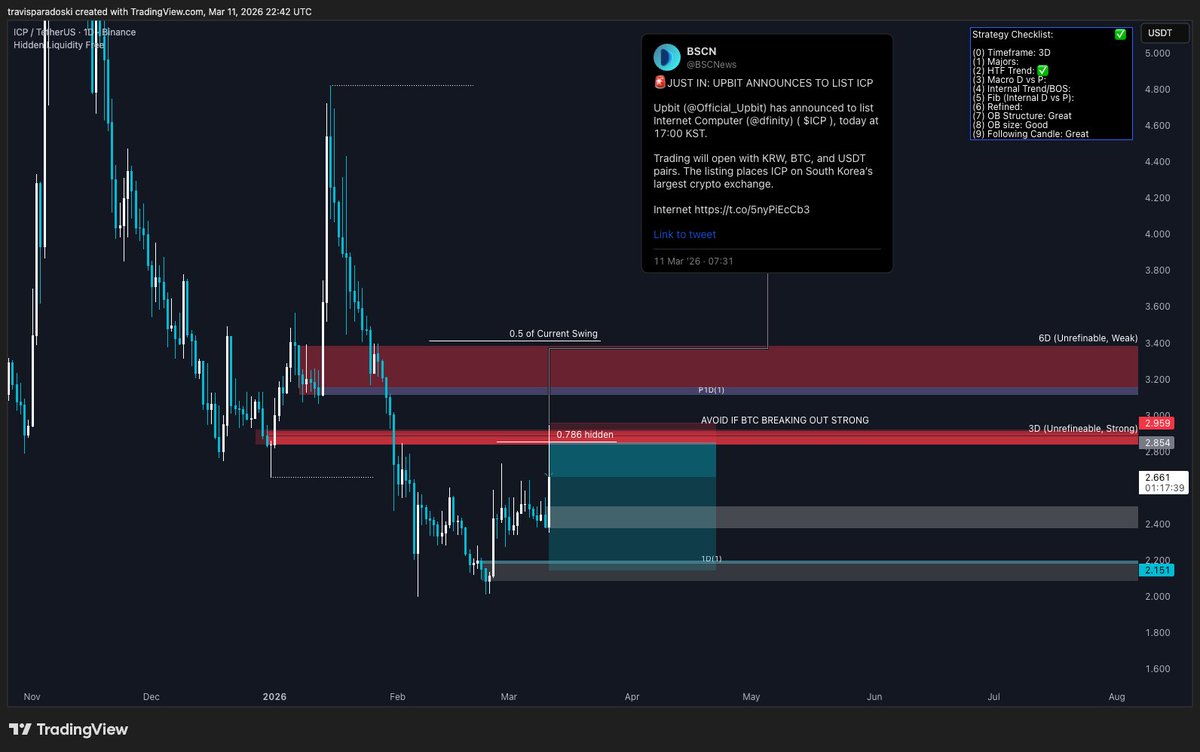
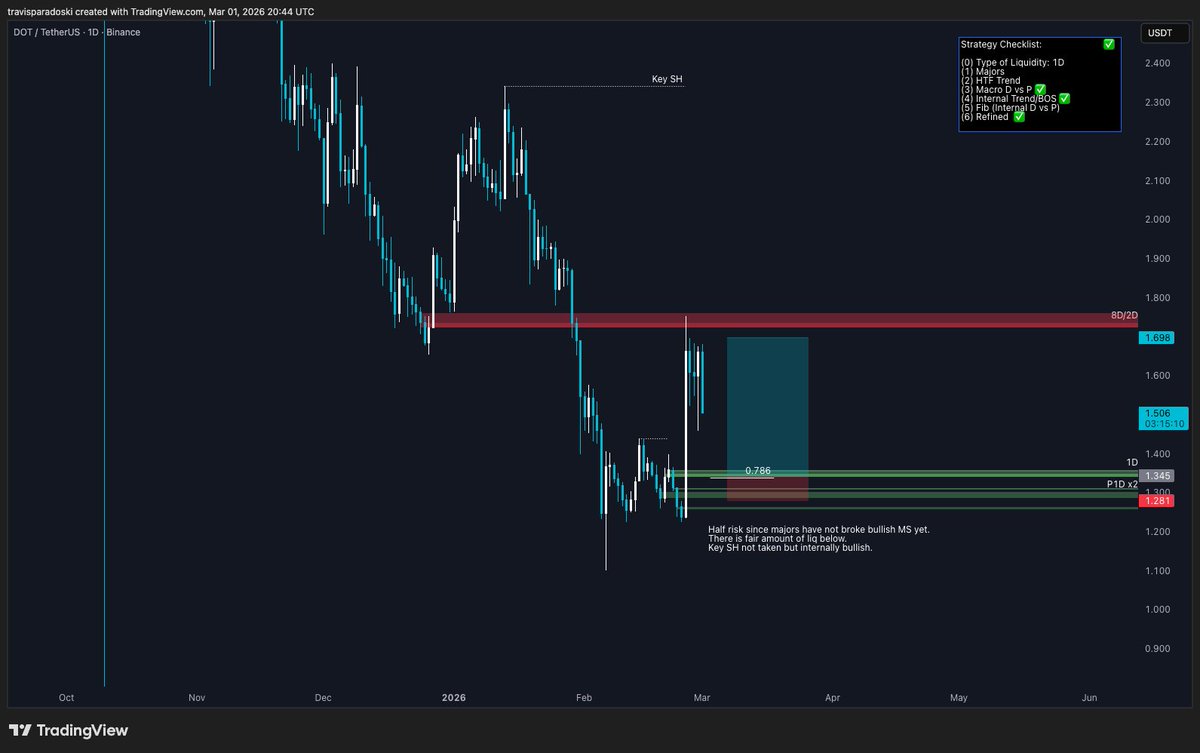
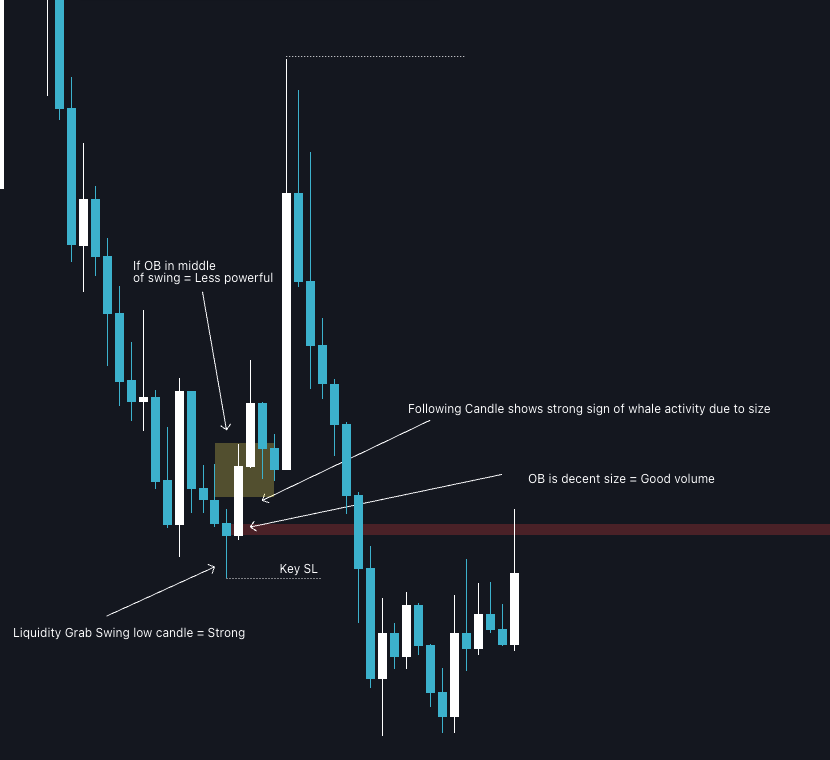
After viewing multiple Bearish HOB's from 2025, i have found that the best structural HTF HOBs work majority of the time while majors are ranging/bearish MS. To be strong structurally, refer to the images. If your alt bags start pumping, these can be nice hedge plays.
🚨UPDATE: IRAN'S $7.8B CRYPTO ECOSYSTEM UNDER SPOTLIGHT AMID CONFLICT
Iran's crypto shadow economy, worth $7.8 billion, relies on Bitcoin mining and stablecoins to evade sanctions, with IRGC handling over half of inflows.
Legalized mining uses subsidized power to generate BTC for trade settlements, accounting for 2-5% of global hash rate.
Ongoing conflicts threaten the power grid, risking mining disruptions and highlighting illicit finance concerns.
@TorayKortan Your theory is good and how you explain the manipulation of the market, but how are you actually helping your student become sustainable to where they don’t need your services to become profitable. Your market chart reviews are just your intuition. How does that help anyone?
@TorayKortan Ngl u charge way too much for what you offer, there are plenty of other profitable traders that provide better strategies for a fraction of the cost. I think people buy in because of how well packaged your content and marketing is. But tbh you just explain your intuition.