How Twitter X gets it all wrong
On X it is a big deal when someone makes a BIG call - a major turning point in stock, a 30% move in a crypto coin, a $1 move in Beans
But which person, A or B, did the best job?
Trader A correctly called for a low in some crypto - but personally got chopped up in the predicted move
Trader B called for a top that was totally wrong, but managed through risk control to break-even on his/her trade
The cost of production does not determine the price of a commodity, just as value, fundamentals, or news do not determine the price of a stock.
There is no mystical force called “intrinsic value” setting the price.
Price is where supply meets demand.
Hello, traders — please stop explaining why a stock boomed or doomed.
You can’t.
The explanation usually comes after the move, not before it. 😌
@nntaleb
( This thought was written by Pierre-Daniel Huet in 1690 — more than three centuries ago.)
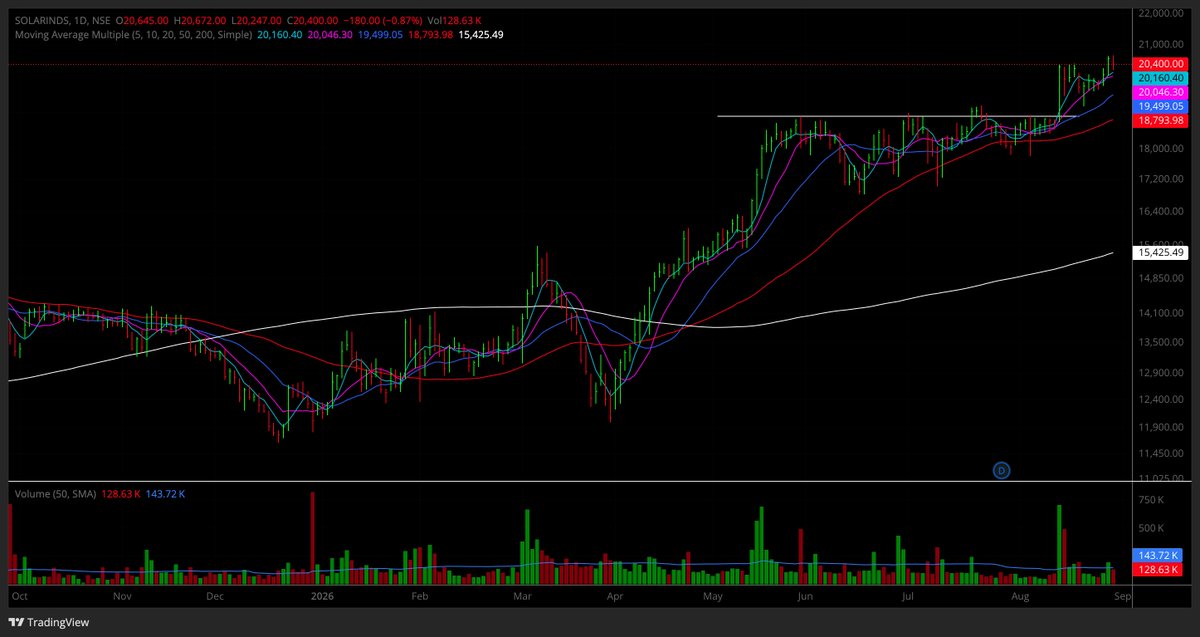
#SOLARINDS
There���s something deeply satisfying about a chart where everything just falls into place.
Trend → structure → momentum → breakout.
Absolutely stunning. 💹
@meet_shoryak If I had to summarise your book collection in a few words, I’d say: you’re moving in the direction of an empirical skeptic.
A Nassim Taleb fan, can i say that? 😄
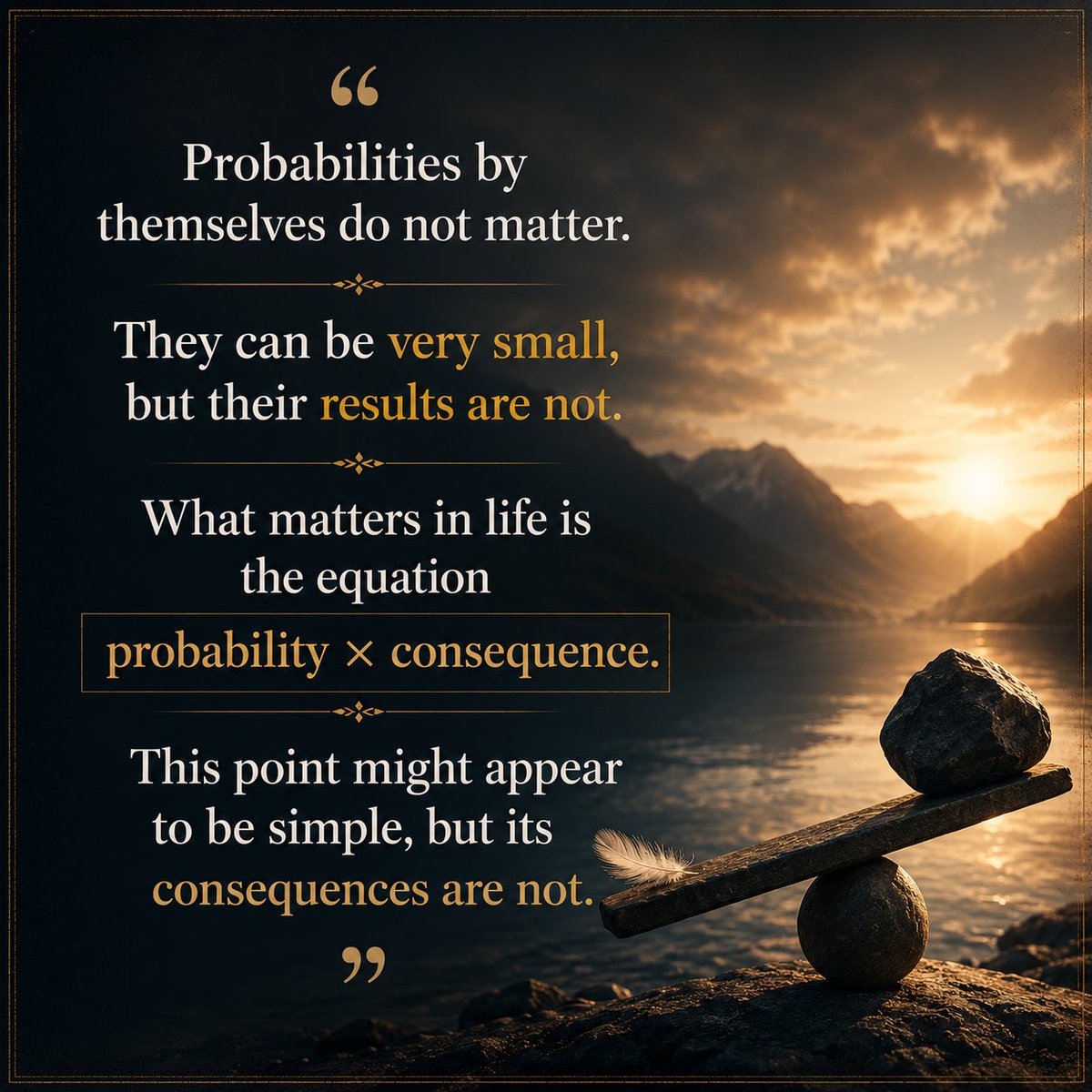
This principle is exactly why you are advised not to ride motorcycles. The probability of a fatal accident on any single ride may be small, but the consequence is irreversible.
A small probability means little when the downside is ruin.
In trading terms, the win rate is far less consequential than the risk-to-reward ratio. What matters is not how often you are right, but how much you gain when right relative to how much you lose when wrong.
But this may simply be a case of being fooled by randomness. If a strategy carries even a small, probability of ruin, then given enough time and repeated exposure, that risk will eventually catch up with you. Survival so far is not evidence of robustness.
@nntaleb
I see a barbell here: confine the possibility of ruin to a small, predefined portion of your wealth, while keeping the overwhelming majority insulated from ruin.
@jackschwager@nntaleb#market_wizards
The average behaviour of the market participants will not allow us to understand the general behaviour of the market.
(Average is useless in the presence of nonlinearities and asymmetries)
Markets aren’t the sum of participants—price changes reflect the most motivated buyer and seller. The most motivated rules. Only traders understand this: why a price can drop ten percent because of a single seller.
“The next time a Merton proposes an elegant model to manage risks and foretell odds, the next time a computer with a perfect memory of the past is said to quantify risks in the future, investors should run—and quickly—the other way.”
Note: Merton here refers to Robert C. Merton, the Nobel laureate (1997, Economics) who co-founded Long-Term Capital Management (LTCM) — the hedge fund whose spectacular 1998 collapse, despite its elegant mathematical models.