@TaPlot This brought tears to my eyes, even though I never knew him personally. He's always been an inspiration, and his words of wisdom have always been worth a read. Now I want to study his methods and watch his videos even more. He showed us all how to fight.
I am WARNING you now.
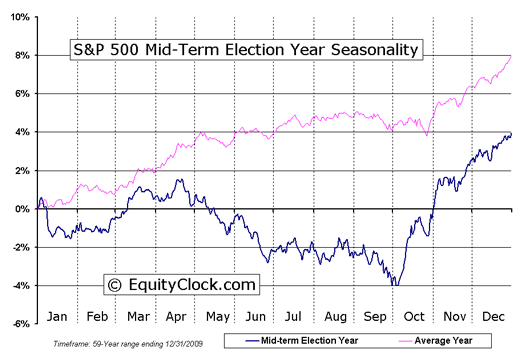
This is the START of the chop until October 2026 timing cycle.
My calculations show that ~62% of traders will LOSE money until October 2026.
Not because markets will be WEAK, but a combination of over-trading and trying to find rotations.
Traders are trying to OUTSMART the markets. Don't.
The best thing to do is STAY in your winners.
Let your winners CONTINUE to uptrend.
You can trim 20% - 30%, but do NOT sell fully.
What to do?
1. Balance with AI infrastructure and financials, healthcare, utilities until October 2026.
2. Mag 7's are showing weakness, make sure you have other parts of the AI trade in your books (power, memory, gpu's, optics, etc.)
3. Biotech and financials gaining strength
4. $MSFT, $PLTR, $NFLX and other software very weak; size appropriately. Can hold, but if you hold, I wouldn't make it my top allocation in my portfolio.
Peak-to-trough drawdown:
• March 2026: ~-6.4%; first real ugly month - VIX spiked hard
• April 2026: ~-9.6%; very choppy recovery - big dip early, then strong rally
• May 2026: ~-4.6%; decent but still had a solid pullback
• June 2026: ~-5.0% (so far); already down ~5% from early June high
I will make sure you SURVIVE until October of 2026.
Until then, stay in uptrending industries. Cut your losers.
It's going to be a very CHOPPY ride.
Expect red, green, red, green, red, green, constantly.
I've been getting a lot of questions lately on:
'what do you think of [Ticker]' / 'what trades are you thinking of doing/did you take any trades' / 'why no interest in shorting [Ticker]?'
1) The market environment has shifted right after a strong momentum market in April + May.
Right now, the character of the market has clearly changed, there is no need to trade every single day. Over time, increased decision making erodes your edge because you make more decisions = likelihood of making a mistake increases.
I know it is not easy because I am a chronic over trader myself, but trust me. You do not want to press that buy button too often now! Consider this:
"I realized right then and there that I didn't even have to take on more risk. I didn't have to double my position size. If I just try to cut out the garbage, cut out all the excess fat, whatever you want to call it to my trading, that it can help my profitability grow dramatically." - @Tradestl , Market Wizard
My goal this year is to be balanced in my aggression, stay in a trading rhythm, and make as little mistakes as possible.
2) I've made the deliberate decision this year to avoid shorting as much as possible in a general market uptrend. My main focus is to find my spots in thematic leaders and ride that trend till the end. As much as I can, I don't want to actively trade anymore but go for longer timeframe moves. It is less stress, more sustainable, and arguably better performing than shorter-timeframe trading. 😄
3) Cyclical Aggression. Consider this quote by Dan Zanger:
"Over the past two years, I can look back on my portfolio and see that my gains have come in about three to four months of the year with slight down months all the other months in between."
We've just had one in April - May. Markets need time to breathe, so the question comes down to what your expectations are that the next one happens one week after it just kickstarted a digestion phase.
That being said, anything can happen, so take things day by day and trade what you see.
------------------------------------------------------
Know exactly what you want to achieve in trading and you'll then have clarity on what to do at each market juncture!
🚨 BREAKING: Claude can now perform stock market research like a top-tier consulting firm — for free.
Here are 10 Claude prompts that replace $100K/year stock analysts.
(Save this for later) 📌
"Focus on tight ranges. Doesn't matter what time frame. Tight ranges is all you should focus on. Wide and loose is for losers and tight is for winners."
—@Qullamaggie
We do not have that right now.
Buying the initial breakout is just the first step.
Oliver Kell uses base and break formations to spot healthy secondary consolidations. This lets you safely trail stops and avoid traps.
Learn to ride the entire move, not just the start.
@RichardMoglen@YouTube@YouTubeCreators@YouTubeCreators This channel is one of the most genuine places to learn trading and has helped thousands! Everything is original, organic, and created from scratch by Richard himself, never reposted or repurposed. Every piece has a real, personal touch. Pls review this manually!
The next Swing Report Webinar with @OliverKell_
will be this Saturday 4/20 at 11am EST
Topic: Stock Selection
We have 5 spots reserved for non-members who are looking to join the Swing Report
Retweet 🔁 and Reply below if interested 👇
https://t.co/gAHtvZvK9n