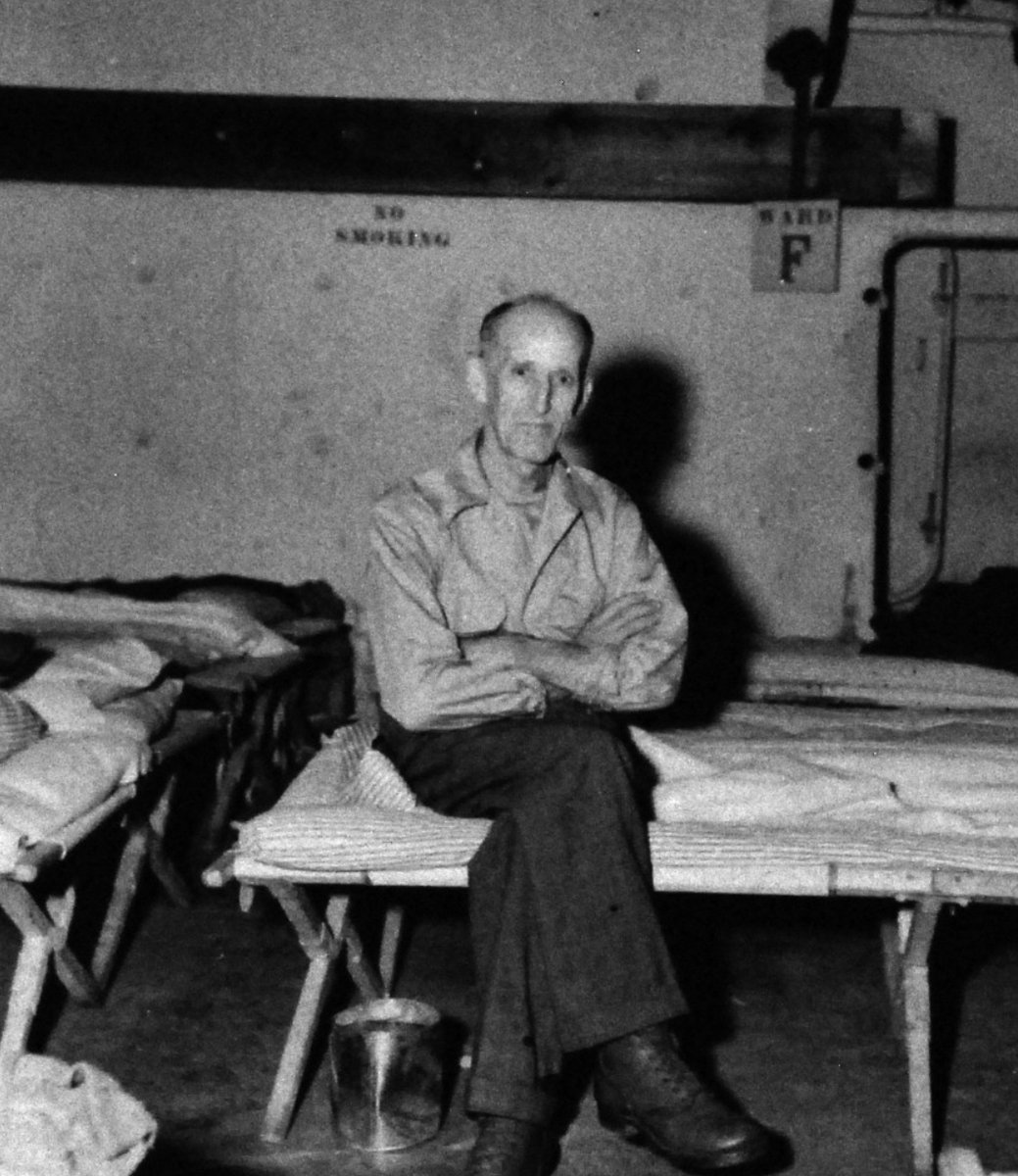
Allied Merchant Marine Prisoner of War. Clive Stratford, who was Captain of the SS Nankin and was held as a POW. He is now aboard USS Monitor (LSV-4) at Yokohama, Japan. Photographed by CPHOM D.W. Wingfield and received September 23, 1945. Official U.S. Navy photograph,h
Happening today at Navy League headquarters!
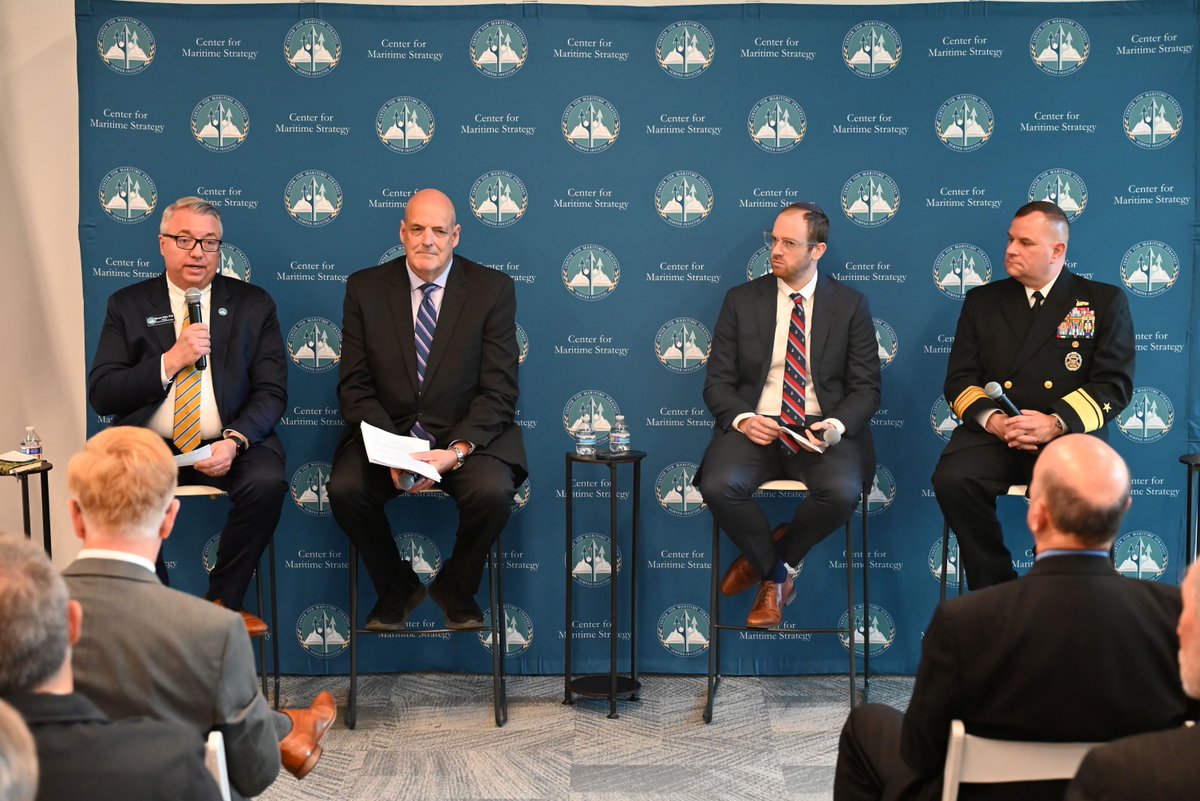
@CMS_Washington is bringing together maritime and national security leaders for a day of discussion and networking with the people shaping the future of American maritime power.
Follow for updates from #AFF2026 ⬇️
Five more ships means more than just a bigger fleet.
The U.S.-flag fleet grew from 185 vessels in January 2024 to 190 in August 2026.
That's more capacity to move American cargo, more opportunities for U.S. mariners, and a stronger maritime foundation for our national security.
Maritime policy affects jobs, families, and national security. The Marine Engineers' Beneficial Association (M.E.B.A.) makes it easy to contact Congress about the Jones Act, the Maritime Security Program, and cargo preference at https://t.co/h83apfi7Ah
Harry Miller, a veteran of World War II, Korea, the Cold War and Vietnam, passed away, perhaps almost fittingly, on Veterans Day. https://t.co/lUUYPDP5Ef
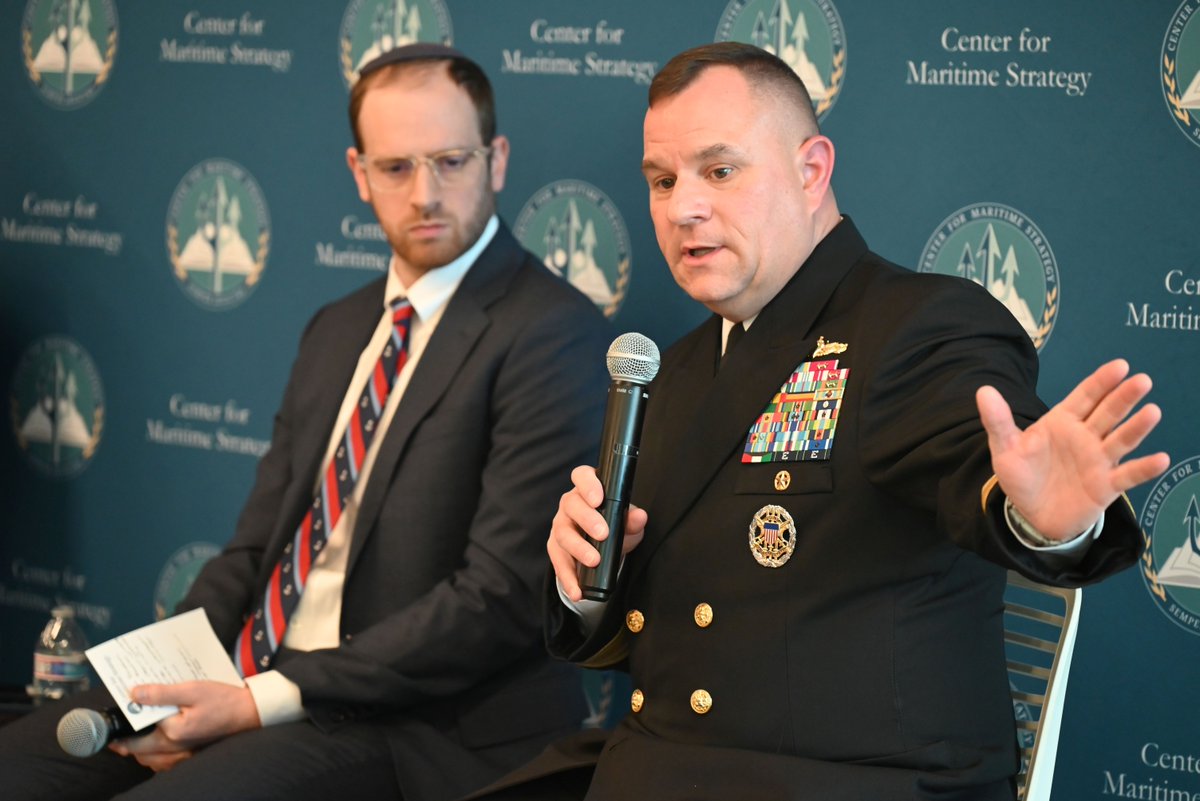
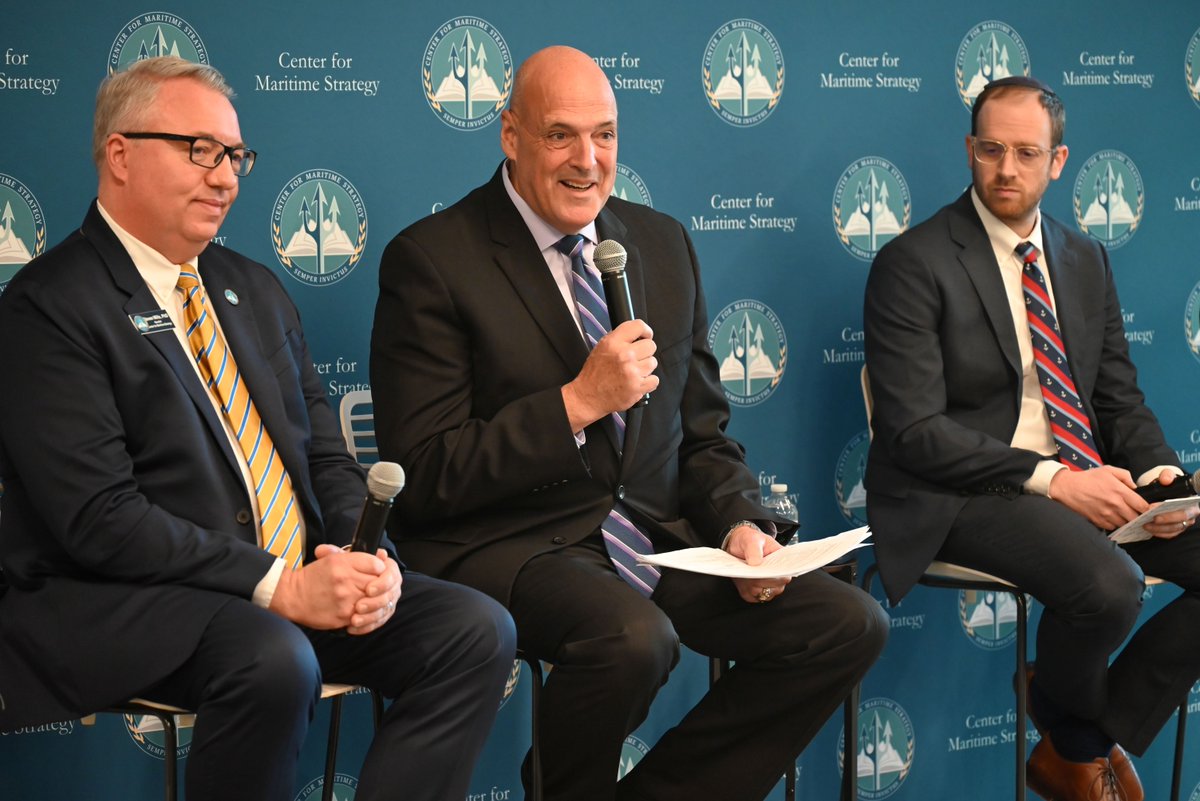
Early morning hop to Washington DC to speak at the @CMS_Washington America's Future Fleet conference.
On a panel discussing "Securing Maritime Chokepoints." Get ready for some SHIP Talk about Hormuz and the Bab el-Mandeb.
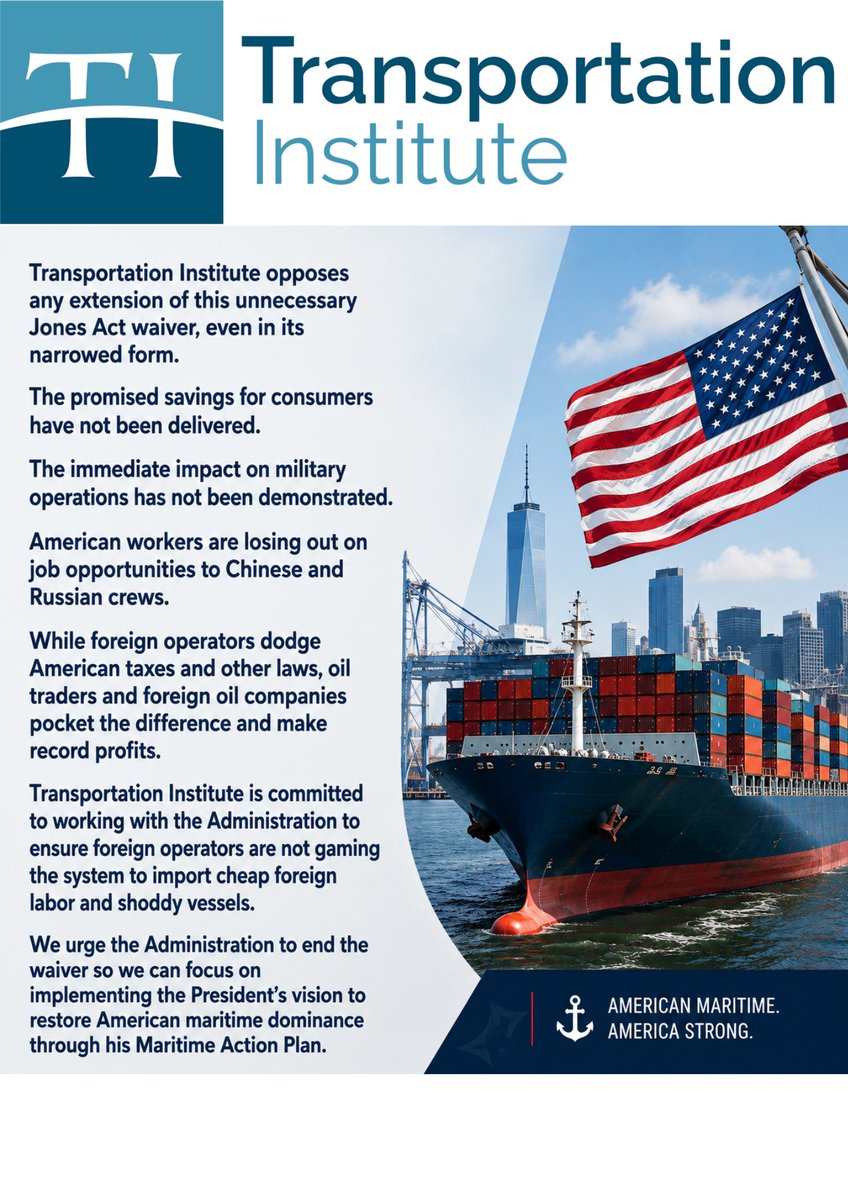
"Jones Act Waiver Extended Another 90 Days as U.S. Maritime Groups Sound Alarm"
I am beginning to think that the @POTUS administration do not know what they want out of their maritime/naval strategy.
Here you see the influence of Stephen Miller and Kevin Hassett who hate the cabotage provision of the Jones Act. They hope that by waiving it, they can magically reduce the cost of gas, diesel and aviation fuel in the U.S.
But the truth is more complex and what the waiver is actually doing is demonstrating some market demand - in particular between the Gulf Coast and California and Puerto Rico.
In both of these cases, instead of extending the waiver, we should be addressing the issue.
1️⃣The initial waiver was under the @DeptofWar and they had ZERO visibility or knowledge if the cargos requesting the waiver could be covered by American ships, so they just rubber stamped them. The new authority in August requires @DOTMARAD to at least determine if there are American ships available.
2️⃣There is no evidence what the cost of the foreign charters are compared to the domestic ones. During this peak season, it is questionable whether there is actual savings in the cost of these charters. Also, there is an issue about taxes for the companies and crews earning money in US coastal waters. Some companies are not wanting to take on such charters due to the uncertain liability.
3️⃣The flow of cargo to Puerto Rico and the West Coast indicate that there is demand. Puerto Rico is pulling from the Gulf coast because of issues of supply throughout the Caribbean basin. But the number of voyages means that we should be reflagging some ships into the US registry, temporarily waiving the build requirement, to handle the flow of diesel, gas, jet fuel and LPG to Puerto Rico.
4️⃣California and the West Coast are more of a mess due to the reduction in refinery capacity there and disruption of production in East Asia. This has more to do with the energy strategy and the lack of a pipeline from Texas to California.
5️⃣Finally, what no one wants to discuss is the fact that the US has a robust and large coastal and inland fleet that would be lost should cabotage be waived. Plus, the crews needed to man the ships in the strategic sealift fleet and support US military forces overseas would be lost as we rely on foreign mariners.
What is needed is a discussion about the Jones Act and not just another waiver.
https://t.co/Za516K7Lxd
Thank you to @USCG for leading rapid rescue operations following Friday's Mississippi River collision between the American Heritage and the Marshall Islands-flagged Atlantic Asphalt. Cargo was international trade and was not subject to the Jones Act.
We commend Captain Leonard Stewart, a hero who refused to leave his vessel until every passenger was accounted for. He upheld the highest traditions of the U.S. Merchant Marine and helped bring all 191 people safely ashore.