@sciam@KamalaHarris The 1st time was 2020. Overnight, sciam turned into a political activist. And disinformationist (face masks).
Sciam, rest in peace!
@stkirsch Post a hash of the data, so that anyone can redistribute the data in any way, via any service, online server or offline usb stick.
Post a hash
@fmeeus1 “Gewone” negatieve getallen zijn ook totaal denkbeeldig: minder dan niks…
Ze faciliteren het concept “schuld met rente”, continue waardestroom zonder tegenprestatie (vroeger bekend als slavernij).
Hebben die imaginaire getallen ook een maatschappelijke functie?
@AndreaTweets9 Als je een steen laat vallen van 5m hoog, is de snelheid waarmee ie de grond raakt 16x de *wortel* uit die 5, 36 km/u. Bij 1m hoog is het 16 km/u.
16 komt door grootte van Aarde, en is anders op de maan of Mars. De wortel is een eigenschap van de Natuur, geldt overal en altijd.
@USMortality@corona_realism People love linear trends. Nature does not. People create trends based on past available data. Nature produces trends based on all that exists.
A parabolic trend over all your data will fit better, and vaporizes most excess mortality.
@engineers_feed Two answers:
1) Plane will take off as usual
2) Plane and universe will cease to exist, as “wheel speed” is ill-defined and belt speed becomes infinite
@patricksavalle “The speed of light in vacuum, commonly denoted c, is a universal physical constant that is EXACTLY equal to 299,792,458 metres per second.”
By definition, no measurements needed. If light speed changes, it is the meter unit that changes, not c.
https://t.co/8zlqAyy6ga
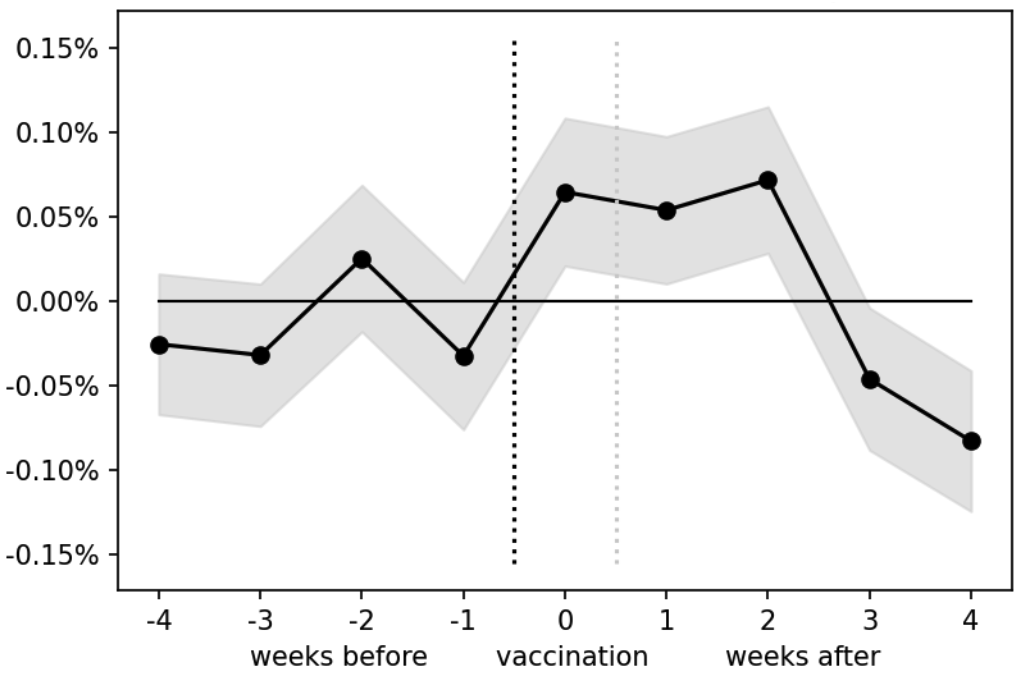
The causal "transfer" function of covid vaccination to mortality in 30 European countries. No significant events before vaccination, rise in weeks 0-1-2 after vaccination, partial compensation in later weeks.
https://t.co/DrlJW1HtIG
In the long-running debate over the origin of covid-19, the latest DNA evidence suggests that it may have reached people via raccoon dogs https://t.co/PXxlh19KRh
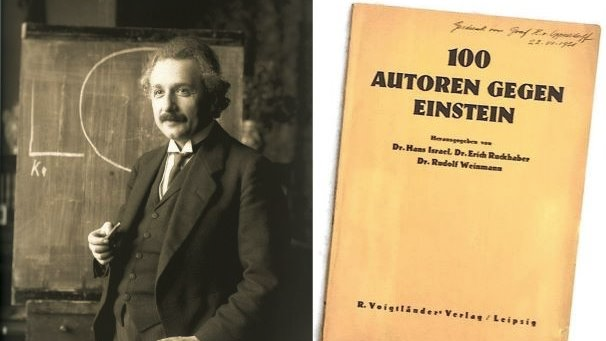
This morning, I appeared as a guest on @tracybeanz's podcast, where we discussed the scarcity of critical thinkers in the scientific community. However, uncritical science is no new phenomenon. In 1931, the book "100 authors against Einstein" was published to disprove his Relativity Theory. So, as someone who was until recently a part of the academic system, I'd like to elaborate on the statements I made in a more detailed manner.
Over the past decade, I've had the opportunity to collaborate with some of the world's most highly cited scientists. Their collective knowledge is impressive, but in my opinion, they lack a critical approach. As a naturally inquisitive individual, I question everything simply because I want to understand. My personal motto has always been: if you can't question it, don't call it science.
I have a strong desire to understand causal relationships and get down to the root causes of specific issues. For instance, during my PhD, I learned how to create models using programs like STELLA, Matlab, and AnyLogic. These models were published in academic journals without ever being validated, which raised skepticism in me even back then. However, as a PhD student and PostDoc, I was only able to express this concern subtly, and there's a reason for that.
Throughout my years as a PhD student and PostDoc, I continuously questioned various aspects. I asked a professor who was a member of the Club of Rome how CO2 could be considered the primary factor responsible for climate change and if the causality might be reversed. I questioned another professor about the IPCC climate models, which he was partly responsible for. During the Covid pandemic, I questioned the measures like "stay home and wear masks." Each time, I was told not to question "settled science" as the facts were clear and questioning them would be considered a conspiracy theory and make me a science-denier.
The realization that the majority of academics are far from critical has shaped me in the last two years. Science is often confused with activism, which has systemic causes. Our education system is designed in such a way that most critical thinkers do not even get a chance at an academic career. This is because the indoctrination of students begins on the first day of school. Those who are critical and question things are generally filtered out by the system. To become a professor at a university, one must simply go with the flow and follow the "woke" agenda. Research funding from the EU, Gates, Soros, etc., is rarely available for critical thinkers, and those who evaluate research funding applications are exclusively part of the system, further reducing the chances of success for critical research applications.
Over the past two years, I have lost my job on three occasions due to subtly expressing public criticism related to Covid. Contrary to the "woke" institutions and colleagues, my statements and predictions have predominantly been accurate; however, rather than receiving apologies, I continue to experience discrimination. That's why I've decided to step away from institutional science for now. I will continue to publish, but in the future, as an independent scientist or working with the @brownstoneinst. However, even this comes with challenges, as peer review processes pose the same problem as critical funding applications: those evaluating scientific work are part of the system, and very few can think critically and scientifically.
The thing is, I don't want to and can't blame most of my former colleagues. For the most part, they genuinely believe in what they say and are themselves victims of indoctrination. They have never learned to think critically and are therefore members of a cult without realizing it. Their intentions may be noble and not fundamentally wrong, but they disregard the original principle that defines science: questioning everything and exploring the true reasons behind certain phenomena.
Cheers,
Simon (@goddek)