Night City will burn again.
Cyberpunk: Edgerunners 2, coming October 20.
Trailer Music:
A Rusty Dream, Artist: DOUDOU, Production Company: Pollux Music, Overall Coordinator: Modern Sky / Modern Sky Game House.
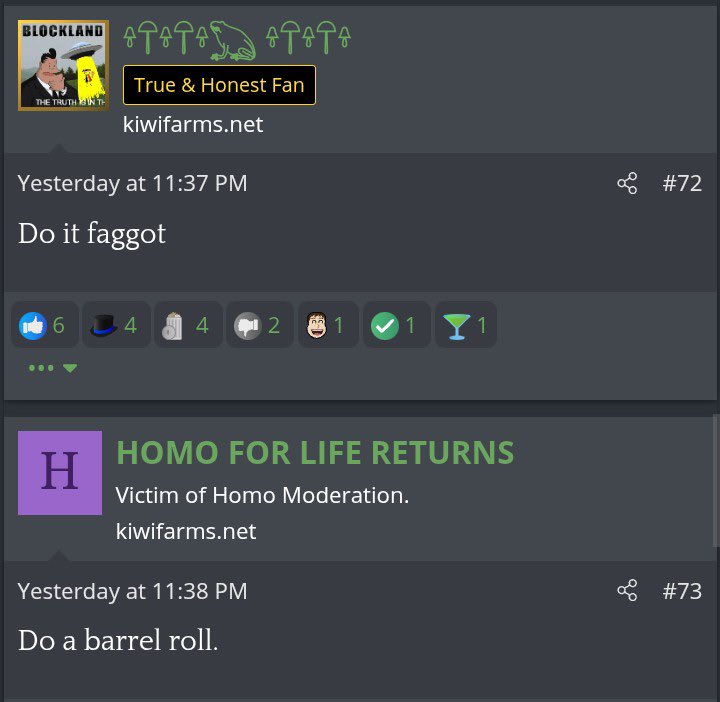
Hey so I just wanted let yall know that Kiwi Farms isn’t posting this out of the goodness of there heart to let everyone know about a man’s struggles with chronic pain. They never have.
These are the comments on the post
pleading with the viewer not to skip, talking about how you had "like no budget" for your ai slop intro is the network tv equivalent of "my game is good the algorithm just ignores me 🥺"
Flathub said no to AI slop. The data says they were right.
When Flathub announced it would reject AI-generated apps, there was some obvious backlash.
"Gatekeeping" "Anti-open source" "Who decides what's slop? "Luddite move" and what not.
Was rejecting AI developed Linux apps the correct decision?
Well, now we have an answer. A clear answer.
A developer went back and analyzed 120 apps Flathub had rejected under this new AI policy.
73% of those repositories are now completely abandoned. Many deleted their source code. Some of the accounts are gone entirely.
Clearly, these weren't passion projects that got unfairly rejected. They were throwaway apps that were never meant to last.
We call them "abandonware".
Flathub held the line, and the Linux app ecosystem is cleaner because of that.
And remember, creating software is not the hardest part, maintaining them is.
Good job Flathub, I guess?
FreeBSD just removed every single line of GPL code from its base system.
The last piece was a small terminal utility called dialog. It is now replaced with a BSD-licensed equivalent.
Sounds like a minor stuff? Not exactly.
This completes a years-long effort to make FreeBSD's entire foundation free of 'copyleft obligations'.
Why does this matter if you're not a BSD person?
Because it changes what companies can do with the OS. GPL code requires you to share your modifications. BSD code doesn't.
That's why FreeBSD (and its relatives like macOS's networking stack and PlayStation's OS) has always been attractive to corporations who want to build on an OS without releasing their changes back.
With FreeBSD 16, that freedom extends to the entire base system without exceptions.
The Linux world operates on a different philosophy. GPL is a feature here, not a bug. GPL ensures that improvements come back to the community.
Watching FreeBSD cross this finish line is a reminder that the open-source world runs on more than one idea of what "free" means.