1/2 Moja majka napipala nešto na dojci, sa unutrašnje strane- UZ, mamografija, kažu nije ništa, magnetna- ništa, biopsija ništa (moja sestra insistirala na dijagnostikama). Na kraju hirurg u fazonu, ajde kad ste dosadne izvadićemo to. Poslije operacije - nije ništa, ⬇️
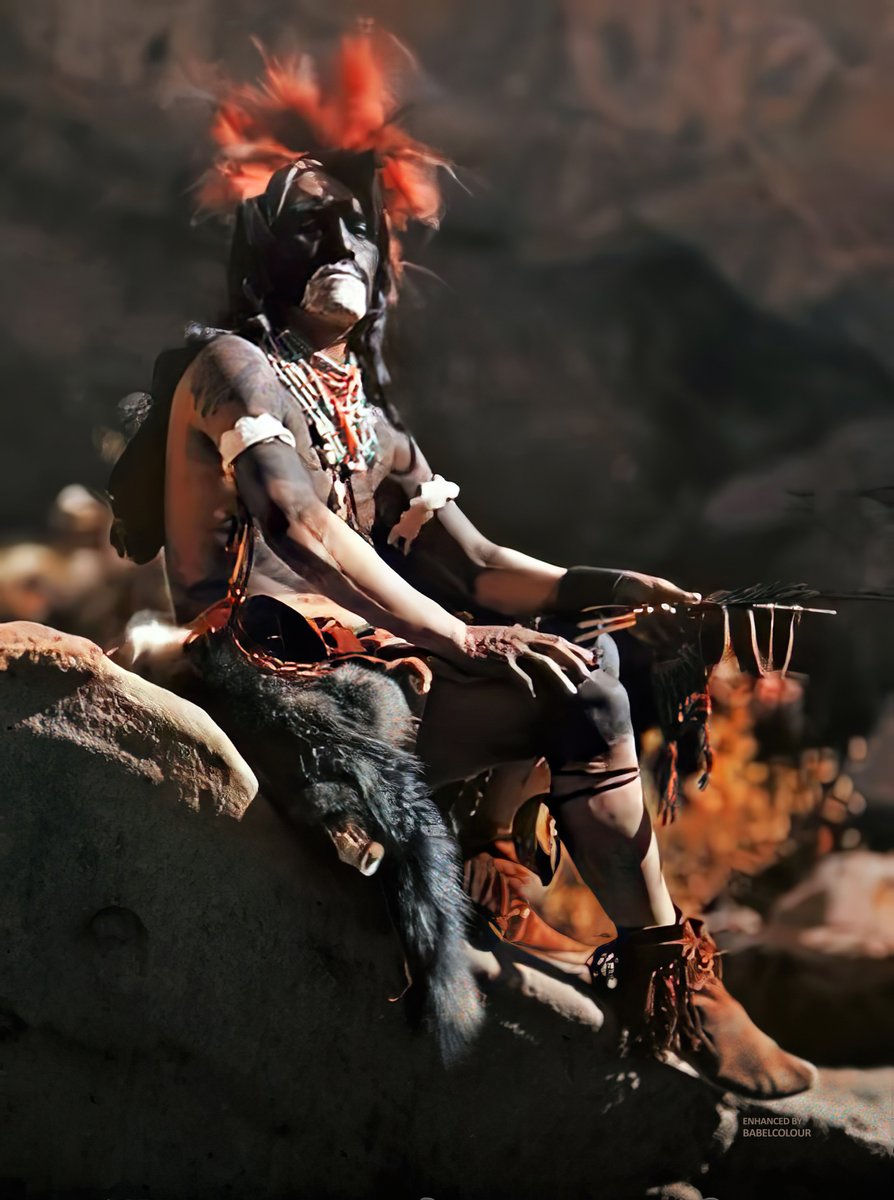
Travel back in time 114 years to the summer of 1912. This imposing figure is named Kopeli, the Chief of the Snake Clan Priests at the Hopi Snake Dance Ceremony in the Pueblo of Walpi, Arizona.
I have cleaned-up this stunning photo by Franklin Price Knott which was taken in 1912 but not published by the National Geographic until 1916. it was taken using an early colour glass-plate process and isn't colourised.
Joël is a carer in a nursing home and invented these games to improve motion and cognition in his patients, proving that it's possible to activate the elderly in a playful way.
[📹 bewegen .is.leven]
Ajmo ljudi... moramo pomoći da ova divna porodica bar bude lišena finansijskih problema, dok Vedo ponovo bije životnu bitku 🙏
Vedo, lavče naše, želim ti da ga ovaj put zgaziš najjače i da se više nikad ne vrati.
Možeš ti to ❤️🫂
Ove majke Srbije sutra stupaju u štrajk glađu, jer su iscpele sve pravne mogućnosti u pokušaju da ostvare refundaciju troškova prevoza koje su same snosile, kako bi njihova deca sa invaliditetom mogla da idu u školu, a na koja imaju pravo.
The FBI had boxes full of serial killer confessions they couldn’t actually use.
Hours of interviews.
Detailed admissions.
Direct conversations with some of the most violent men in America.
And none of it was scientifically useful.
Then a 42-year-old psychiatric nurse walked into Quantico and changed criminal investigation forever.
Her name was Ann Burgess.
1975.
FBI agents Robert Ressler and John Douglas had spent months traveling across the country interviewing imprisoned serial killers. They believed understanding offenders could help solve future crimes.
But when Ann Burgess listened to the tapes, she immediately saw the problem.
“This isn’t research,” she told them.
“These are just stories.”
The room went silent.
“You’re asking them to talk about themselves,” she said. “But every interview is different. There’s no structure. No methodology. You can’t compare one offender to another.”
Then she asked a question nobody else in the room had thought to ask:
“Tell me about the women they killed.”
Not the killers.
The victims.
Who were they?
How old were they?
Where were they approached?
What made them vulnerable?
How did the offender gain control?
The agents were confused.
Ann Burgess explained something revolutionary:
“If you truly study the victims, you’ll understand the offender.”
At the time, Burgess was already a groundbreaking trauma researcher. In 1974, she had co-authored one of the first major studies proving rape caused lasting psychological trauma — at a time when courts barely acknowledged it.
She helped create the term “rape trauma syndrome.”
Now she brought that same scientific rigor to the FBI.
She redesigned the interviews.
Created structured questionnaires.
Introduced victimology as the foundation of profiling.
Distinguished between a killer’s “MO” and their “signature.”
Mapped escalation patterns.
Explained that sexual violence was about power and control — not desire.
Suddenly, the FBI’s Behavioral Science Unit had something it had never truly possessed before:
Methodology.
And it worked.
In 1983, young boys began disappearing in Nebraska.
Using Burgess’s framework, investigators built a profile:
A young white male.
Slight build.
Someone trusted around children.
Likely connected to scouting or youth activities.
A person who kept souvenirs and detective magazines.
Police arrested John Joubert.
The profile was astonishingly accurate.
Almost overnight, criminal profiling became legitimate law enforcement science.
And yet most of the credit went elsewhere.
The public celebrated the FBI agents.
Books were written.
Movies and television series followed.
Ann Burgess became a footnote.
When Netflix released Mindhunter, they based a character on her — but changed nearly everything.
They made her a psychologist instead of a nurse.
Changed her personal life entirely.
Most viewers never even realized she was based on a real person.
Meanwhile, the real Ann Burgess kept working.
Teaching.
Publishing.
Consulting.
Testifying in court.
Training professionals around the world.
More than 150 academic publications.
Multiple landmark books.
Decades of pioneering work.
And through all of it, one truth remained:
Modern criminal profiling exists in large part because a psychiatric nurse walked into a room full of FBI agents and told them they were asking the wrong questions.
Not:
“Why did the killer do this?”
But:
“Who were the victims?”
That shift changed criminal investigation forever.
Ann Burgess is 88 years old now.
Still teaching.
Still working.
Still brilliant.
And finally receiving recognition not as a side character in someone else’s story —
But as herself.
The woman who taught the FBI how to truly understand predators by first understanding the people they harmed.
@IgorMitrovic100@damnjanovicd@pijanistq Super izgleda i razbija, inace sumorne, sive fasade. Lepo! Jedna mala korekcija: prva fotka u nizu je mural koji je naslikao Weedzor.
Večeras oko 21.30 su SNS batinaši u ulicama kod VI gimnazije na Zvezdari pretukli 4 gimnazijalca!!! Među pretučenima je i maloletna devojčica.
Pre napada je na štandu SNS-a kod VI gimnazije viđena Nevena Maksimović predsednica skupštine opštine Zvezdara.
Ljuti građani upravo idu ispred MUP Zvezdara u Milana Rakićada protestuju!!!