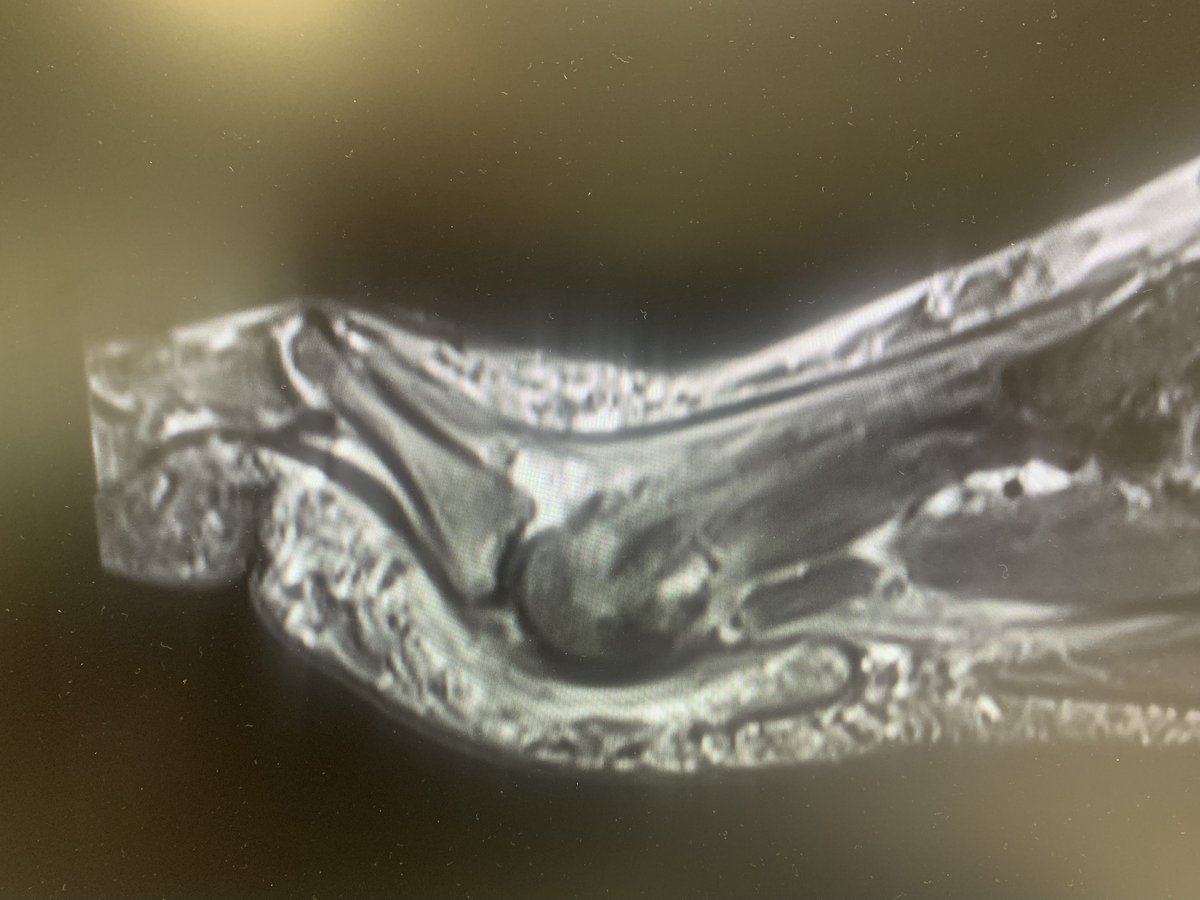
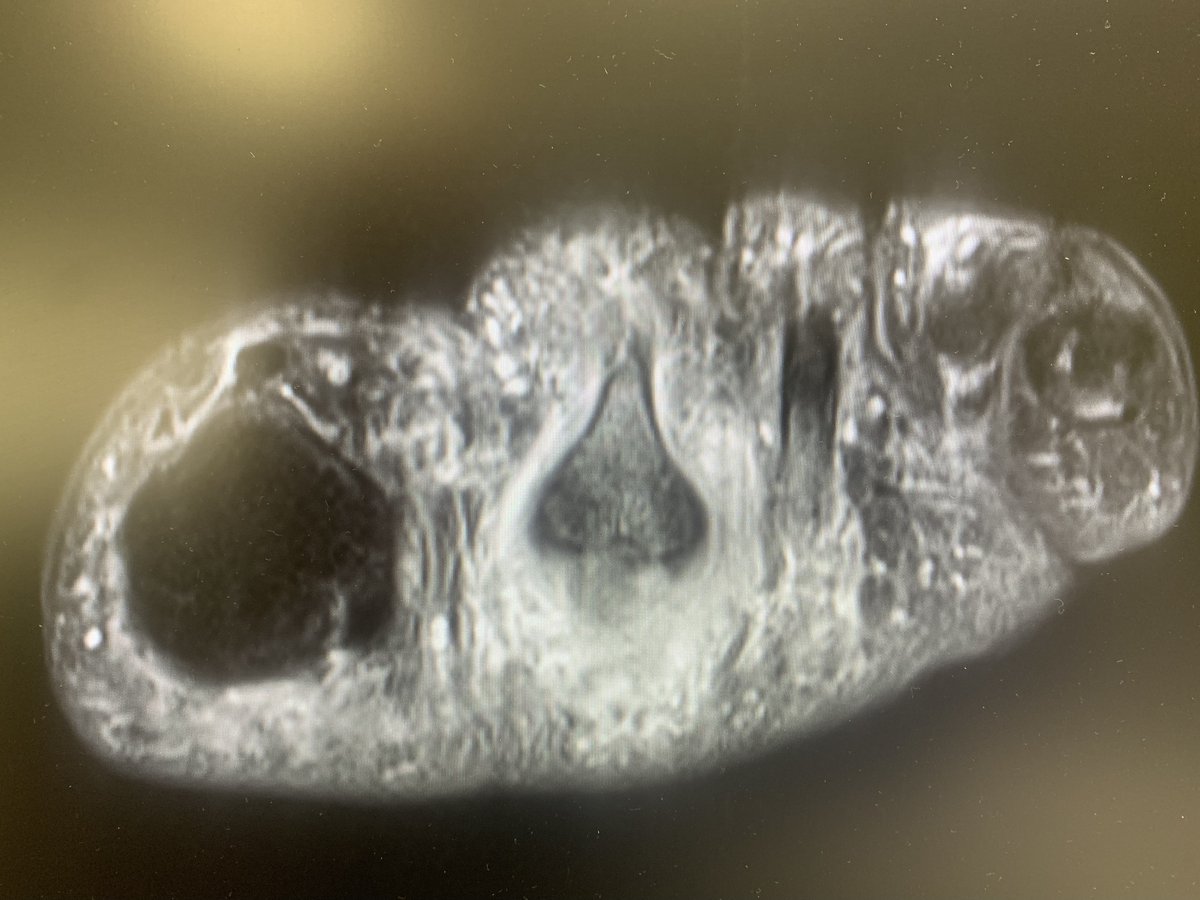
Paciente 54 años metatarsalgia muy severa M2-distal. Sensación de calambres. 2º dedo elevado. Signo del cajón positivo con subluxación MTF. Fue Dx de N Morton 2º espacio ?? (Falso). Se trata de un caso típico de rotura de la placa plantar. Aporto imágenes de RMN.
Upgrading a prior 🧵regarding polypropylene ('Prolene') suture: the workhorse suture of vascular surgery, though it also has other applications.
As usual, we'll go over some of the properties and uses of Prolene, and a little history.
(1/ )
Study alert! A trial investigating the use of silver dressings for healing diabetes-related foot ulcers has found no significant improvement compared to the placebo. Check out the interesting findings here: https://t.co/LSUr4X5YHl
Study: The effect of needle tenotomy on hammer, mallet and claw toe deformities in patients with diabetes #DiabeticFoot – DF Blog https://t.co/ZpVHbalZ8s
Good to see further evidence that highly cross-linked polyethylene with large heads is doing well. It has been one of the most successful innovations of the last two decades.
#TotalHipArthroplasty#Arthroplasty#OpenAccess#BJO@stuartcallary
https://t.co/hJ3oMxCvXe
These pesky age-appropriate changes that your MRI will show might freak some of you out. Others will take it in stride. You cannot unsee your MRI result. https://t.co/ZpojyaANv4
Different types of screw.
1. Wood screws are perhaps the most commonly recognised type of screw. They have a smooth shank and tapered point that make them ideal for penetrating wood. What they’re used for: all types of wood.
2. Machine screws. Blunt ended screws with threads, typically made from brass or steel.
What they’re used for: fastening metal parts together
3. Thread Cutting Machine Screws. They look similar to standard machine screws, but thread cutting machine screws are self-tapping screws that produce threads in existing holes in metal. What they’re used for: most often used with wood and metal.
4. Sheet metal crews are fully threads and pointed. What they’re used for: sheet metal
5. Self Drilling Screws. A pointed screw with sharp cutting threads that tap the hole during installation. What they’re used for: quick drilling into metal or wood.
6. Hex bolts have a flat hexagonal head and threads to be used with a nut or tapped hole.
What they’re used for: fastening wood to wood or metal to wood.
7. Carriage Bolts. Recognisable by their smooth rounded head and square neck. What they’re used for: fastening metal to metal or metal to wood.
8. Lag bolts have a hexagonal head with a wood thread and pointed tip. They are particularly tough fasteners. What they’re used for: connecting heavy lumber or other heavy materials that are bearing an intense load.
9. Socket Screws. Commonly referred to as Allen Heads due to the fact that they are fastened with a hex Allen wrench, socket screws have a hexagonal internal drive built into the head. What they’re used for: fasting machine parts.
10. Set screws are notable for their lack of head. The entire screw can be screwed into a threaded hole so that the entire screw is out of sight. What they’re used for: to secure an object within another object.
11. Eye bolts have machine threads and a circular ring on the head end. What they’re used for: attaching a rope, chain or cable.
12. Eye lags look similar to eye bolts but have wood threads instead of machine threads.
What they’re used for: light duty applications in wood or lag anchor.
13. J-Bolts have a ‘J’ hook on the head end.
What they’re used for: as a fastener for construction projects.
14. U-bolts. A fastener in the shape of the letter U. U-Bolts have two threaded arms extending from a curved base. What they’re used for: fastening pipes and as anchors for foundations and roofs.
15. Shoulder bolts. Also known as stripper bolts, shoulder bolts have a round head and machine tip. What they’re used for: rotating items such as bearings and bushings.
16. Elevator bolts are easily recognisable by their large, flat head and long body. What they’re used for: in conveyor belts, elevators and similar mechanical systems that raise things up and down.
17. Sex bolts. A female threaded nut used in combination with mating screws. What they’re used for: bolting applications where a head is desired on both sides of the joint.
18. Mating screws. A companion for sex screws. They have a plan shaft and a threaded portion, which is received by the internal threaded part of the sex screw. What they’re used for: bolting applications where a head is desired on both sides of the joint.
19. Hanger bolts have wood thread on one end and machine thread on the other. What they’re used for: suspending objects from or attaching items to wood.
Wonderful presentations at OTA meeting in Seattle (USA). Spain invited as a guest nation. Thanks to OTA and Ted Miclaud for this amazing opportunity to present spanish research on tibial plateau fractures!
Mañana es...
¡¡JUEVES DE SESIÓN CLÍNICA DE SCLECARTO!!
⏰19h
💻Vía Zoom
👏🏻Inscripciones gratuitas
🗣️Tema: FX osteoporóticas vertebrales. Perfil del paciente e importancia del tratamiento farmacológico.
😎Colabora @GrunenthalH
📲https://t.co/eSU1J36MYe
Lecture 2!
For the brave who suffered through last weeks biomechanics and vectors primer, today we built on those foundations and started looking at how vector resolution can be applied to fracture systems, and help us asses mechanical stability
#orthotwitter#orthopedics
Ya ha salido!! el PDF con TODOS los textos del cursocot 6 ed 2021-2023. Todo lo más rabiosamente actualizado, para descargar en el móvil. Muy cómodo para las guardias, resolver dudas rápidamente, etc...Para todos los matriculados: https://t.co/0pxsA5iIwV o https://t.co/sRNxtbdktq