One question we were asked recently was, “If your livestock graze under solar panels, where does their winter hay come from? Doesn’t taking farmland out of crop production just make feed more expensive?”
Part of the confusion reflected in that statement comes from how many people define “productive farmland.” There’s often an assumption that the only productive agricultural land is cropland growing corn, soybeans, or other row crops.
But pasture is agricultural production, too. Grazing livestock is a legitimate and valuable use of farmland, not a placeholder until someone decides to grow something else.
Pasture is just as capable of feeding livestock as row crops are, and well-managed grazing systems can provide additional benefits for both animal health and the environment.
For grazing options like ours, the land beneath the panels isn’t replacing anything. It’s supplementing.
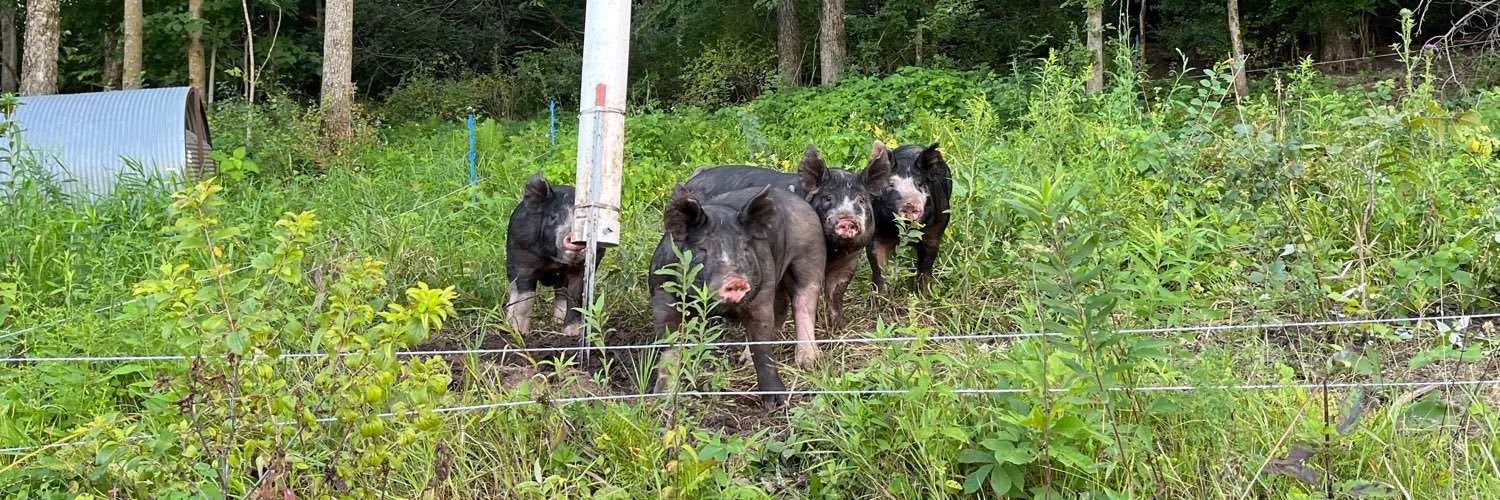
When we put sheep on a solar site, we're grazing that land during the growing season. That's exactly what we'd be doing if those panels weren't there. We aren't simultaneously grazing it and making hay from it.
Those are two different uses for the same acres.
Our hay comes from hay fields. Our grazing happens on pasture. The solar site replaces pasture, not hay production.
Now, every farm is different. Some operations harvest hay and then graze the regrowth. Others have integrated systems. But the idea that every acre grazed under solar somehow represents lost winter feed simply isn't how most rotational grazing operations function.
This also brings up the conversation about how much farmland is being “pinched” by solar in the first place.
The United States has tens of millions of agricultural acres that aren't currently producing anything. Not crops, not pasture. The estimates vary depending on where you look, but the USDA reports 50 to 52 million acres.
To be clear, I'm not talking about the roughly 23 million acres enrolled in the Conservation Reserve Program (CRP), included in that total above. Those lands provide important wildlife habitat, reduce erosion, improve water quality, and serve a valuable purpose.
I'm talking about land that sits idle because farming it simply doesn't make economic sense. Over 30 million acres of farmland in the United States have been abandoned since the 1980s.
Why?
Farmers don't leave ground uncultivated because they don't want to farm it. They leave it because labor is expensive, equipment is expensive, inputs are expensive, markets are volatile, and sometimes the numbers just don't work.
That's where the economics come into play. A solar lease can provide the stable income that keeps a farm in the family instead of forcing the sale of land for housing, warehouses, or other permanent development. In many cases, livestock can continue grazing beneath the panels while that land generates another source of revenue.
And let's keep the scale in perspective.
Even aggressive solar build-out scenarios would use only a tiny fraction of U.S. agricultural land (the highest estimate I’ve found, from NREL, is 13 million acres). This isn’t accounting for rooftop, brownfield, or non-prime-farmland development, which, again, are all also being prioritized.
And most people in the industry (including me) aren't arguing for an all-solar grid. We're arguing for a diversified energy system that includes nuclear, hydro, wind, natural gas, geothermal, storage, and solar, with projects located where they make the most sense.
Agrivoltaics isn't replacing agriculture. It's just asking a different question:
Where can we produce food AND energy on the same acres, while giving farmers another tool to keep their operations financially viable?
Hey, thanks to all of the people who work very hard at a high-stress job in rural areas to provide inexpensive, high quality food for me and my family!